


Key Takeaways for Homeowners
- Demand proof of IICRC S500/S520 certification and ongoing education.
- Insist on documented containment protocols with negative air pressure and HEPA filtration.
- Verify the contractor performs comprehensive moisture mapping and psychrometric analysis.
- Confirm experience with mycotoxins, antimicrobial biocides, and structural drying.
- Ensure the contractor understands Fort Wayne’s humid climate, seasonal storms, and local building conditions.
Hiring a mold remediation contractor is one of the most consequential decisions a Fort Wayne homeowner can make. The wrong choice does not just waste money. It endangers your family’s health, compromises your home’s structural integrity, and can create liability issues when you eventually sell. Before you sign any contract or allow any crew into your home, demand proof of the seven qualifications outlined in this guide. Each one is non-negotiable.
Proof 1: IICRC S500 and S520 Certification
The Institute of Inspection, Cleaning and Restoration Certification is the globally recognized authority for water damage and mold remediation standards. IICRC S500 governs water damage restoration, while S520 specifically addresses microbial remediation. A contractor who cannot produce current certification cards for these standards has not demonstrated competence in the science of mold remediation.
Certification is not a one-time event. The IICRC requires continuing education to maintain credentials. Ask when the technician last completed recertification or advanced training. A contractor who invests in ongoing education is a contractor who takes this work seriously.
What Certification Proves:
- Understanding of water damage categories and contamination classes
- Competence in psychrometrics and structural drying science
- Knowledge of proper containment, removal, and cleaning protocols
- Familiarity with health and safety regulations, including OSHA standards for worker protection
Proof 2: Documented Containment Protocols
Containment is where amateur contractors reveal themselves. Proper mold remediation does not involve spraying bleach and tearing out drywall. It requires engineering controls that prevent spore dispersal. Demand that the contractor show you their written containment protocol before work begins.
The protocol should specify the use of 6-mil polyethylene barriers, sealed seams, and negative air pressure maintained by HEPA-filtered air scrubbers. Negative air pressure means the air pressure inside the containment zone is lower than the pressure outside, forcing air inward through any gaps rather than allowing contaminated air to escape. HEPA filtration captures 99.97% of particles 0.3 microns and larger, including mold spores, mycotoxins, and other airborne contaminants.
Step-by-Step Containment Requirements:
- Pre-Containment Assessment: Air and surface sampling to establish baseline spore counts
- Barrier Construction: Erection of sealed poly sheeting with zippered entry points
- Negative Air Pressure Installation: Placement of HEPA air scrubbers to maintain directional airflow
- HVAC Isolation: Sealing of all ductwork within the containment zone
- Decontamination Chamber: Two-stage entry/exit for personnel and equipment
- Continuous Monitoring: Documentation of pressure differentials and air scrubber operation
Proof 3: Moisture Mapping and Root Cause Analysis
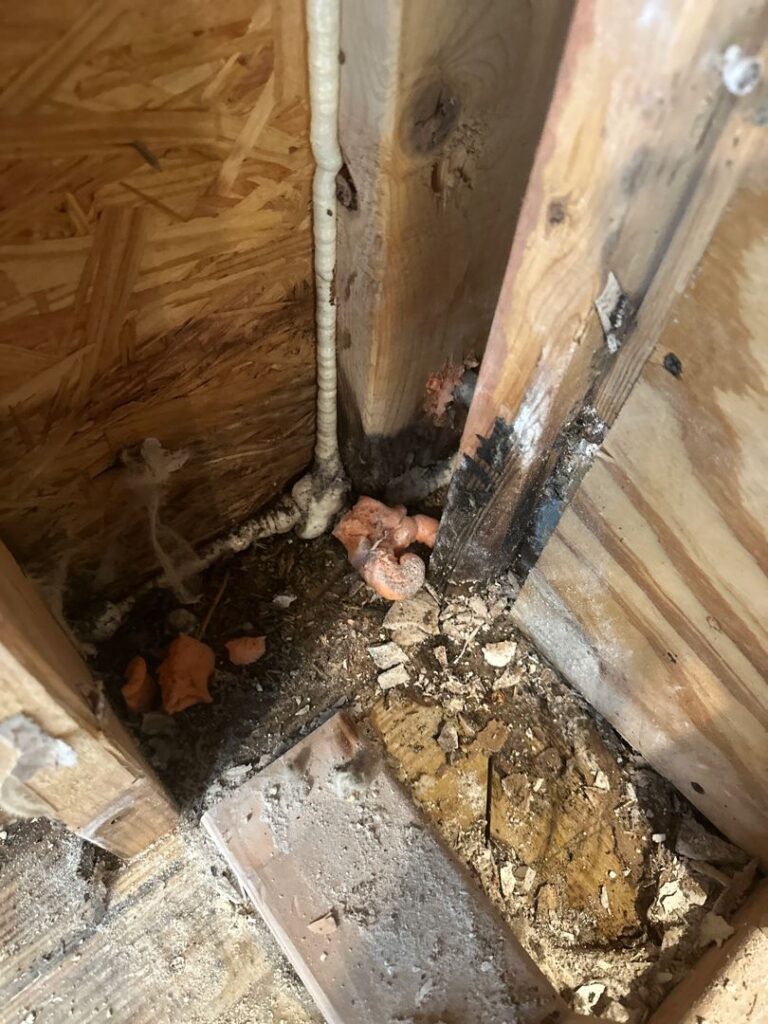
Any contractor who offers to remove visible mold without first identifying and correcting the moisture source is not a remediation professional. They are a demolition crew. Moisture mapping is the systematic process of identifying all areas of elevated moisture content within a structure, including hidden spaces behind walls, under flooring, and within building cavities.
In Fort Wayne, moisture sources are often tied to the region’s climate and housing stock. Northeast Indiana experiences humid summers with relative humidity frequently exceeding 70%, creating ideal conditions for condensation in basements and crawl spaces. Seasonal storms and rapid temperature changes contribute to ice damming on roofs and subsequent water intrusion. Many Fort Wayne homes, particularly the ranch-style and mid-century construction common in neighborhoods like Aboite and Southwest Fort Wayne, have crawl spaces with inadequate vapor barriers or ventilation.
Fort Wayne-Specific Moisture Sources to Address:
- Crawl Space Humidity: Unsealed crawl spaces draw moisture from Indiana’s humid summer air
- Basement Seepage: Seasonal rainfall and snowmelt saturate soils around foundations
- Ice Damming: Freeze-thaw cycles cause water backup under shingles
- HVAC Condensation: Oversized or poorly maintained systems short-cycle, failing to dehumidify
- Plumbing Issues: Aging infrastructure in established neighborhoods
Proof 4: Mycotoxin Awareness and Antimicrobial Protocols
Not all mold species pose the same health risk, but contractors must be prepared to handle the worst-case scenarios. Stachybotrys chartarum, Aspergillus fumigatus, and certain Penicillium species produce mycotoxins that can cause serious respiratory, neurological, and immunological effects. A qualified contractor must demonstrate knowledge of mycotoxin risks and have protocols for safe handling and disposal of contaminated materials.
After physical removal, affected surfaces require treatment with an EPA-registered antimicrobial biocide. This is not household bleach. Bleach is ineffective on porous materials, adds moisture to the environment, and can react with organic compounds to produce harmful byproducts. Professional antimicrobial products are selected based on the specific contamination class and applied with equipment that ensures proper coverage and dwell time.
Proof 5: Structural Drying and Psychrometric Documentation
Drying a structure after water damage or mold remediation is not guesswork. It is applied science. Psychrometrics is the study of the thermodynamic properties of moist air, and it governs every legitimate drying project. A contractor must be able to explain how they measure and control temperature, relative humidity, and dew point to achieve target drying conditions.
The drying process typically involves commercial-grade dehumidifiers, air movers, and specialized drying equipment for hardwood floors and wall cavities. The contractor should provide daily moisture content readings and psychrometric data showing progress toward established drying goals. IICRC S500 specifies that wood framing should reach moisture content below 16% and that relative humidity in affected areas should be maintained below 60%.
Proof 6: Insurance Coordination and Documentation
Mold remediation is expensive, and insurance coverage is often complex. A professional contractor should have experience working with homeowners insurance carriers and be able to provide detailed documentation that supports your claim. This includes scope of work documents, moisture logs, photographic evidence, and post-remediation verification reports.
In Indiana, mold coverage varies by policy. Damage from sudden, accidental water events is more likely to be covered than damage from long-term humidity or maintenance neglect. Your contractor should help you understand your coverage and provide the documentation your adjuster needs to process your claim efficiently.
Proof 7: Local Knowledge of Fort Wayne Conditions
Fort Wayne’s climate and building environment create mold risks that differ from coastal or desert regions. A contractor who understands local conditions will ask the right questions and design the right solutions. Fort Wayne’s humid continental climate means hot, humid summers and cold winters with significant snowfall. This combination creates unique moisture dynamics inside homes.
Many Fort Wayne homes feature basements that were not originally designed as finished living spaces, and converting them without proper moisture control is a common source of mold problems. The city’s mix of historic homes, mid-century construction, and newer developments means contractors must be familiar with a wide range of building materials and methods. Local building codes, including those enforced by the City of Fort Wayne and Allen County, set minimum standards for ventilation and moisture control that informed contractors should reference.
Why Fort Wayne Homeowners Cannot Afford to Compromise
Mold remediation is not a service where cutting corners saves money. Incomplete remediation leads to recurring problems, escalating costs, and potential health consequences. When you hire a contractor, you are entrusting them with your home’s air quality and your family’s wellbeing. The seven proofs outlined in this guide separate true professionals from opportunists who see mold remediation as just another revenue stream.
Fort Wayne’s seasonal weather patterns mean that moisture issues can develop quickly and spread silently. By the time you see visible mold, the problem has often been growing for weeks or months behind walls, under flooring, and in crawl spaces. The contractor you choose must have the technical expertise, equipment, and local knowledge to address the full scope of the problem, not just the symptoms.
Frequently Asked Questions
Does home insurance cover mold caused by high humidity in Fort Wayne?
Standard homeowners insurance policies typically exclude mold damage resulting from long-term humidity, condensation, or maintenance issues. However, if mold growth is a direct result of a covered peril, such as a burst pipe, appliance malfunction, or storm damage, your policy may cover both the water damage and subsequent mold remediation. Documentation is critical. PuroClean Disaster Restoration of West Fort Wayne can assist with insurance claims documentation and direct billing.
How can I tell if a contractor is actually IICRC certified?
Ask to see the technician’s current IICRC certification card. You can also verify certification through the IICRC’s online directory. Be wary of contractors who claim certification but cannot produce documentation or who reference vague “mold certifications” without specifying S500 or S520.
What is the difference between mold removal and mold remediation?
Mold removal is the physical act of removing mold from surfaces. Mold remediation is a comprehensive process that includes assessment, containment, removal, cleaning, drying, and prevention. Remediation addresses the root cause and verifies that the environment is safe. Removal without remediation is incomplete and often temporary.
How do I prevent mold from returning after remediation?
Prevention requires controlling moisture. This may involve installing vapor barriers in crawl spaces, improving basement drainage, repairing roof leaks, upgrading bathroom ventilation, and maintaining indoor relative humidity below 60%. Your contractor should provide a written prevention plan as part of the remediation scope.
What health symptoms indicate I need immediate mold remediation?
Persistent coughing, wheezing, nasal congestion, eye irritation, skin rashes, headaches, and fatigue can all be associated with mold exposure. Individuals with asthma, allergies, or compromised immune systems are at highest risk. If symptoms worsen at home and improve when you are away, mold should be investigated immediately.
Your home is your most important investment, and your family’s health is priceless. Do not trust either to an unqualified contractor. PuroClean Disaster Restoration of West Fort Wayne meets every standard outlined in this guide and brings decades of combined experience serving Fort Wayne, Aboite, Southwest Fort Wayne, and all of Allen County. When you are ready to hire a mold remediation contractor who can prove their qualifications, call (260) 263-9788 for immediate assistance and support.

