


Executive Summary
Water damage affects Fort Wayne homes through various sources including the St. Marys, St. Joseph, and Maumee rivers, severe thunderstorms, winter freeze events, and aging infrastructure. This survival guide provides Fort Wayne homeowners with detailed response protocols, mold prevention strategies, and criteria for selecting qualified restoration companies. Understanding the 24-hour window for preventing mold growth and the importance of professional restoration equipment can save thousands of dollars and protect your family’s health.

A Fort Wayne Family’s Five-Day Delay That Cost $38,000
The Patterson family lived in a beautiful home near Foster Park, an area they loved for its proximity to the St. Marys River and mature tree-lined streets. In March 2025, an early spring thaw combined with heavy rain created rapid snowmelt conditions throughout northeast Indiana.
On a Tuesday evening, Jim Patterson noticed the sump pump running constantly in their basement. By midnight, he realized the pump had stopped working. Water began seeping through the foundation walls. By morning, they had six inches of standing water throughout their finished basement, which included a home office, guest bedroom, and entertainment area.
The Pattersons assumed they could handle the cleanup themselves. Jim rented a small pump from a hardware store and began extracting water. Over the next two days, they used household fans and opened windows to help with drying. The visible water was gone by Friday, and they felt proud of saving the cost of professional help.
The following Tuesday, exactly five days after the initial flooding, Jim’s wife Karen noticed a strong musty odor. By the weekend, they discovered black and green mold covering the basement drywall behind furniture they had moved back into place. The carpet felt damp despite appearing dry.
Professional assessment revealed moisture trapped in wall cavities, behind baseboards, and in the carpet padding had created perfect mold growing conditions. The restoration and mold remediation cost $38,000, required three weeks of work, and forced the family into temporary housing.
The expensive lessons? Professional water extraction equipment far exceeds consumer rental equipment capabilities. Hidden moisture requires detection equipment homeowners do not possess. The time to call professionals is immediately, not after DIY attempts fail. Every day of delay compounds damage and increases costs exponentially.
What immediate steps should I take when I discover water in my Fort Wayne home?
The initial actions you take in the first hour after discovering water damage significantly impact the total damage extent and restoration costs.
Prioritize personal safety above property concerns. If water is near electrical systems, outlets, or appliances, do not enter the area. Turn off electricity at your main breaker panel if you can reach it safely from a dry location. Never walk through standing water when electricity might be present. If you smell gas or suspect gas line damage, evacuate immediately and call utility companies from outside.
Stop the water source immediately if possible. For internal water sources like burst pipes, locate and shut off your main water valve. Most Fort Wayne homes have the main shutoff near where the service line enters the house or near the water meter. For appliance leaks, turn off the dedicated shutoff valve for that appliance. Mark your main water valve location now, before emergencies occur, so all family members know where it is.
Contact professional water damage restoration immediately. Do not wait until morning if damage occurs overnight, and do not attempt DIY cleanup first. Professional response within the first two to three hours prevents the majority of secondary damage. Companies like PuroClean Disaster Restoration of West Fort Wayne provide 24-hour emergency response specifically because water damage cannot wait for convenient business hours.
Document everything thoroughly before any cleanup. Use your smartphone to take extensive photos and videos of all affected areas from multiple angles. Document water sources, standing water depth, affected materials, and damage to belongings. This documentation is essential for insurance claims and helps restoration companies assess the situation before arriving.
Begin removing valuable items from affected areas. If safe to access, carefully move electronics, important documents, photographs, and valuable personal items to dry areas. Place aluminum foil or plastic blocks under furniture legs to prevent staining if items must temporarily remain in damp areas. Avoid moving items into areas where they will obstruct restoration work.
Contact your insurance company within 24 hours. Most homeowners insurance policies require prompt notification, typically within 24 to 48 hours of discovery. Even if you plan to work with a restoration company that handles insurance billing, you should make initial contact with your insurer. Provide your policy number and basic information about what happened.
Do not use regular household vacuums to remove water. Standard vacuums are not designed for water extraction and create serious electrical shock hazards. Professional water extraction requires specialized equipment designed for this purpose.
How fast does water damage progress in Fort Wayne’s climate?
Northeast Indiana’s climate creates specific conditions that affect water damage progression and mold growth rates.
Immediate to 4 hours: Rapid absorption phase. Water immediately begins absorbing into porous materials including drywall, wood, insulation, carpet, and upholstery. Every minute of exposure increases saturation depth. Many Fort Wayne homes have hardwood flooring that begins absorbing water within minutes, causing swelling and cupping that becomes irreversible if not addressed quickly.
4 to 24 hours: Migration and spreading. Water spreads horizontally through flooring and vertically through walls via capillary action and gravity. Wood components including floors, subflooring, and framing begin swelling. Drywall starts losing structural integrity and may begin sagging. Metal fixtures and hardware begin the corrosion process. Furniture in contact with water begins showing finish damage.
24 to 48 hours: Critical mold prevention window closing. Fort Wayne’s humidity levels, especially during spring through fall, create ideal mold conditions. Microscopic mold spores present in all homes begin colonizing damp surfaces. While you may not see visible mold yet, the growth process has started. Musty odors often develop before visible mold appears. This is the last opportunity for professional intervention to prevent mold from requiring separate remediation.
3 to 7 days: Visible contamination and structural concerns. Mold appears as discolored patches on walls, ceilings, carpet, and belongings. Continued moisture exposure weakens structural materials. Hardwood floors that might have been salvageable with immediate response may now require replacement. Door and window frames swell, affecting operation. Odors become persistent and difficult to eliminate.
1 to 4 weeks: Severe damage requiring major reconstruction. Extended moisture exposure causes structural failure of drywall, ceiling sagging or collapse, extensive mold requiring professional remediation with containment protocols, and potential health impacts for occupants. What might have been a $4,000 restoration becomes a $25,000 to $40,000 reconstruction project.
Fort Wayne specific climate factors:
Spring flooding risks from rapid snowmelt combined with rain create high-volume water events. Summer humidity averaging 70% or higher slows natural drying and accelerates mold growth. Winter freeze-thaw cycles can cause repeated moisture events before complete drying occurs. The area’s clay soil prevents rapid water absorption, contributing to basement flooding risks.
Should I attempt to clean up water damage myself or call professionals?
This critical decision point determines whether you face minor restoration costs or major reconstruction expenses.
Very limited scenarios are appropriate for DIY response. If a very small amount of clean water from a supply line spills on non-porous flooring in a tiny area, and you can completely dry everything within 6 to 8 hours using proper equipment, you might handle it without professional help. This represents less than 5% of actual water damage scenarios homeowners face.
Most water damage requires professional restoration for these reasons:
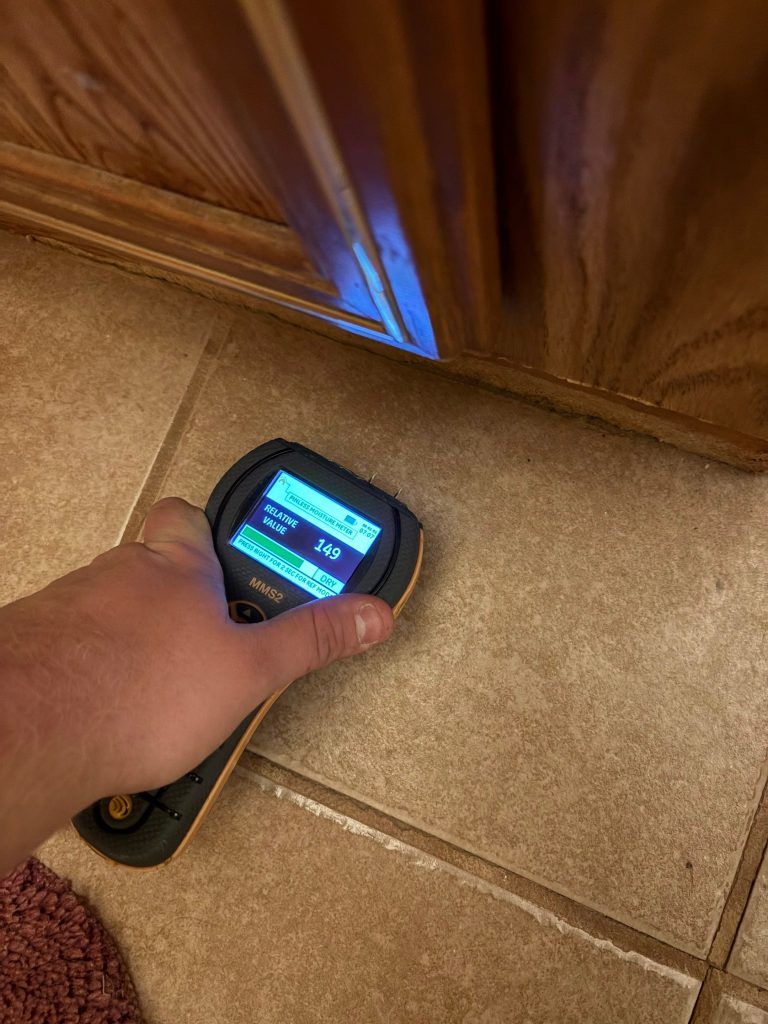
Hidden moisture is the primary concern. Water travels through wall cavities, under flooring systems, behind baseboards and trim, and into structural spaces you cannot see or access. Professional restoration companies use thermal imaging cameras that show temperature differences indicating moisture presence. They use pin and pinless moisture meters to measure exact moisture content in materials. Without this equipment, you cannot verify that everything is actually dry.
Professional extraction equipment is fundamentally different. Consumer-grade wet-dry vacuums and small pumps available at rental stores extract only surface water. Professional truck-mounted extractors create powerful suction that removes water from carpet padding, subflooring, and porous materials. The difference in water removal between consumer equipment and professional equipment is typically 60% to 80% more water extracted with professional tools.
Proper structural drying requires commercial equipment. Household fans move some air but cannot create the focused, high-velocity airflow needed for structural drying. Professional air movers are designed to direct airflow across surfaces and into materials. Commercial dehumidifiers remove 10 to 20 times more moisture from the air than consumer units. Specialty drying equipment like injectidry systems, drying mats for hardwood floors, and wall cavity drying systems have no consumer equivalents.
Water category determines safety requirements. Clean water from supply lines (category 1) is relatively safe, though professional handling is still recommended. Gray water from washing machines, dishwashers, or sump pump backups (category 2) contains contaminants requiring safety protocols. Black water from sewage or flooding (category 3) contains dangerous pathogens requiring personal protective equipment, specialized cleaning protocols, and proper disposal procedures. DIY attempts with category 2 or 3 water expose your family to serious health risks.
Insurance companies expect professional mitigation. Most insurance policies require policyholders to take reasonable steps to prevent additional damage. If your DIY attempts fail to completely dry affected materials and subsequent mold growth occurs, insurers may deny coverage for the mold remediation, arguing it resulted from inadequate mitigation rather than the original covered water event. Professional restoration provides documentation of proper mitigation efforts.
Time investment exceeds expectations. DIY water damage cleanup is not a weekend project. Proper restoration requires continuous monitoring, equipment adjustment, and moisture testing over 3 to 10 days. Most homeowners cannot dedicate this time while also managing work and family obligations.
For Fort Wayne homeowners, professional restoration is an investment that typically pays for itself through faster, more complete drying, prevention of secondary damage, better insurance outcomes, and peace of mind during an already stressful situation.
What does the professional water damage restoration process include from start to finish?
Understanding the complete restoration process helps Fort Wayne homeowners know what to expect and evaluate restoration companies effectively.
Initial emergency call and dispatch (Minutes 1 to 30). When you contact PuroClean Disaster Restoration of West Fort Wayne at (260) 263-9788, an experienced project manager takes detailed information about your situation including water source, duration of exposure, affected areas, and any safety concerns. They dispatch a crew immediately with appropriate equipment based on your situation description.
Emergency arrival and safety assessment (Minutes 30 to 90). Technicians typically arrive within 60 to 90 minutes of your call. Their first priority is safety assessment including electrical hazards, structural stability, and contamination risks. They identify and stop active water sources if not already addressed.
Comprehensive damage inspection (Hours 1 to 2). Using moisture meters, thermal imaging cameras, and visual inspection, technicians map all affected areas including hidden moisture. They classify the water category (clean, gray, or black water) and assess the restoration class based on how much material absorbed water and how difficult drying will be. They develop a detailed restoration plan and timeline.
Water extraction (Hours 1 to 4). Using truck-mounted extractors for maximum suction or portable extractors for upper floors and smaller spaces, technicians remove all standing and absorbed water possible. The goal is extracting as much water as quickly as possible before beginning the structural drying phase. In severe flooding, this phase may take longer.
Content inventory and manipulation (Hours 2 to 6). Technicians inventory all affected contents for insurance purposes. Savable items are moved to dry areas or packed out to climate-controlled storage facilities for cleaning and drying. Unsalvageable items are documented and removed. This creates clear access for equipment placement and prevents belongings from interfering with the drying process.
Demolition and debris removal (Hours 3 to 8). Unsalvageable structural materials that would prevent proper drying or spread contamination must be removed. This typically includes saturated carpet padding, drywall affected by category 2 or 3 water, wet insulation in walls or ceilings, and any materials showing mold growth. Professional teams know exactly what must be removed versus what can be dried in place.
Drying equipment setup (Hours 4 to 10). Industrial air movers are strategically positioned to maximize airflow across wet surfaces and materials. Commercial dehumidifiers are sized and placed based on the cubic footage of affected space. Specialty equipment like injectidry systems for wall cavities or drying mats for hardwood floors may be deployed. Antimicrobial treatments are applied to all affected surfaces to prevent microbial growth during the drying process.
Daily monitoring and adjustment (Days 1 to 7 or more). Technicians return daily to record moisture readings in all affected materials using calibrated meters. They document progress, adjust equipment placement based on drying patterns, and modify dehumidifier settings as conditions change. This daily monitoring ensures complete drying and provides detailed documentation for insurance purposes.
Final inspection and equipment removal (Day 3 to 10). Once all materials reach acceptable moisture levels verified by meter readings matching unaffected areas of your home, equipment is removed. A final inspection ensures no hidden moisture remains and all affected areas are properly dried. Complete documentation packages including all moisture readings, photos, and work performed are provided for insurance claims.
Reconstruction coordination or completion (Timeline varies). If restoration required removal of drywall, flooring, or other building materials, the final phase involves rebuilding. Some restoration companies like PuroClean handle reconstruction in-house. Others coordinate with trusted contractors. The timeline depends on reconstruction scope, ranging from a few days for minor repairs to several weeks for extensive rebuilding.
Most Fort Wayne water damage restoration projects require 4 to 7 days for the drying phase, though extensive damage, difficult materials like plaster, or challenging environmental conditions can extend timelines to two weeks or more.
What should water damage restoration cost in Fort Wayne?
Understanding typical cost ranges helps Fort Wayne homeowners budget and evaluate estimates, though specific costs vary based on numerous factors.
Small, contained clean water damage: $1,500 to $5,000. A single room affected by clean water from a supply line, with immediate professional response, typically falls in this range. This includes emergency extraction, drying equipment deployment for 3 to 5 days with daily monitoring, antimicrobial treatment, and minor repairs.
Moderate damage affecting multiple areas: $5,000 to $15,000. Water affecting several rooms, requiring some demolition of flooring or drywall, or involving category 2 gray water increases costs. This level often includes both the restoration drying phase and reconstruction of removed materials.
Extensive damage or contaminated water: $15,000 to $45,000 or more. Whole-home flooding, sewage backup requiring extensive decontamination, or delayed response necessitating mold remediation falls into this range. Costs include comprehensive restoration, specialty cleaning of contents, possible temporary housing expenses, and extensive reconstruction.
Specific factors affecting Fort Wayne restoration costs:
Home age and construction type matters significantly. Fort Wayne’s diverse housing stock includes everything from historic homes with plaster walls and original hardwood floors to modern construction with drywall and engineered flooring. Older homes often cost more to restore due to more absorbent materials and the need to preserve original features.
Basement finishing dramatically affects costs. Finished basements with drywall, carpet, and built-in features cost substantially more to restore than unfinished storage basements with concrete floors and exposed walls.
Water category impacts pricing. Clean water (category 1) from supply lines costs less to remediate than gray water (category 2) from appliances or sump pump backups, which costs less than black water (category 3) from sewage or flooding. Higher categories require additional safety protocols, specialized cleaning procedures, and proper disposal of contaminated materials.
Response timing changes everything. Immediate professional response, within 2 to 4 hours of water intrusion, can reduce total restoration costs by 50% or more compared to delayed response that allows mold growth and extensive material saturation.
Seasonal factors affect availability and pricing. Spring flooding season in Fort Wayne creates high demand for restoration services, sometimes affecting response times. However, reputable companies maintain adequate crews to handle seasonal surges without unreasonable price increases.
Insurance coverage typically helps significantly. Most homeowners insurance policies cover sudden and accidental water damage after your deductible, which typically ranges from $500 to $2,500. Working with restoration companies experienced in insurance claims helps maximize coverage. Many companies bill insurance directly, minimizing your out-of-pocket expenses to just the deductible amount.
How do I know if my insurance will cover water damage restoration?
Insurance coverage for water damage depends on the cause, your specific policy provisions, and timing of response.
Typically covered water damage sources include:
Burst pipes from freezing, age, or unexpected failure. Appliance malfunctions causing sudden water release including washing machines, dishwashers, water heaters, and refrigerator ice makers. Roof leaks resulting from storm damage like wind-driven rain or fallen tree branches. Accidental overflow from sinks, tubs, or toilets due to clogs or operator error. HVAC system failures that release water unexpectedly.
Typically excluded water damage sources include:
Flood damage from external water sources requiring separate flood insurance. Gradual leaks or seepage from long-term maintenance neglect. Groundwater seepage through foundations or floors. Sewer backup without specific additional coverage. Damage from deferred maintenance or normal wear and tear.
Fort Wayne specific insurance considerations:
Flood insurance is important near rivers. Properties near the St. Marys River, St. Joseph River, or Maumee River should strongly consider flood insurance. Standard homeowners policies exclude flooding from external water sources. Flood insurance through the National Flood Insurance Program or private carriers provides this critical coverage. Even properties outside designated flood zones can flood during extreme weather events.
Sewer backup coverage requires specific endorsement. Fort Wayne’s combined sewer system can back up during heavy rain events, sending sewage into homes. This requires specific sewer backup coverage, typically available as an inexpensive addition to your homeowners policy. Without this endorsement, sewage backup damage is not covered.
Sump pump failure coverage may be separate or limited. Many policies exclude or provide only limited coverage for water damage resulting from sump pump failure or overflow. Given how common sump pumps are in Fort Wayne basements, verifying this coverage is essential. You may need to specifically add or increase this coverage.
How to maximize your insurance claim success:
Document damage immediately and extensively before any cleanup begins. Take photos and videos from multiple angles showing the full extent of damage. This evidence is crucial for claim approval and preventing disputes.
Notify your insurance company within the required timeframe, typically 24 to 48 hours of discovery. Delayed notification can jeopardize coverage. Have your policy number ready and provide clear, factual information about what happened.
Take reasonable steps to prevent additional damage. Your policy requires you to protect the property from further harm, but this means reasonable temporary measures, not attempting full restoration yourself. Save receipts for any emergency purchases like tarps or pumps.
Work with restoration companies experienced in insurance claims. PuroClean Disaster Restoration of West Fort Wayne works with insurance companies daily and understands documentation requirements, appropriate charges, and claims procedures. They can often bill your insurance company directly after you pay your deductible.
Keep organized records of all communication with your insurer including claim numbers, adjuster names and contact information, dates and times of conversations, and summaries of what was discussed. This documentation proves invaluable if any issues arise.
Understand your deductible and coverage limits before making decisions. Know what you will pay out of pocket (your deductible) and what coverage limits apply to your dwelling and contents. This information helps you make informed decisions about the restoration process.
What questions should I ask when choosing a water damage restoration company in Fort Wayne?
Selecting the right restoration company affects restoration quality, timeline, cost, and your overall experience during a stressful time.
Are you available for true 24/7 emergency response? Water damage emergencies happen at any time, including nights, weekends, and holidays. Companies with actual 24-hour emergency response, not just answering services that take messages, can minimize damage through rapid response. Ask about typical response times to Fort Wayne addresses.
Do your technicians hold IICRC certification? The Institute of Inspection, Cleaning and Restoration Certification provides formal training and certification in water damage restoration, structural drying, and applied microbial remediation. IICRC certification demonstrates that technicians have proper training in industry-standard restoration techniques and safety protocols.
Are you licensed and insured for restoration work? Verify that the company carries comprehensive general liability insurance and workers’ compensation coverage. While Indiana does not require specific state licensing for water damage restoration, reputable companies carry appropriate insurance protecting both their workers and your property.
Do you work directly with insurance companies? Experienced restoration companies handle insurance claims daily and understand documentation requirements, appropriate pricing, and communication protocols with adjusters. Ask if they can bill your insurance company directly, which typically minimizes your out-of-pocket expenses to just your deductible amount.
What equipment and technology do you use? Professional restoration requires commercial-grade equipment including truck-mounted or powerful portable extractors, industrial dehumidifiers sized for different space volumes, high-velocity air movers, moisture detection meters, and thermal imaging cameras. Ask to see photos of their equipment or request to see their equipment truck during the initial assessment.
Can you provide recent references from Fort Wayne area customers? Reputable companies readily share contact information for recent customers who experienced similar situations. Local references are particularly valuable because they understand Fort Wayne-specific challenges including basement flooding, freeze-related damage, and storm impacts.
Do you offer complete restoration including reconstruction? Some companies only handle water extraction and drying, requiring you to hire separate contractors for rebuilding. Full-service companies manage the entire process from emergency response through final reconstruction, providing continuity and single-point accountability.
How do you handle contents and personal belongings? Ask about their contents handling procedures including inventory documentation, pack-out and storage services if needed, cleaning and restoration of savable items, and protection protocols for items remaining in the home during restoration.
Do you provide detailed documentation for insurance purposes? Professional restoration includes comprehensive documentation with daily moisture readings, photographic evidence of damage and restoration progress, detailed work logs, and itemized invoicing. This documentation is essential for insurance claims and provides proof of proper restoration procedures.
What is your process for detecting hidden moisture? Hidden moisture in wall cavities, under flooring, and in structural spaces is the primary cause of restoration failures and subsequent mold growth. Ask specifically about their moisture detection procedures and equipment including thermal imaging capabilities.
Do you offer any guarantees on your restoration work? Professional companies stand behind their work with satisfaction guarantees. Ask about their policies if moisture issues reappear or if you discover problems after they complete the work.
Can you handle mold remediation if it becomes necessary? Water damage and mold often go together, especially with delayed response. Companies offering both water restoration and mold remediation provide continuity of service without requiring you to hire additional contractors. In Indiana, mold remediation beyond basic cleaning requires specific licensing and training.
PuroClean Disaster Restoration of West Fort Wayne serves the Fort Wayne area with IICRC-certified technicians, comprehensive commercial equipment, direct insurance billing capabilities, and complete restoration services from emergency response through reconstruction, including mold remediation when necessary.
How can I prevent water damage in my Fort Wayne home before it happens?
Prevention is always more cost-effective and less disruptive than dealing with water damage restoration.
Protect your home from winter freeze damage. Fort Wayne winters regularly bring temperatures well below freezing, creating significant pipe burst risks. Insulate pipes in unheated spaces including garages, attics, crawl spaces, and exterior walls. Disconnect and drain outdoor hoses before the first freeze. During extreme cold snaps, let faucets drip slightly overnight and open cabinet doors under sinks to allow warm air circulation around pipes. Know where your main water shutoff valve is located and ensure all household members can access and operate it.
Maintain and upgrade your sump pump system. Many Fort Wayne homes rely on sump pumps to manage groundwater and prevent basement flooding. Test your pump quarterly by pouring water into the sump pit to ensure proper activation. Replace pumps proactively every 7 to 10 years before failure occurs. Install a battery backup system to maintain operation during power outages, which are common during severe storms. Consider a water-powered backup pump for additional protection. Clean the sump pit annually and ensure the discharge line directs water at least 10 feet from your foundation.
Address foundation and drainage issues promptly. Northeast Indiana’s clay soil creates foundation challenges as it expands when wet and contracts when dry. Inspect your foundation annually for cracks and seal them promptly with appropriate materials. Ensure soil grades away from your foundation with a minimum 6-inch drop over 10 feet of distance. Clean and maintain gutters twice yearly, in spring and fall. Extend downspouts at least 6 feet from the foundation, using buried extensions or splash blocks.
Inspect and maintain your roof system. Fort Wayne’s weather extremes including heavy snow, ice, high winds, and severe thunderstorms stress roofing materials. Inspect your roof twice annually for missing or damaged shingles, deteriorated flashing around chimneys and vents, and signs of wear at roof penetrations. Address problems immediately to prevent water intrusion. Clean gutters in spring after tree pollen and again in fall after leaves drop. Ensure attic ventilation is adequate to prevent ice dams during winter.
Replace aging plumbing before failure occurs. Many Fort Wayne neighborhoods include older homes with plumbing systems approaching or exceeding their expected lifespan. Replace washing machine supply hoses every 5 years, preferably with braided stainless steel hoses rather than rubber. Replace water heaters proactively at 10 to 12 years rather than waiting for catastrophic failure that floods your home. Inspect visible pipes annually for corrosion, especially if your home has galvanized steel pipes common in pre-1960 construction.
Install water detection and automatic shutoff systems. Smart water sensors placed near water heaters, under sinks, near washing machines, and in basements alert you to leaks before major damage occurs. Many connect to smartphone apps allowing monitoring when you travel. Advanced systems include automatic shutoff valves that close your main water line when leaks are detected, providing protection even when you are away. Some insurance companies offer premium discounts for these systems.
Maintain major appliances properly. Have your water heater inspected annually by a licensed plumber. Check washing machine hoses for bulges, cracks, or other signs of wear. Inspect refrigerator water lines, dishwasher connections, and hose bibb connections regularly. Replace aging components before they fail. Know where shutoff valves are located for all major appliances so you can quickly stop water flow if problems occur.
Service your HVAC system annually. Air conditioning systems produce condensation that must drain properly. Clogged condensate lines cause overflow that can damage ceilings, walls, and floors. Annual HVAC maintenance includes checking drain lines, cleaning drip pans, and ensuring proper drainage. Consider installing overflow sensors on drip pans for early leak detection.
Be strategic about basement finishing and storage. If you finish your basement, use mold-resistant drywall products designed for below-grade applications. Consider keeping irreplaceable items, important documents, and expensive electronics on upper floors rather than basements. Install items like water heaters and HVAC systems on elevated platforms to protect them from minor flooding.
Landscape thoughtfully around your foundation. Fort Wayne’s mature trees add beauty but can create problems if planted too close to homes. Tree roots can infiltrate and damage sewer lines and foundation drains. Avoid planting water-hungry plants near foundations that require excessive irrigation. Maintain trees within falling distance of your home with regular professional trimming and inspection, especially before severe weather seasons.
What should I do if water damage affects multiple floors of my home?
Multi-floor water damage presents complex challenges requiring comprehensive professional restoration.
Upper floor water damage always affects lower levels. Water from second-floor sources like bathroom overflows or pipe bursts travels downward through floor assemblies, wall cavities, and structural elements. What appears to be a single-room problem upstairs often affects multiple rooms on lower levels through hidden pathways.
Immediate professional assessment is critical. Multi-floor damage requires thermal imaging and moisture detection throughout the home to map all affected areas. Professionals must trace water pathways to ensure no hidden moisture remains in wall cavities or floor assemblies connecting the levels.
Gravity creates unique drying challenges. Water naturally flows downward, making lower levels more severely damaged than upper levels in many cases. Ceilings below affected areas often require removal to access and dry floor assemblies. What starts as a bathroom overflow upstairs can damage living room ceilings, walls, and flooring below.
Professional restoration for multi-floor damage includes:
Comprehensive moisture mapping using thermal imaging throughout all levels. Strategic equipment placement on all affected floors with power management to avoid overloading circuits. Containment barriers to prevent construction dust and debris from spreading throughout the home. Coordinated access to wall and ceiling cavities for complete structural drying. Daily monitoring across all affected levels to ensure uniform drying progress.
Timeline expectations are longer for multi-floor damage. While single-room damage might dry in 3 to 5 days, multi-floor damage typically requires 7 to 14 days for complete structural drying due to the complexity and volume of affected materials.
Temporary housing may be necessary. When water damage affects multiple floors extensively, remaining in the home during restoration may not be practical or safe. Many homeowners insurance policies include additional living expenses coverage for temporary housing during major restoration projects.
What makes Fort Wayne homes particularly vulnerable to water damage?
Understanding Fort Wayne’s specific vulnerabilities helps homeowners focus prevention efforts where they matter most.
Three rivers create flooding risks. The confluence of the St. Marys, St. Joseph, and Maumee rivers in Fort Wayne creates flood potential, especially during spring snowmelt combined with heavy rain. Properties in floodplains or near these rivers face elevated risk during extreme weather events.
Clay soil prevents rapid water absorption. Northeast Indiana’s clay soil does not absorb water quickly, causing surface water to pool and increasing basement flooding risk during heavy rain events. This clay soil also expands when wet and contracts when dry, creating foundation stress and potential cracking.
Older housing stock includes aging infrastructure. Fort Wayne has many beautiful historic neighborhoods with homes built in the early to mid-1900s. These homes often have aging plumbing systems, original clay sewer lines, and foundation materials that have weathered decades of freeze-thaw cycles. Galvanized steel pipes common in older homes corrode from inside, eventually developing leaks or bursting.
Harsh winter conditions stress plumbing. Fort Wayne winters regularly see temperatures well below freezing with occasional extreme cold events reaching negative temperatures. These conditions create pipe freeze risks, ice dam formation on roofs, and stress on exterior building materials. Freeze-thaw cycles can cause repeated expansion and contraction that weakens plumbing connections and building materials.
Severe weather brings multiple water threats. Fort Wayne experiences severe thunderstorms with heavy rain, high winds that damage roofs, and occasional tornadoes. The area receives approximately 36 inches of precipitation annually, with spring and summer seeing the heaviest rainfall. Flash flooding can occur during extreme rain events when storm drains are overwhelmed.
Basement prevalence increases vulnerability. Most Fort Wayne homes have basements, creating below-grade spaces vulnerable to groundwater intrusion, surface water entry, sewer backup, and sump pump failure. Finished basements substantially increase potential water damage costs compared to unfinished storage basements.
Combined sewer systems in older areas. Some older Fort Wayne neighborhoods have combined sewer systems that handle both sewage and stormwater in the same pipes. During heavy rain events, these systems can become overwhelmed, causing sewage backup into homes.
How do I prevent mold growth after water damage?
Mold prevention is a critical component of water damage restoration, and Fort Wayne’s climate makes it particularly important.
The 24 to 48 hour window is critical. Mold spores are always present in the air, but they need moisture to colonize and grow. If you can completely dry all water-damaged materials within 24 to 48 hours, you can usually prevent mold growth. This extremely tight timeline is why immediate professional response is so important.
Complete drying requires professional equipment. Surface drying is not enough. Materials must be dried throughout their depth and in all hidden spaces. Professional restoration companies use moisture meters to verify that materials have returned to normal moisture levels before considering the job complete.
Antimicrobial treatments provide additional protection. Professional restoration includes application of EPA-registered antimicrobial treatments to all affected surfaces during the drying process. These treatments help prevent mold colonization while drying is underway.
Hidden moisture causes most mold problems. Mold often grows in spaces you cannot see including wall cavities, under flooring, behind baseboards, in ceiling assemblies, and in HVAC systems. This is why professional moisture detection using thermal imaging and moisture meters is essential, not optional.
Some materials cannot be adequately cleaned. Porous materials that have been saturated, especially by category 2 or 3 water, often cannot be salvaged. This includes carpet padding, insulation, upholstered furniture, mattresses, and paper products. Professional restoration companies know what can be saved versus what must be removed to prevent mold growth.
Proper ventilation and dehumidification are essential. During and after restoration, controlling indoor humidity prevents mold growth. Professional restoration includes commercial dehumidifiers that keep relative humidity below 60%, ideally between 30% and 50%, which prevents mold colonization.
If mold appears, professional remediation is necessary. If you notice musty odors or see any mold growth, professional mold remediation following IICRC S520 standards is necessary. Mold remediation includes containment to prevent spore spread, HEPA filtration, removal of contaminated materials, and specialized cleaning. DIY mold removal attempts often spread spores throughout the home, making the problem worse.
Frequently Asked Questions
How long does water damage restoration typically take in Fort Wayne homes?
Most water damage restoration projects in Fort Wayne require 4 to 7 days for the structural drying phase, though timelines vary based on damage extent, materials affected, and environmental conditions. Small, contained damage with immediate response might complete in 48 to 72 hours. Extensive damage, difficult-to-dry materials like plaster, or delayed response requiring mold remediation can extend timelines to 2 to 3 weeks. Reconstruction after drying adds additional time depending on the scope of rebuilding needed.
Can I stay in my home during water damage restoration?
Many homeowners remain in their homes during restoration, especially when damage is contained to basements or specific areas. However, restoration involving category 3 water (sewage), affecting large portions of living areas, or requiring extensive demolition may necessitate temporary housing. Restoration equipment including air movers and dehumidifiers creates considerable noise and air circulation that some families find too disruptive. Your restoration company provides guidance on safety and practicality for your specific situation, and many insurance policies cover temporary housing costs when necessary.
What is the difference between water damage and flood damage for insurance purposes?
Water damage typically refers to internal water sources like burst pipes, appliance failures, or roof leaks from storm damage, usually covered by standard homeowners insurance. Flood damage involves external water sources like rivers overflowing, surface water intrusion from heavy rain, or groundwater seepage, requiring separate flood insurance through FEMA’s National Flood Insurance Program or private insurers. This distinction critically affects whether you have coverage, making it essential to understand your specific risks and insurance policies.
Should I be concerned about small amounts of water or minor leaks?
Yes, even seemingly minor water intrusion can cause serious problems. Water spreads through building materials in ways you cannot see, traveling through wall cavities and under flooring. Small leaks that persist over weeks or months cause extensive hidden damage. Even brief water exposure can lead to mold growth if materials do not dry completely within 48 hours. Professional assessment using moisture detection equipment reveals the true extent of damage beyond what is visible, often showing significantly more damage than appears on the surface.
Do I need flood insurance if my home is not in a designated flood zone?
Flood insurance provides valuable protection even outside high-risk flood zones. Fort Wayne’s three rivers, heavy spring rains, clay soil that prevents rapid water absorption, and severe weather events create flood risk in many areas beyond designated floodplains. Flood insurance is relatively inexpensive outside high-risk zones and provides critical financial protection against a potentially devastating loss. Properties near any creek, drainage channel, or low-lying area should strongly consider flood insurance regardless of official flood zone designation.
What should I do if water damage occurs while I am away from home?
Contact a restoration company immediately upon discovery, even if you cannot return home right away. Professional restoration companies can often coordinate access through neighbors, property managers, or spare key holders to begin emergency mitigation. The longer water sits, the more damage occurs and the higher restoration costs become. Waiting until you return home, especially if that is days away, can turn a manageable situation into a catastrophic loss. Also contact your insurance company promptly, as policies require notification within 24 to 48 hours of discovery.

Conclusion
Water damage is one of the most common and financially devastating emergencies Fort Wayne homeowners face, but understanding proper response protocols, prevention strategies, and restoration processes dramatically reduces both damage extent and restoration costs.
The Patterson family’s experience demonstrates the critical importance of immediate professional response rather than attempting DIY solutions. Their five-day delay turned a $4,000 restoration into a $38,000 nightmare involving mold remediation, extensive reconstruction, and temporary housing. Their painful lesson teaches that professional help should be the first call, not the last resort after DIY attempts fail.
Fort Wayne’s unique combination of three rivers, clay soil, harsh winters, severe weather, and diverse housing stock creates multiple water damage vulnerabilities. Homeowners who understand these specific risks and take proactive prevention measures protect their properties more effectively. Regular maintenance, strategic upgrades, appropriate insurance coverage, and immediate professional response when problems occur create the best possible outcomes.
Whether you currently face water damage or want to prepare for potential future emergencies, having accurate information, understanding your specific vulnerabilities, and knowing trusted professional resources provides invaluable peace of mind. Water damage cannot always be prevented, but with proper preparation and rapid response, its impact can be minimized dramatically.
If you are experiencing water damage in Fort Wayne or surrounding areas, do not wait and do not attempt DIY solutions. Contact PuroClean Disaster Restoration of West Fort Wayne immediately at (260) 263-9788 for 24/7 emergency response. Professional intervention within the first few hours makes the difference between minor restoration and major reconstruction. Every hour counts when water threatens your home.

