


Key Takeaways for Homeowners
- Fort Wayne’s proximity to the Saint Marys and Saint Joseph Rivers creates elevated groundwater and humidity conditions supporting hidden mold
- The five red flags include structural odors, health symptoms, surface changes, HVAC anomalies, and foundation indicators that precede visible growth
- IICRC S520 standards mandate containment, negative air pressure, HEPA filtration, and antimicrobial biocide treatment for safe remediation
- Allen County building characteristics, including pre 1980s construction and limestone foundations, present unique moisture management challenges
- Professional moisture mapping identifies concealed contamination before structural compromise occurs
- PuroClean Disaster Restoration of West Fort Wayne provides 24/7 emergency assessment and certified mold remediation at (260) 263-9788
Understanding Fort Wayne’s Unique Mold Risk Profile
Fort Wayne occupies a geologically distinctive position where the Saint Marys and Saint Joseph Rivers converge to form the Maumee. This hydrology creates consistently high water tables across Allen County, particularly in neighborhoods west of downtown and along the river corridors. Combined with humid continental climate patterns that produce summer relative humidity averaging 75 percent, the environmental conditions favor persistent moisture intrusion.
The restoration industry recognizes that mold requires three elements: organic substrate, adequate temperature, and moisture. Fort Wayne provides all three abundantly. Local housing stock compounds this reality. Many desirable neighborhoods, including those near Foster Park and Lakeside, feature homes built before modern vapor barrier requirements. Limestone foundations common to the region are porous and hydrophilic, wicking groundwater into basement environments continuously.
IICRC S500 and S520 standards provide the scientific framework for addressing these challenges. These protocols establish that mold remediation is not merely cleaning visible growth but systematically eliminating moisture sources, containing affected areas with negative air pressure, removing contaminated materials under HEPA filtration, and applying antimicrobial biocides to prevent recurrence.
The five red flags below represent early detection opportunities that prevent minor moisture issues from becoming major restoration projects.
Red Flag 1: Persistent Structural Odors in Specific Zones
When Your Home’s Air Quality Signals Concealed Contamination
Musty odors indicate active microbial volatile organic compound (MVOC) release. In Fort Wayne homes, these odors often concentrate in basements, crawl spaces, and first floor areas above slab foundations. The Maumee River watershed’s high water table maintains soil moisture levels that create chronic evaporation into substructure spaces.
Homeowners frequently misattribute these odors to “old house smell” or seasonal dampness. This normalization bias delays intervention until visible growth appears. By that stage, contamination has typically spread behind drywall, into insulation cavities, and through HVAC ductwork.
Odor source identification protocol:
- Map odor intensity by time of day, groundwater levels fluctuate and affect emission rates
- Note temperature correlation, odors often intensify during warming periods when evaporation increases
- Check for symmetry, odors appearing on multiple walls suggest systemic moisture rather than isolated leaks
- Inspect areas near plumbing stacks, chimney chases, and exterior penetrations where thermal bridging creates condensation
- Document with dated notes to establish progression timelines
If odors persist despite ventilation and dehumidification attempts, professional moisture mapping is warranted. PuroClean Disaster Restoration of West Fort Wayne utilizes thermal imaging and psychrometric analysis to locate concealed sources without destructive investigation.
Red Flag 2: Household Health Patterns That Defy Medical Explanation
Mycotoxin Exposure Before Visual Confirmation
Toxigenic mold species, including Stachybotrys chartarum and certain Aspergillus strains, produce mycotoxins that trigger immunological, neurological, and respiratory responses. When multiple household members experience similar symptoms that improve away from home, hidden mold represents the probable cause.
Fort Wayne’s seasonal variation complicates diagnosis. Winter indoor confinement coincides with heating season dryness, leading residents to assume respiratory irritation results from low humidity. Conversely, summer air conditioning creates condensation within ductwork that distributes spores throughout living spaces while residents attribute symptoms to outdoor allergies.
Symptom clusters indicating possible hidden mold exposure:
- Chronic sinus congestion or postnasal drip without infectious symptoms
- Worsening asthma control requiring increased medication frequency
- Unexplained fatigue, difficulty concentrating, or mood changes
- Skin rashes or irritation without new product introductions
- Recurrent headaches, particularly upon waking or after time in specific rooms
The Allen County Health Department emphasizes that indoor air quality significantly impacts respiratory health, particularly for children and immunocompromised individuals. Professional assessment provides objective data to correlate health symptoms with environmental conditions.
Red Flag 3: Surface Deterioration on Lower Wall Sections and Ceilings
Gravity Driven Moisture Patterns Reveal Subsurface Issues
Water follows gravity and capillary action. In Fort Wayne homes with basement moisture or crawl space humidity, the lowest sections of drywall and framing materials absorb moisture first. Paint bubbling, wallpaper loosening, or baseboard separation from walls indicate advanced moisture migration that likely supports fungal colonization behind visible surfaces.
Allen County’s clay rich soils exacerbate foundation moisture. During spring snowmelt and heavy rainfall events, expansive soils press against foundation walls, increasing hydrostatic pressure and driving water through porous limestone or concrete block. Homes in the West Central and Southside neighborhoods frequently exhibit this pattern due to age related waterproofing degradation.
Systematic surface evaluation:
- Begin inspection at floor level, examine baseboards for warping, staining, or fungal growth
- Check corners and wall intersections where air circulation is minimal
- Press test drywall at multiple heights, softening indicates moisture absorption
- Inspect ceiling areas beneath bathrooms, kitchens, and roof penetrations
- Document with photographs showing progression over time
- Do not disturb visibly affected areas without containment, this releases spores into occupied spaces
Red Flag 4: HVAC System Performance Degradation and Odor Events
Mechanical Systems as Mold Distribution Networks
Your heating and cooling system can either maintain comfort or actively disseminate spores throughout your home. In Fort Wayne, where seasonal temperature extremes demand significant HVAC operation, contaminated ductwork or air handlers introduce biological particulates with every cycle.
Biofilm accumulation on evaporator coils, in drain pans, and within flex duct runs creates odor events when systems activate. The transition from heating to cooling season often triggers noticeable emissions as dormant colonies respond to temperature and humidity changes.
HVAC specific diagnostic indicators:
- Musty or earthy odor within 30 seconds of system activation
- Visible mold growth on vent registers or surrounding ceiling areas
- Excessive dust accumulation requiring frequent filter changes
- Uneven temperature distribution suggesting airflow restriction
- Condensation on ductwork exterior in unconditioned spaces
Fort Wayne’s older housing stock frequently features ductwork in unconditioned attics or crawl spaces, where temperature differentials create condensation. PuroClean coordinates with licensed mechanical contractors to address contaminated systems while preserving equipment warranties and ensuring post remediation air quality meets IICRC standards.
Red Flag 5: Foundation and Substructure Anomalies
The Critical Interface Between Soil and Structure
Fort Wayne’s limestone bedrock and high water table create unique foundation challenges. Efflorescence (white mineral deposits), foundation wall staining, and chronic dampness indicate moisture intrusion that supports hidden mold on adjacent organic materials.
Homes in the West Fort Wayne area, particularly those near the Saint Marys River corridor, face elevated risks due to floodplain proximity and alluvial soil characteristics. Even properties outside designated flood zones experience seasonal water table fluctuations that affect basements and crawl spaces.
Foundation assessment criteria:
- Efflorescence patterns: Widespread, recurring deposits indicate active moisture migration rather than historical events
- Wall texture changes: Powdery surfaces suggest spalling concrete or mortar degradation
- Floor moisture: Persistent dampness on basement floors, particularly near wall junctions
- Structural wood condition: Softened sill plates, joist staining, or fungal growth on framing
- Insulation status: Wet or compressed insulation loses thermal value and supports mold growth
The Science of Professional Mold Assessment
When red flags appear, professional evaluation transcends DIY limitations. IICRC S520 certified technicians employ systematic protocols:
Comprehensive assessment methodology:
- Psychrometric evaluation: Measuring temperature, relative humidity, and dew point to identify moisture anomalies invisible to casual observation
- Infrared thermography: Detecting temperature differentials that reveal moisture behind finished surfaces
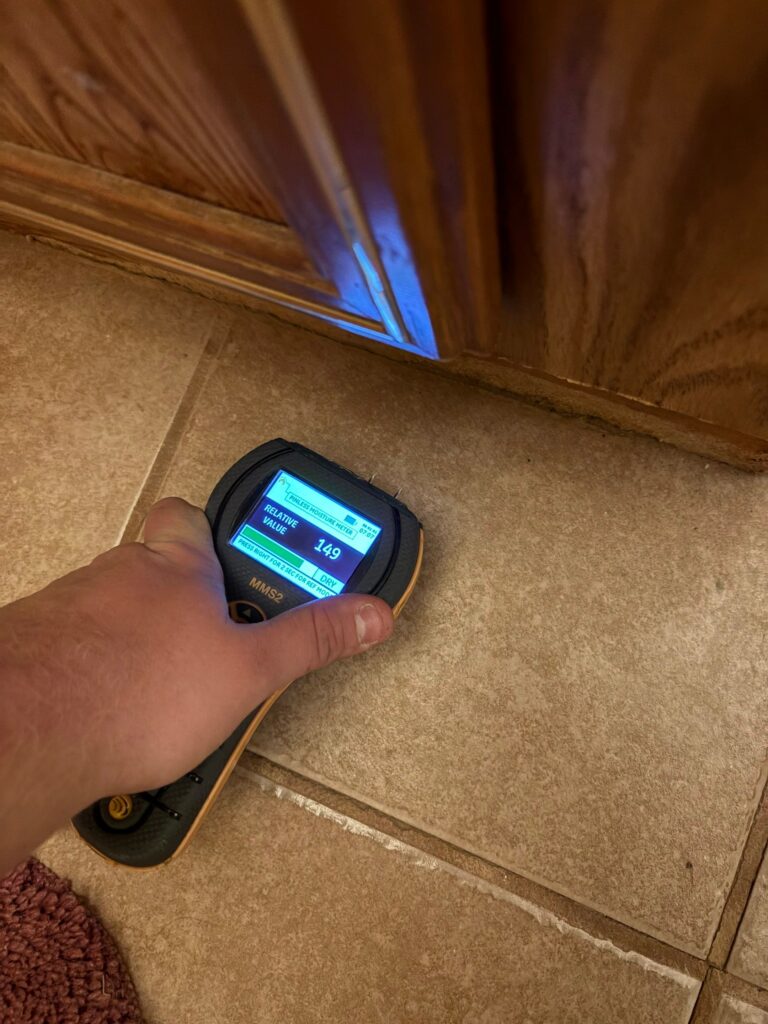
- Moisture content measurement: Documenting wood and masonry moisture levels against established baselines
- Air quality sampling: Spore trap analysis comparing indoor and outdoor fungal concentrations
- Bulk material analysis: Laboratory identification of species and toxigenic potential
This data driven approach eliminates guesswork and ensures remediation addresses root causes rather than symptoms.
FAQ:
Does home insurance cover mold caused by high humidity in Fort Wayne?
Indiana insurance regulations permit carriers to exclude mold resulting from maintenance failures or chronic humidity. However, mold secondary to covered water damage events may receive limited coverage. Allen County homeowners should review their declarations page for mold specific sublimits, commonly set at $10,000. Documentation proving sudden water intrusion, such as pipe bursts or storm damage, improves claim success. PuroClean Disaster Restoration of West Fort Wayne provides detailed documentation and direct insurance billing support.
How do Fort Wayne’s rivers affect basement mold risks?
The Saint Marys and Saint Joseph Rivers maintain Allen County’s water table at levels that create chronic foundation moisture, particularly during spring snowmelt and heavy precipitation events. Properties within the 100 year floodplain face obvious risks, but even elevated areas experience capillary rise and hydrostatic pressure. Modern perimeter drainage systems and sump pump installations mitigate these risks, but aging infrastructure in established neighborhoods often lacks these protections.
What building code factors influence mold prevention in Fort Wayne?
Allen County adopted the 2020 Indiana Residential Code, which enhanced crawl space ventilation and moisture control requirements. However, homes built under earlier codes may lack ground vapor barriers, adequate foundation drainage, or mechanical ventilation. Retrofitting these properties with closed crawl space systems, dehumidification, and proper grading significantly reduces hidden mold risks while improving energy efficiency.
Can I perform mold remediation myself in Fort Wayne?
DIY approaches are strongly discouraged for contamination exceeding 10 square feet or involving HVAC systems. Disturbing mold colonies without containment and negative air pressure releases spores throughout the home, potentially worsening exposure. IICRC S520 requires specific engineering controls, personal protective equipment, and antimicrobial application protocols that trained professionals execute safely. Additionally, improper remediation often fails to address moisture sources, guaranteeing recurrence.
How quickly should I respond to suspected hidden mold?
Immediate action is essential. Mold colonies expand rapidly under favorable conditions, with visible growth appearing within 48 to 72 hours of moisture introduction. In Fort Wayne’s humid climate, once established, colonies double in mass approximately every 24 hours. Delay transforms surface remediation projects into structural gutting and reconstruction. PuroClean Disaster Restoration of West Fort Wayne provides 24/7 emergency response to contain contamination and prevent escalation.
Why PuroClean Disaster Restoration of West Fort Wayne
Mold remediation demands scientific rigor, not surface cleaning. Our IICRC certified technicians deliver:
- Containment systems utilizing negative air pressure and HEPA filtration
- Antimicrobial biocide treatments targeting specific fungal species
- Comprehensive moisture source elimination and drainage solutions
- Post remediation verification with laboratory documentation
- Direct insurance coordination and claims advocacy
Your home and health deserve immediate, professional protection.
Call PuroClean Disaster Restoration of West Fort Wayne: (260) 263-9788
We serve Fort Wayne, New Haven, Leo Cedarville, and all surrounding Allen County communities with urgency, empathy, and restoration science that returns your property to safe, healthy conditions.

