


Reviewed for technical accuracy by PuroClean Disaster Restoration of West Fort Wayne’s IICRC-certified restoration team.
Mold prevention and remediation around home windows falls under the IICRC S520 Standard for Professional Mold Remediation, the recognized framework restoration professionals use to assess moisture, contain growth, and safely remove mold colonies. In Fort Wayne, cold-weather window mold is usually a condensation problem rather than a leak, but the EPA’s mold guidance is direct on the underlying rule: moisture control is mold control, and no amount of cleaning solves the problem permanently until the water source is fixed.

Key Takeaways for Homeowners
- Window mold in cold weather almost always starts as condensation, not a plumbing leak or roof issue.
- Fort Wayne’s clay-heavy soils and older combined sewer neighborhoods add background humidity pressure that can make lower-level window mold worse.
- Indoor humidity above 50 percent during freezing weather is the main trigger for glass and sill condensation.
- Homes in Waynedale, South Side, and Foster Park with original wood windows face higher condensation risk than newer Aboite-area construction.
- Mold patches smaller than about 10 square feet can often be cleaned safely with basic PPE, larger or recurring patches need professional evaluation.
- Repeated mold after cleaning usually means there is a hidden moisture pathway that needs moisture mapping to locate.
Every additional week of Fort Wayne’s freeze-thaw pattern adds more condensation cycles to your window frames, and mold that keeps returning after cleaning is not going to resolve itself. Call PuroClean Disaster Restoration of West Fort Wayne at (260) 263-9788 for a local inspection before it spreads further into the wall.
Why Do Fort Wayne Windows Grow Mold in Cold Weather?
Windows grow mold in cold weather because warm, humid indoor air condenses the moment it touches cold glass or window framing, and that standing moisture becomes a steady food source for mold spores already present in household dust. The colder the glass surface relative to room temperature, the faster and heavier the condensation.
Fort Wayne sits at the confluence of the St. Marys, St. Joseph, and Maumee rivers, and while river flooding is more of a spring and summer concern, the city’s underlying soil conditions matter year-round too. Neighborhoods like Lakeside and Bloomingdale sit on clay-rich glacial outwash soil that traps moisture against foundations, which can raise ambient humidity in basements and lower floors even in winter. That extra humidity works its way upward and adds to the condensation load on ground-floor and basement windows in older homes throughout Waynedale, South Side, and Foster Park, where original wood-frame windows and less efficient insulation make the glass run colder to begin with. Newer construction in Aboite Township generally has tighter building envelopes and better-engineered drainage, which helps, though tighter homes still need enough ventilation to avoid trapping humidity indoors.
Takeaway: if your windows fog up on cold mornings, especially in an older Fort Wayne neighborhood with clay soil nearby, your indoor humidity is outrunning your glass temperature, and mold will follow if nothing changes.
Mold or Just Dirt: How Can You Tell?
Mold on window sills usually looks fuzzy, slimy, or speckled with small black or dark green dots that follow wood grain or vinyl seams, while ordinary dirt sits flat and wipes away evenly without discoloring the surface underneath.
A quick field check is the diluted bleach spot test: dab a hidden area with a 1:10 bleach-to-water solution, and if the dark spot noticeably lightens within about two minutes, it is likely mold rather than staining or soil. This is a helpful screening tool, not a lab diagnostic, and for anything spreading across multiple windows or returning after cleaning, professional surface sampling gives a more reliable answer.
Takeaway: treat ambiguous dark spots as mold until proven otherwise, wear gloves and an N95 mask while cleaning, and avoid dry-sanding or dry-brushing, which releases spores into the air you breathe.
Steps to Stop Window Mold Before It Spreads
- Track indoor humidity with a hygrometer in every affected room. Most Fort Wayne homes need indoor humidity kept between 30 and 45 percent during freezing weather to avoid condensation, and a basic hygrometer removes the guesswork.
- Wipe sills and glass daily during hard freezes. Condensation sitting for six or more hours gives mold spores enough time to start colonizing damp wood or vinyl surfaces.
- Run bathroom and kitchen exhaust fans longer, and crack trickle vents where available. Cooking, showering, and everyday breathing all add humidity, and venting it outside instead of trapping it lowers the moisture load against your glass.
- Reseal worn weatherstripping and glazing putty. Gaps let humid indoor air reach colder framing members, which can trigger hidden condensation inside the wall cavity and eventually subfloor delamination near lower windows.
- Add storm windows to original wood-frame units, particularly relevant in older Waynedale, South Side, and Foster Park homes where single-pane glass runs much colder than modern double-pane assemblies.
- Use a properly sized dehumidifier in problem rooms. LGR dehumidification, the same low-grain-refrigerant technology used in structural drying after water losses, can pull several pints of moisture daily from a humid room.
- Keep houseplants away from window sills. Potting soil and plant transpiration both add localized humidity exactly where the glass is coldest.
- Air-seal and insulate the window’s rough opening, not just the sash. Backer rod and low-expansion spray foam reduce the thermal bridging that keeps interior trim cold enough to sweat.
- Watch for grading and drainage issues near basement window wells, especially in Lakeside and Bloomingdale, where clay soil already holds water against the foundation and poor grading compounds the problem.
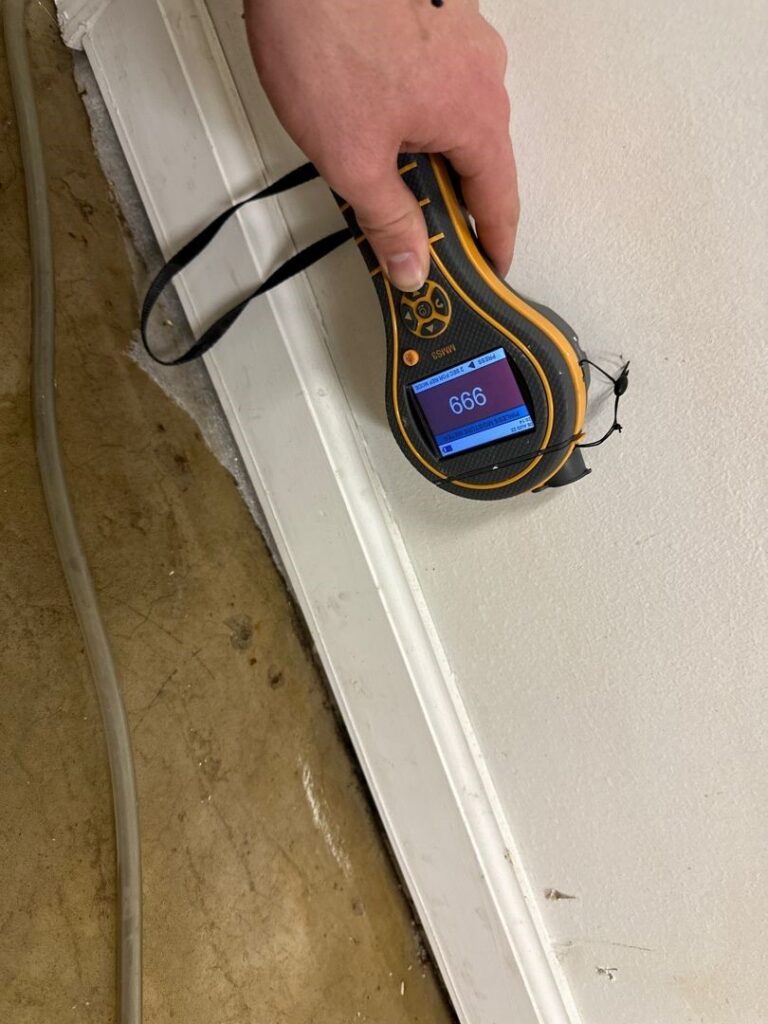
- Get a moisture mapping inspection if mold returns after cleaning. Recurring growth usually points to a hidden source, and thermal imaging paired with hygrometer readings can locate wall cavity condensation or early water intrusion without opening up drywall on a guess.
Takeaway: most window condensation mold responds to better humidity control and sealing, but repeat growth is a signal that a moisture source is still active somewhere you cannot see.
When Is It Time to Call a Professional?
Call a professional when mold covers more than roughly 10 square feet, keeps coming back after cleaning, or is paired with a musty smell coming from inside the wall rather than just the window frame itself. Those signs mean the moisture problem has likely moved beyond a simple surface fix.
IICRC-certified technicians use moisture mapping and thermal imaging to trace the source of condensation or intrusion, often finding wet insulation or subfloor delamination that is invisible from inside the room. If a window-area issue is ever tied to a larger water event, particularly a combined sewer overflow common in Fort Wayne’s older downtown, Waynedale, and South Side neighborhoods, category 3 water introduces contamination that requires containment barriers, negative air pressure, and HEPA-filtered air scrubbers to prevent cross-contamination through the rest of the home.
Takeaway: if cleaning is not holding and the smell keeps spreading, that is your cue to bring in a certified inspection instead of repeating the same surface treatment.
What Sets PuroClean Disaster Restoration of West Fort Wayne Apart?
PuroClean Disaster Restoration of West Fort Wayne staffs IICRC-certified technicians, offers 24/7 emergency dispatch, and works with direct insurance billing, so homeowners are not left managing paperwork between an adjuster and a contractor on their own. Being based locally in the Fort Wayne and Aboite Township area means faster response times across Allen County neighborhoods compared with restoration companies traveling in from outside the region, which matters once moisture is actively spreading through wall materials.
If your window mold keeps returning, or you are catching a musty smell that seems to travel beyond the frame itself, that is the sign to stop re-treating the surface and start tracing where the moisture is actually coming from. PuroClean Disaster Restoration of West Fort Wayne can send a technician out to map the moisture pathway and outline next steps before conditions get worse.
Frequently Asked Questions
Does homeowners insurance cover window mold remediation in Fort Wayne? It depends on the cause. Mold tied to a sudden covered event, such as a burst supply line near a window, is often covered, while mold from ongoing condensation or deferred maintenance typically is not. Reviewing your policy’s mold sublimit or exclusion language before filing, and documenting the cause clearly, makes the claims process smoother.
What does professional window mold remediation typically cost in Allen County? Small, contained sill-level remediation often runs in the low hundreds of dollars, while jobs involving wall cavity moisture, insulation replacement, or structural drying can reach into the thousands. Cost depends on the square footage affected and whether specialized drying equipment is required.
How long does window mold remediation usually take? A contained surface job can often be finished in one to two days, covering cleaning, antimicrobial biocide treatment, and a follow-up moisture check. Jobs needing structural drying with dehumidification and air scrubbers generally take three to five days depending on saturation levels.
Can I paint over window mold instead of removing it? No. Paint or mold-resistant primer only traps existing spores under the surface rather than eliminating them, and sealed-in moisture can accelerate wood rot underneath. The mold needs to be physically removed first, with the moisture source addressed at the same time.
Is condensation mold around windows a health risk? Common window-area molds are mostly respiratory irritants rather than acutely toxic, but ongoing exposure can worsen allergies, asthma, or general respiratory sensitivity, especially for children and older adults. Certain mold species can also produce mycotoxins under the right conditions, which is part of why professional identification matters for larger patches.
Why does my newer Aboite Township home still develop window mold? Newer homes are often built with tighter envelopes for energy efficiency, which can trap indoor humidity unless mechanical ventilation runs enough to offset it. A well-sealed home without adequate exhaust fan use can actually see more condensation risk than an older, draftier one.

