


Key Takeaways for Homeowners
- Fort Wayne’s location near the Great Lakes creates elevated humidity and lake-effect precipitation that amplifies mold risk after any water damage event.
- Properties in the 46804, 46805, and 46825 zip codes face specific challenges from aging infrastructure, seasonal flooding, and prevalent basement construction.
- IICRC S500 water damage restoration and S520 mold remediation standards provide the scientific framework for effective, lasting solutions.
- Nine specific overlooked locations in Fort Wayne properties commonly harbor hidden mold that DIY methods cannot address.
- Professional assessment within 48 hours of water damage dramatically reduces remediation scope and cost.
Understanding Fort Wayne’s Unique Mold Risk Profile
Fort Wayne occupies a distinctive position in Northeast Indiana where the continental climate intersects with Great Lakes weather patterns. The city receives approximately 38 inches of precipitation annually, but the critical factor is the sustained humidity, particularly during late spring and summer when dew points climb into the uncomfortable range. This atmospheric moisture load becomes dangerous when combined with water damage inside a structure.
The housing stock in Fort Wayne presents additional complexity. West Fort Wayne neighborhoods near the St. Marys River, including areas served by PuroClean Disaster Restoration of West Fort Wayne, contain significant concentrations of homes built between 1940 and 1970. These properties often feature plaster construction, galvanized plumbing, and unfinished basements with minimal moisture control. Newer developments in Aboite and southwest Fort Wayne bring their own challenges, including slab-on-grade construction with inadequate vapor barriers and tightly sealed envelopes that trap moisture.
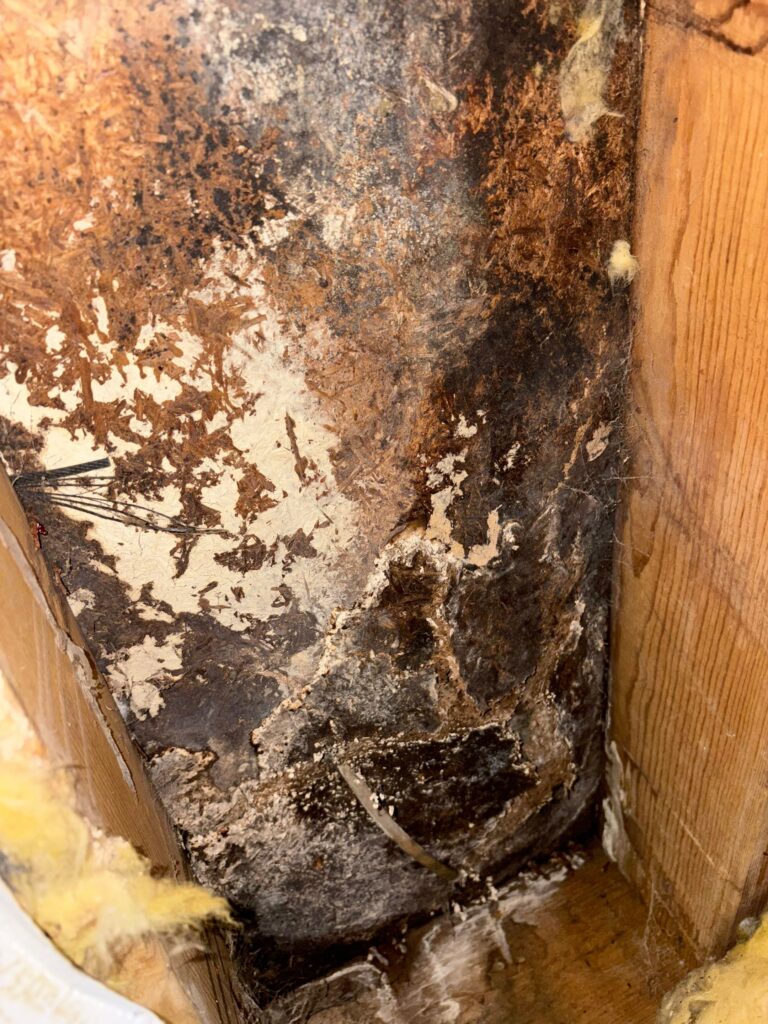
When water damage occurs in this environment, mold does not grow in obvious locations first. It exploits the path of least resistance, colonizing concealed spaces where moisture lingers and organic materials provide sustenance. The following nine locations represent the most commonly overlooked mold spread zones in Fort Wayne properties after water damage.
Inside Soffit Vents and Roof Overhang Cavities
Fort Wayne’s mature tree canopy, particularly in historic neighborhoods like Lakeside and West Central, contributes to gutter clogging and roof overflow during the region’s intense summer thunderstorms. When water overflows gutters, it enters soffit vents and the cavities within roof overhangs. These spaces contain exposed wood framing and minimal air circulation.
Mold in soffit cavities often goes unnoticed until it spreads into attic spaces or produces visible staining on exterior fascia boards. Because soffits connect directly to attic ventilation systems, mold here can compromise entire attic environments. Remediation requires removal of soffit panels, treatment of framing members with antimicrobial agents, and correction of the underlying drainage issue that caused water intrusion.
Within Floor Joist Cavities in Basements with Stone Foundations
Fort Wayne’s older neighborhoods feature a surprising number of homes with original stone or block foundations. Unlike modern poured concrete, these foundations are permeable and allow groundwater migration directly into basement spaces. Floor joists resting on ledges within these foundations become chronically damp, particularly during spring snowmelt and after heavy rains.
Mold on basement joists appears as dark spotting or fuzz on the wood surfaces. Because these joists support the main floor above, structural integrity concerns accompany mold issues. IICRC S520 remediation protocols for this scenario include installation of temporary support if necessary, HEPA cleaning of all joist surfaces, application of penetrating antimicrobial treatments, and implementation of permanent moisture control measures such as interior drainage systems and dehumidification.
Behind Drywall in Rooms with Exterior Brick Veneer
Brick veneer construction is common in Fort Wayne’s 1960s and 1970s subdivisions. The air gap between brick veneer and structural sheathing is designed to drain water, but flashing failures at windows, doors, and roof intersections allow water into the cavity. This water then penetrates the building paper or house wrap and reaches the drywall interior.
Mold behind drywall in brick veneer walls produces subtle early warning signs: peeling paint near window corners, slight discoloration of baseboards, or a persistent earthy odor. Thermal imaging during professional moisture mapping reveals the temperature differentials that indicate wet insulation and wall cavities. Remediation requires strategic drywall removal, cavity drying, and often replacement of compromised building paper before reconstruction.
Inside Garage Ceiling Spaces Below Living Areas
Attached garages in Fort Wayne homes create a unique mold risk zone. The ceiling of an attached garage often supports living space above, with plumbing lines for bathrooms or laundry rooms running through the garage ceiling cavity. When these lines leak, water saturates the garage ceiling and the insulation within the cavity.
Garage environments are particularly problematic for mold because they experience temperature extremes and often lack climate control. Aspergillus species commonly colonize these spaces. Because garage ceilings are rarely inspected closely, mold can spread extensively before discovery. Remediation involves garage ceiling demolition, removal of contaminated insulation, treatment of floor joists from below, and repair of the plumbing leak source.
Within Subfloors Below Tile and Stone Flooring
Fort Wayne’s preference for ceramic tile and natural stone in bathrooms and kitchens, particularly in newer construction, creates a hidden mold risk below the visible surface. Traditional tile installation uses mortar beds that are highly porous and slow to dry. When water penetrates grout lines or reaches the subfloor from plumbing leaks, the mortar bed traps moisture against the subfloor for extended periods.
Mold in these assemblies often produces no visible surface signs until tile loosening or grout cracking occurs. By this stage, the subfloor may require replacement. Professional remediation includes removal of tile and mortar bed, inspection and treatment of the subfloor, and reconstruction using modern waterproofing membranes and drainage mats that prevent future moisture accumulation.
Inside Wall Cavities Adjacent to Fireplaces
Fireplaces in Fort Wayne homes, whether original masonry or modern prefabricated units, create complex wall assemblies with multiple potential water entry points. Chimney flashing failures, crown cracks, and improper sealing around chimney chases allow water into wall cavities adjacent to the fireplace structure.
These cavities often contain combustible framing materials that mold colonizes readily. The proximity to heat sources complicates remediation because thermal cycling can drive moisture deeper into materials. IICRC S520 protocols require careful assessment of whether structural members have been compromised by both moisture and mold digestion before reconstruction.
Beneath Appliances in Laundry and Utility Rooms
Fort Wayne homes frequently locate laundry facilities in basements, where washing machine drain overflows and supply line failures deposit significant water volumes. The space beneath and behind washers and dryers rarely receives adequate drying attention during cleanup efforts. Rubber washing machine hoses, particularly in older homes, are a leading cause of water damage.
Mold beneath appliances spreads across concrete floors and up drywall behind the units. The heat generated by dryers accelerates evaporation from surfaces but can drive moisture into wall cavities, paradoxically worsening hidden mold conditions. Professional water damage restoration includes appliance relocation, comprehensive drying of all surfaces and cavities, and replacement of rubber hoses with braided stainless steel lines.
Within Closet Spaces on Exterior Walls
Closets positioned on exterior walls in Fort Wayne homes create microclimates ideal for hidden mold. These spaces are rarely heated adequately, have minimal air circulation, and often contain cardboard boxes and clothing that provide organic material for mold growth. When water damage affects exterior walls, closet interiors on those walls become primary colonization sites.
Mold in closets typically appears on the back walls first, hidden by hanging clothing and storage items. The musty odor associated with closet mold often gets attributed to old clothing rather than structural mold growth. Remediation requires emptying the closet, removing affected drywall, treating wall cavities, and implementing improved ventilation and insulation to prevent temperature differentials that cause condensation.
Behind Wallpaper and Paneling in Finished Basements
Finished basements are common in Fort Wayne, but the wall coverings used often mask developing mold problems. Wallpaper adhesive provides an additional organic food source for mold, and the paper backing creates a vapor barrier that traps moisture against drywall. Wood paneling performs similarly, concealing wall cavity conditions while providing cellulose for mold consumption.
When water damage affects a wallpapered or paneled basement wall, mold colonizes the interface between covering and drywall before becoming visible. Removal of wallpaper or paneling often reveals extensive mold growth that has compromised the drywall entirely. Remediation requires removal of all wall coverings, treatment of underlying materials, and reconstruction using moisture-resistant products designed for below-grade applications.
The Science of Effective Mold Remediation
Professional mold remediation in Fort Wayne properties follows IICRC S520 standards, which establish a multi-phase approach grounded in building science and microbiology:
- Assessment and Documentation: Moisture mapping, thermal imaging, and air quality testing establish the scope of contamination before work begins.
- Containment Engineering: Physical barriers sealed with negative air pressure prevent cross-contamination during remediation activities.
- Source Removal: HEPA vacuuming and controlled demolition remove mold-colonized materials that cannot be salvaged.
- Cleaning and Treatment: Remaining structural elements receive antimicrobial biocide application to eliminate residual mold fragments.
- Drying and Stabilization: Psychrometric monitoring ensures materials reach moisture content levels below the threshold for mold growth.
- Verification and Clearance: Post-remediation inspection confirms successful remediation before reconstruction begins.
Frequently Asked Questions
Does home insurance cover mold caused by high humidity in Fort Wayne?
Most standard homeowners policies in Indiana exclude mold damage caused by humidity, condensation, or gradual leaks. Coverage typically requires a sudden and accidental water event, such as a burst pipe or appliance failure. Fort Wayne homeowners should understand that river flooding and groundwater seepage require separate flood insurance through the National Flood Insurance Program. Properties near the St. Marys or Maumee Rivers face elevated flood risk that standard policies do not address.
How does Fort Wayne’s climate differ from Indianapolis in terms of mold risk?
Fort Wayne’s proximity to Lake Michigan creates slightly elevated humidity and more frequent lake-effect precipitation events compared to Central Indiana. Winter temperatures are also more severe, leading to extended heating seasons and greater indoor-outdoor temperature differentials that drive condensation. The combination of higher humidity and colder winters creates year-round moisture stress on building envelopes.
What building codes in Fort Wayne affect mold prevention?
Allen County building codes require vapor barriers in crawl spaces and below-grade walls, but many older Fort Wayne properties predate these requirements. Homes built before 1980 often lack adequate foundation waterproofing, creating legacy moisture issues that current codes cannot retroactively address. Renovation projects in historic Fort Wayne neighborhoods must balance code compliance with preservation requirements.
Can mold in my Fort Wayne home affect my family’s health even if we cannot see it?
Absolutely. Airborne mold spores and mycotoxins can cause respiratory symptoms, allergic reactions, and in sensitive individuals, more severe health effects without any visible mold present. Fort Wayne’s high pollen counts can mask mold-related symptoms, leading residents to attribute breathing difficulties to seasonal allergies when mold is the actual trigger. Professional air quality testing distinguishes between pollen and mold spore loads.
Why should I choose certified remediation over DIY mold removal?
DIY methods typically address only visible surface mold while leaving hidden colonies intact. Without containment and negative air pressure, DIY cleaning releases concentrated spore loads into living spaces. IICRC-certified professionals have the training, equipment, and protocols to address hidden mold comprehensively while protecting occupant health and documenting work for insurance purposes.
Contact PuroClean Disaster Restoration of West Fort Wayne
Water damage in Fort Wayne properties demands immediate, professional response. The unique combination of Great Lakes humidity, seasonal temperature extremes, and diverse housing stock creates mold conditions that require specialized expertise. PuroClean Disaster Restoration of West Fort Wayne provides certified water damage restoration and mold remediation tailored to Northeast Indiana’s specific challenges.
Call (260) 263-9788 now for immediate mold removal assistance in Fort Wayne. Our emergency response team serves Fort Wayne and surrounding neighborhoods with 24/7 availability. Do not let hidden mold compromise your property value or your family’s wellbeing. Professional assessment and remediation begin with one phone call.

