 PuroClean Disaster Restoration of West Fort Wayne
 | Key Takeaways for Homeowners Fort Wayne, Indiana experiences some of the highest annual snowfall totals in the state, and ice storm events regularly compound that winter weather burden on local homes. The 5 exterior damage signs covered in this guide focus on roofing systems, gutters, flashing, siding, and exterior trim, all critical components that fail silently after ice loading. IICRC S500 and S520 standards provide the professional framework for assessing and restoring water and storm damage to these systems. Unaddressed exterior damage creates direct pathways for moisture intrusion, elevating the risk of structural decay and indoor mold colonization. PuroClean Disaster Restoration of West Fort Wayne serves Fort Wayne and all surrounding neighborhoods. Call (260) 263-9788 for immediate expert assistance. |
Fort Wayne sits in the northeast corner of Indiana where three rivers converge, and the surrounding Allen County terrain creates conditions that amplify winter weather severity. The city averages more than 30 inches of snow annually, and freezing rain events that deposit glaze ice on residential roofing, gutters, and exterior surfaces are a recurring reality for local homeowners. After each significant ice storm, the combination of ice weight, thermal cycling, and wind-driven moisture creates a predictable set of exterior damage patterns that, if ignored, escalate into costly water intrusion and secondary mold issues governed by IICRC S520 standards.
The exterior envelope of a Fort Wayne home, particularly the older two-story colonials and brick ranch homes that predominate throughout Allen County neighborhoods, is exposed to extraordinary mechanical stress during an ice event. This guide covers five specific exterior warning signs that indicate your home needs professional evaluation before the next precipitation cycle.
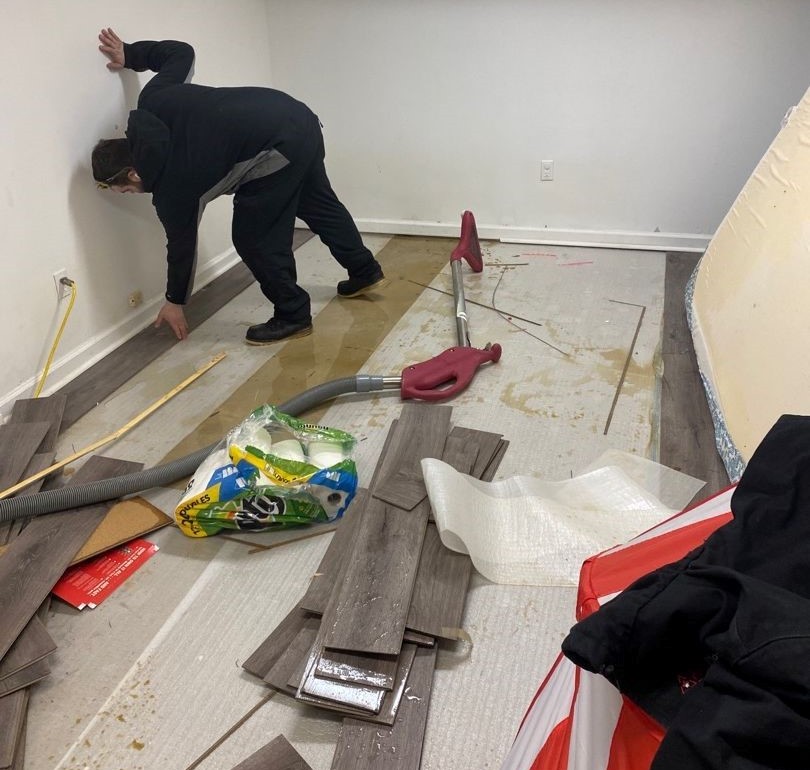
Why Fort Wayne Homeowners Face Elevated Ice Storm Risk
The geography of Fort Wayne places it at the intersection of cold Arctic air masses pushing down from Canada and moisture-laden air systems moving northeast from the Gulf. When these systems interact, the resulting precipitation falls as freezing rain rather than snow, coating every horizontal and vertical surface with clear ice. Homes in established Fort Wayne neighborhoods including Aboite, Southwest, and the older Northwest corridor contain architectural features like complex rooflines, decorative dormers, and mature tree canopies overhead that all amplify ice accumulation and damage potential.
Under IICRC S500 principles, water damage is best addressed by addressing the source of water entry first. For ice storm events, that source is always the exterior envelope, which is why the five signs below focus exclusively on exterior assessment.
Sign 1: Visible Roofing Membrane and Shingle Failure
Your roofing system is your home’s first line of defense against precipitation intrusion. When ice accumulates on the roof surface and then thaws and refreezes repeatedly across a Fort Wayne winter, it subjects asphalt shingles to repeated thermal expansion and contraction. This cycling causes shingles to crack, cup, or lose their granular coating, which is the mineral surface that provides UV resistance and waterproofing.
Critical indicators to assess after an ice storm:
- Shingles that are cracked across their width, indicating brittleness from cold exposure and ice impact
- Lifted shingle tabs that have been broken free from the adhesive strip by ice leverage
- Missing shingles that have been completely displaced by ice sheet sliding off the roof during the melt phase
- Granule accumulation in gutters or at downspout outlets far beyond what is normal for the roof’s age
- Exposed roof deck or underlayment visible from ground level
Once the roofing membrane is compromised, water infiltrates the roof deck and begins the process that IICRC S500 classifies as structural material saturation. Moisture mapping of the attic space using calibrated moisture meters and thermal imaging will reveal the lateral extent of saturation, which typically exceeds the visible breach area significantly.
Sign 2: Ice Dam Formation and Attic Ventilation Failure
Ice dams are among the most destructive and misunderstood consequences of ice storm events in Fort Wayne. They form at the boundary between the warmer upper roof surface, where heat escaping through inadequate attic insulation melts accumulated snow and ice, and the colder eave overhang, where the roof sits above unheated soffit space and temperatures remain at or below freezing.
What proper assessment looks like:
- Inspect the eave line from the ground using binoculars for a ridge of ice that runs horizontally across the lower roof section
- Check the attic for frost or ice accumulation on the sheathing near the eave, which indicates warm humid air from the living space is migrating upward
- Measure relative humidity inside the attic if accessible; readings above 60 percent indicate a ventilation deficiency that predates the ice storm
- Look for interior ceiling stains or wet drywall directly below the eave line on the top floor, which confirms active ice dam leakage
The psychrometrics of ice dam remediation involve not just removing the physical ice but also addressing the thermal and moisture gradient that caused the dam. This typically requires improving attic insulation, sealing air bypass pathways, and verifying that soffit ventilation is unobstructed.
Sign 3: Gutter System Failure and Downspout Damage
Fort Wayne’s gutter systems must manage some of the highest precipitation loads of any city in Indiana. When ice storm conditions freeze the water inside gutters before it can drain, the expanding ice exerts outward pressure on gutter seams, end caps, and the brackets anchoring gutters to the fascia. The result is a cascade of failures that redirects water away from downspouts and directly toward the foundation.
What to inspect along the entire gutter run:
- Open seams or visible gaps at gutter joints where sealant has been forced out by ice expansion
- Gutter sections that have pulled away from the fascia or are hanging at an angle due to bracket failure
- Downspouts that have separated from the gutter outlet or from their wall-mounted brackets
- Splash blocks or downspout extensions that have been displaced by ice or fallen debris
- Standing water near the foundation perimeter that indicates gutter drainage failure
Gutter failure that directs water toward the foundation creates the conditions for basement seepage and crawlspace flooding. Under IICRC S500 principles, water that has migrated into below-grade spaces and contacted soil, concrete, or other materials may be classified as Category 2 or Category 3 depending on the duration of contact and microbial loading.
Sign 4: Flashing Separation and Penetration Leaks
Roof flashing is the metal or rubberized membrane installed at every point where the roofing surface meets a vertical element such as a chimney, skylight curb, dormer wall, or roof valley. These transition points are inherently vulnerable to water infiltration because they rely on watertight seals between dissimilar materials that expand and contract at different rates. Ice storm events subject flashing to extraordinary mechanical stress through ice loading, thermal cycling, and the prying action of ice expanding in gaps.
Flashing inspection points specific to Fort Wayne home styles:
- Step flashing along dormers, which are common on the two-story colonials prevalent in neighborhoods like Aboite and Southwest Fort Wayne
- Chimney counter-flashing where the metal bends over the cap and into the mortar joint
- Pipe boot flashing around plumbing vent stacks, which are frequent failure points after ice loading
- Valley flashing in roof sections where two pitches intersect, which concentrates runoff and ice accumulation
Separated flashing allows water to run behind the roofing membrane and directly onto the roof deck or into wall cavities. A thermal imaging scan from inside the attic immediately after a rain event will reveal the point of entry as a cold spot indicating wet insulation or wet sheathing.
Sign 5: Exterior Cladding, Siding, and Trim Damage
The vertical exterior surfaces of a Fort Wayne home also sustain damage during ice storm events, though this damage is often overlooked in favor of the more obvious roof and gutter issues. Ice accumulation on siding, particularly vinyl and fiber cement products common on homes throughout Allen County, causes cracking through thermal shock. Falling ice from the roof and from trees overhead can impact siding with enough force to crack panels, create holes, or displace trim pieces.
Exterior surface damage indicators:
- Cracked or shattered vinyl siding panels along the lower wall sections where falling ice concentrates impact
- Fiber cement siding panels with paint failure, surface cracking, or delamination from moisture exposure during the thaw
- Window and door trim that has pulled away from the frame, creating gaps where air and water can infiltrate
- Caulk at all penetrations including windows, doors, and utility entries that has cracked, separated, or been completely dislodged
- Brick veneer mortar joints that show cracking or spalling after freeze-thaw cycling, particularly on north-facing walls that retain moisture longer
Any breach in the exterior cladding system allows liquid water and water vapor to enter the wall assembly. In Fort Wayne’s cold winter climate, this moisture condenses within the wall cavity at the dew point, saturating insulation and initiating the moisture content conditions under which mold growth occurs per IICRC S520 standards. HEPA filtration and antimicrobial biocide application are typically required when remediating wall cavities with confirmed biological growth.
The Professional Restoration Process for Ice Storm Exterior Damage
- Initial inspection and documentation using digital photography and moisture meters
- Thermal imaging scan to identify hidden moisture pathways and wet insulation zones
- Moisture mapping of all affected assemblies to determine drying targets per psychrometrics protocols
- Emergency weatherproofing including tarping of compromised roof sections to prevent ongoing water intrusion
- Structural drying using industrial dehumidification and negative air pressure equipment
- Mold testing and remediation where biological growth is confirmed, using HEPA filtration and antimicrobial biocide treatments per IICRC S520
- Documentation package for homeowner insurance claim submission
Frequently Asked Questions About Ice Storm Exterior Damage in Fort Wayne
Does homeowner insurance in Fort Wayne cover ice dam damage to the roof and interior?
Indiana homeowner insurance policies generally cover sudden and accidental damage caused by ice dams, including interior water damage resulting from ice dam intrusion. Coverage for the underlying cause, such as inadequate attic insulation, is typically excluded. An IICRC-certified assessment report documenting the storm event timeline and the resulting damage pattern is valuable supporting documentation for your claim.
How long does structural drying take after ice storm water intrusion?
The drying timeline depends on the materials affected, the depth of saturation, and indoor temperature and humidity conditions. IICRC S500 drying goals typically require 3 to 5 days for Category 1 water damage affecting standard drywall and wood framing under controlled conditions. Dense materials including hardwood flooring, engineered wood subfloor, and masonry may require extended drying cycles monitored through psychrometrics readings.
Can I repair ice storm roof damage myself to save money?
Emergency weatherproofing measures such as applying roof tarps are reasonable temporary homeowner actions to prevent ongoing water intrusion. Permanent repair of roofing, flashing, and structural damage should be performed by licensed contractors who can meet Allen County building code requirements and whose work can be documented for insurance purposes. Attempting DIY permanent roof repairs on a damage claim can complicate the insurance process.
What are mycotoxins and how do they relate to ice storm water damage?
Mycotoxins are secondary metabolites produced by certain mold species that colonize wet building materials. Stachybotrys and Aspergillus species, which are found in building environments, produce mycotoxins associated with respiratory, neurological, and immunological health effects. The connection to ice storm damage is that rapid water intrusion through a compromised exterior envelope creates optimal growth conditions. IICRC S520-guided remediation using HEPA filtration, negative air pressure containment, and antimicrobial biocide application is the professional standard for addressing confirmed mycotoxin-producing colonies.
Are older Fort Wayne homes more vulnerable to ice storm exterior damage?
Yes. Homes built prior to current Indiana energy codes, which updated insulation and air sealing requirements significantly, are more vulnerable to ice dam formation due to higher heat loss through the roof assembly. Older vinyl siding formulations become more brittle at low temperatures. Original wood windows with single-pane glazing allow more condensation and are more susceptible to ice damage at the frame. A professional exterior assessment can identify which components carry the highest risk for a specific property.
Fort Wayne homeowners who have experienced significant ice storm conditions this winter should not delay exterior assessment. Hidden moisture pathways from compromised roofing, failed gutters, and damaged cladding escalate from contained water damage to structural decay and active mold colonization without visible warning signs.
PuroClean Disaster Restoration of West Fort Wayne provides IICRC-certified storm damage assessment, moisture mapping, emergency weatherproofing, structural drying, and mold remediation services throughout Fort Wayne and all surrounding Allen County communities. Our team responds 24 hours a day, 7 days a week.
Call PuroClean Disaster Restoration of West Fort Wayne now at (260) 263-9788 for immediate assistance. Serving Fort Wayne and all surrounding neighborhoods.

 PuroClean Disaster Restoration of West Fort Wayne