 PuroClean Disaster Restoration of West Fort Wayne
 Executive Summary
Fire damage doesn’t end when flames are extinguished. The smoke odor that remains creates health hazards and property damage that worsen each day without proper intervention. Fort Wayne homeowners face unique challenges from regional climate conditions that affect how smoke penetrates and persists in homes. This comprehensive guide examines smoke odor side effects after fire damage, provides step-by-step remediation processes, and shares proven strategies for preventing future fire risks. You’ll discover why smoke contamination requires professional attention, learn what makes Fort Wayne homes vulnerable to specific fire and smoke issues, and find practical solutions that protect your family’s health while preserving your property’s value and safety.
The Morning Everything Changed
Robert never expected to wake up to smoke alarms at 4:30 AM on a frigid January morning in Fort Wayne. An electrical short in his basement had smoldered for hours before igniting stored boxes near the breaker panel. By the time he smelled smoke and found the source, flames had spread to nearby wall studs. The Fort Wayne Fire Department responded within seven minutes and had the fire under control in less than an hour, but the damage had been done.
The fire itself was contained to about 100 square feet of his basement. Robert felt fortunate the damage wasn’t worse and assumed he could handle the cleanup himself to save money. He spent three days cleaning visible soot, repainting affected areas, and running fans to air out the house. The smoke smell faded from obvious to barely noticeable.
Two weeks later, Robert’s wife Sarah developed a persistent cough that their doctor initially dismissed as a winter cold. Their eight-year-old daughter Emma complained of headaches every evening. Robert himself felt constantly fatigued but attributed it to stress from the fire incident. The faint smoke smell they’d learned to ignore seemed to intensify on humid days.
After a month of declining health for his entire family, Robert mentioned the fire to their doctor during Emma’s follow-up visit. The doctor immediately made the connection and recommended they have their home professionally assessed for smoke contamination. Testing revealed that smoke particles had spread throughout their entire house via the HVAC system. The particles had embedded in insulation, ductwork, and the back sides of drywall throughout every room. What Robert thought was minor damage requiring basic cleanup actually demanded comprehensive professional remediation.
Professional restoration took three weeks and cost $12,000. Robert’s insurance covered most of it, but he couldn’t recover the health effects his family had suffered or the month they’d spent breathing contaminated air. His story demonstrates a crucial lesson many Fort Wayne homeowners learn too late: smoke damage extends far beyond what you can see, and DIY cleanup rarely addresses the full extent of contamination.
Why Does Fort Wayne’s Climate Make Smoke Damage More Complicated?
Fort Wayne’s humid continental climate creates specific challenges for homeowners dealing with smoke damage. Understanding these regional factors helps you recognize why restoration approaches that work in dry climates often fail here.
Humidity levels in Fort Wayne fluctuate significantly throughout the year. Summer humidity regularly exceeds 70 percent, while winter indoor heating creates very dry conditions. These moisture swings cause materials to expand and contract, affecting how smoke particles remain trapped or get released.
When smoke-damaged materials absorb moisture during humid periods, the moisture reactivates smoke particles and volatile compounds. This is why many Fort Wayne residents notice smoke odors intensifying in summer even months after a fire. The humidity essentially brings dormant contamination back to life.
Temperature fluctuations create similar problems. Fort Wayne experiences significant temperature ranges, from below zero in winter to 90-plus degrees in summer. These thermal cycles cause materials to expand and contract, potentially releasing trapped smoke particles.
The region’s older housing stock adds another layer of complexity. Many Fort Wayne homes date from the early to mid-20th century, featuring construction methods and materials that absorb smoke differently than modern homes. Plaster walls, solid wood framing, and older insulation materials are more porous and hold smoke contamination more tenaciously.
Freezing temperatures complicate winter restoration efforts. Some cleaning processes require controlled temperatures and can’t be performed effectively when homes are too cold. This seasonal limitation sometimes extends restoration timelines for winter fires.
Understanding these Fort Wayne-specific factors helps you work effectively with restoration professionals and set realistic expectations about the remediation process.
What Immediate Health Effects Should You Watch For After Fire Exposure?
Your body begins responding to smoke exposure immediately, even if you weren’t present during the actual fire. Living in a smoke-contaminated home creates ongoing exposure that affects everyone differently based on age, existing health conditions, and exposure intensity.
Respiratory symptoms typically appear first. You might notice throat irritation, coughing, wheezing, or shortness of breath. These symptoms indicate that smoke particles are irritating your airways and lungs. Don’t dismiss mild symptoms as unimportant; they signal that exposure is occurring and affecting your body.
Eye irritation including redness, watering, and burning sensations develops quickly in contaminated environments. The volatile organic compounds released from smoke residue irritate mucous membranes.
Headaches ranging from mild to severe affect many people exposed to smoke contamination. These headaches often worsen in certain rooms or at certain times of day when off-gassing is more pronounced.
Skin reactions can include rashes, hives, or generalized itching. Direct contact with smoke residue on surfaces allows chemical absorption through skin.
Gastrointestinal symptoms sometimes develop, including nausea and digestive upset. These responses indicate systemic exposure affecting multiple body systems.
Fatigue and difficulty concentrating appear as your body diverts energy to processing and eliminating smoke-related toxins. You might feel constantly tired despite adequate sleep.
If anyone experiences difficulty breathing, chest pain, persistent severe coughing, or other serious symptoms, seek immediate medical attention. Don’t wait to see if symptoms improve on their own.
Children show effects more quickly and severely than adults. Their smaller size, developing systems, and higher breathing rates mean they receive proportionally greater exposure. Watch children carefully for any health changes after fire exposure.
People with existing respiratory conditions like asthma or COPD often experience significant worsening of their conditions in smoke-contaminated environments. If you or family members have these conditions, temporary relocation during restoration isn’t optional; it’s medically necessary.
What Are the Long-Term Health Consequences of Living With Smoke Contamination?
The immediate effects of smoke exposure get the most attention, but long-term consequences deserve equal concern. Chronic exposure to unresolved smoke contamination creates health impacts that develop gradually and can become permanent.
Respiratory System Damage That Becomes Progressive
Continuous exposure to smoke particles causes chronic inflammation in airways and lung tissue. Over months and years, this inflammation leads to structural changes. Healthy lung tissue becomes scarred and less flexible, reducing lung capacity and efficiency.
People who’ve lived in smoke-contaminated homes without proper remediation show increased rates of chronic bronchitis, development of asthma in previously healthy individuals, and worsening of existing respiratory conditions.
The damage isn’t always reversible. Even after removing the contamination source, some respiratory damage persists. Protecting your respiratory health requires addressing contamination quickly rather than accepting ongoing exposure.
Increased Cancer Risk From Prolonged Chemical Exposure
Smoke from structure fires contains known carcinogens including formaldehyde, benzene, polycyclic aromatic hydrocarbons, and many other compounds. Living in contaminated spaces creates daily exposure to these carcinogens in concentrations that may seem low but accumulate over time.
While individual exposure might seem minimal, the cumulative effect over months or years increases cancer risk. This isn’t theoretical; epidemiological studies have connected prolonged smoke exposure to elevated cancer rates.
You can’t eliminate all cancer risk, but you can eliminate unnecessary exposure by properly remediating smoke damage rather than living with contamination.
Cardiovascular Effects That Compound Over Time
Smoke particles small enough to remain airborne enter your bloodstream through your lungs. These particles trigger inflammation in blood vessels and contribute to atherosclerosis (hardening of the arteries).
Studies have linked particulate matter exposure to increased blood pressure, elevated cholesterol, greater risk of heart attack and stroke, and irregular heart rhythms. While acute exposure during a fire creates immediate cardiovascular stress, chronic exposure from living in contaminated spaces creates sustained effects that damage your cardiovascular system progressively.
People with existing heart conditions face particularly high risks. If you or family members have cardiovascular disease, unresolved smoke contamination directly threatens health and life expectancy.
Neurological Decline and Cognitive Effects
The volatile organic compounds released from smoke residue affect brain function. Short-term effects include difficulty concentrating, memory problems, and mood changes. Long-term exposure can lead to more serious neurological impacts.
Research has connected chronic VOC exposure to increased risk of neurodegenerative diseases, persistent cognitive impairment, and structural brain changes visible on imaging studies.
Fort Wayne residents have reported cognitive changes they initially attributed to aging or stress, only later discovering that living in smoke-contaminated homes was the actual cause. The gradual nature of these changes makes the connection less obvious, but the impact on quality of life is profound.
Immune System Compromise Leading to Increased Illness
Your immune system constantly works to identify and eliminate threats. Chronic exposure to smoke contaminants forces your immune system to continuously process these chemicals, diverting resources from other protective functions.
People living in smoke-contaminated homes experience more frequent infections, longer recovery times from common illnesses, increased allergy symptoms, and greater susceptibility to various health challenges.
Maintaining strong immune function requires eliminating unnecessary chemical exposures, including unresolved smoke contamination in your home environment.
How Do You Systematically Assess Fire and Smoke Damage Throughout Your Fort Wayne Home?
Proper assessment forms the foundation for effective restoration. Incomplete assessment leads to incomplete remediation, which means persistent odors and ongoing health exposure.
Professional assessment begins with visual inspection of all areas, including spaces homeowners often overlook. Attics, crawl spaces, inside closets, and other hidden areas require attention because smoke travels everywhere air can go.
Thermal imaging cameras reveal smoke penetration patterns invisible to the naked eye. The cameras detect temperature differences that indicate where smoke particles have penetrated into walls, ceilings, and other structures. This technology prevents the guesswork that compromises DIY efforts.
Moisture mapping identifies areas where firefighting water has penetrated. Unaddressed moisture leads to mold growth within 24 to 48 hours, creating secondary damage that complicates restoration.
Air quality testing measures specific contaminants and their concentrations. This data helps determine necessary remediation intensity and provides objective verification when restoration is complete.
Material testing involves collecting small samples of affected materials for laboratory analysis. This reveals the types and concentrations of contaminants present, guiding appropriate cleaning methods.
HVAC system inspection requires checking all components for smoke contamination. The air handler, evaporator coil, ductwork, and venting all need evaluation because these systems distribute smoke throughout your entire home.
Structural assessment by qualified professionals determines whether fire has weakened structural components. What appears superficially damaged sometimes has significant structural compromise requiring repair or replacement.
Documentation throughout assessment supports insurance claims and provides before/after comparison once restoration completes. Detailed photos, videos, and written notes create the record you’ll need.
Professional restoration companies in Fort Wayne conduct these assessments systematically. PuroClean Disaster Restoration of West Fort Wayne brings trained technicians with specialized equipment to assess damage accurately and completely. Call (260) 263-9788 for thorough assessment that captures the full extent of damage rather than relying on visual inspection alone.
What Is the Correct Step-by-Step Process for Smoke Damage Restoration?
Following the proper sequence ensures effective restoration while preventing additional damage. Each step builds on previous work, so skipping steps or working out of order compromises results.
Step One: Emergency Response and Property Securing
Address immediate hazards including structural instability, electrical dangers, and water from firefighting efforts. Secure the property against weather and unauthorized entry. This phase happens within hours of the fire being extinguished.
Step Two: Comprehensive Damage Assessment
Conduct the thorough evaluation described above. This assessment typically takes one to three days depending on property size and damage extent. Don’t rush this phase because incomplete assessment leads to incomplete restoration.
Step Three: Content Inventory and Pack-Out
Document all contents and their condition. Remove salvageable items to restoration facilities or secure storage. This protects belongings from additional damage during structural restoration and provides access for workers.
Step Four: Water Removal and Structural Drying
If firefighting efforts left standing water, remove it immediately using pumps and extractors. Deploy commercial dehumidifiers and air movers to dry structures completely. This typically requires three to five days but depends on the amount of water and materials affected.
Moisture meters verify when drying is complete. Restoring while materials remain damp leads to mold growth and additional damage.
Step Five: Soot and Smoke Residue Removal
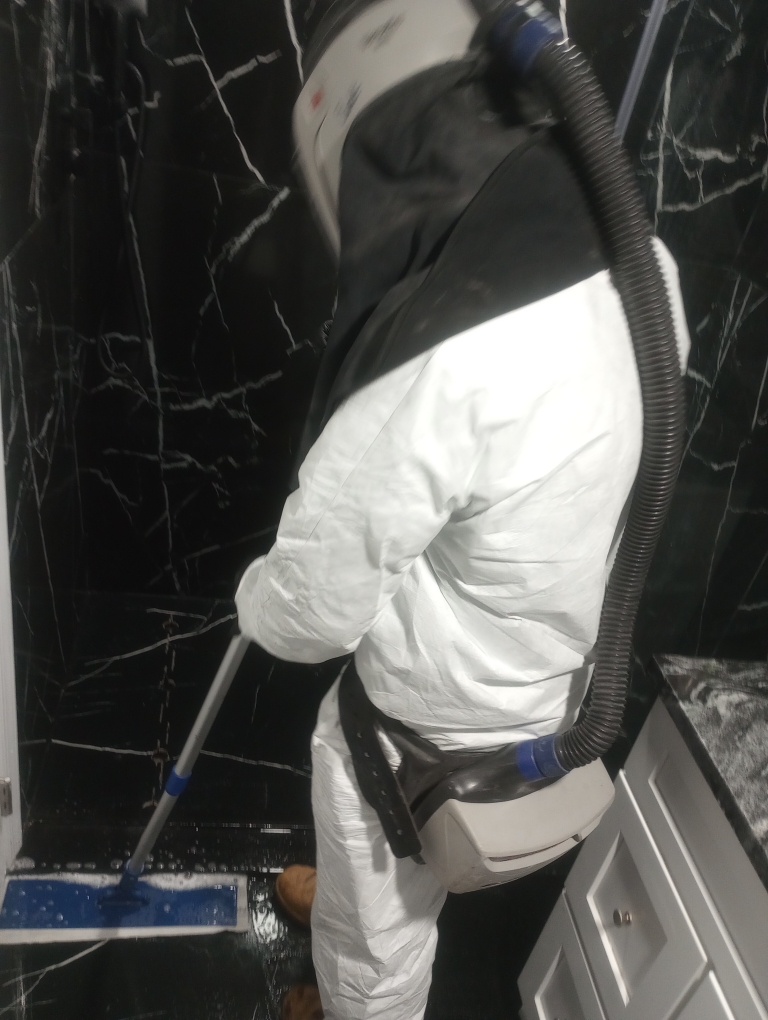
Begin with dry cleaning methods including HEPA vacuuming and chemical sponges. Follow with wet cleaning using appropriate solutions for different materials. This phase addresses all affected surfaces in sequence, typically working from top to bottom and from least damaged to most damaged areas.
Pay special attention to hidden areas including inside cabinets, behind appliances, inside closets, and other spaces where smoke penetrated.
Step Six: HVAC System Cleaning or Replacement
Clean all ductwork using specialized equipment. Service or replace the air handler, evaporator coil, and all filters. Verify that the system is free of contamination before operating it.
Step Seven: Deep Cleaning and Sanitization
After removing visible contamination, deep clean all surfaces again using antimicrobial treatments. This kills bacteria and fungi that may have begun growing on smoke-damaged materials.
Step Eight: Odor Neutralization
Apply professional deodorization techniques after cleaning is complete. Methods include thermal fogging, which uses heated deodorizing agents that penetrate materials just as smoke did, ozone treatment in unoccupied spaces to oxidize odor-causing compounds, hydroxyl generation for occupied space treatment, and air scrubbing using HEPA filters and activated carbon.
Run deodorization equipment for the time required to achieve results. Rushing this phase leaves persistent odors.
Step Nine: Sealing and Primer Application
Apply odor-blocking primer to all cleaned surfaces before painting or finishing. These specialized primers encapsulate any remaining residue and create barriers preventing odor migration.
Step Ten: Reconstruction and Restoration
Replace materials that couldn’t be saved. This might include drywall, insulation, flooring, cabinetry, or structural components. Match materials and finishes to restore your home to its pre-loss condition.
Step Eleven: Final Cleaning and Inspection
Clean the entire property one final time, returning contents to their proper locations. Conduct final inspection and air quality testing to verify successful restoration.
Step Twelve: Documentation and Warranty
Document completed work with photos and provide detailed records for insurance purposes. Reputable restoration companies warranty their work, giving you recourse if problems develop.
This process takes anywhere from two weeks for minor damage to several months for major restoration projects. The timeline depends on damage extent, material availability, insurance processing, and whether any complications arise during restoration.
How Do Different Types of Fires Create Different Smoke Damage Problems?
Not all fires produce the same smoke composition or create the same restoration challenges. Understanding what burned helps predict what contaminants you’re dealing with and what restoration approaches work best.
Kitchen Fires Produce Greasy, Protein-Based Smoke
Cooking oil, meat, and food fires create smoke with high grease content. This smoke leaves sticky, oily residue particularly difficult to remove. The residue coats surfaces with an almost lacquer-like finish that resists many conventional cleaners.
Kitchen fire smoke penetrates materials quickly because the heat opens pores just as the greasy particles arrive. Restoration requires degreasers and repeated cleaning cycles to break down this stubborn residue.
Electrical Fires Release Toxic Synthetic Compounds
Burning wire insulation, plastic components, and electronic devices produce smoke containing highly toxic compounds. These fires often smolder for extended periods before being discovered, giving smoke maximum time to spread.
The acidic nature of electrical fire smoke aggressively corrodes metals. Wiring, pipes, and metal framing show corrosion damage even in areas that seem only lightly affected by smoke.
Furniture and Content Fires Vary by Material Composition
Modern furniture contains synthetic foams, fabrics, and composite materials. When these burn, they release complex mixtures of toxic chemicals including isocyanates, hydrogen cyanide, and numerous VOCs.
Natural material fires like solid wood furniture produce smoke with different characteristics, generally less toxic but still requiring proper remediation.
Structural Fires Involving Building Materials
When fire burns framing lumber, insulation, drywall, and other building materials, it produces smoke containing gypsum compounds, fiberglass particles, wood pyrolysis products, and various binders and additives used in construction materials.
Deep structural fires that reach wall cavities and attic spaces create extensive hidden damage. Smoke travels through these spaces and deposits throughout your home’s structure.
Vehicle Fires in Attached Garages
Cars contain hundreds of different materials. Vehicle fires produce especially complex and toxic smoke mixtures. Attached garage fires allow this contaminated smoke to enter living spaces through shared walls, doors, and attic spaces.
Understanding what burned helps restoration professionals select appropriate cleaning agents, predict where contamination likely reached, and determine necessary safety precautions during remediation.
What Mistakes Do Fort Wayne Homeowners Make That Worsen Smoke Damage?
Well-intentioned actions sometimes make restoration more difficult or expensive. Avoiding these common mistakes protects both your health and your property.
Running the HVAC System Before Professional Cleaning
Many people turn on heating or cooling without realizing the system is contaminated. This distributes smoke particles throughout every room, spreading contamination to previously unaffected areas.
Leave your HVAC off until professionals clean or clear it for operation. The short-term discomfort of no climate control prevents long-term contamination problems.
Using Standard Cleaning Methods on Smoke Damage
Regular household cleaners and techniques aren’t designed for smoke residue. Conventional cleaning can smear soot rather than removing it, drive particles deeper into porous materials, spread contamination to clean areas, or react chemically with smoke residue creating new problems.
Smoke damage requires specialized cleaning products and techniques developed specifically for this type of contamination.
Delaying Professional Assessment
Every day smoke remains on surfaces, it continues reacting with materials. Acidic compounds corrode metals, degrade plastics and rubber, and stain or etch surfaces. Prompt professional assessment within 24 to 48 hours prevents secondary damage that increases restoration costs.
Many Fort Wayne homeowners delay calling professionals hoping to save money with DIY approaches, only to discover that delayed intervention caused additional damage costing more to fix.
Attempting to Paint Over Smoke Damage
Paint doesn’t seal smoke contamination unless you first clean thoroughly and apply specialized odor-blocking primer. Painting over contamination results in odor bleed-through, poor paint adhesion, and discoloration as smoke residue migrates through the new paint.
Disposing of Damaged Items Before Insurance Assessment
Insurance adjusters need to see and document damaged property. Throwing things away before the adjuster visits can reduce your insurance settlement because you can’t prove what was damaged.
Document everything with photos and videos, but don’t dispose of anything significant until after insurance assessment.
Not Considering Hidden Damage Areas
Homeowners naturally focus on visible damage and overlook areas they can’t see. Attics, crawl spaces, inside walls, and ductwork receive smoke contamination that continues causing problems even after visible areas are cleaned.
Professional assessment using thermal imaging and other diagnostic tools identifies hidden damage you wouldn’t find on your own.
Accepting “Good Enough” Partial Restoration
Some homeowners stop restoration efforts when the smell becomes faint rather than completely eliminated. Remaining contamination continues causing health effects and property damage even if you’ve adapted to the reduced odor level.
Complete restoration means eliminating contamination, not just reducing it to more tolerable levels.
How Do You Prevent Future Fire Risks in Your Fort Wayne Home?
Learning from fire damage includes implementing prevention strategies that reduce future risks. Fort Wayne homes face specific fire hazards based on regional factors and common building characteristics.
Electrical System Maintenance and Upgrades
Electrical issues cause approximately one-third of residential fires. Many Fort Wayne homes have electrical systems installed decades ago that don’t meet current demands.
Schedule professional electrical inspection every three to five years or when you notice warning signs like frequently tripping breakers, flickering lights, burning smells near outlets, discolored outlets or switches, or buzzing sounds from electrical panels.
Consider upgrading electrical panels to handle modern electrical loads. Today’s homes use far more electricity than systems installed in the 1950s through 1970s were designed to provide.
Install arc-fault circuit interrupter (AFCI) breakers that detect dangerous electrical arcs and shut off power before fires start. While code requires these in newer construction, older homes benefit from retrofitting.
Never overload outlets or use damaged electrical cords. Replace any cords showing wear, fraying, or damage.
Heating System Safety and Maintenance
Fort Wayne’s cold winters mean heating systems run extensively. Furnaces, space heaters, and fireplaces all create fire risks when improperly maintained or used.
Have furnaces professionally inspected and serviced annually before heating season. Technicians check for dangerous conditions including cracked heat exchangers, improper venting, and excessive dust buildup.
Keep space heaters at least three feet away from anything flammable. Never leave space heaters running unattended or while sleeping. Choose models with automatic shutoff if tipped over.
Have chimneys inspected and cleaned annually if you use your fireplace. Creosote buildup in chimneys causes thousands of house fires yearly.
Install carbon monoxide detectors on every floor. While not fire prevention devices, they provide early warning of dangerous conditions from heating equipment malfunction.
Kitchen Fire Prevention
Cooking causes more home fires than any other source. Fort Wayne fire departments respond to numerous cooking fires each year, many of which could have been prevented.
Never leave cooking unattended, especially when using high heat or oil. Set timers to remind you that you’re cooking if you step away.
Keep combustible items away from the stove, including dish towels, paper products, wooden utensils, and packaging materials.
Clean cooking surfaces regularly to prevent grease buildup. Exhaust hoods and the spaces above stoves accumulate grease that can ignite.
Keep a fire extinguisher rated for grease fires (Class K) in your kitchen. Learn how to use it before you need it.
Consider installing automatic stove shutoff devices that turn off burners when smoke is detected or after a set time period.
Smoke Detector Maintenance
Smoke detectors save lives but only if they’re working properly. Many fire deaths occur in homes with non-functional smoke detectors.
Test smoke detectors monthly using the test button. Replace batteries annually or when low-battery warnings sound.
Replace entire smoke detector units every ten years. Even hard-wired units have components that degrade over time.
Install smoke detectors on every floor, inside each bedroom, and outside sleeping areas. Interconnected detectors that all sound when one detects smoke provide better protection.
Consider upgrading to combined smoke and carbon monoxide detectors for comprehensive protection.
Safe Storage of Flammable Materials
Gasoline, paint thinners, propane, and other flammable materials require careful storage away from ignition sources.
Store flammables in approved containers in detached sheds or garages, never inside living spaces. Keep quantities minimal; don’t stockpile unnecessary flammable materials.
Never store gasoline or propane near water heaters, furnaces, or other appliances with pilot lights or electronic ignition.
Dryer Fire Prevention
Lint buildup in dryers causes thousands of fires annually. Fort Wayne’s humid climate means dryers often work harder to dry clothes, increasing lint accumulation.
Clean the lint trap after every load without exception. Even small amounts of lint dramatically increase fire risk.
Have dryer vents professionally cleaned annually. Lint accumulates in ductwork where you can’t reach it, creating dangerous buildup.
Ensure dryer vents exhaust directly outside, not into attics or crawl spaces. Improper venting increases fire risk and creates moisture problems.
Replace flexible plastic or foil dryer vents with rigid or semi-rigid metal ducts. These don’t trap lint as readily and won’t fuel fires if they start.
PuroClean Disaster Restoration of West Fort Wayne can provide referrals to qualified fire safety professionals who can assess your home and recommend specific prevention measures. Prevention is always more affordable and less traumatic than dealing with fire damage. Call (260) 263-9788 for resources and information about protecting your Fort Wayne home from fire risks.
How Does Insurance Coverage Work for Fire and Smoke Damage in Indiana?
Understanding your insurance coverage before filing claims helps you navigate the process more effectively. Indiana homeowners policies typically follow industry-standard structures with some state-specific variations.
Standard homeowners policies (HO-3 is most common) cover fire and smoke damage as “named perils.” This means your policy explicitly lists fire as a covered cause of loss. Coverage typically includes the dwelling structure, other structures on your property like detached garages, personal property (contents), additional living expenses if you can’t occupy your home during restoration, and liability if fire spreads to neighboring properties.
Your dwelling coverage pays to repair or rebuild your home’s structure. Most policies cover “replacement cost,” meaning they pay to rebuild at current construction costs rather than paying only the depreciated value.
Contents coverage reimburses for damaged or destroyed personal property. You’ll need to document your losses through inventory lists, receipts, photos, or other proof of ownership and value. Actual cash value policies pay depreciated value, while replacement cost policies pay to replace items at current prices.
Additional living expenses (ALE) or loss of use coverage pays for hotels, temporary housing, restaurant meals, and other costs above your normal living expenses when fire damage makes your home uninhab
itable. This coverage has limits (often 20 percent of dwelling coverage) and time limits.
Your deductible applies to fire claims. If your policy has a $1,000 deductible and restoration costs $15,000, insurance pays $14,000 and you pay $1,000.
Document everything thoroughly. Take photos and videos of all damage before touching anything. Create detailed inventory lists of damaged items including purchase dates and estimated values when possible. Keep all receipts for emergency repairs, temporary housing, and other expenses related to the fire.
Contact your insurance company immediately, ideally within 24 hours of the fire. Delays can complicate claims processing.
Cooperate fully with insurance adjusters but understand that you can disagree with their assessments. If you believe the adjuster has undervalued damage, providing additional documentation and potentially hiring a public adjuster (who works for you, not the insurance company) can help.
Work with restoration companies experienced in insurance work. They understand documentation requirements, can provide detailed estimates in formats adjusters expect, and often work directly with insurance companies to streamline the process.
Be aware of policy limits and exclusions. Most policies limit coverage for certain valuable items like jewelry, art, or collectibles. Separate valuable items policies or increased limits endorsements protect high-value possessions.
If you’re displaced from your home, keep detailed records of all expenses. Hotels, meals, pet boarding, laundry, and similar costs may be reimbursable under ALE coverage.
Don’t accept quick settlement offers without understanding the full extent of damage. Some damage isn’t immediately apparent, and accepting final payment before restoration is complete can leave you responsible for additional costs.
Frequently Asked Questions
How long does smoke odor typically last after a fire?
Without proper remediation, smoke odor persists indefinitely. The particles embedded in materials don’t naturally break down or dissipate. Homes can maintain smoke smell for decades after fires if contamination isn’t professionally addressed. With proper restoration, odors should be completely eliminated, not just masked or reduced.
Can you remove smoke smell without professional help?
Minor smoke exposure from very small incidents might be addressed with thorough DIY cleaning, but any significant fire requires professional restoration. The smoke penetration extends far beyond what homeowners can access or effectively clean. DIY efforts typically address surface contamination while missing the hidden damage that causes persistent problems.
What health problems does living with smoke odor cause?
Short-term effects include respiratory irritation, headaches, eye irritation, and fatigue. Long-term exposure can lead to chronic respiratory conditions, increased cancer risk, cardiovascular problems, neurological effects, and weakened immune function. Children and people with existing health conditions face the greatest risks.
How much does professional fire damage restoration cost?
Costs vary tremendously based on damage severity. Minor single-room smoke damage might cost $2,000 to $5,000 for cleaning and deodorization. Moderate whole-house damage typically runs $5,000 to $20,000. Major fires requiring structural repairs can exceed $50,000 to $100,000. Most homeowners insurance policies cover fire damage after your deductible.
Does insurance cover smoke damage from wildfires?
Standard homeowners policies typically cover wildfire smoke damage as long as the fire itself was a covered peril and the damage occurred suddenly. Gradual smoke infiltration over extended periods might not be covered. Review your specific policy and discuss coverage with your insurance agent.
How do you know if your HVAC system is contaminated with smoke?
Visual inspection often reveals soot on vents and inside ductwork. You might smell smoke odors when the system runs. However, contamination often isn’t visible. Professional assessment using cameras and testing equipment provides accurate evaluation. Never run HVAC systems after fires without professional clearance.
Can smoke damage affect your home’s resale value?
Absolutely. Disclosed fire history affects buyer perception and can reduce home values by 5 to 20 percent depending on damage severity and restoration quality. Undisclosed fire damage creates legal liability when buyers discover it later. Complete professional restoration helps minimize impact on property values.
What’s the difference between smoke and soot?
Soot refers to visible black carbon particles that settle on surfaces. Smoke includes soot plus invisible gases and microscopic particles that penetrate materials deeply. You might clean visible soot yet still have extensive smoke contamination you can’t see. Both require professional remediation after significant fires.
How long should you stay out of your home after a fire?
This depends entirely on damage severity. Minor fires might allow safe occupancy of unaffected areas during restoration. Moderate to severe damage requires complete evacuation until restoration is finished. Never occupy spaces with smoke odor or visible contamination; the health risks outweigh any convenience.
Why does smoke damage smell worse on humid days?
Humidity reactivates volatile compounds in smoke residue that has penetrated materials. Water molecules release these compounds into the air, making odors more noticeable. This is why Fort Wayne residents often notice increased smoke smell during summer months even long after fires. It indicates that contamination remains in materials and needs proper remediation.

Conclusion
Fire damage creates challenges that extend far beyond the obvious destruction. The smoke odor that persists after flames are extinguished signals ongoing contamination that threatens both health and property. Understanding the side effects, recognizing the complexity of proper restoration, and implementing prevention strategies protects Fort Wayne families from both current damage and future risks.
The step-by-step restoration process outlined here demonstrates why shortcuts fail. Effective remediation requires systematic approaches addressing visible and hidden damage, using appropriate techniques for different materials, and applying professional deodorization methods that eliminate odors at their source rather than masking them.
For Fort Wayne homeowners dealing with fire and smoke damage, professional assessment and restoration aren’t optional luxuries; they’re necessities that protect health, preserve property value, and provide peace of mind. PuroClean Disaster Restoration of West Fort Wayne brings comprehensive fire and smoke damage restoration services backed by training, certification, and commitment to complete recovery. Don’t let smoke contamination continue affecting your family’s health and home. Call (260) 263-9788 for immediate assistance and thorough evaluation. Their experienced team responds quickly to prevent further damage and begins the restoration process that returns your home to safe, healthy condition. Whether you’re facing recent fire damage or dealing with lingering effects from past incidents, professional intervention makes the difference between living with contamination and truly resolving it.


 PuroClean Disaster Restoration of West Fort Wayne