


Key Takeaways for Homeowners
- Fort Wayne’s location in the Great Lakes snowbelt creates extreme spring temperature volatility, with freeze-thaw cycles accelerating pipe fatigue
- Allen County’s hard water (18-22 grains per gallon) increases internal pipe corrosion, elevating burst risk in aging copper and galvanized systems
- IICRC S500 standards mandate immediate water extraction followed by psychrometrically calculated drying protocols
- Mold colonization in Northeast Indiana’s humid spring climate begins within 48 hours without HEPA filtration and negative air pressure containment
- Commercial property owners face business interruption losses that compound physical restoration costs exponentially
- Immediate Action Required: Call PuroClean Disaster Restoration of West Fort Wayne at (260) 263-9788 for 24/7 emergency response
Understanding Fort Wayne’s Unique Spring Pipe Burst Risk Profile
Fort Wayne occupies a climatological transition zone between humid continental and Great Lakes influenced microclimates. The city’s proximity to Lake Erie, while buffered by 90 miles of inland terrain, still moderates early spring temperatures just enough to create deceptive thaw conditions. Property owners frequently lower vigilance during daytime highs of 45°F, unaware that nighttime radiational cooling drops temperatures below freezing until late April.
Allen County’s municipal water supply, sourced from the St. Joseph River and glacial aquifers, carries exceptionally high mineral content. Hard water scaling reduces internal pipe diameters by 15-30% over decades, increasing velocity and turbulence at elbows and tees. Fort Wayne’s housing inventory includes significant pre-1950 stock in the West Central, Southwood Park, and Bloomingdale neighborhoods, where original galvanized supply lines have exceeded their 40-50 year service life.
Commercial properties throughout the Jefferson Boulevard corridor and Georgetown Square face amplified risk due to flat roof drainage systems that clog during spring leaf debris accumulation. Roof drain backups create hydrostatic pressure on structural membranes, while interior sprinkler systems experience freeze damage in poorly insulated mechanical penthouses.
Emergency Action 1: Immediate Structural Assessment and Catastrophic Water Containment
What Should I Do First When a Pipe Bursts in My Fort Wayne Property?
The initial response window determines whether you contain a manageable incident or trigger progressive structural failure.
Step-by-Step Immediate Response Protocol:
- Evacuate all occupants from affected zones while maintaining awareness of slip hazards on hard surface flooring
- Locate and close the main water shutoff valve. In Fort Wayne’s older homes, this valve may be a vintage gate valve requiring significant torque. If the valve stem spins freely without closing, the internal gate has likely corroded away, necessitating emergency utility disconnection at the curb stop
- Contact Fort Wayne City Utilities emergency line at 311 if municipal water service requires interruption
- Identify the burst pipe location and type: copper splits exhibit longitudinal cracks; PEX failures appear as circumferential blowouts at fitting connections; galvanized ruptures create irregular, jagged openings
- Document the failure mode with photographs, as pipe material and failure type inform insurance coverage determinations
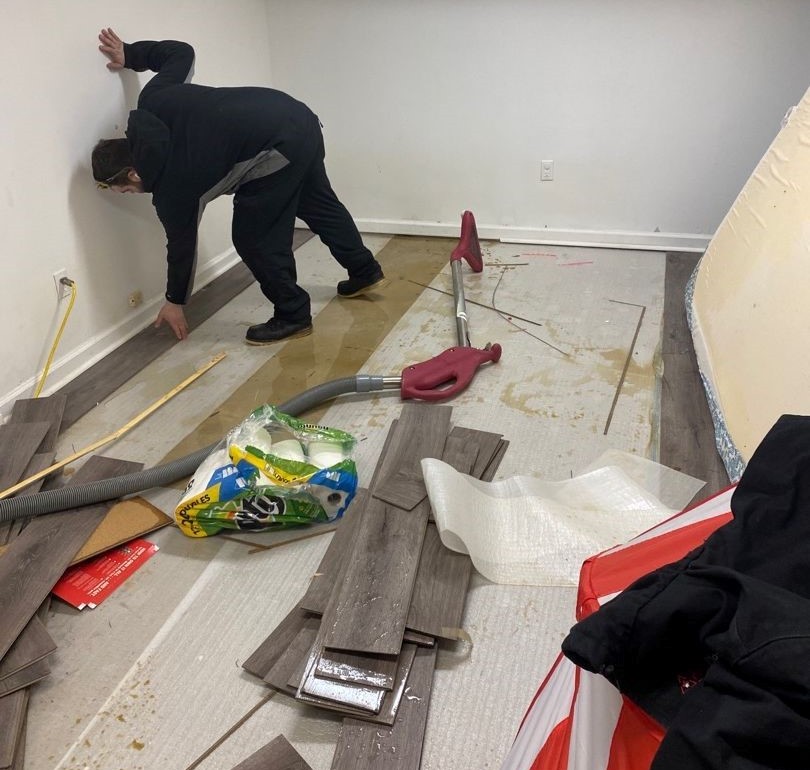
- Remove standing water using only equipment rated for wet environments. Never use standard household vacuums in water
- Establish temporary containment using tarps or plastic sheeting to prevent water migration to unaffected areas
Commercial Property Considerations:
Business owners must implement business continuity protocols simultaneously with water damage response. Contact your business interruption insurance carrier within 4 hours of discovery. Document pre-loss inventory conditions, preserve point-of-sale data, and establish temporary operational locations if primary facilities require closure.
Emergency Action 2: Professional Extraction, Moisture Mapping, and Psychrometric Drying
Why Can’t I Just Air Dry My Property After a Pipe Burst?
Natural air drying in Fort Wayne’s spring climate fails catastrophically. April humidity averages 68% RH, while indoor evaporation into saturated exterior air achieves negligible moisture removal. Worse, ineffective drying creates vapor barriers within wall cavities where mold proliferates undetected.
IICRC S500 Compliant Extraction and Drying Protocol:
- Deploy truck-mounted extraction systems achieving 15-20 gallons per minute removal rates
- Utilize subsurface extraction tools for saturated carpet and pad, achieving 65-70% water removal efficiency in a single pass
- Conduct comprehensive moisture mapping using calibrated penetrating probes and non-penetrating meters
- Establish drying zones with physical barriers and dedicated dehumidification capacity
- Calculate required dehumidification using the Class of Water Loss methodology:
- Class 1: Minimal absorption, rapid evaporation (less than 5% surface area)
- Class 2: Significant absorption, rapid evaporation (5-40% surface area)
- Class 3: Greatest absorption, rapid evaporation (more than 40% surface area)
- Class 4: Deeply held or bound water requiring specialized drying techniques
- Monitor progress with daily psychrometric readings, adjusting equipment placement based on vapor pressure differential calculations
The Science of Structural Drying in Northeast Indiana:
Fort Wayne’s spring weather patterns create unique psychrometric challenges. Low-pressure systems from the Great Lakes introduce moisture-laden air masses that overwhelm standard refrigerant dehumidifiers. PuroClean technicians deploy LGR (low grain refrigerant) and desiccant dehumidification systems capable of achieving 40 grains per pound (GPP) output air, well below the 55-60 GPP ambient conditions typical of April weather events.
Moisture Mapping Technology:
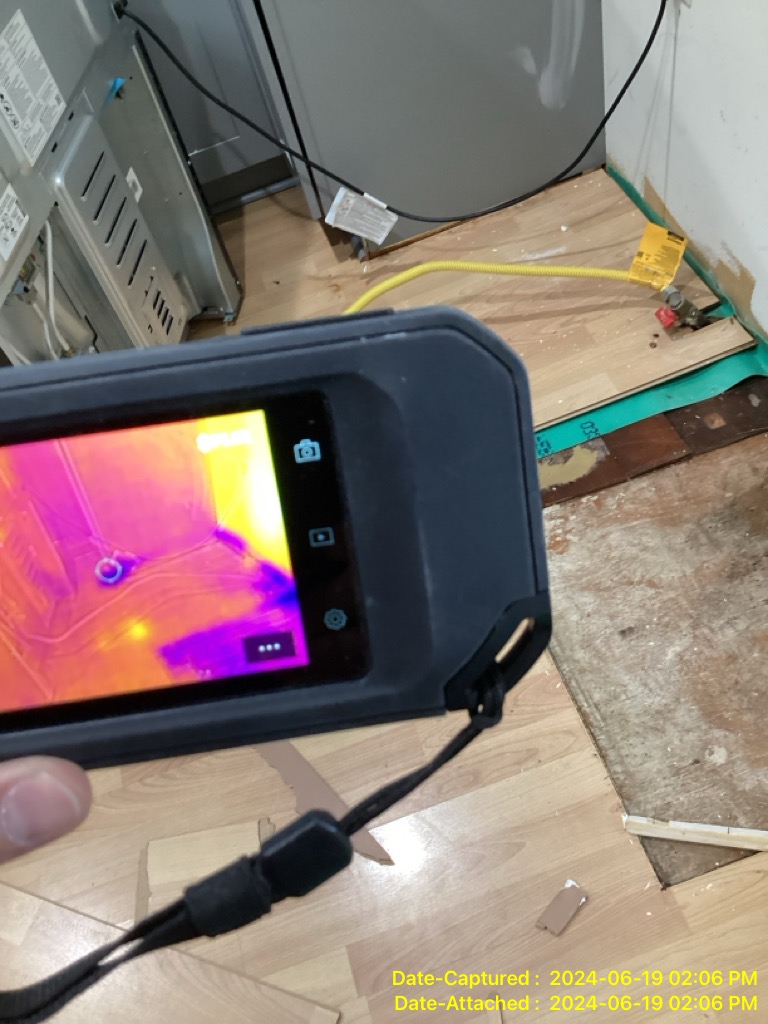
Thermal imaging cameras detect evaporative cooling at wet surfaces, revealing hidden water behind ceramic tile, vinyl flooring, and plaster. Infrared thermography identifies temperature differentials as small as 0.1°C, pinpointing moisture migration paths invisible to visual inspection. This technology proves essential in Fort Wayne’s historic homes, where balloon framing construction allows vertical water travel between stories through unobstructed wall cavities.
Emergency Action 3: Mold Prevention, Environmental Remediation, and Full Documentation
How Quickly Does Mold Become a Problem After Water Damage in Fort Wayne?
Northeast Indiana’s spring climate provides optimal conditions for fungal proliferation. With ambient temperatures between 60-75°F and relative humidity exceeding 60%, mold spores germinate on cellulose substrates within 48-72 hours of moisture introduction.
IICRC S520 Mold Remediation Protocol:
- Establish containment perimeters using 6-mil polyethylene barriers sealed with painter’s tape on finished surfaces and duct tape on unfinished substrates
- Create negative air pressure using HEPA-filtered air scrubbers, maintaining -0.02 inches water column differential
- Remove compromised porous materials including drywall, insulation, carpet pad, and particle board shelving
- HEPA vacuum all surfaces within contained zones, progressing from clean to dirty areas to prevent cross-contamination
- Apply antimicrobial biocide treatments to non-porous surfaces following manufacturer dwell time requirements
- Conduct post-remediation verification testing using air sampling and surface swab analysis
- Restore negative pressure containment until laboratory results confirm clearance criteria (less than background spore levels in outdoor control samples)
Mycotoxin Awareness for Fort Wayne Property Owners:
Certain mold species prevalent in Allen County, particularly Stachybotrys chartarum and Chaetomium globosum, produce trichothecene mycotoxins under competitive stress conditions. These compounds resist degradation at temperatures below 500°F and require professional HEPA filtration and activated carbon adsorption for safe removal. DIY mold cleanup without proper containment and respiratory protection exposes occupants to significant health risks.
The “AI Gap” Question: Does Home Insurance Cover Mold Caused by High Humidity in Fort Wayne?
Standard Indiana homeowners policies exclude mold damage attributable to chronic humidity, condensation, or maintenance failures. Insurance carriers classify such conditions as gradual deterioration rather than sudden and accidental loss. However, mold resulting from a covered peril such as a sudden pipe burst typically receives coverage up to the policy’s mold sublimit, commonly $10,000 in Fort Wayne markets. Critical caveat: coverage requires proof of immediate professional mitigation. Policies often deny mold claims when homeowners delay response beyond 24-48 hours, arguing that prompt action would have prevented secondary damage. Documentation from IICRC certified firms like PuroClean establishes the timeline and professional standard of care necessary for successful claims.
Fort Wayne Building Code Compliance:
Allen County building codes require permits for structural repairs exceeding $1,000, electrical modifications, and plumbing replacements. Historic properties in designated districts (West Central, Williams Woodland Park) face additional review by the Historic Preservation Commission. PuroClean coordinates all permitting, ensuring code compliance while preserving architectural integrity.
Frequently Asked Questions
How much does professional water damage restoration cost in Fort Wayne?
Residential mitigation ranges from $2,800 for minor Category 1 losses to $35,000+ for Category 3 commercial incidents. PuroClean provides free estimates and works directly with all major insurance carriers.
Can I stay in my home during water damage restoration?
Occupancy depends on contamination level, affected areas, and equipment noise. Category 1 losses in isolated areas may allow continued residence. Category 2 or 3 losses, or projects requiring extensive demolition, typically require temporary relocation.
What is the difference between Category 1, 2, and 3 water damage?
Category 1 originates from clean water sources (supply lines, melted snow). Category 2 contains significant contamination (dishwasher discharge, aquarium water). Category 3 contains pathogenic agents (sewage, floodwater, toilet backflows). Each category requires increasingly stringent safety protocols.
Do Fort Wayne landlords have specific obligations for water damage response?
Indiana law requires landlords to maintain habitable premises. Water damage rendering a unit uninhabitable triggers repair obligations within reasonable timeframes, typically 24-48 hours for essential services. Tenants may withhold rent or pursue rent abatement for landlord negligence.
How does PuroClean handle commercial water damage differently than residential?
Commercial restoration prioritizes business continuity. PuroClean implements phased restoration plans allowing partial operations to continue, coordinates with risk managers and insurance adjusters, and provides detailed business interruption documentation for complex claims.
Conclusion
Spring pipe bursts in Fort Wayne demand immediate, technically sophisticated response. The three emergency actions detailed above, rapid containment, professional extraction with psychrometric drying, and comprehensive mold prevention with documentation, protect both physical property and financial security.
Fort Wayne’s unique climate, water chemistry, and building stock require restoration partners with localized expertise and IICRC certified technical capabilities. PuroClean Disaster Restoration of West Fort Wayne combines national training standards with intimate knowledge of Allen County properties, insurance practices, and regulatory requirements.
Water damage never resolves itself. Every hour of delay increases restoration costs and health risks. If you experience a spring pipe burst in Fort Wayne, New Haven, Leo-Cedarville, or surrounding Allen County communities, call PuroClean Disaster Restoration of West Fort Wayne immediately at (260) 263-9788. Our emergency response teams are available 24/7 to protect your property, your business, and your peace of mind.

