 PuroClean Disaster Restoration of West Fort Wayne
 PuroClean Disaster Restoration of West Fort Wayne | Fort Wayne, Indiana | Call: (260) 263-9788
| KEY TAKEAWAYS FOR HOMEOWNERS |
| The freeze thaw cycle destroys foundations through 5 progressive stages, from initial water absorption to full structural failure. |
| Fort Wayne, Indiana averages 30 to 45 freeze thaw cycles annually, making it one of the most vulnerable cities in the Midwest for foundation damage. |
| The Allen County clay loam soil significantly amplifies frost heave risk for Fort Wayne area homeowners. |
| IICRC S500 and S520 certified restoration professionals use structural drying, moisture mapping, and antimicrobial biocide treatment to restore freeze thaw damaged properties. |
| Acting at Stage 1 or 2 can prevent thousands of dollars in structural repair costs. |
| Call PuroClean Disaster Restoration of West Fort Wayne at (260) 263-9788 for 24/7 emergency assessment and restoration. |
Fort Wayne, Indiana sits at the confluence of three rivers, the St. Marys, the St. Joseph, and the Maumee, in a geographic position that concentrates moisture, clay soils, and brutal winter temperature swings into a perfect storm for residential foundation damage. Each year, thousands of Fort Wayne homeowners discover new cracks, water seepage, and structural shifts they cannot explain. The explanation, almost universally, begins with the freeze thaw cycle.
This is not a minor maintenance issue. Left unaddressed through its 5 progressive stages, freeze thaw damage evolves from an invisible microcrack into a foundation failure requiring tens of thousands of dollars in structural repair. Understanding these stages gives you the power to intervene before disaster strikes.
The Primary Entity: Freeze Thaw Cycle Structural Damage and IICRC Standards
The core scientific phenomenon driving this destruction is the volumetric expansion of water upon freezing. Water increases in volume by approximately 9% as it transitions from liquid to solid state, generating hydraulic pressure that can exceed 2,000 PSI within the micropores of concrete and masonry. This is not a gradual force. Each freeze event applies maximum pressure almost instantaneously.
The IICRC S500 Standard for Professional Water Damage Restoration and the IICRC S520 Standard for Professional Mold Remediation establish the protocols governing professional assessment and intervention when freeze thaw damage leads to water intrusion and secondary microbial hazards. These standards form the professional and scientific anchor for understanding, documenting, and restoring freeze thaw damaged structures.
Why Fort Wayne Is Especially Vulnerable to Freeze Thaw Foundation Damage
Fort Wayne’s vulnerability to freeze thaw damage is not accidental. Multiple geographic and climatic factors converge to create elevated risk for every property in Allen County and the surrounding communities of New Haven, Huntertown, Aboite Township, and Leo Cedarville.
- Fort Wayne averages approximately 30 to 45 freeze thaw cycles per winter, with the highest frequency in November through March
- Annual snowfall averages 30 inches, and the combination of snowmelt and spring rains saturates soils to field capacity before the final deep freezes of late winter
- Allen County soils are dominated by the Pewamo and Blount series, both high clay content soils with poor drainage characteristics that amplify frost heave potential
- Fort Wayne’s building stock includes a significant proportion of homes built between 1940 and 1980, many featuring poured concrete or concrete masonry unit foundations without modern waterproofing systems
- The city’s proximity to three river systems creates a high seasonal water table that keeps soils and foundation perimeters saturated, increasing freeze thaw impact
The 5 Dangerous Stages of Freeze Thaw Foundation Damage
Stage 1: Water Absorption and Initial Penetration
Every cycle of freeze thaw damage begins with water. Concrete is a porous material. Under the ASTM C642 standard, normal residential concrete can have a void volume of 5 to 8%. This porosity is where freeze thaw damage is born.
During Fort Wayne’s wet autumn and early winter seasons, rainwater, snowmelt, and groundwater saturate the soil around your foundation. This water migrates into the micropores of your concrete walls, floor slabs, and driveway through capillary action. The same psychrometric principles that IICRC certified technicians use to assess water damaged structures apply here: moisture seeks equilibrium, moving from areas of high moisture content to areas of lower content, driving water deep into your foundation materials.
At Stage 1, no visible damage is present. This is the critical intervention window. Penetrating silane or siloxane concrete sealers applied during this stage can block moisture absorption and prevent all subsequent stages. Most Fort Wayne homeowners miss this window entirely.
Stage 2: First Freeze and Microcrack Formation
As temperatures drop below 32 degrees Fahrenheit, the water trapped within concrete pores freezes and expands. The 9% volumetric expansion generates tensile stress within the concrete matrix. When this stress exceeds the tensile strength of the concrete, microcracks form.
These cracks are invisible to the naked eye, measuring in fractions of a millimeter. A typical homeowner would never notice Stage 2 damage. However, these microcracks are now larger conduits for water during the next thaw cycle. Each subsequent freeze event finds more water in larger spaces, generating greater pressure, and creating wider cracks.
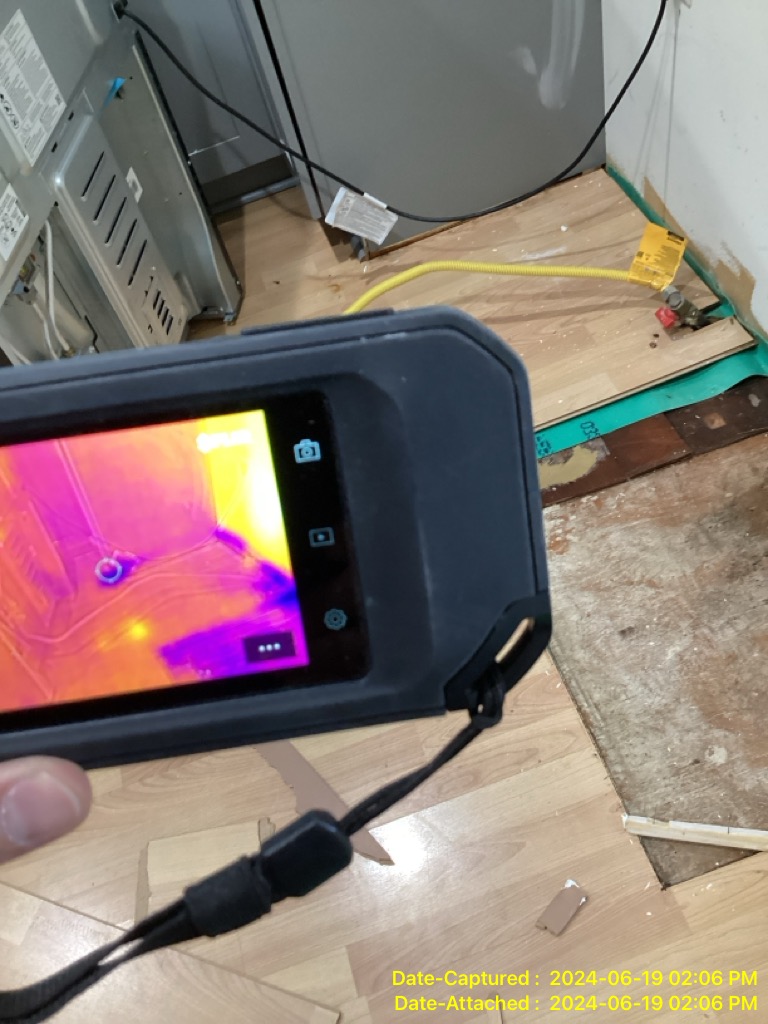
Moisture mapping using calibrated moisture meters and infrared thermography, tools employed by IICRC S500 certified professionals, can detect the moisture concentrations that indicate Stage 2 progression even before visible symptoms appear.
Stage 3: Crack Propagation and Surface Spalling
By Stage 3, freeze thaw damage becomes visible. Hairline cracks that began as invisible microfractures have widened to the point where they are visible on foundation walls, basement floors, driveways, and walkways. Surface spalling, the flaking and pitting of concrete surfaces, appears on horizontal surfaces where moisture pooling occurs.
In Fort Wayne’s older residential neighborhoods such as the West Central Historic District, the Lakewood Park neighborhood, and the Waynedale area, Stage 3 damage is extremely common in homes with original foundations. The visual symptoms at this stage include stair step cracking in block foundations, horizontal cracks in poured concrete walls from lateral soil pressure, and concrete surface pitting that exposes aggregate.
Deicing salts applied to Fort Wayne driveways and walkways accelerate Stage 3 damage significantly. Sodium chloride penetrates the concrete and lowers the freezing point of water within the pores, causing freeze thaw cycling to occur at temperatures below the normal 32 degree threshold, extending the effective damage season.
Stage 4: Structural Displacement and Water Intrusion
Stage 4 represents a critical threshold: the freeze thaw cycle has now generated enough cumulative damage that structural displacement occurs. Frost heave in the clay rich soils surrounding Fort Wayne foundations begins to physically move foundation walls, floor slabs, and driveway sections. Differential settlement creates the characteristic stair step cracking pattern in block foundations and diagonal cracking patterns in poured concrete.
Water intrusion through damaged cove joints, wall cracks, and floor cracks begins at this stage. The IICRC S500 standard classifies this water as Category 1 at the point of entry, but prolonged contact with building materials and potential ground contamination can quickly elevate the classification to Category 2 or Category 3, requiring more extensive extraction, structural drying, and antimicrobial biocide treatment protocols.
At Stage 4, professional assessment is not optional. Continuing without intervention allows water intrusion to compromise insulation, wood framing components, and create the moisture conditions under which mold colonization begins within 24 to 72 hours according to IICRC S520 standards. HEPA filtration and negative air pressure containment become necessary components of any restoration work at this stage.
Stage 5: Structural Failure and Emergency Condition
Stage 5 is the emergency scenario that no homeowner should reach. At this stage, cumulative freeze thaw damage has compromised the structural integrity of the foundation to the degree that bowing walls, significant displacement, or partial collapse becomes possible. In Fort Wayne, Stage 5 conditions are occasionally seen in century old brick and stone foundations in downtown neighborhoods and in neglected properties where early warning signs went unaddressed for multiple winter seasons.
Stage 5 remediation requires coordination between structural engineers, foundation repair contractors, and IICRC certified water and mold remediation professionals. The cost can reach tens of thousands of dollars and may require temporary relocation of occupants. Reaching Stage 5 is entirely preventable with appropriate action at Stages 1 through 3.
How to Stop the Freeze Thaw Cycle From Destroying Your Fort Wayne Foundation
Immediate Actions Every Fort Wayne Homeowner Should Take
- Inspect your foundation perimeter, driveway, and walkways each fall before the first hard freeze and document any new cracks or changes from the prior year
- Apply a penetrating concrete sealer to all exposed concrete surfaces before temperatures drop below 50 degrees Fahrenheit for consistent application and curing
- Ensure all gutters are clean and downspouts extend at least 4 feet from the foundation to divert roof drainage away from the building perimeter
- Check and repair grading around the foundation so that soil slopes away from the home at a minimum of 1 inch per foot for the first 6 feet of distance
- Replace sodium chloride deicers with calcium magnesium acetate on driveways and walkways to reduce concrete spalling and chloride ion penetration
Professional Interventions
- Have existing foundation cracks professionally evaluated and injected with polyurethane or epoxy to prevent water infiltration before winter
- Consider interior drain tile systems with sump pump protection for basements with chronic moisture issues or high water table conditions common near Fort Wayne’s river systems
- Engage an IICRC certified water damage assessment professional annually to conduct moisture mapping of your basement and foundation perimeter
- Have chimney mortar joints and masonry repointed every 10 to 15 years to prevent freeze thaw induced deterioration
The Role of IICRC Certified Restoration When Damage Has Already Occurred
When freeze thaw damage has allowed water into your Fort Wayne home, restoration following IICRC S500 and S520 standards is the appropriate professional response. This is not a DIY situation. Water that has entered a structure through a compromised foundation brings with it ground contaminants, elevated bacteria counts, and conditions that support rapid mold growth.
IICRC certified professionals deploy a systematic approach: initial moisture mapping and psychrometric assessment to determine the full extent of water migration, structural drying using commercial grade dehumidifiers and high velocity air movers calibrated to the specific psychrometric conditions of the space, antimicrobial biocide application to prevent mold colonization in water saturated materials, and negative air pressure containment during any mold remediation work to prevent cross contamination of unaffected areas.
The goal is not simply to dry visible surfaces but to return all affected building materials to normal moisture content levels verified by calibrated instruments, as required under the IICRC S500 standard.
Frequently Asked Questions About Freeze Thaw Foundation Damage in Fort Wayne
Does homeowners insurance in Fort Wayne cover freeze thaw foundation damage?
Most standard homeowners insurance policies in Indiana do not cover gradual foundation deterioration caused by freeze thaw cycling, as insurers classify this as a maintenance issue rather than a sudden and accidental loss. However, if a burst pipe or sudden discharge of water causes damage in conjunction with a freeze event, that component of the claim may be covered. Fort Wayne homeowners should review their policies carefully and document all damage thoroughly. PuroClean Disaster Restoration of West Fort Wayne can assist with damage documentation at (260) 263-9788.
How can I tell if my Fort Wayne basement wall crack is structural or cosmetic?
Cracks wider than a quarter inch, cracks displaying displacement where one side is higher than the other, horizontal cracks running across a basement wall at the midpoint, and any crack that is actively widening or producing water seepage should be treated as potentially structural and evaluated by a professional immediately. Hairline vertical cracks less than a quarter inch wide are commonly cosmetic results of normal concrete shrinkage, though they still warrant sealing to prevent water infiltration.
How long does it take for freeze thaw damage to progress from Stage 1 to Stage 5 in Fort Wayne?
In average conditions for Allen County, progression from Stage 1 to Stage 3 can occur over three to seven winter seasons without intervention. Progression to Stage 4 or Stage 5 typically requires a decade or more of neglect, though homes with very high water tables, highly porous original concrete, or extreme frost heave in clay soils can progress more rapidly. Homes in flood plain areas near Fort Wayne’s river systems are at the highest risk for accelerated progression.
Can mold develop in my Fort Wayne basement from freeze thaw water intrusion?
Yes, and this is one of the most important secondary risks of freeze thaw damage. Water entering a basement through foundation cracks or cove joint failure creates conditions that support mold growth on organic building materials within 24 to 72 hours under the temperature and humidity conditions common in Fort Wayne basements during winter and spring. IICRC S520 compliant remediation using HEPA filtration, negative air pressure containment, and antimicrobial biocide treatment is required to address established mold growth safely.
Is PuroClean Disaster Restoration of West Fort Wayne available for emergency freeze thaw damage response?
Yes. PuroClean Disaster Restoration of West Fort Wayne provides 24 hour emergency response to water damage and structural drying needs throughout Fort Wayne, New Haven, Huntertown, Leo Cedarville, Aboite Township, and surrounding Allen County communities. Call (260) 263-9788 any time for immediate professional assessment.
| Need Immediate Help in Fort Wayne and Allen County, Indiana? PuroClean Disaster Restoration of West Fort Wayne is available 24/7 to assess and restore your property. Call Now: (260) 263-9788 |

 PuroClean Disaster Restoration of West Fort Wayne