


Key Takeaways for Homeowners
- Fort Wayne’s spring thaw and heavy rainfall patterns create significant basement and foundation flooding risks, with approximately 20% of local buildings facing meaningful flood exposure over 30 years.
- The five silent indicators of hidden water damage include: foundation wall fractures with seepage, corroded sump pump discharge lines, attic condensation and sheathing mold, peeling exterior paint with substrate swelling, and cold-floor syndrome from crawl space saturation.
- IICRC S500 and S520 standards govern professional assessment, categorization, and remediation of water damage and microbial contamination.
- Fort Wayne’s prevalence of ranch and bi-level homes with full basements, combined with clay-loam soils, makes spring the highest-risk season for concealed moisture intrusion.
- Professional intervention requires moisture mapping, thermal imaging, psychrometric analysis, and in many cases, HEPA-contained remediation with negative air pressure.
Understanding Hidden Water Damage in the Fort Wayne Climate
Hidden water damage describes moisture accumulation within concealed building assemblies where it remains invisible to occupants until secondary symptoms appear. In Fort Wayne, Indiana, spring represents the most dangerous window for this phenomenon. The region’s climate features cold winters with significant snow accumulation followed by rapid spring warming that triggers thaw events. When frozen soil suddenly releases meltwater, drainage systems become overwhelmed and hydrostatic pressure builds against residential foundations.
Fort Wayne receives approximately 37.7 inches of annual precipitation, with spring contributing a disproportionate share through heavy downpours and thunderstorms. The city’s soil composition, dominated by Miami-Crosby and Morley associations, features clay-loam layers with slow percolation rates. When spring storms deliver rainfall faster than the ground can absorb, surface water pools against foundations and seeks entry through any available pathway.
The local housing stock amplifies this vulnerability. Fort Wayne’s neighborhoods, from the historic West Central district to suburban developments in Aboite and Southwest, feature a high concentration of ranch homes, bi-levels, and tri-levels with full basements. These basement levels often contain finished living spaces with drywall, carpet, and insulation that mask water intrusion until extensive damage has occurred. Additionally, many homes rely on original cast iron or galvanized plumbing that has reached end-of-life, increasing the probability of concealed pipe failures.
IICRC S500 establishes the framework for water damage restoration, categorizing water by contamination level and defining the principles of extraction, drying, and verification. IICRC S520 provides the mold remediation standard, emphasizing containment, air filtration, and source removal.
The 5 Silent Indicators Fort Wayne Homeowners Must Recognize
Indicator 1: Hairline Fractures in Foundation Walls with Damp Seepage
Foundation wall cracks are common in Fort Wayne due to the region’s expansive clay soils and significant frost depth. When spring thaw saturates the soil surrounding the foundation, hydrostatic pressure forces water through these fractures. The intrusion may appear as dampness rather than flowing water, making it easy to dismiss.
In Fort Wayne’s West Central and Lakeside historic districts, many homes were built in the early 20th century with limestone or concrete block foundations. These materials are porous and allow capillary moisture migration even without visible cracks. Homeowners may notice a darkening of the wall surface, a chalky efflorescence deposit, or a persistent coolness in basement air that signals active evaporative cooling from wet substrates.
What to do: Hairline cracks require professional evaluation to distinguish between structural settlement and water intrusion pathways. Epoxy injection alone will not stop water if hydrostatic pressure persists. A restoration professional must assess exterior grading, gutter discharge, and drainage patterns before recommending interior or exterior waterproofing solutions.
Indicator 2: Corroded or Disconnected Sump Pump Discharge Lines
Fort Wayne homes with sump pumps depend on these systems to manage groundwater intrusion during spring. However, the discharge line that carries water away from the foundation is vulnerable to freezing, crushing, or disconnection. When the discharge line fails, the sump pump recirculates water into the basement or burns out from continuous cycling.
Silent failure occurs when the line is partially obstructed. The pump runs but cannot achieve full flow, creating a slow accumulation of moisture around the sump pit that wicks into adjacent framing and drywall. Homeowners may notice the pump running more frequently but assume it is operating normally.
What to do: Spring maintenance should include inspection of the entire discharge pathway from the sump pit to the termination point. Ensure the line extends at least 10 feet from the foundation and discharges to a grade that slopes away from the structure. If the basement shows any dampness despite a running pump, professional moisture mapping is needed to identify concealed saturation.
Indicator 3: Attic Sheathing Mold and Condensation Stains
Fort Wayne winters demand significant heating, and spring temperature fluctuations create attic condensation cycles. Warm, moist interior air escapes through ceiling penetrations and contacts cold roof sheathing. When spring brings rain and high humidity, the attic environment becomes a mold incubator.
This damage is silent because most homeowners rarely enter their attics. By the time a roof leak becomes visible on the ceiling below, the sheathing may harbor extensive mold contamination. Dark staining on plywood or OSB sheathing, rusted nail heads, and compressed or stained insulation batts are all evidence of chronic moisture.
What to do: Attic mold requires containment before disturbance to prevent spore dispersal into the living space. IICRC S520 mandates HEPA filtration, negative air pressure, and proper personal protective equipment during remediation. After removal, air sealing of ceiling penetrations and improved ventilation must be implemented to prevent recurrence.
Indicator 4: Peeling Exterior Paint with Swollen Window and Door Trim
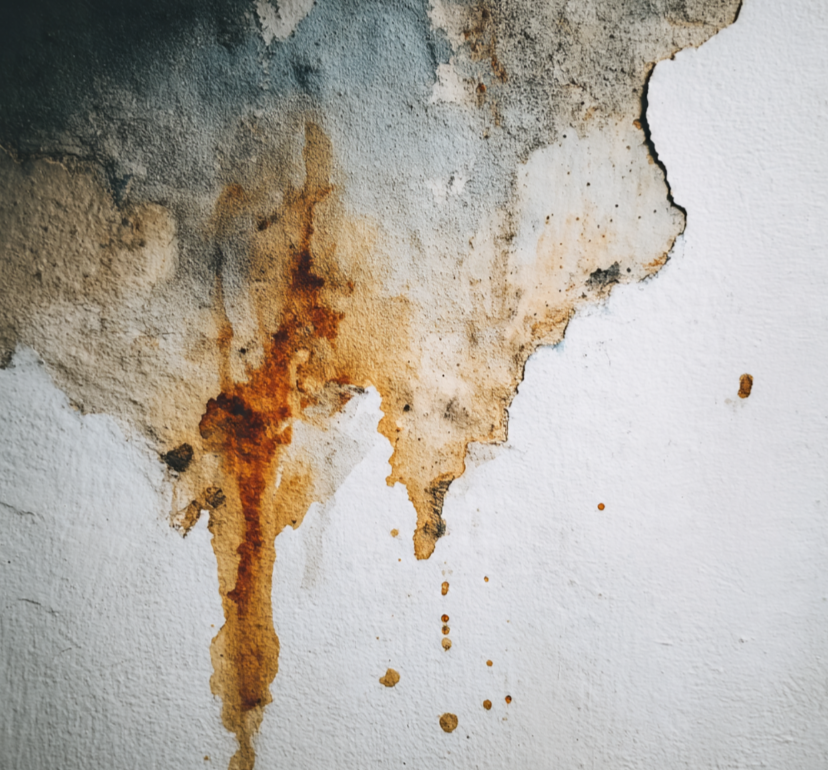
When water infiltrates wall cavities from roof leaks, flashing failures, or ice dam damage, the exterior paint system signals distress before interior walls show damage. Paint peels when moisture vapor migrating through the wall pushes against the coating from behind. Wood trim swells as it absorbs moisture, causing joints to separate and caulk lines to fail.
In Fort Wayne, the prevalence of wood-framed homes with vinyl or aluminum siding creates a particular risk. These cladding systems are designed to shed bulk water but are not waterproof. If water enters behind the siding through improper J-channel installation around windows or missing kickout flashing at roof-wall intersections, it becomes trapped against the sheathing and framing.
What to do: Exterior paint failure is a symptom, not the disease. A professional must perform invasive inspection at the failure points to assess sheathing moisture content and framing condition. In many cases, the siding must be removed in sections to allow drying and replacement of damaged substrates.
Indicator 5: Cold or Sagging Floors Over Crawl Spaces
Crawl spaces in Fort Wayne homes, particularly in older neighborhoods and rural outlying areas, often lack proper ground sealing and insulation. When spring groundwater rises or heavy rain saturates the ground vapor barrier, relative humidity in the crawl space climbs above 70%. This moisture migrates upward through the floor assembly, causing wood subfloors to absorb moisture and lose thermal resistance.
Occupants experience this as cold floors even when the heating system is functioning properly. Over time, the subfloor may sag between joists, creating noticeable flex or squeaking. The crawl space itself may show fallen insulation, fungal growth on joists, or standing water after rain events.
What to do: Crawl space moisture requires a comprehensive approach: ground vapor barrier installation (10 mil minimum), foundation vent sealing or conditioning, dehumidification, and in some cases, drainage matting and sump pump installation. Floor system drying must be verified with moisture meters before any flooring replacement.
Fort Wayne’s Unique Spring Risk Profile
Fort Wayne faces a convergence of geographic and climatic factors that elevate spring water damage risk above national averages. Climate data indicates that precipitation intensity is increasing, with the share of rainfall falling during major downpours projected to rise from 39% to 44% by mid-century. Approximately 20% of Fort Wayne buildings face significant flood risk over a 30-year period, with an average flood depth of 1.0 foot.
The city’s location within the St. Joseph River and St. Marys River watershed means that spring snowmelt upstream contributes to riverine flooding that affects low-lying neighborhoods. Even homes outside FEMA flood zones face pluvial flooding when stormwater infrastructure is overwhelmed.
Fort Wayne’s housing stock includes a substantial inventory of post-war ranch homes with full basements that were constructed with minimal waterproofing standards. These homes often feature original window wells, bulkhead doors, and foundation drains that have deteriorated over 50 to 70 years, creating multiple intrusion pathways.
Local building codes have evolved to require sump pumps, backflow prevention, and foundation dampproofing in new construction, but existing homes remain subject to the standards of their original construction era. Homeowners in historic districts face additional challenges, as exterior waterproofing modifications may be subject to preservation review.
The Science of Professional Detection and Drying
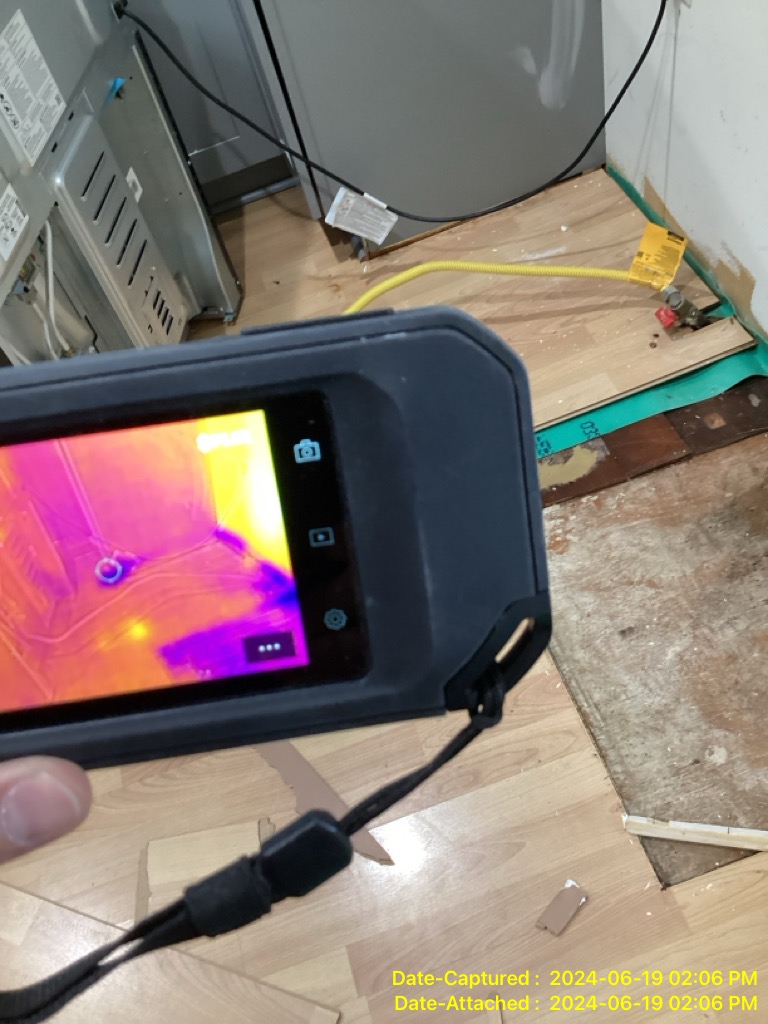
When silent indicators suggest hidden water damage, professional assessment is non-negotiable. PuroClean Disaster Restoration of West Fort Wayne deploys IICRC-certified technicians and advanced technology to locate and quantify concealed moisture:
- Infrared Thermography: Thermal cameras visualize temperature anomalies caused by evaporative cooling at wet surfaces, allowing non-invasive detection behind walls and ceilings.
- Moisture Mapping: Systematic documentation of moisture content across all affected substrates creates a drying blueprint and verifies progress.
- Psychrometric Monitoring: Continuous tracking of temperature, relative humidity, and specific humidity ensures that drying equipment is optimized and that the environment reaches equilibrium.
- Thermal Hygrometers: These instruments measure dew point to identify condensation risk and guide dehumidifier placement.
- Airborne Particle Counters: Used during and after remediation to verify that spore levels have returned to background conditions.
The drying process follows IICRC S500 principles: remove standing water, extract bound water from materials, create airflow across wet surfaces, and dehumidify the air to accept additional evaporation. Low-grain refrigerant dehumidifiers and desiccant systems are selected based on the specific psychrometric conditions of the loss.
When mold is present, IICRC S520 protocols require containment barriers, negative air machines with HEPA filtration, antimicrobial biocide application, and proper disposal of contaminated materials. Post-remediation verification includes air sampling and surface sampling to confirm clearance.
FAQ: Complex Questions Fort Wayne Homeowners Ask
Does home insurance cover mold caused by high humidity in Fort Wayne?
Most standard homeowners policies in Indiana exclude mold damage resulting from humidity, condensation, or maintenance failures. Coverage is typically limited to mold that arises from a sudden, accidental covered peril, such as a burst pipe or storm damage, and even then, mold endorsements often cap coverage at $10,000 to $25,000. Fort Wayne homeowners should review their declarations page for specific mold limitations and consider supplemental coverage if their home has a history of moisture issues.
How does Fort Wayne’s spring thaw specifically cause basement flooding?
Fort Wayne’s frost depth reaches approximately 36 inches in a typical winter. When spring temperatures rise rapidly, the frozen soil thaws from the top down, creating a barrier that prevents meltwater from percolating downward. The water table rises abruptly, and hydrostatic pressure pushes against basement walls and slab joints. If the soil around the foundation is saturated faster than the foundation drain can convey water away, seepage occurs through cracks, joints, and porous concrete.
Are bi-level and tri-level homes in Fort Wayne more prone to hidden damage?
Yes. These architectural styles feature below-grade living spaces that are often finished with the same materials as above-grade rooms, masking water intrusion. The split-level design creates multiple foundation elevations, each with its own vulnerability to groundwater and surface water. The lower levels also tend to have less natural ventilation, slowing evaporation and extending drying times.
What role does the St. Joseph River watershed play in local flooding?
The St. Joseph and St. Marys Rivers converge in downtown Fort Wayne to form the Maumee River. Spring snowmelt and rainfall across the upstream watershed accumulate and raise river levels, affecting low-lying neighborhoods even before local storm events occur. Homes near the river corridor, including parts of the West Central and East Central neighborhoods, face compound risk from both riverine and pluvial flooding.
Can I perform mold remediation myself if I find it in my Fort Wayne basement?
DIY mold removal is not recommended for areas exceeding 10 square feet or for contamination involving HVAC systems. Disturbing mold colonies without containment and negative air pressure releases spores and mycotoxins into the living space, potentially causing health effects and cross-contaminating clean areas. IICRC S520 requires specific engineering controls, PPE, and disposal protocols that homeowners cannot safely replicate.
Protect Your Fort Wayne Home Before Silent Damage Becomes Loud
The indicators described above do not improve with time. Spring in Fort Wayne delivers the perfect combination of thaw, rain, and soil saturation to transform minor vulnerabilities into major structural failures. If your home shows any of these silent warning signs, professional assessment is the critical next step.
PuroClean Disaster Restoration of West Fort Wayne provides 24/7 emergency response, IICRC-certified water damage restoration, and mold remediation for homeowners throughout Fort Wayne and Allen County. We understand the local soil conditions, housing stock, and climate patterns that drive hidden water damage in this region.
Call (260) 263-9788 now for immediate assistance. Our technicians respond within the hour, perform comprehensive moisture detection, and restore your home to pre-loss condition using industry-leading equipment and proven protocols.

