


Reviewed for technical accuracy by PuroClean Disaster Restoration of West Fort Wayne’s IICRC-certified restoration team.
Wet drywall doesn’t always mean total loss, but the IICRC S500 Standard for Professional Water Damage Restoration makes clear that the decision hinges on water contamination category and how long the material stayed saturated. For Fort Wayne homeowners, that decision carries extra weight because of where the city sits: at the confluence of the St. Marys, St. Joseph, and Maumee Rivers, in a watershed prone to both spring snowmelt flooding and summer flash flooding.
This guide answers the questions Fort Wayne homeowners ask most often when they’re standing in front of a water-stained wall, trying to decide whether to dry it, cut it out, or call a professional.
Key Takeaways for Homeowners
- Clean water (Category 1) drywall can often be dried and saved if drying starts within 24 to 48 hours.
- Sewer backup or floodwater (Category 3, or black water) drywall must be removed, particularly in Fort Wayne’s older combined-sewer neighborhoods.
- Drywall wet for more than two days risks hidden mold growth even if the surface looks fine.
- Fort Wayne’s clay-rich soils in neighborhoods like Lakeside and Bloomingdale trap water against foundations, increasing hydrostatic pressure during wet seasons.
- Rapid snowmelt onto still-frozen ground is a documented local trigger for basement flooding, distinct from summer thunderstorm flash flooding.
- A hygrometer reading, not a visual check, is the only reliable way to confirm a wall is fully dry before closing it back up.
If water is actively sitting in your basement or crawl space right now, don’t wait to see how it dries on its own. The difference between a saveable wall and a full tear-out is often measured in hours. PuroClean Disaster Restoration of West Fort Wayne offers 24/7 emergency dispatch across Fort Wayne, Aboite Township, and Allen County, with technicians who can begin moisture mapping the same day.
1. What Actually Determines If Wet Drywall Can Be Saved?
Two factors matter most: the water’s contamination category and how long the drywall stayed wet. Category 1 water, like a clean supply line break, gives drywall a real shot if drying begins promptly. Category 3 water, which includes river overflow and sewer backups, means the paper facing has likely absorbed contaminants that drying alone won’t remove.
Fort Wayne’s combined sewer systems in older neighborhoods near downtown, Waynedale, South Side, and Foster Park overflow during intense rainfall, sending backup water through floor drains and sanitary laterals. When that happens, the resulting basement water is Category 3 by definition, and the decontamination scope changes accordingly, regardless of how the flooding looked when it started.
Takeaway: Identify your water source before deciding on drying versus removal. A river overflow or sewer backup event automatically shifts the protocol.
2. How Long Can Fort Wayne Drywall Stay Wet Before Replacement Is Necessary?
Clean water drywall dried within 24 to 48 hours generally has a good chance of survival. Past that window, the paper backing becomes a viable food source for mold spores already present in ordinary indoor air, and hidden colonization can begin without any visible surface change.
Technicians confirm drying progress with psychrometrics, tracking temperature, humidity, and moisture content together rather than relying on how a wall looks or feels. If moisture readings in affected drywall aren’t trending down toward the baseline reading from unaffected areas of the home within about 72 hours, removal becomes the more reliable option, since continued attempts to dry in place risk subfloor delamination.
Takeaway: Let moisture readings, not appearance, decide when a wall has dried enough to keep.
3. What Warning Signs Mean the Drywall Has to Come Out?
Bulging or sagging drywall, bubbling paint, a musty smell that lingers after the surface appears dry, and spreading stains are all signs the wall assembly has failed. Drying in place is no longer a realistic option once these appear.
If you notice a persistent musty odor, particularly in a Waynedale or Foster Park basement that flooded during a combined sewer overflow event, stop and call a professional rather than continuing DIY drying efforts. That smell often means mold is already colonizing inside the wall cavity where fans and open windows can’t reach it.
Takeaway: A lingering musty smell after surface drying is your cue to stop DIY efforts and call a certified technician.
4. Does My Fort Wayne Neighborhood Affect My Flood Risk?
Yes, significantly. Homes in Lakeside and Bloomingdale sit on clay-rich soil that traps water against foundations rather than letting it drain away, increasing hydrostatic pressure during wet periods. Established mid-century housing throughout Waynedale, South Side, and Foster Park often has aging combined sewer connections, which raises the odds that any basement flooding there involves sewage contamination rather than clean groundwater.
Newer developments in Aboite and southwest Fort Wayne generally benefit from more modern engineered drainage, though proximity to the river corridor still carries some flood exposure. Historic homes near downtown face their own risk profile tied to the city’s documented flood history, including the 1913 flood and the 1982 event that earned Fort Wayne the nickname “The City That Saved Itself.”
Takeaway: Know whether your neighborhood runs on a combined sewer system, since that single fact changes how any basement flood should be treated.
5. What Does a Professional Drywall Restoration Actually Look Like?
Restoration follows a defined sequence, not just a few fans left running overnight.
- Moisture mapping — thermal imaging and moisture meters locate the full extent of intrusion, including water that has migrated behind walls or under flooring.
- Containment barrier setup — plastic sheeting combined with negative air pressure isolates the work area and prevents cross-contamination to the rest of the home.
- Water extraction — standing water is removed using truck-mounted or portable extraction units.
- Structural drying — LGR dehumidifiers paired with air movers pull residual moisture from studs, subfloor, and remaining wall cavities.
- Antimicrobial treatment — an antimicrobial biocide is applied to exposed structural materials to inhibit mold growth during the drying window.
- Air scrubbing — HEPA filtration air scrubbers run continuously for any Category 2 or 3 job to reduce airborne contaminants.
- Verification — hygrometer readings confirm the structure is within a normal moisture range before rebuild begins.
This level of monitored process is what separates a licensed restoration company from a general handyman, and it’s why PuroClean Disaster Restoration of West Fort Wayne bills insurance carriers directly, so Fort Wayne homeowners aren’t paying out of pocket while a claim is processed.
Takeaway: Structural drying is a documented, verified process, not a guess based on how a wall feels to the touch.
6. Can I Remove Wet Drywall Myself in Fort Wayne?
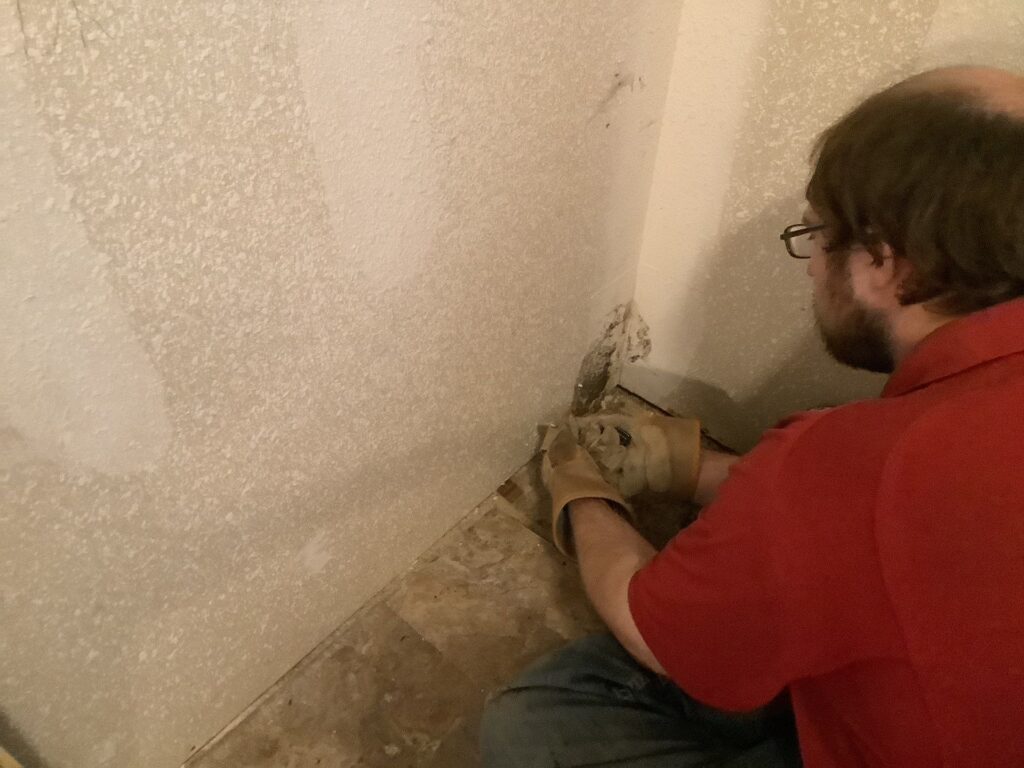
For small, clean water incidents caught within hours, a homeowner can often safely cut out and replace a limited section. Wear gloves and an N95 respirator, cut at least 12 inches past visible damage, and bag the material for disposal.
Anything involving standing water, sewage odor, a large affected area, or Class 4 water damage, where moisture has soaked into low-permeance materials like plaster or hardwood, calls for professional equipment and Category 3 protocols. This is especially true in Fort Wayne’s older combined-sewer neighborhoods, where a basement flood is more likely to carry contamination than a homeowner might assume.
Takeaway: Small, recent, clean-water leaks may be reasonable DIY projects. Sewage-contaminated or large-scale flooding is not.
7. What’s the Mold Risk After Drywall Is Removed or Dried?
Even after wet drywall is removed or dried successfully, the framing, insulation, and subfloor behind it still need verification. According to EPA mold guidance, mold can begin developing within 24 to 48 hours under the right conditions, which is why a job isn’t finished until moisture readings confirm the framing and subfloor are dry, not just the visible surface.
If a combined sewer overflow was involved, that water is treated as Category 3 contamination requiring more thorough decontamination than a standard clean water loss, following OSHA 29 CFR 1910 general industry guidance for handling biological contamination during cleanup.
Takeaway: Don’t consider a drywall repair complete until the framing and subfloor behind it have been independently verified dry.
Timing Matters More Than Anything Else
The single biggest variable in whether your drywall survives is how quickly drying begins. A wall that could be saved with immediate attention may require full removal if left even a few days.
Frequently Asked Questions
Will homeowners insurance cover wet drywall replacement in Fort Wayne? Sudden, accidental events like a burst pipe are typically covered under standard policies. River flooding and sewer backups often fall outside standard coverage and may require flood insurance or a sewer backup rider. Have your restoration company document the water source clearly to support your claim.
What does drywall water damage restoration typically cost in Fort Wayne? Costs depend on square footage, water category, and whether mold remediation is also required. A small clean water repair may cost a few hundred dollars, while a Category 3 basement loss spanning multiple rooms can run into the thousands. A technician can give you a specific number after moisture mapping the space.
How long does drying and repair usually take? Structural drying typically takes three to five days once equipment is running, with additional time needed for drywall replacement and finishing. Category 3 jobs take longer due to required antimicrobial treatment and verification before any rebuild starts.
Can I just paint over a water stain instead of replacing the drywall? Painting over a water-stained wall without confirming it’s fully dry risks sealing moisture and potential mold behind the new paint. A moisture meter reading should confirm the wall is dry before any cosmetic fix is applied.
Is wet drywall a health concern for my family? Clean water dried promptly poses minimal health risk. Category 3 water from sewer backups or river flooding can introduce bacteria, and if mold develops, mycotoxins that affect indoor air quality. Family members with asthma or allergies should stay clear of the affected area until remediation is complete.
Why does Fort Wayne see flooding in both spring and summer? Spring brings rapid snowmelt onto still-frozen, saturated ground, which the earth can’t absorb quickly, while summer brings intense thunderstorms that overwhelm drainage and combined sewer systems. These are two distinct mechanisms with two distinct risk windows, which is why year-round sump pump maintenance matters here.
Get Help Now
If wet drywall is a problem anywhere in Fort Wayne, Aboite Township, or the surrounding Allen County area, PuroClean Disaster Restoration of West Fort Wayne is available 24/7. Our IICRC-certified technicians assess the water category, map the full extent of moisture intrusion, and tell you plainly what can be saved. We also bill your insurance carrier directly, so you aren’t fronting restoration costs while your claim is processed.
PuroClean Disaster Restoration of West Fort Wayne (260) 263-9788

