


Key Takeaways for Homeowners
- Water damage in Fort Wayne homes escalates from a manageable mitigation project to a major restoration and mold remediation job within 24 to 48 hours.
- ANSI/IICRC S500 provides the scientific framework for water damage restoration, while IICRC S520 governs mold remediation when moisture is not properly addressed.
- Fort Wayne’s humid continental climate, freeze-thaw cycles, and aging infrastructure create unique vulnerabilities for homeowners in West Fort Wayne and surrounding neighborhoods.
- Professional moisture mapping, psychrometric drying, and antimicrobial biocide application are essential to preventing secondary damage.
- If you are experiencing water damage right now in Fort Wayne, West Fort Wayne, or nearby neighborhoods, call PuroClean Disaster Restoration of West Fort Wayne at (260) 263-9788 for immediate 24/7 emergency response.
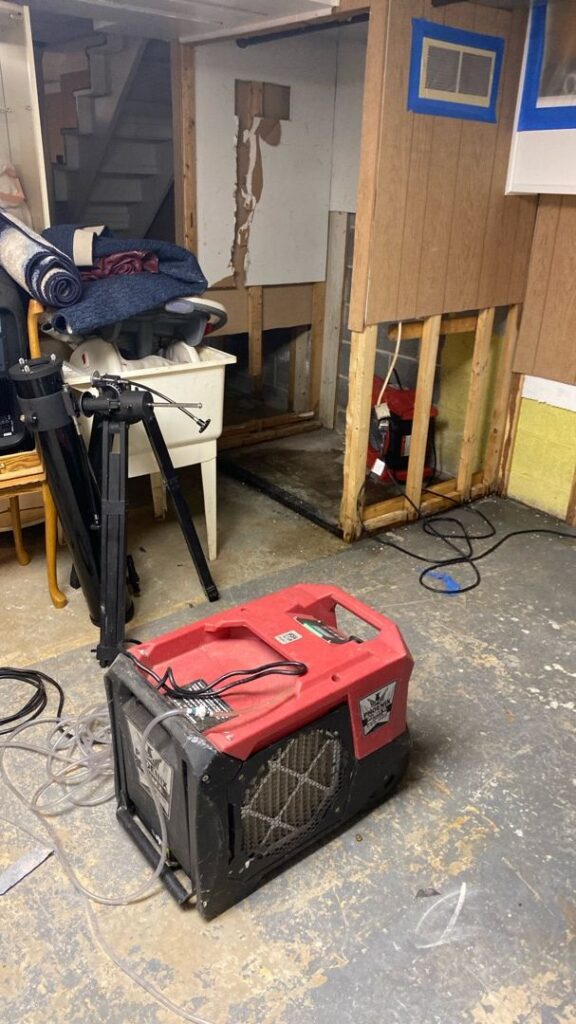
Why Water Damage in Fort Wayne Requires Immediate Professional Response
Water damage is the progressive intrusion of water into building assemblies, contents, and structural materials, triggering a cascade of degradation that includes microbial amplification, material swelling, and potential health hazards. The Institute of Inspection, Cleaning and Restoration Certification (IICRC) publishes ANSI/IICRC S500, the globally recognized standard for professional water damage restoration. This standard categorizes water damage by contamination level (Category 1 clean water, Category 2 gray water, Category 3 black water) and by drying difficulty (Class 1 through Class 4).
The urgency of the first 24 hours cannot be overstated. Within this window, water wicks upward through drywall at rates of several inches per hour, subfloors absorb moisture that compromises structural integrity, and mold spores begin germinating on organic surfaces. After 48 hours, the project often transitions from an S500 water restoration protocol to an S520 mold remediation protocol, requiring containment, negative air pressure, HEPA filtration, and in many cases, removal of porous materials.
Fort Wayne homeowners face compounded risk. The city’s humid continental climate produces summer humidity levels that regularly exceed 75 percent, significantly slowing natural evaporation. Freeze-thaw cycles in winter cause pipe bursts that flood homes while residents are away. The aging infrastructure in established West Fort Wayne neighborhoods means corroded supply lines and deteriorating sewer mains are common sources of water damage.
9 Essential Actions to Take Within the First 24 Hours
Action 1: Prioritize Safety and Power Down Affected Areas
Before entering any water-damaged space, assess electrical hazards. Standing water and energized circuits are a fatal combination. Turn off power at the breaker panel if it is accessible and dry. If the breaker panel is in a flooded basement or wet area, do not attempt to access it. Call your utility provider or a licensed electrician. Wear rubber-soled boots and nitrile gloves. If the water is from a sewage backup, dishwasher overflow, or any source with visible contamination, treat it as Category 3 under IICRC S500 guidelines and evacuate immediately.
Action 2: Stop the Water Source Immediately
Locate and halt the water intrusion. This may involve shutting off the main water supply valve, typically found near the front foundation wall or in the basement. For roof leaks, place a tarp over the damaged area if it is safe to do so. For foundation seepage, identify whether the source is groundwater intrusion, a sump pump failure, or a drainage issue. S500 standards require source control as the first step in any restoration protocol. Without it, all subsequent drying efforts are compromised.
Action 3: Document the Damage Thoroughly for Insurance
Photograph and video every affected area before moving furniture or removing water. Capture water lines on walls, damaged contents, and the source of the intrusion if visible. This evidence is essential for your insurance claim and for the restoration contractor’s initial assessment. IICRC S500 requires comprehensive project documentation, including moisture mapping and daily psychrometric logs, which your certified restoration professional will provide.
Action 4: Notify Your Insurance Carrier Without Delay
Report the loss to your insurance company immediately. Most policies cover sudden and accidental water damage, but exclusions apply for gradual leaks, maintenance issues, and sewer backups without a specific rider. Ask about emergency mitigation coverage and whether your insurer has preferred vendor relationships with IICRC-certified firms. The documentation provided by a certified restoration company often determines whether your claim is approved or denied.
Action 5: Contact an IICRC-Certified Restoration Professional
This is the single most important decision you will make. A certified Water Damage Restoration Technician (WRT) and Applied Structural Drying (ASD) specialist will arrive with thermal imaging cameras, penetrating and non-penetrating moisture meters, and industrial-grade extraction and dehumidification equipment. They will perform moisture mapping to locate hidden saturation in wall cavities, under flooring, and within insulation. PuroClean Disaster Restoration of West Fort Wayne serves Fort Wayne and all surrounding neighborhoods with 24/7 emergency response. Call (260) 263-9788 now.
Action 6: Extract Standing Water with Professional Equipment
Consumer-grade wet/dry vacuums are insufficient for anything beyond minor spills. Professional truck-mounted extraction systems remove water at rates exceeding 25 gallons per minute from carpet, padding, and hard surfaces. The S500 standard emphasizes that extraction is always more efficient than drying through evaporation. Every gallon removed by extraction is a gallon that does not need to be evaporated, reducing drying time and preventing secondary damage.
Action 7: Deploy Controlled Drying Using Psychrometric Science
Drying is not guesswork. It is a science. Restoration professionals use psychrometrics, the study of air and moisture relationships, to calculate specific humidity, dew point, and vapor pressure. These calculations determine the precise number, size, and placement of air movers and dehumidifiers. In Fort Wayne’s high-humidity climate, low-grain refrigerant (LGR) dehumidifiers and desiccant systems are often required to achieve target drying conditions. Opening windows is counterproductive when outdoor humidity exceeds indoor levels, which is common in Fort Wayne from May through September.
Action 8: Remove Saturated Materials That Cannot Be Salvaged
IICRC S500 provides clear criteria for material salvageability based on composition, contamination category, and exposure duration. Carpet padding, particleboard subflooring, and fiberglass insulation typically require removal when saturated. Drywall may be salvageable in Category 1 losses if drying begins within 24 hours, but must be removed if water has been present longer or if contamination is present. Your restoration professional will make these determinations using moisture content readings and material science principles, not guesswork.
Action 9: Apply Antimicrobial Biocide and Establish Daily Monitoring
Even with rapid drying, residual moisture in porous materials creates conditions for microbial growth. EPA-registered antimicrobial biocides are applied to affected surfaces as a preventive control measure. This is not a substitute for drying; it is a supplemental step within the S500 protocol. Your contractor will take daily moisture readings and adjust equipment until wood framing and structural materials return to pre-loss equilibrium moisture content. This documentation proves to your insurer that the structure was properly dried before reconstruction begins.
Fort Wayne’s Unique Water Damage Risks: Climate, Infrastructure, and Housing
Humid Continental Climate and Seasonal Threats
Fort Wayne experiences a humid continental climate with four distinct seasons. Annual precipitation averages 37 to 38 inches, with the majority falling between April and September. Summer humidity regularly exceeds 75 percent, creating conditions where moisture lingers in crawl spaces, basements, and wall cavities. Winter temperatures frequently drop below zero, causing frozen pipes to burst in homes with inadequate insulation or heating failures. The spring thaw brings rapid snowmelt that overwhelms drainage systems and saturates soils.
Aging Infrastructure in West Fort Wayne
Many neighborhoods in West Fort Wayne were built between 1950 and 1980. Galvanized steel supply lines, cast iron drain pipes, and clay tile sewer lines are reaching the end of their service life. Corroded pipes burst without warning, and tree root intrusion into sewer lines causes backups that flood basements with Category 3 black water. Homeowners in these neighborhoods should consider proactive plumbing inspections and sewer line camera assessments.
Regional Housing Characteristics
Fort Wayne’s housing stock includes ranch homes, Cape Cods, and two-story colonials, many with full basements. Basements in older homes were constructed with poured concrete or block walls without exterior waterproofing membranes. The flat topography of certain West Fort Wayne neighborhoods means stormwater accumulates quickly, testing sump pump capacity. Homes with finished basements face significantly higher restoration costs when flooding occurs, as drywall, carpet, and insulation all require removal and replacement.
Local Building Codes and Floodplain Management
The City of Fort Wayne enforces the Indiana Residential Code, which incorporates flood-resistant construction standards for properties in designated floodplain areas. The Fort Wayne Building Department requires permits for structural repairs following significant water damage. Properties in the St. Marys River or Maumee River floodplains may be required to elevate electrical systems and HVAC equipment above base flood elevation. Understanding these requirements is essential when rebuilding after a major water loss.
Frequently Asked Questions:
Does home insurance cover mold caused by high humidity in Fort Wayne?
Standard homeowners insurance policies in Indiana typically exclude mold damage caused by long-term humidity, condensation, or maintenance neglect. However, mold that results from a covered water loss, such as a burst pipe or storm damage, may be covered up to policy limits, often with a separate sublimit. Some insurers offer mold endorsement riders for additional premium. The critical factor is establishing that the moisture source was sudden and accidental. Work with an IICRC-certified restoration firm that can provide the scientific documentation, including moisture mapping and psychrometric logs, that your insurer requires to approve mold-related claims.
How long does water damage restoration take in Fort Wayne?
A typical Class 2 or Class 3 water loss in Fort Wayne’s climate takes 3 to 5 days for structural drying, assuming immediate professional extraction and proper equipment deployment. Class 4 losses involving hardwood floors, plaster, or concrete may require 7 to 10 days. If mold remediation under S520 protocols is necessary, the timeline extends by 3 to 7 days depending on contamination levels, the size of the affected area, and whether post-remediation verification by an independent indoor environmental professional is required.
Will my insurance cover a sump pump failure in West Fort Wayne?
Standard homeowners insurance policies typically exclude sump pump failure and water backup unless you have purchased a specific water backup and sump pump overflow endorsement. This rider is highly recommended for Fort Wayne homeowners, particularly those in West Fort Wayne neighborhoods with older drainage infrastructure and high water tables. The endorsement is relatively inexpensive and can save tens of thousands of dollars in out-of-pocket restoration costs.
What is the difference between Category 2 and Category 3 water damage?
Category 2 water, or gray water, contains significant contamination and has the potential to cause discomfort or sickness if contacted or consumed. Sources include dishwasher discharges, washing machine overflows, and toilet bowl overflows with no feces. Category 3 water, or black water, is grossly contaminated and contains pathogenic, toxigenic, or other harmful agents. Sources include sewage backups, flooding from rivers or streams, and wind-driven rain from hurricanes. Category 3 losses require significantly more aggressive remediation, including removal of porous materials, antimicrobial biocide application, and often HEPA air filtration under negative air pressure.
Can I use household fans and dehumidifiers to dry my home?
Household fans and consumer-grade dehumidifiers are inadequate for anything beyond minor spills. They lack the airflow capacity (measured in cubic feet per minute) and dehumidification capacity (measured in pints per day) to achieve S500 drying standards. In Fort Wayne’s humid climate, consumer equipment may actually increase humidity by circulating moist air without removing sufficient vapor. Professional-grade air movers, LGR dehumidifiers, and desiccant systems are required to achieve the specific humidity and vapor pressure differentials necessary for structural drying.

Why PuroClean Disaster Restoration of West Fort Wayne Is the Right Choice
Water damage does not wait for business hours, and neither should your response. PuroClean Disaster Restoration of West Fort Wayne is an IICRC-certified firm serving Fort Wayne and all surrounding neighborhoods. Our technicians hold WRT and ASD certifications and follow ANSI/IICRC S500 and S520 standards on every project. We provide 24/7 emergency response, direct insurance billing, and comprehensive moisture mapping using thermal imaging and penetrating moisture meters.
Do not let water damage destroy your home and your finances. If you are in Fort Wayne, West Fort Wayne, or nearby neighborhoods and need immediate water damage assistance, call PuroClean Disaster Restoration of West Fort Wayne right now at (260) 263-9788. Our emergency teams are standing by.

