


Reviewed for technical accuracy by PuroClean Disaster Restoration of West Fort Wayne’s IICRC-certified restoration team.
Key Takeaways for Homeowners
- Carpet that stays damp for more than 24 to 48 hours after water damage can support mold growth.
- A musty odor is often the first sign of mold, and it can appear before any growth is visible.
- If basement carpet got wet from a floor drain backup, treat it as Category 3 (black water) and keep children and pets away.
- Mold on carpet usually extends into the pad and subfloor, so the visible patch understates the problem.
- Fort Wayne’s clay-rich soils and combined sewer areas make basement moisture a recurring risk, especially after spring snowmelt and summer thunderstorms.
- A hygrometer reading above 60 percent relative humidity in a room with wet carpet is a warning sign to act.
What Is Mold Growth on Wet Carpet?
Mold growth on wet carpet is fungal colonization of carpet fibers, backing, padding, and the subfloor beneath, triggered by moisture that was not removed fast enough. The IICRC S520 Standard for Professional Mold Remediation guides safe removal, while the IICRC S500 Standard for Professional Water Damage Restoration guides the drying that prevents it.
The EPA’s mold guidance says prompt drying, generally within 24 to 48 hours, is the best way to prevent mold after water damage. Carpet is hard to dry fast because the foam pad underneath acts like a sponge and the backing traps moisture against the floor.
Takeaway: If carpet has been wet longer than two days, assume mold may be starting and have it checked.

Why Is Fort Wayne Prone to Wet Carpet and Mold Problems?
Fort Wayne is prone to basement and carpet water problems because of its rivers, soils, and aging sewer systems. The city sits where the St. Marys and St. Joseph Rivers meet to form the Maumee, which drains the largest watershed of any Great Lakes tributary, more than 6,600 square miles. That puts many neighborhoods in flood-prone watersheds.
Soil adds to the problem. The city rests on glacial outwash with highly variable permeability. In clay-rich areas like Lakeside and Bloomingdale, water cannot drain away quickly and presses against foundations. That hydrostatic pressure pushes moisture through cracks and wall-floor joints into finished basements.
Older neighborhoods, including downtown, Waynedale, the South Side, and Foster Park, are served by combined sewers. During intense rain, those systems can overflow and back up through floor drains. Sewage-contaminated water is Category 3, and it changes the cleanup scope entirely.
Fort Wayne averages roughly 38 inches of precipitation a year. Spring snowmelt onto still-frozen, saturated ground and summer thunderstorms are the two peak risk periods. The city’s flood history, including 1913 and the 1982 flood known as “The City That Saved Itself,” is a reminder that river-corridor risk is long-standing.
Newer developments in Aboite and southwest Fort Wayne generally have more modern drainage design, but sump pump failures and plumbing leaks can still wet carpet there.
Takeaway: Know your neighborhood’s water risk, and check basement carpet after every major storm and thaw.
7 Signs You May Have a Mold Problem in Wet Carpet
1. A Musty or Earthy Smell That Will Not Go Away
A persistent musty smell is the most common early sign of mold on wet carpet. The odor comes from compounds released as mold grows. If the smell returns after you air out the room, moisture is still trapped in the pad or subfloor.
2. Carpet Still Feels Damp or Cool After 48 Hours
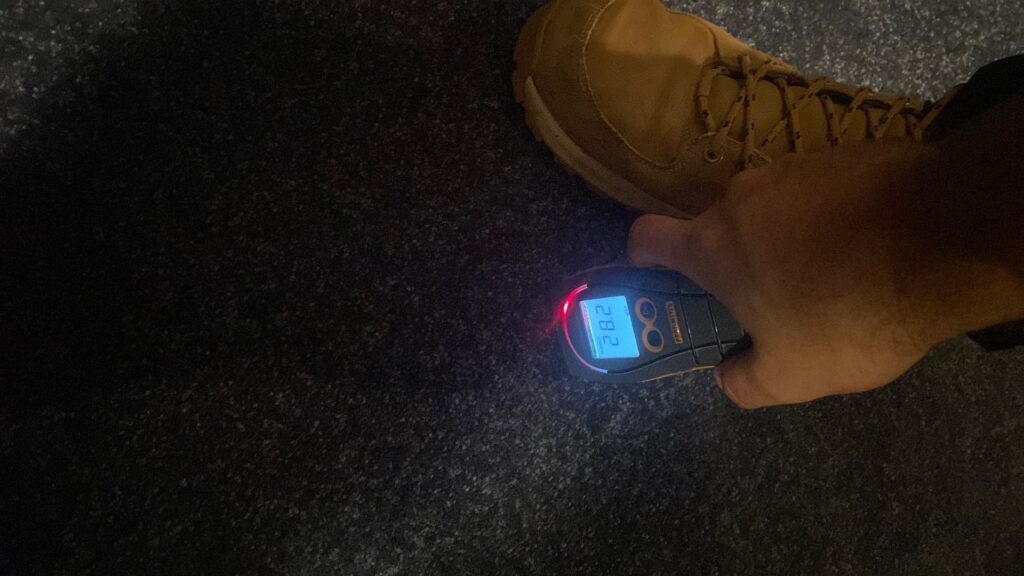
Carpet that stays damp past two days has not dried properly. The pad holds water longest. A cool, clammy feel underfoot suggests moisture is evaporating from below. Moisture mapping with a meter shows how far the dampness extends.
3. Visible Spots, Stains, or Fuzzy Patches
Mold on carpet may appear as green, black, gray, or white spots, often along edges, under furniture, or on the backing when you lift a corner. Not all discoloration is mold, but spots that spread are a red flag.
4. Rippling, Buckling, or a Spongy Feel
Carpet that ripples or feels soft underfoot may be sitting on a saturated pad or a subfloor that is starting to fail. Subfloor delamination, where plywood layers separate, signals long-term moisture exposure.
5. Staining or Peeling Near Walls and Baseboards
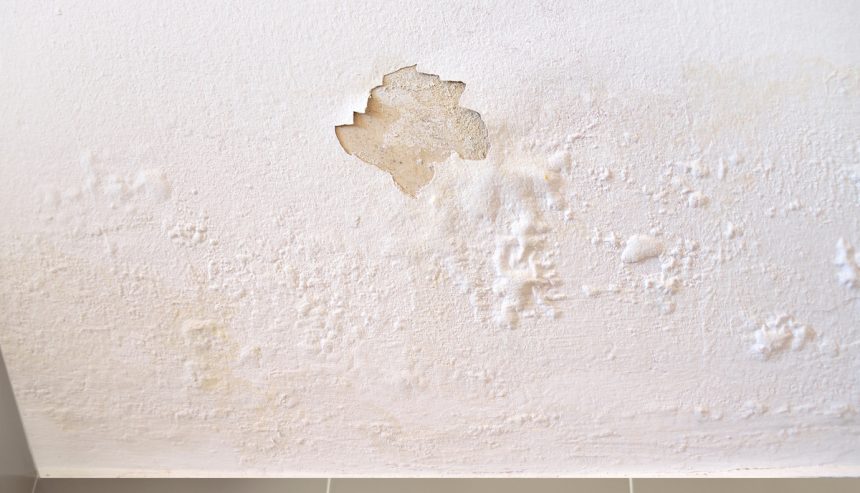
Water travels. Peeling paint, bubbling drywall, and warped baseboards near wet carpet indicate moisture has wicked into wall cavities. Mold often grows behind baseboards well before it shows on the carpet.
6. Allergy or Breathing Symptoms Indoors
Sneezing, coughing, itchy eyes, or wheezing that improve when you leave the house can point to indoor mold. The EPA notes that mold can trigger allergy symptoms and worsen asthma. Symptoms alone do not confirm mold, but they are worth taking seriously.
7. High Humidity Readings
A hygrometer measures relative humidity. The EPA recommends keeping indoor humidity between 30 and 50 percent. Readings above 60 percent in a room with wet carpet create ideal conditions for growth. Psychrometrics, the science of how heat and moisture behave in air, guide professional drying decisions.
Takeaway: Two or more of these signs together mean it is time for a professional moisture inspection.
How Do Professionals Handle Moldy Wet Carpet?
Professionals handle moldy wet carpet by containing the area, removing contaminated materials, treating surfaces, and drying the structure until it meets a verified standard. A typical sequence follows IICRC S520 and S500.
- Assess the water source and category. Technicians identify whether water was clean, gray, or black, because Category 3 changes the safety protocol.
- Map moisture. Moisture meters and thermal imaging locate hidden wet areas.
- Build a containment barrier. Plastic sheeting isolates the work zone to prevent cross-contamination.
- Establish negative air pressure. HEPA-filtered air scrubbers pull air out of the zone.
- Remove carpet and pad. Materials are cut, bagged, and carried out carefully.
- Clean and treat. HEPA vacuuming, damp wiping, and an antimicrobial biocide are applied to the subfloor.
- Dry the structure. LGR dehumidifiers and air movers run for structural drying, with daily hygrometer readings and moisture logs.
- Verify and rebuild. Dry readings are confirmed before new flooring is installed.
In severe cases where water saturated deep materials, the job may be classified as Class 4 water damage, which needs specialty drying methods and more time.
Takeaway: Ask for documented moisture readings at the start and end of the job.
What Sets PuroClean of West Fort Wayne Apart?
PuroClean Disaster Restoration of West Fort Wayne offers 24/7 emergency dispatch, IICRC-certified technicians, and direct insurance billing, with local crews serving Fort Wayne, Aboite Township, and Allen County.
What Should You Do While You Wait for Help?
While you wait, limit further moisture and avoid disturbing mold. These steps protect your health and your claim.
- Stop the water source if it is safe to do so.
- Photograph all damage before moving anything.
- Keep children, pets, and anyone with respiratory conditions out of the area.
- Run fans and a dehumidifier for airflow, but do not run your HVAC if you suspect sewage.
- Avoid scrubbing or vacuuming visible mold.
- Call a restoration professional.
Takeaway: Document first, protect people second, and avoid actions that spread spores.
Frequently Asked Questions
Does insurance cover mold from wet carpet in Fort Wayne?
It depends on the cause and your policy. Mold that follows a sudden, accidental loss like a burst pipe is more often covered. Groundwater seepage and flood damage are commonly excluded, and sewer backup usually needs an endorsement. Contact your agent promptly and keep photos and records.
How much does it cost to remove mold from carpet?
Cost depends on affected square footage, whether the subfloor or walls are involved, the water category, and drying time. Professional moisture testing is the only reliable way to scope the work. Early intervention generally costs less than waiting until growth spreads into structural materials.
How long does mold remediation on carpet take?
Containment, removal, and cleaning often take one to two days. Structural drying commonly adds several days, depending on materials and humidity. Verification readings confirm completion before rebuilding. Extensive or Class 4 cases take longer, and your technician can give a schedule after inspection.
Can I treat mold on wet carpet myself?
Small, surface-level mold on hard materials may be manageable at home. Carpet and pad are porous, so DIY treatment rarely removes the growth. Call a professional if the area exceeds about 10 square feet, if water was contaminated, or if someone in the home has asthma or a weakened immune system.
What health risks does mold on carpet pose?
Mold can cause allergy symptoms such as sneezing, itchy eyes, and congestion, and it can aggravate asthma. Some people react more strongly than others. Infants, older adults, and people with immune or respiratory conditions should avoid affected areas. Seek medical advice for persistent symptoms.
Is wet carpet after a Fort Wayne sewer backup safe to keep?
No. Carpet exposed to sewage is Category 3 water, which contains harmful bacteria. It generally must be removed and discarded, and the subfloor needs cleaning and treatment. Do not try to dry it in place. Keep people and pets away and call a certified professional.
Wet Carpet in Fort Wayne? Get a Clear Answer Fast.
If your carpet is damp, smells musty, or shows spots of growth, a quick inspection can tell you how far moisture has spread. PuroClean Disaster Restoration of West Fort Wayne serves Fort Wayne, Aboite Township, and surrounding Allen County neighborhoods. Call (260) 263-9788 any time. Our IICRC-certified technicians are on call 24/7 and can bill your insurance directly.

