 PuroClean Disaster Restoration of West Fort Wayne
 Executive Summary
Fort Wayne, Indiana faces significant mold challenges due to its humid continental climate, with summer humidity frequently exceeding 75% and annual precipitation averaging 38 inches. This comprehensive guide helps Fort Wayne residents understand the importance of hiring certified mold remediation professionals who utilize eco-friendly treatments specifically designed for Northeast Indiana’s environmental conditions. Homeowners experiencing mold issues can contact PuroClean Disaster Restoration of West Fort Wayne at (260) 263-9788 for immediate expert assistance. This article explores certification standards, the science behind green treatments, climate-specific challenges, cost considerations, and proven prevention strategies tailored to Fort Wayne’s unique housing characteristics and weather patterns.

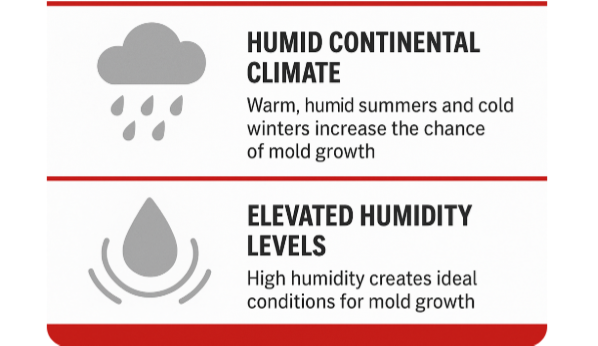
Fort Wayne sits at the convergence of three rivers, the St. Marys, St. Joseph, and Maumee, creating naturally elevated humidity levels throughout the metropolitan area. This unique geography combines with Northeast Indiana’s humid continental climate to produce conditions exceptionally favorable for mold development.
Summer months bring sustained humidity levels between 75-85%, while Fort Wayne receives precipitation fairly evenly distributed across all seasons. The region experiences approximately 38 inches of annual rainfall plus significant snowfall that creates additional moisture challenges during spring melts. This consistent moisture availability provides ideal conditions for mold spores to germinate and colonies to flourish.
Fort Wayne’s temperature variations contribute significantly to mold problems. The city experiences hot, humid summers followed by cold winters with frequent freeze-thaw cycles that stress building materials. Spring and fall shoulder seasons generate dramatic day-to-night temperature swings of 30-40 degrees, creating condensation issues within wall cavities, attics, and crawl spaces where moisture accumulates unnoticed.
The city’s housing stock presents additional mold risk factors. Many Fort Wayne neighborhoods feature homes built in the early-to-mid 20th century, constructed before modern moisture barriers, proper ventilation systems, and effective waterproofing became standard practice. Areas like West Central, South Wayne, and older sections of neighborhoods surrounding downtown contain beautiful historic homes that unfortunately lack modern moisture protection.
Northeast Indiana’s clay-heavy soil composition retains water and creates hydrostatic pressure against foundation walls. This geological characteristic means Fort Wayne basements commonly experience moisture intrusion through foundation walls and floor slabs. Even newer construction in developing areas like southwest Fort Wayne and Aboite Township can experience moisture problems if builders didn’t properly address soil conditions during construction.
Understanding these regional factors helps Fort Wayne homeowners recognize why mold remediation requires specialized local knowledge. Professionals familiar with Northeast Indiana’s climate, soil conditions, and housing characteristics provide more effective solutions than generic approaches.
Why Does Certification Matter When Choosing Mold Remediation Services?
The mold remediation industry includes both highly qualified professionals and unscrupulous operators lacking proper training or credentials. Certification provides the primary means for Fort Wayne homeowners to distinguish between these extremes.
IICRC certification represents the industry’s most recognized and respected credential for mold remediation technicians. The Institute of Inspection, Cleaning and Restoration Certification requires completion of rigorous coursework covering microbial remediation principles, containment protocols, removal techniques, safety procedures, and post-remediation verification. This training typically involves 40+ hours of classroom instruction plus practical examinations demonstrating competency.
Indiana state regulations establish baseline requirements for mold remediation contractors. The Indiana Professional Licensing Agency oversees contractor registration, requiring proof of adequate insurance coverage, proper bonding, and demonstrated technical qualifications. Fort Wayne homeowners should verify any company’s license status through the state’s online database before agreeing to services.
Beyond basic requirements, additional certifications demonstrate advanced expertise and commitment to excellence. The Indoor Air Quality Association offers specialized credentials focusing on environmental health aspects of mold problems. The American Council for Accredited Certification provides designations requiring extensive knowledge of mold biology, moisture dynamics, and building science principles.
Certified professionals understand critical concepts that untrained operators miss. They recognize how Fort Wayne’s climate influences mold growth patterns, which building materials harbor mold most aggressively, how to properly contain work areas to prevent spore spread, and which treatment approaches work most effectively against specific mold species common in Northeast Indiana.
Insurance coverage equals certification in importance. Legitimate companies maintain comprehensive general liability insurance protecting homeowners from property damage claims and workers compensation coverage protecting against injury claims. Request current certificates of insurance and verify coverage directly with insurance carriers before work begins.
When evaluating Fort Wayne remediation companies, ask specific questions about certifications and training. Request certification card numbers and verify them through issuing organizations’ websites. Legitimate professionals display credentials proudly and welcome verification. Companies hesitant about providing documentation likely lack proper qualifications and should be avoided.
The Patterson Family’s Hidden Mold Discovery
Jennifer and Mark Patterson moved into their dream home in the Covington Ridge neighborhood five years ago. The two-story colonial offered everything they wanted—a spacious layout, finished basement, and beautiful landscaping. Their two children loved the neighborhood, and everything seemed perfect until Jennifer noticed persistent allergy symptoms that wouldn’t respond to medication.
Initially, she blamed seasonal allergies, common in Fort Wayne with its abundant trees and plant life. However, her symptoms continued year-round, worsening whenever she spent time in the basement where her home office was located. Mark mentioned occasionally noticing a musty smell down there but attributed it to typical basement odors.
Everything changed when heavy spring rains caused minor flooding in their neighborhood. While their basement didn’t flood, Mark decided to check for any water intrusion. Moving storage boxes away from the foundation wall revealed shocking discoveries—extensive mold growth covering the concrete and climbing up drywall studs. The beautiful finished basement had concealed a serious problem for years.
Jennifer immediately researched mold health effects and became concerned about her symptoms and their children’s exposure. They contacted their insurance company, which provided several remediation company recommendations. The first company offered a quick chemical spray treatment for an attractive price. Something felt wrong about such a simple solution to what appeared serious.
Jennifer researched alternatives and discovered the importance of proper certification and eco-friendly treatment options. The second company they contacted arrived with sophisticated testing equipment, performed comprehensive moisture mapping, and discovered mold extended far beyond the visible areas. They found colonies behind finished walls where slow moisture seepage from foundation cracks had occurred undetected.
The certified remediators explained how eco-friendly botanical treatments would safely eliminate the mold without exposing their family to harsh chemical residues. The comprehensive approach included removing affected materials, applying enzyme-based antimicrobials, properly sealing foundation cracks, installing a perimeter drain system, and adding a basement dehumidification system.
The remediation took nine days and cost more than initial quotes, but results justified every dollar invested. Jennifer’s symptoms disappeared within three weeks. Post-remediation testing confirmed complete mold elimination with spore counts returning to normal background levels. Most importantly, the Pattersons learned that proper certification, comprehensive approaches, and eco-friendly treatments protected their family’s health while solving the root problem rather than masking symptoms.
Their experience taught valuable lessons they now share with Fort Wayne neighbors. First, visible mold represents only part of the problem—professionals find hidden colonies. Second, the cheapest quote often means inadequate work leaving problems unresolved. Third, eco-friendly treatments provide effective solutions without compromising family health. Fourth, addressing moisture sources matters as much as treating visible mold.
How Do Eco-Friendly Treatments Work Against Mold?
Understanding the science behind eco-friendly mold remediation helps Fort Wayne homeowners appreciate why these treatments match or exceed conventional chemical effectiveness while providing superior safety profiles.
Traditional chemical biocides like chlorine bleach, ammonia-based products, and synthetic fungicides kill mold by creating toxic conditions that destroy cellular structures. While effective at killing visible surface mold, these chemicals leave concerning residues in living spaces, emit volatile organic compounds that affect air quality, and can damage surfaces they contact. They also pose health risks to family members and pets exposed to treatment areas.
Eco-friendly alternatives employ different mechanisms that eliminate mold without toxic side effects. Botanical antimicrobials derived from plant compounds like thyme oil, tea tree oil, and citrus extracts disrupt mold cell membranes, causing cellular death. These natural compounds break down into harmless components after completing their antimicrobial action.
Enzyme-based cleaners work by producing proteins that break down organic matter mold feeds upon, essentially starving colonies while simultaneously degrading mold structures. These biological catalysts continue working after application, providing residual protection against new mold development. When their work completes, enzymes biodegrade naturally without leaving harmful residues.
Hydrogen peroxide formulations at appropriate concentrations oxidize mold cell structures, destroying colonies at the molecular level. Unlike chlorine bleach, hydrogen peroxide decomposes into water and oxygen, leaving no toxic residues. Professional-grade formulations penetrate porous surfaces more effectively than consumer products, reaching mold roots within building materials.
Research demonstrates properly applied eco-friendly treatments achieve equivalent or superior effectiveness compared to traditional chemicals against mold species commonly found in Fort Wayne homes. Studies show botanical antimicrobials effectively eliminate Aspergillus, Penicillium, Cladosporium, and Stachybotrys species prevalent in Northeast Indiana’s humid climate.
Application methodology matters tremendously for treatment effectiveness. Professional technicians understand proper product concentrations, necessary contact times, and appropriate application techniques for different surfaces and mold species. They use specialized equipment that ensures even coverage and adequate penetration into porous materials where mold roots hide.
Fort Wayne’s environmental conditions make eco-friendly treatments particularly suitable. Our region’s moderate climate doesn’t require the aggressive chemicals that might be necessary in extreme humidity zones. Green treatments work efficiently against Midwest mold species while protecting local water quality, an important consideration given Fort Wayne’s position at the headwaters of the Maumee River watershed.
What Should Comprehensive Mold Remediation Include?
Professional mold remediation follows systematic protocols ensuring complete elimination while protecting property and occupant health. Understanding this process helps Fort Wayne homeowners recognize quality service and identify companies cutting corners.
Initial assessment and testing establish the problem’s full extent. Certified technicians use moisture meters identifying hidden water sources within walls and flooring. Infrared thermal cameras detect temperature variations indicating moisture presence. Air quality sampling determines mold spore concentrations and identifies specific species present. Surface sampling confirms contamination extent. This comprehensive diagnostic phase creates a detailed remediation blueprint specific to your home’s conditions.
Containment setup prevents mold spore spread during removal activities. Professionals establish physical barriers using heavy polyethylene sheeting that seals work areas from the rest of your home. They create negative air pressure using specialized fans that pull air from containment areas through HEPA filters before exhausting outside. Air scrubbers continuously filter the work area, capturing microscopic spores released during removal. These precautions protect unaffected areas from cross-contamination that would spread problems throughout your home.
Moisture source elimination addresses root causes enabling mold growth. Remediation fails without solving underlying water problems. Technicians identify and repair leaks, seal foundation cracks, improve exterior drainage, correct grading issues, or install dehumidification systems as needed. This critical step ensures mold cannot return after treatment completion.
Material removal follows strict guidelines based on contamination severity and material porosity. Porous materials like drywall, insulation, carpet, and ceiling tiles that absorbed moisture and harbor deep mold penetration typically require removal and disposal. Non-porous surfaces like metal, glass, solid wood, and sealed concrete can often be cleaned and salvaged using appropriate treatments. Professional judgment determines removal necessity based on actual conditions rather than arbitrary rules.
Eco-friendly treatment application uses botanical antimicrobials, enzyme cleaners, or hydrogen peroxide formulations that penetrate surfaces and eliminate mold at the cellular level. Professional application ensures proper product selection, appropriate concentration, complete coverage, and sufficient contact time for maximum effectiveness. These treatments continue working after application, providing residual protection against new growth.
Structural drying reduces moisture levels below thresholds supporting mold growth. Industrial dehumidifiers and high-velocity air movers create conditions preventing mold survival. This drying phase typically continues for several days depending on materials affected and initial moisture content. Moisture meter readings verify successful drying before reconstruction begins.
HEPA vacuuming removes dead mold debris and settled spores from all surfaces within containment areas. This cleaning phase prevents residual spores from becoming airborne after containment removal.
Post-remediation verification confirms successful mold elimination through clearance testing. Air samples collected after remediation verify spore counts returned to normal background levels. Surface samples confirm no viable mold remains. Reputable companies provide detailed documentation of these results for your records and potential insurance claims.
How Does Fort Wayne’s Climate Influence Treatment Selection?
Northeast Indiana’s specific climate patterns significantly influence which remediation approaches work most effectively. Professionals familiar with Fort Wayne conditions select methods based on regional environmental factors.
Summer humidity creates persistent moisture challenges requiring ongoing control beyond one-time remediation. Fort Wayne’s sustained high humidity means ambient moisture alone can support mold growth even after professional treatment. Effective remediation plans include dehumidification system recommendations—whole-house units integrating with HVAC systems or standalone basement models maintaining humidity below 50% year-round.
Seasonal temperature variations generate hidden condensation problems in attics, crawl spaces, and wall cavities. Fort Wayne experiences hot summers and cold winters creating conditions where warm moist air contacts cold surfaces and deposits moisture. This hidden moisture feeds mold growth remaining invisible until colonies become extensive. Proper remediation addresses these concealed moisture sources through improved insulation, enhanced ventilation, and appropriate vapor barriers.
Spring flooding risks affect many Fort Wayne neighborhoods, particularly areas near the three rivers and their tributaries. Heavy spring rains combined with snowmelt create periodic water intrusion challenges testing basement waterproofing systems. Professional remediators familiar with Fort Wayne’s flood patterns recommend robust waterproofing solutions that withstand these recurring events.
Clay soil throughout Northeast Indiana retains water and creates hydrostatic pressure against foundation walls. This geological characteristic means many Fort Wayne basements experience persistent moisture intrusion through foundation walls and floor slabs. Effective remediation includes exterior drainage improvements like French drains and interior moisture barriers specifically designed for clay soil conditions.
Winter freeze-thaw cycles stress building materials and create new entry points for moisture. Fort Wayne’s winters feature repeated freezing and thawing that cracks foundation walls, damages roof materials, and compromises window and door seals. Spring remediation often discovers winter damage requiring repair alongside mold treatment.
What Prevention Strategies Protect Fort Wayne Homes Long-Term?
Professional remediation solves existing mold problems, but prevention strategies protect your investment and maintain healthy indoor environments indefinitely.
Humidity control represents the single most critical prevention factor for Fort Wayne homes. Install and properly maintain dehumidifiers in basements, crawl spaces, and other moisture-prone areas. Set target humidity between 40-50% for optimal mold prevention. Monitor humidity regularly using simple meters available at hardware stores. During Fort Wayne’s humid summer months, dehumidifiers should operate continuously. Empty collection buckets daily or install permanent drainage connections for continuous operation.
Ventilation improvements remove moisture before condensation occurs. Ensure bathroom exhaust fans vent outside rather than into attics. Run fans during showers and for 20 minutes afterward. Kitchen range hoods should exhaust cooking moisture outside rather than recirculating. Consider whole-house ventilation systems or energy recovery ventilators that provide fresh air while maintaining energy efficiency.
Regular inspections catch problems when solutions remain simple and inexpensive. Check basements quarterly for water stains, efflorescence (white mineral deposits indicating moisture), musty odors, or visible mold. Inspect attics twice yearly for roof leaks, insulation problems, or inadequate ventilation. Examine crawl spaces annually for standing water, damaged vapor barriers, or moisture accumulation. Address minor problems immediately before they escalate into major remediation projects.
HVAC system maintenance ensures heating and cooling equipment controls moisture effectively. Change filters monthly during high-use seasons and every two months during moderate weather. Schedule professional service twice annually to verify proper condensate drainage, adequate airflow, and correct refrigerant levels. Clean ductwork every 3-5 years to remove accumulated dust, debris, and biological growth that can harbor mold spores.
Foundation waterproofing protects against Fort Wayne’s clay soil and periodic heavy precipitation. Maintain proper grading sloping away from foundations at minimum 6 inches over 10 feet distance. Keep gutters clean and install gutter guards if trees surround your property. Extend downspouts at least 6 feet from foundations, directing water toward areas that drain away from your home. Consider professional exterior waterproofing including drainage systems for chronic basement moisture problems.
Landscape management reduces moisture near foundations. Trim shrubs and trees maintaining 2-3 feet clearance from exterior walls. Ensure mulch beds slope away from foundations and don’t exceed 2-3 inches depth immediately adjacent to walls. Avoid planting water-intensive gardens directly against foundations where irrigation increases moisture exposure.
Prompt water damage response prevents mold establishment. Address leaks, floods, or water intrusion immediately. Extract standing water within 24 hours. Remove wet porous materials like carpet padding within 48 hours. Begin drying within 24-48 hours using fans, dehumidifiers, and adequate ventilation. Fort Wayne’s humid climate means moisture lingers longer than in arid regions, making rapid response essential for mold prevention.
How Do You Select the Right Remediation Company in Fort Wayne?
Fort Wayne hosts numerous mold remediation companies with varying qualifications, capabilities, and integrity. Selecting the right service requires careful evaluation extending beyond comparing price quotes.
Verify certifications independently rather than accepting company claims at face value. Check IICRC certification status through their official website at iicrc.org. Confirm Indiana state licensing through the Professional Licensing Agency website. These simple verification steps immediately eliminate unqualified operators making false claims.
Request detailed written estimates from at least three certified companies. Compare not just total costs but specific work scope, materials specified, treatment methods proposed, timeline estimates, and warranties provided. Suspiciously low bids often indicate shortcuts in containment procedures, incomplete moisture source correction, inadequate treatment depth, or use of inferior materials allowing mold recurrence.
Investigate their eco-friendly treatment options specifically and thoroughly. Companies genuinely committed to green remediation explain product chemistry, effectiveness research, health advantages, and environmental benefits clearly. They should offer multiple eco-friendly product options and help you understand which formulations work best for your specific situation, mold species present, and affected materials.
Examine insurance coverage thoroughly and verify independently. Request current certificates for comprehensive general liability insurance and workers compensation coverage. Note certificate expiration dates and coverage limits. Contact insurance companies directly using phone numbers from independent sources rather than certificates to verify policies remain active with adequate coverage. This verification protects you from potential liability if accidents occur during remediation work.
Assess their Fort Wayne-specific experience and local knowledge. Ask how long they’ve operated in Northeast Indiana and request references from recent projects in your neighborhood. Companies familiar with Fort Wayne’s climate patterns, common housing characteristics, typical mold problems, and local building codes provide more effective solutions than regional or national operators unfamiliar with local conditions.
Review online reputation across multiple independent platforms. Check Google reviews, Better Business Bureau ratings, Angie’s List feedback, HomeAdvisor reviews, and social media comments. Look for consistent patterns rather than isolated complaints or suspiciously perfect ratings. Companies maintaining predominantly positive reputations across all platforms demonstrate reliability, quality work, and customer focus. Pay particular attention to how companies respond to negative reviews—professional, constructive responses indicate integrity.
Interview technicians and ask detailed questions. Legitimate professionals explain their process clearly, answer questions thoroughly, and discuss potential complications honestly. They should willingly explain certification requirements, treatment product options, timeline estimates, and warranty terms. Beware of high-pressure sales tactics, guaranteed prices before inspection, or promises that sound too good to be true.
What Should Fort Wayne Homeowners Expect to Invest in Mold Remediation?
Understanding cost factors helps Fort Wayne homeowners budget appropriately and evaluate whether estimates reflect proper remediation scope and quality.
Project size significantly influences total investment required. Small isolated areas under 10 square feet typically cost between 500-1,500 dollars for professional remediation including containment, treatment, and verification. Medium projects covering 10-100 square feet generally range from 1,500-5,000 dollars depending on material removal requirements and moisture source repairs needed. Extensive remediation exceeding 100 square feet often costs 5,000-15,000 dollars or substantially more for whole-house contamination or structural complications.
Material removal requirements dramatically affect total costs. Simple surface cleaning of non-porous materials costs considerably less than removing and replacing drywall, insulation, flooring, or structural components. However, thorough removal of contaminated porous materials ensures complete mold elimination and prevents recurrence, making it a necessary investment despite higher initial costs. Attempting to save money by avoiding necessary removal typically results in mold returning within months, requiring complete remediation again at even greater expense.
Eco-friendly treatment products typically cost 10-15% more than conventional chemical biocides. This modest premium provides significant health and environmental benefits that most Fort Wayne families consider worthwhile, especially households with children, elderly members, individuals with respiratory conditions, or pets. The cost difference represents a small fraction of total project expenses while providing substantial safety advantages.
Testing expenses include initial assessment, during-project monitoring, and post-remediation clearance verification. Expect to invest 300-700 dollars for comprehensive testing that documents mold species present, concentration levels before treatment, and successful elimination after remediation. Many insurance companies require this documentation for claim approval, and testing provides valuable verification that work was completed successfully.
Moisture source repairs add variable costs depending on underlying problems discovered. Simple repairs like sealing foundation cracks might cost 500-1,000 dollars. Installing sump pumps ranges from 1,000-3,000 dollars. Comprehensive exterior waterproofing systems cost 5,000-15,000 dollars or more. While these repairs increase total investment, they’re essential for preventing mold recurrence and protecting your home’s structural integrity.
Additional costs beyond direct remediation contracts often surprise homeowners. Consider temporary housing expenses during extensive projects requiring vacating your home, storage costs for furniture and belongings removed from work areas, replacement of removed materials like drywall and flooring, and repainting or refinishing after reconstruction. Discuss these potential expenses upfront with your remediation company to avoid budget surprises.
Insurance coverage varies significantly based on policy language and damage causes. Sudden water events like burst pipes, sewage backups, or storm flooding typically receive coverage including resulting mold remediation. Long-term moisture problems from deferred maintenance, chronic leaks, or inadequate ventilation generally don’t qualify for coverage. Review your policy carefully and contact your agent immediately when discovering mold to understand coverage options and claim requirements.
Frequently Asked Questions About Fort Wayne Mold Remediation
How quickly should I address mold problems after discovering them?
Immediate action protects both health and property. Mold colonies spread rapidly in Fort Wayne’s humid climate, potentially doubling in size within 48-72 hours under favorable conditions. Quick professional response limits contamination spread, reduces remediation costs, and minimizes health exposure. Contact certified remediators immediately upon discovering mold rather than waiting to see if problems worsen.
Can mold grow inside walls where I cannot see it?
Hidden mold growth represents one of the most dangerous scenarios because colonies develop extensively before discovery. Moisture from slow leaks, condensation, or foundation seepage allows mold to flourish within wall cavities, behind finished basements, under flooring, and in attics. Professional inspection using moisture meters and thermal imaging detects these hidden problems before they cause serious structural damage or health effects.
What health symptoms indicate mold exposure?
Common symptoms include persistent coughing, sneezing, nasal congestion, throat irritation, eye redness or itching, skin rashes, headaches, and fatigue. More severe exposure causes breathing difficulty, asthma attacks, chronic sinus infections, and cognitive problems like difficulty concentrating. Individuals with compromised immune systems, chronic respiratory conditions, or mold allergies experience more serious reactions potentially requiring medical treatment.
How long does professional mold remediation take?
Typical residential projects require 3-7 days from initial containment through final clearance verification. Small isolated areas may complete in 1-2 days, while extensive whole-house remediation can take 2-3 weeks or longer. Timeline depends on affected area size, structural drying requirements, material replacement needs, moisture source repair complexity, and weather conditions affecting drying rates.
Will mold return after professional remediation?
Proper remediation performed by certified professionals eliminates existing mold permanently. Recurrence only happens if new moisture problems develop or humidity control fails. Following prevention recommendations, maintaining dehumidifiers, addressing water problems immediately, and conducting regular inspections prevents new mold growth. Reputable companies warranty their work against recurrence when homeowners maintain proper moisture control.
Should I hire the same company for water damage restoration and mold remediation?
Many certified restoration companies offer both services, providing advantages in coordinated response, consistent quality, and streamlined insurance claims. However, ensure the company holds separate certifications for both water damage restoration and mold remediation. IICRC offers distinct certifications for each specialty requiring different training and expertise. Companies certified in both areas provide comprehensive solutions addressing immediate water damage and preventing subsequent mold development.
Take Action to Protect Your Fort Wayne Home Now
Mold problems never resolve themselves and always worsen with time. Delay allows colonies to spread deeper into building materials, structural damage to progress, remediation costs to increase, and health risks to multiply for everyone in your household. Fort Wayne homeowners dealing with mold concerns need certified professionals who combine technical expertise with eco-friendly solutions protecting both families and the environment.
PuroClean Disaster Restoration of West Fort Wayne serves Fort Wayne and surrounding Northeast Indiana communities with certified mold remediation using advanced eco-friendly treatments. Their IICRC-certified technicians understand Indiana’s unique climate challenges and provide comprehensive solutions tailored specifically to Fort Wayne’s environmental conditions, housing characteristics, and common mold problems.
Whether you’ve discovered visible mold growth, notice persistent musty odors, want professional assessment of potential hidden problems, need emergency response to water damage, or require verification after previous remediation attempts, immediate action protects your home’s value and your family’s health. Certified professionals identify hidden issues invisible to homeowners, eliminate mold safely using green treatments proven effective in Northeast Indiana’s climate, and implement prevention strategies that maintain healthy indoor environments long-term.
Don’t risk your family’s wellbeing or your home’s structural integrity by choosing unqualified services or attempting inadequate DIY approaches that leave root problems unaddressed. Call PuroClean Disaster Restoration of West Fort Wayne at (260) 263-9788 right now for immediate expert assistance. Their team responds quickly to Fort Wayne emergencies, provides thorough professional assessments using advanced technology, and delivers eco-friendly remediation that solves mold problems completely and permanently. The initial consultation costs nothing, but the protection and peace of mind for your family proves invaluable.


 PuroClean Disaster Restoration of West Fort Wayne