


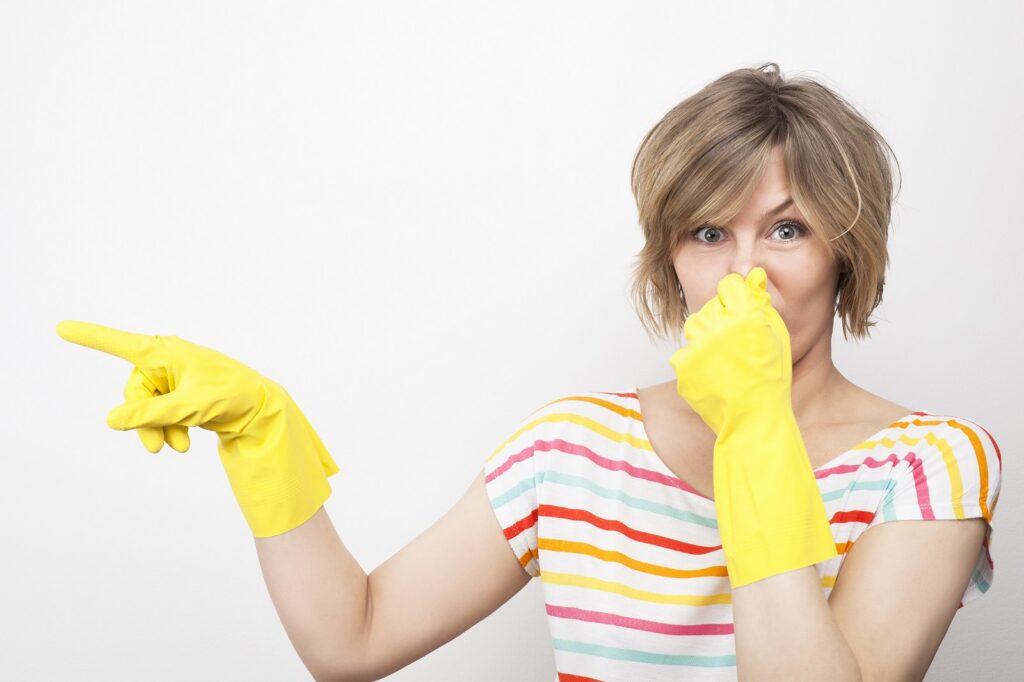
A foul or persistent smell in your home is more than just an annoyance it is often a warning sign of an underlying structural or environmental issue. In Chamblee, Georgia, where humid summers and older housing stock create ideal conditions for moisture retention, odors can embed deeply into drywall, carpets, upholstery, and subfloors.
While store-bought sprays, scented candles, and plug-in air fresheners may temporarily mask bad odors, they only coat olfactory receptors with synthetic fragrance. To permanently eliminate stubborn smells, you must locate the root source and destroy the odor molecules at a microscopic level.
Common Sources of Household Odors in Chamblee
Musty & Earthy Smells (Hidden Mold and Mildew)
A persistent earthy or damp basement smell usually points to microbial growth behind drywall, under carpeting, or inside crawlspaces caused by excess humidity or undetected plumbing leaks.
Sewer Gas & Rotten Egg Smells (P-Traps & Plumbing Vent Line Failure)
A sulfur or sewage stench usually indicates dried-out plumbing P-traps, damaged toilet wax rings, or blocked sewer vent stacks allowing sewer gas to back up into living spaces.
Pet Urine and Dander Odors
Urine penetrates deep through carpet fibers into subflooring and padding. As moisture evaporates, uric acid crystals bind tightly to porous building materials, releasing strong ammonia odors whenever indoor humidity rises.
Smoke Damage (Tobacco or Cooking Fires)
Smoke particles are microscopic and sticky. They embed into wall paint, ceiling tiles, HVAC ductwork, and structural framing, remaining behind long after the fire event.
1. Why does my house smell musty?

If your home has suffered water damage or high humidity, the musty odor is likely the result of mold, which thrives in damp, warm, and dark places. Mold also presents several health risks.
Mold exposure symptoms
Getting rid of mold not only neutralizes the odor, but it also defends occupants from mold exposure health risks. Mold-sensitive individuals may exhibit allergy symptoms, such as sneezing, runny or stuffy nose, coughing, itchy eyes, wheezing and skin irritation. Moreover, mold can trigger asthmatic symptoms that include coughing, wheezing, shortness of breath and chest tightness. Mold exposure can also cause irritant reactions, in which case the symptoms are like those of an allergic reaction: coughing, runny nose, eye irritation and more.
For proper odor removal in your house, the affected area will need to be dried and the mold properly removed.
Tips for mold-related odor removal
- Check the damp places in your home that could support mold growth. Keep in mind that mold may be hidden. If you can’t find traces of mold, hire a restoration company — they have non-invasive moisture meters to find mold that’s hiding behind walls, for example.
- Once you find the affected area, clean it by scrubbing the surface with a mixture of household detergent and water. Don’t use bleach, as it only kills live mold, but not mold spores, leading to faster mold growth. Then, dry the area using ventilation and dehumidifiers. Make sure the area is dry before doing any repainting or reconstruction.
- If the odor comes from carpet, first, fix the humidity issue that causes the musty odor. To deodorize your carpet, spray it with a mixture of 1 cup of white vinegar and 2 cups of warm water. Then, pour baking soda on the carpet and wait a few hours. If the odor persists, repeat the process. (Make sure you spot test first to avoid potentially damaging delicate materials.)
For any mold removal task, we recommend contacting a professional mold remediation company, such as PuroClean. Our technicians provide industrial-strength machines and have extensive mold removal experience. They use dehumidifiers, air-moving machines, and fans to thoroughly dry the area, ensuring that mold will not return.
2. My house smells like tobacco smoke
How tobacco smoke affects your home
Smoking tobacco releases odorous substances that stick to every surface of the area in which smoking occurs. Cigarette smoke also penetrates more odor-absorbing objects, such as carpets, upholstery, bedding, clothes, and many more. Additionally, the HVAC system of a building can carry the smoke odor and chemicals throughout the structure.
Tobacco residue is extremely hard to remove and requires professional equipment and services. But, if you want to try to DIY, here are a few tips for cigarette smoke odor removal.
Long-term cigarette odor removal solutions
For cigarette smoke odor removal, you must thoroughly clean the tobacco smoke residue from every surface and corner in the home:
- First, open all windows and doors to let as much fresh air inside as possible.
- Clean or replace all air filters, furnace filters, and AC filters.
- Clean walls and ceilings using products with ammonia and glycol — two ingredients that neutralize bad odors. Let the walls dry and check if the odor persists.
- If you can still smell cigarette odor after cleaning, repaint the walls and ceilings with latex paint. Use a sealant designed to lock in odors before painting.
- Clean everything in the home: floors, windows, carpets, furniture, upholstery, draperies, blinds, and other household surfaces, fixtures, and items. Hire a professional cleaning company if the tobacco smoke is too difficult to remove.
Short-term cigarette odor removal solutions
If you want inexpensive short-term solutions, try these tips:
- Use an air purifier in your home.
- Sprinkle baking soda on the carpets, leave it overnight to absorb bad smells, and vacuum it the next day.
- Place saucers of white vinegar around the house and leave them overnight to neutralize the smell.*
- Get indoor plants which can absorb up to 87% of indoor pollutants.
- Place small bowls of coffee throughout the home.*
- Use scented or non-scented candles.
- Leave orange peels around the home.*
- Place pineapple slices around the room with all doors and windows closed for 24 hours.*
- Place bowls of activated charcoal around the home.*
*Please be mindful of where you place these items throughout your home as they may be harmful to children and pets if ingested.
Completely removing cigarette smoke odor from a home is a very time-consuming and complicated process. If the situation is severe, call a professional smoke remediation specialist, such as PuroClean, for odor removal.
How professionals perform smoke odor removal from a property
As tobacco residue is present throughout the entire affected area, removing it is often very difficult. There is no magic formula that just whisks away residues and smells.
The only effective way to remove tobacco residue and smell is through very thorough cleaning and then sealing all structural surfaces. Restoration specialists start tobacco smoke odor removal by cleaning all surfaces. The cleanup includes deodorizing agents to help eliminate the very tiny particles of tobacco smoke.
Once the technicians finish cleaning the visible surfaces, using specialized equipment is often necessary to remove the very last of the odors that are not easily accessible (such as inside walls or joints). This will often involve hydroxyl generators or ozone generators — professional equipment that effectively destroys the smelly particles.
The next step consists of sealing the surfaces with a product designed to seal smoke residues. These can lock in the very last of the stains and odors. Finally, the surfaces will be ready to paint, refinish or apply new coverings.
What about the soft items? Things such as upholstery, bedding, draperies, and clothes absorb odors very well and are often easily damaged. Because of this, they are very difficult to successfully restore and may require specialists. In many cases though, the decision is made to simply replace these materials and items.
For cigarette smoke odor removal, call the pros!
For tobacco smoke odor removal in your home effectively and in the shortest time possible, hire a professional restoration company like PuroClean. We provide complete smoke cleaning and sanitation, professional deodorization, as well as duct cleaning services.
3. My house smells like pet urine or skunk spray
Skunk spray and serious pet urine odor are some of the most upsetting when they affect your home. But, although controlling those odors can be difficult, it can be achieved. Here are tips on how to properly deodorize these odors from a house.
How to remove pet urine or skunk smell
- Nonporous surfaces — If pet urine or skunk spray is on a nonporous surface, such as metal or plastic, thorough cleaning is the first step and may be enough. Since the odorous substance contains natural oils, which is the cause of the smell, you will want a strong detergent. Using warm water and strong detergent should be effective and should not take long. After washing the surface, rinse it with warm water. If the smell is still there, repeat the process. Make sure to rinse with warm water to clean away any residue left behind.
- Porous surfaces — If pet urine or skunk is on a porous surface, like carpet, particleboard, or upholstery, cleaning them is also the first step. Clean these as you would a non-porous surface. These surfaces are more difficult to clean, so if your efforts are not successful, or if the task is too overwhelming, call a professional restoration company. Carpet and pad with excessive pet urine damage creates a biohazard condition and should usually be removed and discarded.
- Semi-porous surfaces — On semi-porous materials, such as most wood, also clean with a solution of water and detergent as explained above. To help neutralize the odor, the detergent should be allowed to penetrate the surface. However, if the wood is heavily damaged by urine or skunk spray, it will most likely need to be disposed of. Seek assistance from a restoration company to improve your chances of restoring damaged semi-porous material.
How to eliminate general pet odors:
- Pets need regular bathing and grooming. Washing your furry friends helps remove odors and dirt, while frequent brushing prevents shedding hair from reaching your furnishings.
- Wash your dog with a solution of 1 quart of 3% hydrogen peroxide mixed with ¼ cup of baking soda and 1 teaspoon of mild dishwashing liquid. Avoid the eyes and ears.
- Empty the cat litter box, then clean it by pouring ½ inch of vinegar in it and adding some baking soda. Add water, stir and let it soak for a few hours. Afterward, remove the liquid, wash, rinse and let it dry.
- Regularly clean and vacuum your furniture and carpets. Make sure to read the instructions and use cleaning products that don’t harm your animal companions.
- A common solution to removing general pet odors is baking soda. Just sprinkle a small amount of fresh baking soda on carpets and fabrics in your room, leave it on for 15 minutes (or more), then vacuum it. You can also use baking soda as a substitute for home air fresheners.
- Use air filters to recycle the air in your household. HEPA air filtration systems are recommended and change the HVAC filters monthly in order to provide the best air purification possible.
- Clean the objects that the pets use (toys, food containers, etc.) weekly. Doing so not only improves the smell in your home, but also your pets’ health.
The odor should disappear after applying these tips. But if the problem persists, call PuroClean. Our biohazard cleanup professionals have specialized products and equipment, such as ozone or hydroxyl generators, that can be very effective in completing the deodorizing process.
4. How to Deodorize a House Affected by Decomposition Odor
One of the most severe smells comes from the decomposition of human or animal bodies. Check out our tips to remove these odors from your home:
- Dead body odors — If the issue involves a deceased person, get professional assistance. After the proper authorities have removed the body, cleaning and decontaminating the fluids come under Occupational Safety and Health Administration (OSHA), Blood and Other Potentially Infectious Material (BOPIM) regulations. These regulations specify the training, equipment, safety issues, and products that must be used to safely remove and decontaminate an area damaged by BOPIM. Professional restoration companies follow these regulations to safely decontaminate areas where decomposition took place.
- Dead animal odors — In case the source of decomposition is a small animal, such as a rodent, the approach is similar to removing pet urine or skunk spray. Wear protective gear first, clean and sanitize non-porous and semi-porous material, and discard damaged absorbent material. Semi-porous and nonporous materials need to be thoroughly cleaned and then sanitized with a disinfectant. Over-the-counter disinfectants are very effective and will result in a clean and sanitary surface.
When you’re not sure what to do when confronted with an odor problem, contact a restoration professional right away, before the problem worsens. For any odor removal situation, call your local PuroClean office.
5. How to remove other smells in your home
Bad odors also linger in places like the kitchen, basement, and bathroom. They permeate areas such as carpets, fabrics, and your pets’ favorite spots. Here are budget-friendly tips for eliminating bad odors from various areas in your home:
- Remove the source of the smell. To truly fix the odor issue, identify the problem and fix it. For instance, fixing the plumbing could stop the bad smells from permeating your home.
- Wash hard surfaces, such as countertops, tables, hard floors, and walls. Use either your favorite cleaner or a mixture of half water, half white vinegar.
- Clean carpets and fabrics:
- For carpets, a simple way to eliminate odor is to use baking soda, a natural deodorizer. After the carpet is dry, sprinkle baking soda on it, then allow the baking soda to sit overnight. The next day, remove the baking soda with a vacuum cleaner.
- On upholstery, use white vinegar to absorb the odor. Fill a spray bottle with white vinegar and spritz it on the upholstery. Wait until the vinegar air-dries. The strong smell of vinegar, along with the musty odors, will be gone once it has dried.
- Fight kitchen smells:
- Fridge — keep an open box of baking soda in the fridge to absorb smells. For more efficiency, wipe down shelves using hydrogen peroxide and a piece of cloth.
- Garbage disposal — grind some ice, then sprinkle Borax down the disposal and rinse it with water.
- Fish and other food smells – boil a cup of vinegar on the stove to release vapors that absorb smells quickly. Wipe down the cabinets with soap and warm water.
- Garbage can — if the can itself smells, wash it with water and white vinegar. If the garbage smells, but the can isn’t full yet, remove the odors by dropping some coffee grounds in it.
- Remove bathroom odors:
- Toilet — add 1 cup of white vinegar into the bowl, wait 5 minutes, then scrub and flush.
- Sink drain — mix ½ cup of bleach and ½ cup of water and pour it down the drain. Let it stand for 1 hour and then rinse with water.
The Culprits: Common Sources of Unpleasant Smells
Many things can cause a lingering odor in your home. Before you can get rid of it, you need to find the source.
- Mold and Mildew: This is a major one in our coastal environment. The combination of warm temperatures and high humidity creates a perfect breeding ground for mold. It often produces a musty, earthy smell and can grow in hidden places like behind drywall, under carpets, or in a damp basement.
- Pet Odors: We love our furry friends, but pet dander and urine can seep deep into carpets, upholstery, and floorboards, creating a persistent and unpleasant smell.
- Clogged Drains and Sewage Issues: A foul, rotten egg-like smell coming from a sink or bathroom can be a sign of a clogged drain or a more serious sewer line problem.
- Smoke Residue: Whether from a kitchen fire, a fireplace, or cigarette smoke, the residue from smoke can cling to every surface, from walls and ceilings to furniture and clothing. These odors are notoriously difficult to remove with simple cleaning. This is an issue that is increasingly prevalent in the aftermath of local wildfires, which can leave lingering odors and chemical residues even in homes that weren’t directly burned.
- Decomposing Organic Matter: This could be as simple as forgotten food in a pantry or a dead rodent in a wall or crawl space. These smells are often intensely localized and require finding and removing the source to eliminate the odor.
DIY Solutions to Try First
Once you’ve identified the source, here are some steps you can take to tackle the problem yourself.
- Ventilate, Ventilate, Ventilate: The first and most crucial step is to get fresh air circulating. Open all your windows and doors to let the house air out. You can also use fans to increase airflow.
- Deep Clean Everything: Odors cling to porous surfaces. You’ll need to clean your carpets, rugs, furniture, curtains, and even your walls and ceilings.
- Baking Soda and Vinegar: These are your best friends for odor removal. Sprinkle baking soda on carpets and upholstery, let it sit for a few hours, and then vacuum it up. For hard surfaces, a solution of equal parts white vinegar and water can be used to scrub down walls and floors.
- Clean Out Drains: Pour a cup of baking soda down the drain, followed by a cup of white vinegar. Let it fizz for about 15 minutes, then flush with hot water.
- Invest in an Air Purifier or Dehumidifier: An air purifier with a HEPA filter can help remove airborne particles and odors. A dehumidifier can be essential for combating musty smells by removing excess moisture from the air.
- Seal and Repaint: For stubborn odors like smoke, cleaning isn’t always enough. After a thorough cleaning, you may need to apply a special odor-blocking primer before repainting your walls and ceilings.
Practical Homeowner DIY Odor Removal Tips
- Run Dried-Out P-Traps: Pour water down guest bathroom sinks, tub drains, and floor drains that are rarely used to maintain the water barrier against sewer gas.
- Use Enzymatic Cleaners for Organic Stains: Standard surface cleaners cannot break down uric acid crystals. Always use enzymatic cleaners specifically formulated for pet urine or organic waste.
- Change HVAC Filters and Clean Vents: Replace furnace and air conditioning filters quarterly. Clogged filters recirculate trapped dust, pet dander, and fungal spores throughout your home.
- Promote Air Circulation: Open windows on lower humidity days and run ceiling fans or exhaust fans to clear stagnant air from basements and closets.
Professional Deodorization & Thermal Fogging Process
When household odors stem from deep-seated contamination like mold, fire smoke, or widespread pet accidents, professional intervention is necessary. PuroClean of Chamblee uses advanced, industrial-grade deodorization technology:
1. Source Identification & Elimination
We locate and remove the physical cause of the odor—whether that means extracting trapped moisture, remediating mold growth, or removing contaminated carpet padding.
2. Deep Surface Cleaning & Antimicrobial Wash
Hard surfaces and structural elements are thoroughly cleaned and disinfected using specialized antimicrobial solutions.
3. Thermal Fogging
We deploy thermal fogging units that recreate microscopic particle sizes matching smoke or odor molecules. The fog penetrates deep into wall cavities, fabrics, and porous wood to neutralize odors at their source.
4. Ozone & Hydroxyl Generator Treatment
Hydroxyl generators utilize UV light to generate natural oxidant molecules that oxidize and destroy airborne organic compounds, bacteria, and gases safely without chemical residues.
5. HVAC Duct Cleaning & Air Scrubbing
Industrial HEPA air scrubbers capture floating particulate matter, while ductwork is deodorized to ensure clean airflow throughout the property.
| PuroClean of Chamblee: Professional Deodorization Services Call 24/7 Professional Assistance: (770) 290-3200 Certified Odor Removal Specialists | Advanced Thermal Fogging & Hydroxyl Treatment | Serving Chamblee & Metro Atlanta |