


Discovering standing water pooling in your basement or crawl space is a deeply unsettling experience for any property owner in Stonecrest, Chamblee, Lithonia, or across DeKalb County. Whether triggered by a torrential summer downpour, a failed sump pump, or a leaking household appliance, water accumulation immediately triggers concerns about structural rot, mold growth, and health hazards. A common question property owners ask when facing subterranean water intrusion is whether all standing water is automatically classified as a hazardous Category 3 biohazard.
The short answer is no. Not all standing water in a basement or crawl space constitutes a Category 3 biohazard. According to the Institute of Inspection, Cleaning and Restoration Certification (IICRC S500 standards), water damage is divided into three distinct biological categories based on source and contamination levels. Understanding these categories is essential for determining appropriate safety protocols, handling insurance claims correctly, and executing professional water mitigation.
Mistakenly treating clean water as raw sewage can lead to unnecessary demolition and inflated expenses, while failing to recognize true biohazard contamination puts occupants at severe health risk. Knowing how to differentiate between water types empowers property owners to respond effectively and work confidently with certified restoration professionals.
In DeKalb County’s humid climate, subterranean water issues require prompt evaluation. Recognizing the difference between a clean water pipe leak and a contaminated ground backup ensures that mitigation is handled with the correct level of technical rigor, protecting both building integrity and family health.
The Three IICRC Water Damage Categories Explained
Professional restoration contractors evaluate water intrusion using strict industry guidelines established by the IICRC. Water damage falls into three primary classifications:
Category 1: Clean Water
Category 1 water originates from a sanitary source and poses no substantial risk to human health if ingested or touched. Examples include a broken supply line on a water heater, a supply line feeding a washing machine, or clean rainwater leaking directly through a fresh roof gap before touching exterior soils. If discovered and extracted quickly in a basement or crawl space, Category 1 water allows porous materials to be dried in place without extensive removal.
Category 2: Gray Water
Category 2 water contains significant chemical, biological, or physical contaminants that cause illness or discomfort if consumed or exposed to humans. Examples include discharge from dishwashers or washing machines, broken aquarium water, or sump pump failures where groundwater mixes with household waste. Gray water requires specialized extraction, thorough sanitization, and the removal of contaminated porous materials like carpet padding.
Category 3: Black Water (The True Biohazard)
Category 3 water is grossly unsanitary and contains pathogenic agents, toxic bacteria, human waste, heavy metals, or hazardous chemicals. This category includes sewage backups, overflowing toilet bowls with feces, rising floodwaters from rivers or streams, and stagnant groundwater that has sat in a warm crawl space for days absorbing microbial pathogens. Category 3 water mandates full personal protective equipment (PPE), professional containment, biohazard disposal, and antimicrobial decontamination.
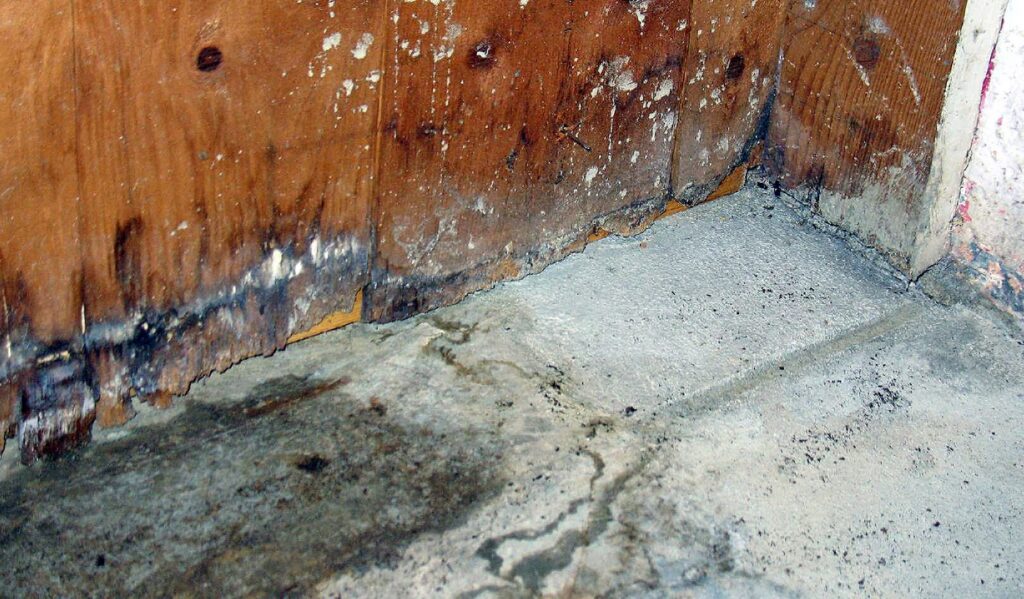
Why Basement and Crawl Space Water Can Quickly Degrade
Even if water entering a basement or crawl space starts out clean (Category 1), environmental conditions in DeKalb County can cause it to degrade into Category 2 or Category 3 rapidly:
- Prolonged Stagnation Time: When clean rainwater or supply line water sits undisturbed in a dark, warm basement or crawl space for more than 48 to 72 hours, ambient bacteria, dust, and organic debris multiply exponentially, transforming clean water into a contaminated soup.
- Soil Contact and Ground Seepage: Water entering crawl spaces directly through earthen floors picks up agricultural fertilizers, animal waste, soil bacteria, and decaying organic matter, instantly elevating the contamination level.
- Sewer and Septic Cross-Contamination: Heavy municipal rainstorms can overwhelm municipal sewer mains or septic tanks, causing raw sewage to back up through basement floor drains and converting a clean flood into a severe Category 3 biohazard.
Health Risks Associated with Subterranean Water Intrusion
Failing to mitigate standing water properly poses serious health risks to building occupants:
- Bacterial and Viral Infections: Contact with sewage-contaminated black water exposes individuals to E. coli, Salmonella, Hepatitis A, and norovirus through skin absorption or accidental ingestion.
- Mold Spores and Mycotoxins: High humidity in unconditioned crawl spaces combined with standing water triggers rapid mold colonization within 24 to 48 hours, releasing airborne spores that exacerbate asthma and allergies.
- Vector Attraction: Stagnant subterranean water attracts mosquitoes, rodents, and pests seeking moisture, creating secondary pest infestations that threaten property hygiene.
Professional Mitigation Steps for Basement and Crawl Space Flooding
Managing basement and crawl space water requires specialized technical intervention rather than DIY mopping:
- 1. Comprehensive Safety and Electrical Inspection: Technicians shut off power to flooded areas to eliminate electrocution hazards before entering standing water.
- 2. Water Testing and Contamination Grading: Professionals assess the water source and stagnation duration to classify the loss accurately as Category 1, 2, or 3.
- 3. High-Capacity Extraction and Pumping: Submersible trash pumps and truck-mounted extractors remove standing water rapidly from concrete slabs and dirt crawl spaces.
- 4. Antimicrobial Application and Structural Drying: Industrial LGR dehumidifiers and air movers dry out framing timbers, sill plates, and concrete, while EPA-registered disinfectants sanitize the space.
Trust PuroClean of Stonecrest for Expert Water Mitigation

If your basement or crawl space is flooded in Stonecrest, Lithonia, Decatur, or DeKalb County, do not guess at contamination levels. Trust the Paramedics of Property Damage® at PuroClean of Stonecrest for certified water extraction, precise contamination testing, and structural drying.
| PuroClean of Stonecrest: Water Damage Restoration Experts |
| Call 24/7 for Emergency Water Extraction: (770) 290-3200 |
| Basement Pumping | Crawl Space Sanitization | Direct Insurance Billing | Serving Stonecrest, Chamblee & DeKalb County |