


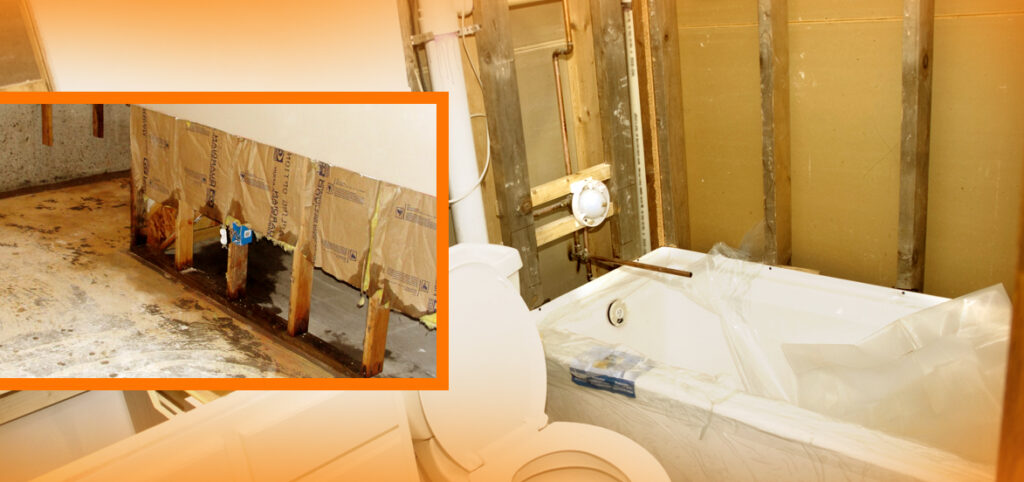
Every home contains hidden infrastructure. Behind the smooth, painted drywall of your Stonecrest home sits a complex network of plumbing lines, electrical wiring, insulation, and structural framing timber. When this network operates smoothly, it remains out of sight and out of mind.
However, when a minor fitting loosens, a drain pipe develops a hairline crack, or exterior groundwater creeps through a foundation seam, that invisible cavity behind your drywall transforms into a reservoir for trapped moisture.
Unlike a burst washing machine hose that floods a living room floor in minutes, hidden water damage works silently over weeks or months. Homeowners often notice subtle warning signs first: a lingering musty odor that persists after cleaning, or a sudden, unexpected increase in the monthly water bill. Because standard interior paint and drywall paper can resist surface moisture for a brief period, significant structural damage can unfold behind the wall long before a visible water stain appears.
Detecting and resolving hidden water damage in Stonecrest requires looking past surface appearances. Modern restoration science relies on advanced diagnostic tools, including infrared moisture detection in Georgia homes, to pinpoint trapped water without tearing down walls prematurely.
The Hidden Progression: How 24 Hours of Moisture Creates Unseen Mold
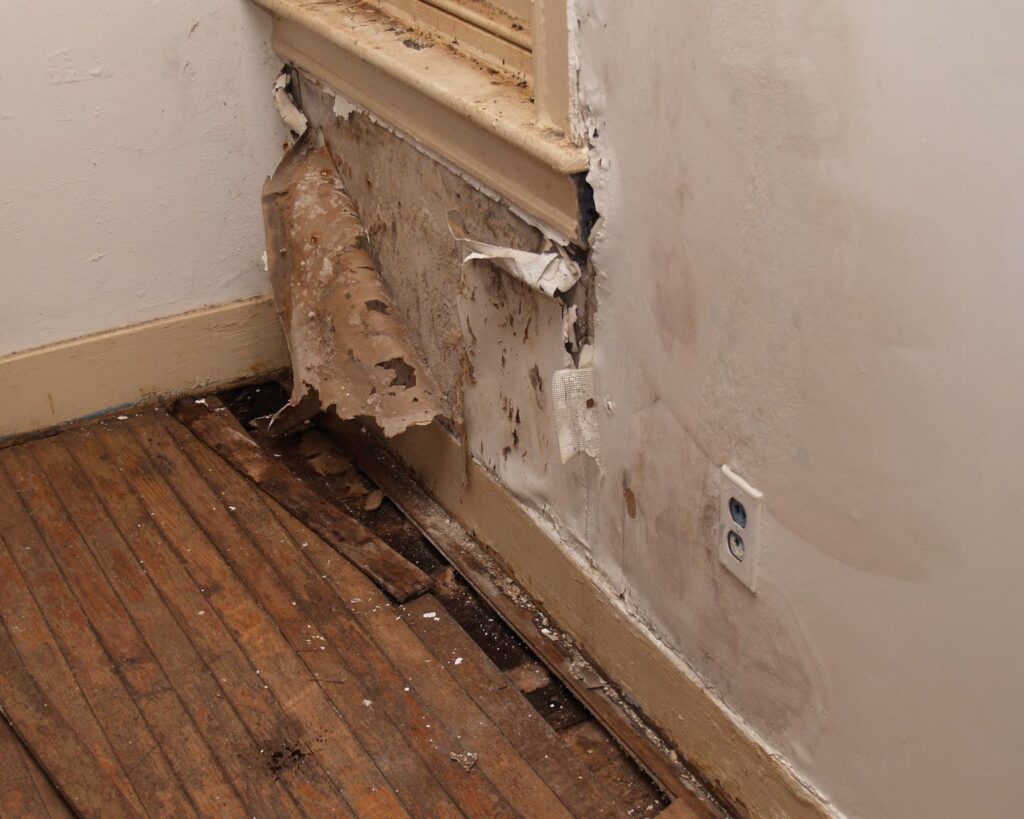
When clean water leaks inside a wall cavity, a biological and physical countdown begins. Drywall is composed of a gypsum plaster core encased between heavy sheets of paper. Gypsum absorbs water readily through capillary action, drawing moisture upward and sideways across the wall assembly like a sponge.
The First 24 Hours
Within hours of water entering a wall cavity, the relative humidity inside that confined space climbs toward 100 percent. The air inside a wall stud bay remains stagnant due to surrounding insulation and tight building envelopes. Paper facings on drywall and organic components in wooden wall studs supply abundant organic food sources for naturally occurring mold spores present in the indoor air.
48 Hours to 72 Hours
Microscopic mold spores germinate when relative humidity exceeds 60 percent and water activity levels remain elevated. Within 24 to 48 hours of initial exposure, dormant spores begin producing hyphae, the thread-like structures that form mold colonies. Because the environment inside the wall cavity remains warm, dark, and damp, these colonies multiply rapidly behind the drywall while the room side of the wall appears completely normal.
By the time surface discoloration, peeling paint, or visible mold specks appear on the exterior face of the drywall, extensive microbial growth has typically taken root on the hidden interior paper layer and adjacent wood framing. Relying solely on visual inspection means missing the critical early window for non-invasive mitigation.
The Science of Restoration: How Infrared Thermal Cameras and Moisture Meters Pinpoint Trapped Water
Historically, finding a leak behind a wall meant physical exploration. Technicians had to cut holes into drywall along the perimeter of a room to inspect the framing, leaving homeowners with extensive repair bills even if no active leak was found. Contemporary restoration science relies on physics and non-destructive testing to map moisture patterns precisely.
The Physics of Infrared Detection
Infrared cameras do not literally see through solid drywall like an X-ray machine. Instead, FLIR thermal imaging cameras measure surface temperature variations across materials.
When water evaporates from porous building components like gypsum, wood, or concrete, it undergoes an endothermic process known as evaporative cooling. As water converts from liquid to vapor, it absorbs heat energy from its surroundings. Consequently, damp areas on a wall surface maintain a lower surface temperature than surrounding dry areas.
An infrared camera captures these subtle thermal variations and renders them as a high-contrast visual image. Wet areas typically appear as cool, dark plumes or thermal anomalies against a uniform, warmer background.
Confirming Anomalies with Moisture Profiling
Thermal imaging provides a rapid visual map of potential moisture, but temperature differences can also stem from missing insulation, electrical heat, or air drafts. To verify whether a thermal anomaly indicates actual water retention, certified technicians conduct moisture profiling using specialized meters:
- Pinless Moisture Meters: These devices use radio frequency signals to measure the dielectric property of materials up to three-quarters of an inch deep without puncturing the wall surface. They allow technicians to scan large sections of drywall quickly to confirm the boundaries of wet materials.
- Pin-Type Moisture Meters: When precise depth readings are required, technicians insert insulated pins directly into structural materials, such as bottom wall plates or subflooring, to measure electrical resistance. Water increases electrical conductivity, offering an exact percentage of moisture content within the wood or gypsum.
Read Also: 7 Signs You Have Hidden Water Damage Behind Walls
Combining thermal imaging scans with calibrated moisture readings creates an accurate profile of the affected area, ensuring that moisture behind drywall cleanup targets only the impacted zones.
Structural Impact: Plywood Delamination, Drywall Sagging, and Georgia Humidity
The climate in Stonecrest, Georgia, presents distinct challenges when water becomes trapped inside building assemblies. High outdoor relative humidity levels during much of the year limit the natural evaporation rates of building materials, causing trapped water to remain stagnant for extended periods.
Drywall and Gypsum Degradation
As gypsum board absorbs water over extended periods, the internal crystal bonds that give drywall its structural integrity break down. The material loses rigidity, sags, and eventually buckles under its own weight. Softened drywall cannot support wall anchors, hanging fixtures, or structural fasteners, increasing the risk of section collapse.
Plywood and OSB Delamination
Plywood and oriented strand board (OSB) are widely used for exterior wall sheathing, subflooring, and cabinetry backing. These composite wood products rely on synthetic resins to bond wood layers or strands together. Prolonged exposure to liquid water breaks down these adhesive bonds:
- Swelling: OSB edges swell permanently when saturated, creating uneven subfloors and compromising structural alignment.
- Delamination: Plywood layers separate into individual veneers, permanently destroying the load-bearing capacity of subflooring and wall bracing.
- Rot: Saturated framing lumber creates ideal conditions for wood-decaying fungi, leading to structural rot in bottom plates and wall studs.
Furthermore, trapped moisture in warm climates creates ideal microclimates for pests, including subterranean termites and carpenter ants, which thrive in damp, decaying timber.
Case Study: Locating a Pinhole Leak Behind a Stonecrest Kitchen Cabinet
To understand how non-invasive moisture detection works in practice, consider a recent scenario involving a homeowner in Stonecrest.
The Problem
The homeowner noticed a gradual, unexplained increase in their monthly water bill over two consecutive billing cycles, alongside a persistent, musty smell in the kitchen pantry. There were no visible water puddles on the hardwood flooring, no dripping under the sink, and no obvious water marks on the painted drywall.
The Diagnostic Process
Upon arrival, a restoration team performed an initial walk-through using an advanced FLIR thermal imaging camera. Scans of the kitchen perimeter revealed a distinct, cool thermal signature spreading behind the lower base cabinets and expanding outward along the bottom four inches of the adjacent pantry wall.
To verify the thermal signature, technicians used a pinless moisture meter. The device recorded elevated relative moisture readings exceeding 85 percent saturation within the lower drywall section behind the cabinetry, confirming that the thermal anomaly was caused by water rather than cold air infiltration.
Targeted Repair and Mitigation
Using the thermal map as a guide, technicians located the source of the moisture: a tiny pinhole corrosion leak in a copper supply line serving the refrigerator ice maker, running through the wall cavity behind the cabinetry.
Because thermal imaging pinpointed the exact boundaries of the moisture footprint:
- The restoration team removed only two cabinet base panels rather than demolishing the entire custom kitchen cabinet run.
- A licensed plumber repaired the leaking pipe fitting through a small, targeted access point.
- Injectidry structural drying systems were installed to pump dry, heated air directly into the wall cavity through unobtrusive holes made behind the baseboards.
By using non-invasive detection, the homeowner saved thousands of dollars in cabinet replacement and full drywall reconstruction costs.
Why IICRC-Certified Structural Drying Saves Thousands in Unnecessary Reconstruction
When water enters a building, the immediate impulse for many property owners is to tear down every piece of wet material. However, indiscriminate demolition is frequently unnecessary, highly disruptive, and expensive. Professional restoration relies on the principles of applied psychrometrics to dry structural elements in place whenever feasible.
What Is IICRC Certification?
The Institute of Inspection, Cleaning and Restoration Certification (IICRC) sets global standards for the water damage restoration industry. The IICRC S500 Standard for Professional Water Damage Restoration outlines strict, science-based protocols for structural drying, category classifications of water, and health considerations.
Working with an IICRC-certified firm ensures that your property is evaluated using standardized engineering principles rather than guesswork.
The Physics of Psychrometric Drying
Structural drying is the controlled management of temperature, relative humidity, and air movement to extract bound water molecules from porous building materials. Certified technicians balance three core variables:
- Air Movement: High-velocity air movers disrupt the saturated boundary layer of air sitting directly above wet surfaces, encouraging moisture to convert rapidly into vapor.
- Dehumidification: Industrial LGR (Low Grain Refrigerant) or desiccant dehumidifiers extract moisture vapor from the surrounding air, keeping relative humidity low enough to maintain continuous evaporation out of saturated wall studs and drywall.
- Temperature Control: Controlling ambient temperatures optimizes the vapor pressure differential between wet materials and the surrounding environment, driving moisture out of structural elements efficiently.
Restoring vs. Replacing
Demolishing wet building components requires labor, disposal fees, material purchases, and extensive reconstruction time. When clean water damage is detected early using infrared technology, IICRC-certified technicians can often dry drywall, wall framing, and subfloors back to their dry standards without tear-out. Preserving sound building materials reduces total claim costs, minimizes daily disruption, and restores your home significantly faster.
Protect Your Home with Advanced Moisture Detection
Hidden water damage does not resolve on its own. What begins as a subtle thermal anomaly behind a wall can quickly turn into costly structural repairs and extensive mold remediation if left unaddressed. If you suspect moisture behind your walls, taking action early protects both your property value and your family’s living environment.
PuroClean of Stonecrest combines technical expertise with advanced diagnostic technology to resolve hidden moisture issues safely and efficiently. Contact us today to schedule a non-invasive thermal imaging moisture inspection for your Stonecrest home.