


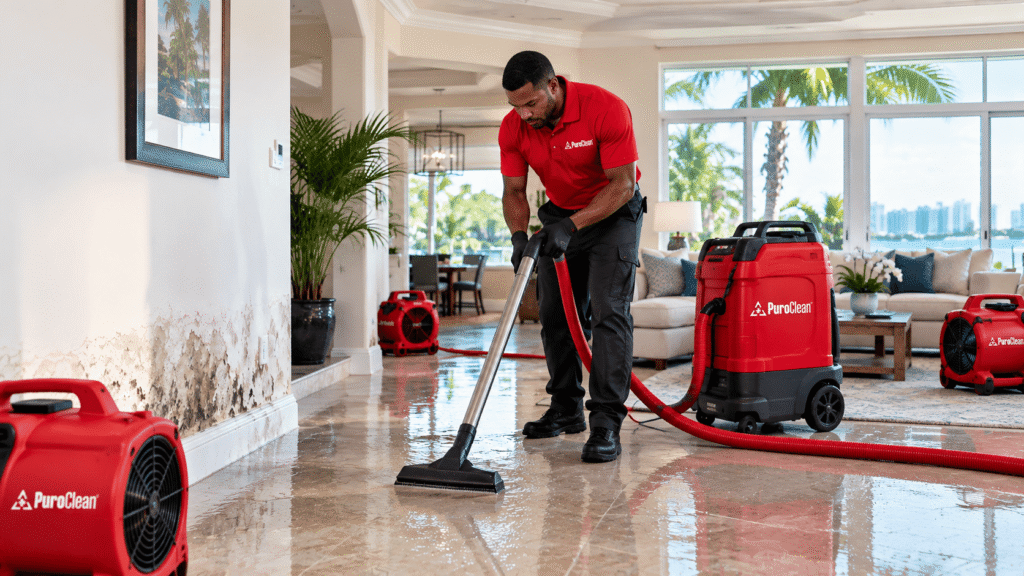
When a burst pipe, overflowing appliance, or storm-damaged roof floods your living space, one of the first questions every homeowner asks is how quickly life can return to normal. Living with high-velocity air movers humming around the clock and commercial dehumidifiers exhausting warm air into hallways is disruptive. For property owners in Stonecrest, Chamblee, Lithonia, Decatur, and across DeKalb County, understanding the exact timeline of water extraction and structural drying helps reduce anxiety and ensures the job is completed thoroughly rather than rushed.
For a standard residential water loss, physical water extraction typically takes just a few hours on the first day, while complete structural drying generally requires three to five days. However, complex losses involving dense building materials like hardwood flooring, plaster walls, or deep crawl space saturation can extend the drying window to seven days or longer.
Professional restoration is governed by strict scientific principles known as psychrometrics rather than arbitrary guesswork. Stopping drying equipment prematurely traps bound moisture inside wall cavities and subfloors, leading to warped wood, delaminated flooring, and hidden mold growth within days. This guide walks through each phase of the drying timeline, explains the variables that speed up or slow down evaporation, and details how certified technicians verify when your home is truly dry.
Phase-by-Phase Breakdown: From Initial Extraction to Final Dry Verification
Following IICRC S500 Standard and Reference Guide for Professional Water Damage Restoration, certified technicians divide moisture removal into two distinct operational stages.
Stage 1: Emergency Water Extraction (Hours 1 to 6)
Physical extraction is always the fastest and most critical part of water mitigation. Removing liquid water mechanically with pumps and extractors is roughly 500 times more efficient than attempting to evaporate that same water using dehumidifiers and air movers.
Upon arrival at your Stonecrest or DeKalb County home, technicians immediately assess electrical safety, halt the water source if still active, and deploy truck-mounted vacuum units or submersible pumps. Depending on the square footage affected and standing water depth, bulk extraction typically takes between two and six hours. During this window, crews also remove unsalvageable porous items such as saturated carpet padding to expose the subfloor beneath.
Stage 2: Industrial Structural Drying (Days 1 to 5)
Once all visible standing water is extracted, significant moisture remains absorbed deep inside porous building materials like drywall, wood framing studs, plywood subfloors, and concrete slabs. Structural drying targets this bound moisture through controlled airflow, temperature regulation, and dehumidification.
Day 1: Equipment Placement and Containment Setup
Technicians establish containment barriers using heavy-duty plastic sheeting to isolate affected rooms, creating a controlled drying chamber. Commercial Low-Grain Refrigerant (LGR) dehumidifiers and high-velocity axial or centrifugal air movers are positioned strategically across walls and floors, and initial baseline moisture readings are logged.
Days 2 to 3: Daily Psychrometric Monitoring and Adjustment
Every 24 hours, a restoration technician returns to measure ambient temperature, relative humidity, and grains per pound (GPP) of moisture in the air, alongside pin and pinless moisture meter readings inside walls and floors. As outer surfaces dry, crews reposition air movers to direct airflow toward stubborn moisture pockets.
Days 4 to 5: Reaching Dry Standards and Equipment Demobilization
When daily readings confirm that wet structural materials have returned to within one to two percentage points of unaffected dry control areas in your home, the structure meets official dry standards. Technicians sanitize surfaces with botanical antimicrobials, remove all drying equipment, and clear the space for reconstruction.
Six Key Factors That Influence Your Structural Drying Timeline
No two water losses dry at the exact same pace. Restoration specialists calculate equipment requirements and project timelines based on six primary variables:
- 1. Volume and Depth of Water Intrusion: A minor supply line leak affecting a single bathroom dries far faster than a second-story burst pipe that saturates ceilings, insulation, and hardwood floors across multiple levels.
- 2. Porosity and Density of Building Materials: Open-cell materials like drywall and carpet release moisture quickly, whereas dense materials such as solid oak hardwood flooring, concrete slabs, and double-layer subfloors hold bound water tightly and require specialized drying mats.
- 3. Time Elapsed Before Mitigation Begins: Water discovered within an hour remains mostly on surface layers. Water left standing for 24 hours wicks upward into drywall and saturates structural sill plates, doubling drying time.
- 4. Class of Water Loss (Class 1 through Class 4): IICRC guidelines classify losses from Class 1 (minimal absorption in low-porosity rooms) to Class 4 (deep saturation in specialty materials like plaster, brick, or hardwood requiring extended low-humidity drying).
- 5. Category of Water Contamination: Clean water from a supply pipe (Category 1) can be dried in place, whereas gray water from washing machines (Category 2) or black water from sewage backups (Category 3) requires removing saturated drywall and flooring before drying begins.
- 6. Seasonal Outdoor Humidity in Metro Atlanta: Georgia summers bring high ambient outdoor humidity. Keeping windows closed and running your central HVAC system alongside commercial dehumidifiers prevents humid outside air from slowing down indoor evaporation.
Average Drying Times by Structural Material
Different components of your Stonecrest home respond uniquely to commercial drying equipment. The table below outlines typical drying durations under professional mitigation conditions:
| Building Material | Typical Drying Duration | Specialized Equipment Used |
|---|---|---|
| Drywall and Baseboards | 3 to 4 Days | Wall cavity air movers, baseboard removal, LGR dehumidifiers. |
| Carpet (Pad Removed) | 2 to 3 Days | Weighted extraction tools, high-velocity centrifugal air movers. |
| Plywood Subflooring | 3 to 5 Days | Subfloor air circulation, dehumidification, and thermal monitoring. |
| Solid Hardwood Flooring | 5 to 10+ Days | Negative-pressure floor drying mats, desiccant or LGR dehumidifiers. |
| Concrete Slab Foundations | 4 to 7 Days | Surface air movers, moisture vapor testing, LGR dehumidification. |
Why You Should Never Turn Off Drying Equipment Early
It is tempting for homeowners to switch off noisy air movers at night to sleep or unplug dehumidifiers to save on electricity while equipment is running. However, interrupting the drying cycle slows evaporation dramatically and compromises structural safety.
Air movers and dehumidifiers work together as a balanced system. Air movers sweep boundary air off wet surfaces so moisture evaporates into the room, while dehumidifiers pull that airborne moisture out of the air before it can reabsorb into dry walls or ceilings. Turning off dehumidifiers while air movers keep blowing creates a warm, tropical microclimate inside your home that accelerates mold growth on drywall paper and wood framing. Similarly, turning equipment off a day early leaves deep core moisture trapped inside studs, which later causes paint blistering, buckled floorboards, and persistent musty odors.
How Homeowners Can Help Speed Up the Drying Process
While certified technicians manage all industrial equipment, property owners can take several simple steps to support optimal drying conditions:
- Keep Equipment Running 24/7: Allow air movers and dehumidifiers to operate continuously until technicians verify dry readings across all affected zones.
- Keep Windows and Exterior Doors Closed: Prevent humid Georgia outdoor air from entering your controlled drying chamber and overwhelming dehumidifier capacity.
- Maintain Comfortable Indoor HVAC Temperatures: Keep your central air conditioning or heating set between 68 and 75 degrees Fahrenheit to support optimal LGR dehumidifier grain depression.
- Clear Clutter and Small Items: Move boxes, laundry baskets, and lightweight personal belongings out of affected rooms so airflow reaches every square inch of wet flooring and baseboards.
How Daily Moisture Logs Protect Your Insurance Claim
Insurance adjusters require scientific proof justifying every day that commercial dehumidifiers and air movers remain on site. Without documented psychrometric readings, carriers frequently dispute multi-day equipment charges or claim drying took longer than necessary.
During every daily monitoring visit in Stonecrest and DeKalb County, PuroClean technicians record atmospheric temperature, relative humidity, moisture content percentages across tagged reference points, and thermal camera scans. This transparent digital audit trail proves to your insurance carrier that equipment operated strictly until verified dry standards were achieved.
Trust PuroClean of Stonecrest for Fast, Verified Structural Drying
Every hour matters when water invades your home. Rapid extraction combined with scientifically monitored structural drying protects your property from costly secondary damage and keeps your insurance claim fully documented from day one.
If your Stonecrest, Chamblee, Lithonia, Decatur, or DeKalb County property suffers water intrusion, call the Paramedics of Property Damage® at PuroClean of Stonecrest. Our IICRC-certified specialists respond 24/7 with commercial extraction systems, thermal imaging cameras, and high-efficiency dehumidifiers, providing daily moisture logs and direct insurance billing for complete peace of mind.
| PuroClean of Stonecrest: Rapid Water Extraction & Structural Drying |
|---|
| Call 24/7 for Immediate Emergency Response: (770) 290-3200 |
| Water Extraction | Psychrometric Drying | Direct Insurance Billing | Serving Stonecrest, Chamblee & DeKalb County |