Hardwood floors are among the most valuable architectural features in any home across Chamblee, Stonecrest, and greater DeKalb County.
Whether original historic oak flooring or high-end solid maple planks, natural wood adds warmth, elegance, and substantial market value to a property. However, natural hardwood is also exceptionally sensitive to water intrusion.
When a refrigerator ice maker line bursts, a dishwasher leaks underneath kitchen cabinetry, or an air conditioning condensate drain overflows, water quickly seeps through floor board seams into the subflooring. Traditionally, restoration contractors responded to saturated hardwood by tearing up the wood planks, destroying the floor, and forcing homeowners into long, dusty, and expensive floor replacements. Today, innovative restoration technology has changed everything. The mat drying panel revolution allows certified restoration specialists to save water-damaged hardwood floors without demolition.
Understanding Hardwood Behavior During Water Damage: Why Wood Cups

To understand how mat drying panels work, it helps to understand why hardwood flooring distorts when exposed to excess moisture:
1. Differential Moisture Absorption
Solid wood planks absorb moisture primarily from below. As water collects in the subfloor or vapor barrier, the bottom edge of the hardwood board absorbs water and expands rapidly, while the top sealed surface remains dry.
2. Board Cupping
Because the bottom of the wood plank expands faster than the top face, the edges of each board curl upward while the center sinks down. This creates a wavy, concave appearance known as cupping.
3. Board Crowning
If a cupped floor is sanded prematurely while the subfloor remains wet, the raised edges are shaved off flat. As the subfloor eventually dries out months later, the center of the board expands, causing crowning, where the center bows upward higher than the edges.
How Mat Drying Panels Work: The Science of Negative Pressure Extraction
Mat drying panel systems operate on physics, fluid dynamics, and controlled vapor pressure. Rather than blowing hot air across top floor surfaces, mat systems create a sealed vacuum directly over the wet wood assembly.
The Mat Drying Panel Setup
Technicians seal specialized, high-density plastic panels to the surface of the cupped hardwood floor using removable, non-damaging tape. These panels connect through vacuum hoses to high-powered vacuum units or Low-Grain Refrigerant (LGR) dehumidifier intake manifold systems.
Negative Pressure Vapor Extraction
The vacuum unit creates intense negative pressure beneath each panel. This pressure differential forces air and bound moisture to travel upward through the floorboard seams, drawing trapped water out of the hardwood planks, wood pores, subflooring, and joists simultaneously.
Controlled Environmental Dehumidification
As vacuum units extract liquid moisture and water vapor from beneath the boards, high-capacity LGR dehumidifiers operate in the room, maintaining super-dry ambient air conditions. This continuous cycle reverses board cupping and returns the wood planks to original, flat equilibrium moisture content (EMC).
Benefits of Mat Drying Panels Over Traditional Floor Removal
Utilizing specialized mat drying panels provides overwhelming advantages for property owners and insurance carriers alike:
- Saves Original and Historic Flooring: Custom, hand-scraped, or historic hardwood floors often cannot be matched or replaced. Mat drying preserves the original craftsmanship and historical integrity of your home.
- Eliminates Costly Demolition: Avoiding floor tear-out saves thousands of dollars in labor, disposal fees, and new material costs, keeping claims significantly lower.
- Drastically Reduces Restoration Timelines: Demolishing and reinstalling hardwood flooring can take weeks or months. Mat panel drying typically stabilizes and restores floors within 3 to 7 days.
- Minimizes Household Disruption: Mat drying systems run quietly and cleanly, preventing the heavy sawdust, chemical odors, and mess associated with hardwood installation and refinishing.
When Can Hardwood Floors Be Saved?
While mat drying systems boast impressive success rates, certain conditions dictate whether a floor can be saved in-place:
Factors that Favor Successful In-Place Drying
Floors respond best to mat drying when emergency response occurs within 24 to 48 hours of the leak event. Clean water losses (Category 1 water from supply lines or clean appliances) and solid wood or high-quality engineered hardwood with sound finish layers have exceptionally high recovery rates.
When Replacement Is Necessary
If water damage involves Category 3 contaminated water (sewage or groundwater flooding), materials pose severe health risks and must be replaced. Furthermore, if wood planks have buckled so severely that nails have pulled free from subfloors, or if wood rotting has begun from weeks of neglect, partial or total replacement is required.
The Professional Hardwood Restoration Process Step-by-Step
Saving hardwood floors requires careful technical execution by certified restoration professionals:
1. Immediate Moisture Evaluation and Thermal Imaging
Technicians evaluate hardwood moisture content using non-invasive pinless moisture meters and infrared thermal cameras to map the exact boundary of subfloor saturation.
2. Standing Water Extraction and Surface Cleaning
Heavy surface water is extracted instantly using specialized hard-surface floor squeegee wands.
3. Panel Layout and Vacuum Seal Installation
Mat panels are arranged across the affected floor area, taped along edges to ensure air-tight vacuum seals, and connected to extraction manifolds.
4. Continuous Psychrometric Monitoring
Technicians measure wood moisture content, ambient relative humidity, and temperature daily, adjusting vacuum pressure until wood levels match baseline dry standards.
5. Final Inspection and Refinishing Assessment
Once moisture levels stabilize and boards flatten, the floor is inspected. In many cases, boards lay completely flat with zero need for sanding or refinishing.
Trust PuroClean of Stonecrest for Advanced Hardwood Floor Restoration in Chamblee & DeKalb County
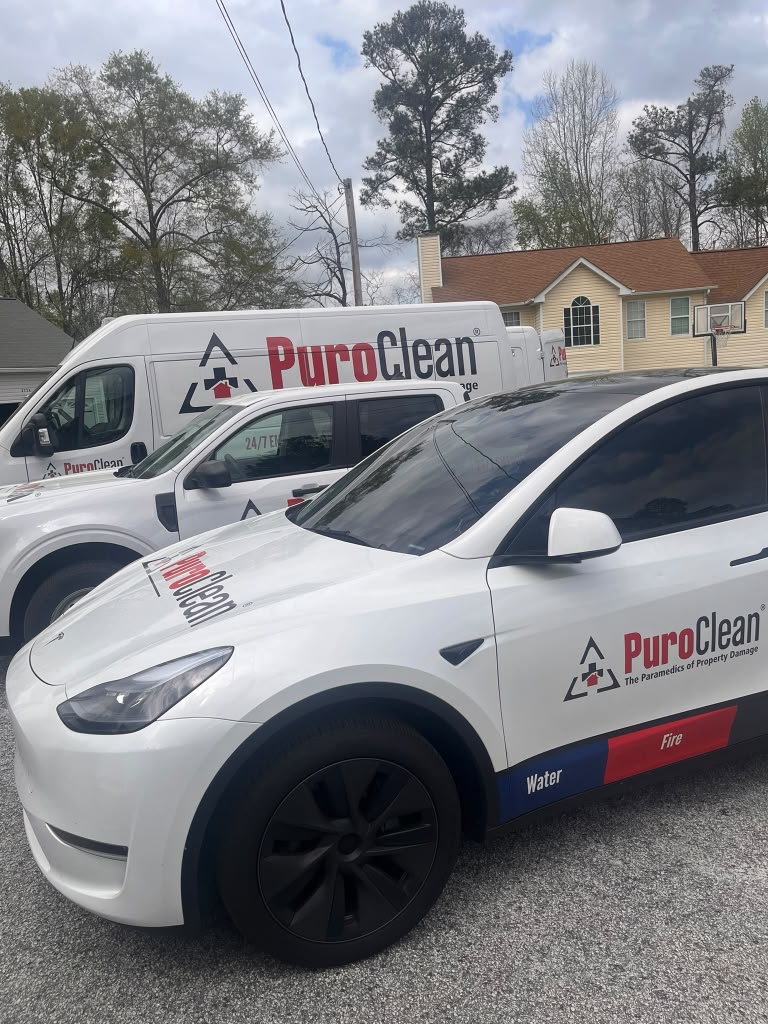
If a water leak threatens your valuable hardwood floors, do not let an inexperienced contractor tear them up without exploring non-invasive drying options. PuroClean utilizes cutting-edge mat drying panel technology, high-capacity LGR dehumidification, and advanced moisture tracking to save hardwood floors, protect home value, and minimize disruption.
| PuroClean of Stonecrest: Advanced Hardwood Drying & Restoration Specialists |
| Call 24/7 for Emergency Floor Drying: (770) 290-3200 |
| Mat Drying Panel Technology | Non-Invasive Subfloor Extraction | Direct Insurance Billing | Serving Chamblee, Stonecrest & DeKalb County |