When property water damage occurs in Stonecrest, Chamblee, Lithonia, Decatur, or anywhere across DeKalb County, the emergency mitigation phase begins immediately. Professional restoration technicians arrive with heavy-duty industrial machinery, including high-velocity air movers, Low-Grain Refrigerant (LGR) dehumidifiers, and HEPA air scrubbers. As these powerful machines begin humming day and night to dry out saturated drywall and subflooring, homeowners naturally wonder: Is it safe to stay in my house while this equipment is running?
In most residential water damage scenarios, staying in your home is entirely safe, provided certain operational guidelines and safety protocols are followed. However, living alongside industrial drying equipment presents unique lifestyle adjustments, including elevated noise levels, continuous airflow, and specific electrical considerations. Understanding how water mitigation equipment operates helps property owners make informed decisions regarding comfort, safety, and temporary relocation.
Managing a water disaster involves balancing property restoration with daily living routines. Because industrial drying equipment must operate continuously for 72 to 120 hours without interruption to achieve complete structural dryness, understanding what to expect ensures a smoother recovery process for your household. Knowing the exact mechanics behind mitigation tools also alleviates common anxieties about power usage, air quality, and noise.
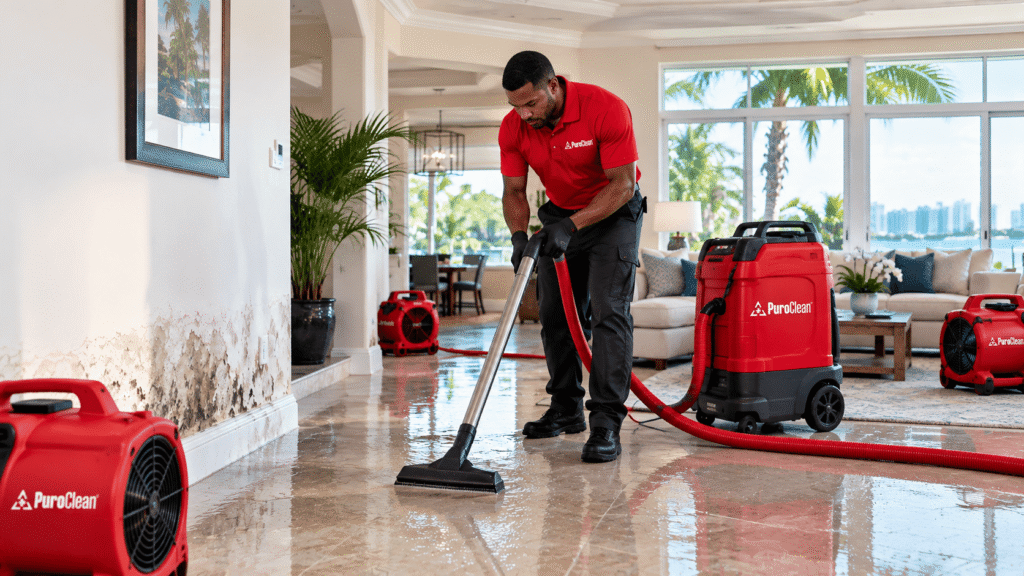
What Water Mitigation Equipment Does and Why It Runs Continuously
Structural drying is a precise science governed by psychrometrics, the study of atmospheric moisture and air temperature. To extract moisture trapped inside building assemblies, restoration technicians deploy specialized equipment that must run uninterrupted:
- High-Velocity Air Movers (Blowers): These powerful fans direct concentrated streams of air across wet flooring, baseboards, and wall cavities, accelerating the rate of evaporation and lifting moisture into the ambient air.
- Low-Grain Refrigerant (LGR) Dehumidifiers: Dehumidifiers pull humid air through refrigerated coils, condensing moisture into liquid water and pumping it out through drainage hoses. LGR units run continuously to capture evaporating moisture and maintain dry indoor humidity levels.
- HEPA Air Scrubbers: Deployed during sewage backups or suspected mold events, air scrubbers draw in airborne spores, dust, and micro-contaminants through HEPA filters, purifying indoor air quality.
Is It Physically Safe to Stay Home During Mitigation?
From a health and safety perspective, standard clean water (Category 1) drying equipment is completely safe for human occupancy. The air circulating through air movers is simply the air already inside your home, dried and filtered by dehumidifiers. However, certain safety guidelines must be strictly observed:
1. Electrical Safety and Overloaded Circuits
Industrial dehumidifiers and multiple air movers draw significant electrical current. Restoration technicians carefully distribute equipment loads across different household circuits or deploy temporary power distribution boxes. Homeowners must never unplug drying equipment, plug space heaters into the same circuits, or tamper with heavy-duty power cords.
2. Tripping Hazards and Cord Management
Power cords running across hallways and living room floors create potential tripping hazards. Technicians secure cords along baseboards wherever possible, but occupants must remain cautious, especially children and elderly family members walking through work zones.
3. Biological Contamination (Gray and Black Water)
If the water loss involves Category 2 (gray water) or Category 3 (sewage backups), staying in the home requires caution. Exposure to sewage pathogens poses severe health risks. In severe sewage or toxic mold losses, professional restoration teams establish containment barriers and recommend temporary relocation until sanitization is complete.
Managing Comfort: Noise, Airflow, and Dry Air
While staying home during mitigation is safe, the physical comfort level inside the house changes noticeably:
Dealing with Continuous Noise
Industrial air movers produce a steady, roaring sound similar to a loud vacuum cleaner or jet engine idling. Sleeping can be challenging if equipment is operating near bedrooms. Using earplugs, white noise machines, or closing bedroom doors helps muffle the sound.
Managing High Airflow and Dry Skin
Rapid evaporation creates a stiff breeze throughout the home. Occupants may notice dry skin, chapped lips, or irritated nasal passages. Drinking plenty of water and using saline nasal sprays or moisturizers keeps family members comfortable.
Never Adjust or Turn Off Equipment
Homeowners are often tempted to turn off equipment at night to sleep in silence. However, interrupting the drying cycle slows evaporation, extends the project timeline, and increases the risk of secondary mold growth. Technicians monitor daily moisture readings to determine the exact moment equipment can be safely removed.
When Should You Temporarily Relocate?
While staying home is common, temporary relocation may be necessary under specific circumstances:
- Extensive Damage and Major Demolition: If large sections of drywall, kitchen cabinets, and subfloors are removed, leaving the home without functional plumbing, cooking facilities, or bathrooms, staying elsewhere is recommended.
- Severe Sewage Contamination: Category 3 black water floods involving raw sewage require extensive antimicrobial containment that makes living spaces temporarily uninhabitable.
- Extreme Noise Sensitivity: Families with infants, night-shift workers, or individuals sensitive to loud continuous noise often prefer staying with relatives or at a nearby hotel during the peak 48-hour drying window.
Trust PuroClean of Stonecrest for Expert Guidance and Efficient Drying
When water damage impacts your Stonecrest or DeKalb County property, navigating the mitigation process requires professional expertise. Trust the Paramedics of Property Damage® at PuroClean of Stonecrest for rapid structural drying, clear safety guidance, and direct insurance billing.

| PuroClean of Stonecrest: Water Mitigation & Drying Experts |
| Call 24/7 for Emergency Drying Assistance: (770) 290-3200 |
| Industrial Structural Drying | Moisture Mapping | Direct Insurance Billing | Serving Stonecrest, Chamblee & DeKalb County |