


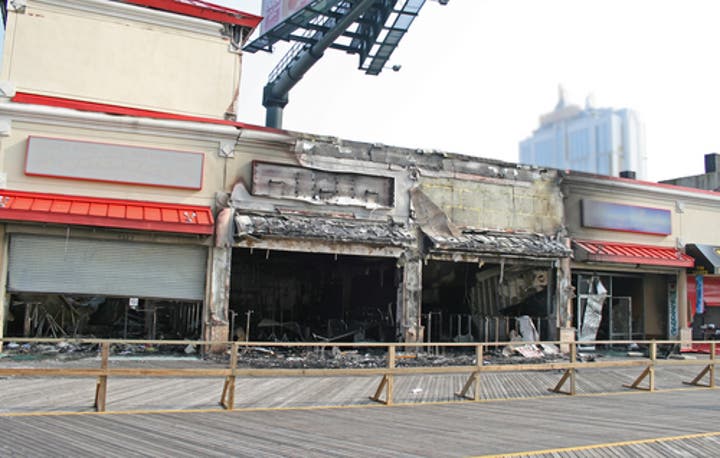
What Highway 190 and I-12 Corridor Business Owners Need When Fire Hits
Covington’s commercial landscape along Highway 190 and the I-12 interchange represents one of St. Tammany Parish’s most active mixed-use corridors. Restaurants, retail establishments, service businesses, and light commercial operations line this stretch in a density that reflects the North Shore’s growth over the past two decades. These are not abstract commercial properties. They are businesses with employees, customers, lease obligations, and revenue streams that stop the moment a fire event closes the doors.
Emergency fire restoration in a commercial property on this corridor is a fundamentally different job from residential fire restoration. The urgency is greater, the regulatory requirements are more complex, and the financial consequences of restoration delays accumulate faster than most business owners anticipate when they are standing in a smoke-filled dining room or retail floor at 2am waiting for the fire department to clear the scene.
At PuroClean Emergency Restoration, we respond to commercial fire events across Covington and St. Tammany Parish around the clock. Here is what emergency fire restoration for commercial properties in this corridor actually requires.
Why Commercial Fire Events Move Faster Than Residential Ones
In a residential fire event, the primary urgency is protecting the structure and the family’s possessions while the restoration process unfolds at a professional pace. In a commercial property, every hour the business cannot operate is a quantifiable financial loss that compounds through the entire restoration timeline.
For a Covington restaurant on the Highway 190 corridor, a fire event that closes the property for two weeks during peak dining season represents:
- Direct revenue loss from every service not delivered during the closure period
- Payroll obligations that continue regardless of whether the kitchen is operating
- Perishable inventory loss from refrigeration systems disrupted by the event
- Customer relationship erosion that affects reservation volume for weeks after reopening
- Lease obligations that do not pause for fire restoration timelines
- Health department reinspection requirements before the property can legally reopen
Every one of these costs is influenced by how quickly emergency fire restoration begins and how efficiently it proceeds. A restoration team that responds immediately, assesses thoroughly, and sequences the work to enable the fastest possible safe reopening produces a meaningfully different financial outcome than one that works on standard residential timelines applied to a commercial context.

Restaurants represent the highest fire risk category in Covington’s commercial corridor, and they present emergency fire restoration challenges that no other property type replicates exactly.
Commercial kitchen fires produce a combination of grease fire residue, protein smoke, and carbon deposits that requires cleaning chemistry and application methods specifically designed for commercial cooking environments. Standard residential fire restoration products and protocols applied to a commercial kitchen produce incomplete results that fail health department inspection and leave persistent odor that affects the dining experience for weeks after apparent completion.
Commercial hood and suppression systems that discharge during a kitchen fire leave chemical suppression agent throughout the cooking line that must be completely removed before any cooking equipment can be operated. This is not a standard restoration cleaning task. It requires specific knowledge of commercial suppression system chemistry and the decontamination protocols that equipment manufacturers and health authorities require before the system and equipment can be returned to service.
The health department reinspection requirement before a food service establishment can reopen after a fire event adds a regulatory dimension to emergency fire restoration that residential jobs do not carry. Documentation of what was cleaned, what products were used, what temperatures and dwell times were applied, and what was replaced versus restored is not optional for the insurance file. It is required by the regulatory authority that controls whether the business can legally reopen.
Code Compliance in Commercial Emergency Fire Restoration
Covington’s commercial properties along the Highway 190 corridor include buildings constructed across several decades of Louisiana commercial building code evolution. Emergency fire restoration in these properties raises code compliance questions that residential restoration does not encounter.
When fire damage in a commercial property exceeds a certain percentage of the building’s assessed value, Louisiana’s building code and local ordinance may require that the restoration bring the entire affected area into current code compliance rather than simply restoring it to pre-fire condition. This substantial improvement threshold, which varies by jurisdiction and is calculated differently from insurance replacement cost, can significantly expand the scope of emergency fire restoration beyond what the fire itself damaged.
Common code compliance upgrades triggered by commercial fire restoration in older Covington buildings include:
- Electrical system upgrades where original wiring does not meet current commercial code requirements in fire-affected areas
- ADA accessibility compliance in areas where restoration involves reconstruction of customer-facing spaces
- Fire suppression system installation or upgrade where the existing system did not meet current requirements or was not present in the original construction
- HVAC system compliance where ductwork and mechanical systems in fire-affected areas require upgrade to current commercial ventilation standards
Identifying these compliance requirements early in the emergency fire restoration process, rather than discovering them mid-reconstruction, protects the business owner from unexpected scope additions and timeline extensions that delay reopening.
What Emergency Fire Restoration Covers for Covington Commercial Properties
Our commercial emergency fire restoration response in Covington addresses every phase of recovery with business continuity as a parallel priority alongside thorough restoration:
- Immediate scene assessment covering structural safety, utility isolation, and a preliminary scope that gives the business owner a realistic reopening timeline from the first visit
- Emergency board-up and security of fire-compromised access points to protect inventory and equipment from weather and unauthorized entry during the restoration period
- Commercial-grade smoke and soot removal using chemistry and protocols appropriate for the specific surfaces and materials present in commercial construction
- Suppression agent decontamination for properties where commercial kitchen or other suppression systems discharged during the event
- HVAC system assessment and cleaning given that commercial HVAC systems distribute smoke contamination throughout entire buildings rapidly during and after a fire event
- Health department documentation package for food service establishments requiring regulatory reinspection before reopening
- Code compliance identification as an early step in the restoration scope to eliminate surprises during reconstruction
- Complete insurance documentation supporting business interruption claims alongside the standard property damage claim
Business Interruption Claims: What Commercial Fire Restoration Documentation Supports
Commercial property insurance policies typically include business interruption coverage that compensates for lost revenue during the period the property cannot operate due to a covered fire event. This coverage is valuable but requires documentation that standard residential fire restoration files do not produce.
Business interruption claims require evidence of the revenue the business would have generated during the closure period, the direct relationship between the fire event and the inability to operate, and the reasonable timeline for restoration given the scope of damage. Our emergency fire restoration file for commercial properties includes the scope documentation, daily progress records, and restoration timeline evidence that supports a complete business interruption claim alongside the standard property damage settlement.
For Covington business owners navigating the relationship between emergency fire restoration and their insurance claim, the documentation we provide from the first hour of response through final clearance gives your carrier everything it needs to process both the property and interruption components of the claim efficiently.
Covington’s Commercial Corridor Deserves a Local Restoration Partner
The businesses along Highway 190 and the I-12 interchange are part of what makes the North Shore’s economy work. When fire damage threatens one of them, the response needs to match the urgency of what is at stake.
PuroClean Emergency Restoration serves commercial and residential properties throughout Covington, Mandeville, Madisonville, and all of St. Tammany Parish around the clock. When fire hits your Covington business, call (985) 590-6600 immediately. We will be there fast, assess the full commercial scope, and work with the urgency your business requires from the first hour through the day you reopen your doors.