


When the Storm Lasts 45 Minutes and the Damage Lasts Months
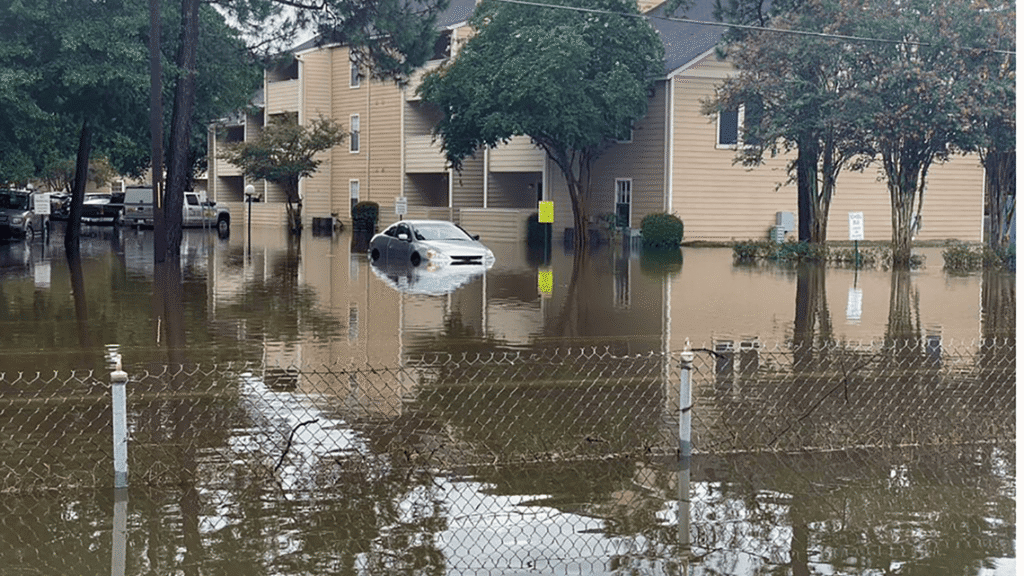
There is a particular kind of storm that North Shore residents know well. No named system, no days of advance warning, no time to prepare. Just a sky that turns green around 3pm, a wall of rain that drops three inches in under an hour, and a neighborhood drainage system that was simply not designed for what just happened.
By the time the storm passes and the sun comes back out, the damage is already done. Water that entered through a garage threshold, backed up through a floor drain, or pushed through a window seal during the wind-driven downpour is already saturating flooring, wicking up drywall, and beginning the process that emergency water restoration exists to interrupt.
In Mandeville’s climate, that process does not wait for business hours.
Why Pop-Up Storms Create the Most Challenging Emergency Water Restoration Scenarios
Named storms and hurricanes come with warning. Homeowners can prepare, move valuables, and have a plan in place before water arrives. Pop-up severe thunderstorms in St. Tammany Parish offer none of that. They develop rapidly over the warm lake surface, intensify faster than forecast models predict, and deliver rainfall volumes in compressed timeframes that exceed what even well-maintained residential drainage can manage.
The emergency water restoration challenges these events create are distinct from hurricane flooding in several important ways:
- No preparation window means contents are in place, valuables are at floor level, and nothing has been moved to reduce exposure before water enters
- Multiple simultaneous entry points as wind-driven rain exploits every gap in the building envelope at the same time drainage infrastructure backs up from below
- Rapid onset with delayed discovery when homeowners are away during the afternoon storm and return hours later to find water has been sitting since mid-afternoon
- Deceptively contained appearance where visible water on hard surface floors masks significant saturation already present in wall cavities and under flooring systems
That last point is where emergency water restoration decisions go wrong most often. A homeowner who returns to find an inch of water in the living room, mops it up, and runs fans has addressed the surface. The wall that absorbed wind-driven rain for forty-five minutes, the subfloor that wicked moisture from below for three hours, and the insulation that has been saturated since the storm peaked are still holding everything the surface water brought in.
The Three Hours That Determine the Outcome
In South Louisiana’s ambient conditions, the three hours following a pop-up storm water event are the most consequential in determining what emergency water restoration ultimately costs and how long it takes.
During that window, several processes are running simultaneously inside the affected structure:
Water continues migrating laterally through flooring systems and vertically through wall assemblies from whatever volume entered during the storm. Relative humidity inside the home spikes as that moisture begins evaporating into the interior air. In Mandeville’s summer ambient conditions, where outdoor humidity is already high, the interior environment rapidly approaches the threshold where mold spore germination becomes active.
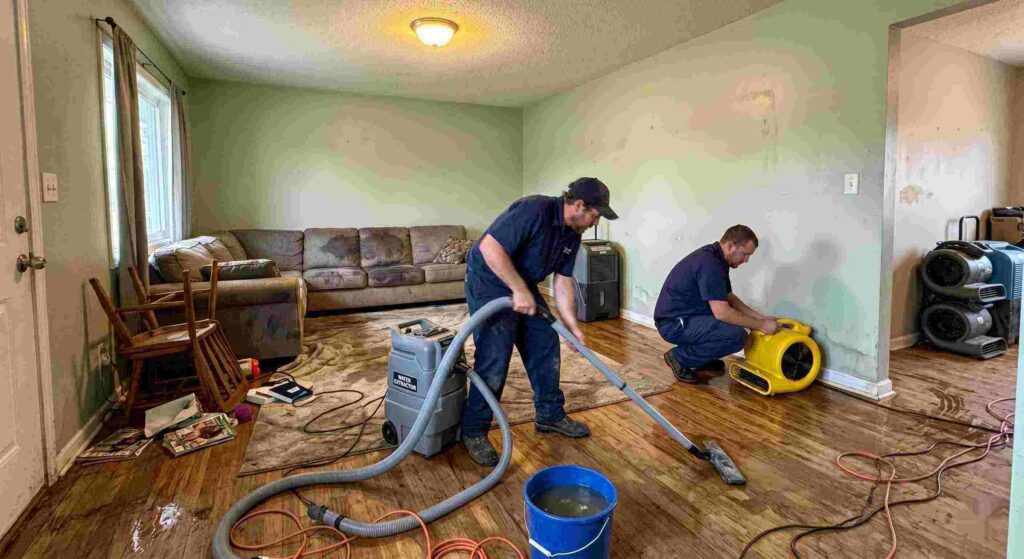
Professional emergency water restoration that begins within this window intercepts these processes before they compound. Extraction removes water from flooring systems before full saturation depth is reached. Commercial dehumidification begins reducing interior humidity before mold conditions establish themselves. And moisture mapping identifies wall cavity saturation before the decision window for drying in place versus opening walls closes.
Every hour beyond that three-hour window adds scope to the job. Not theoretically. Measurably, in moisture readings and in the materials that cross from salvageable to requiring replacement as saturation deepens.
What Emergency Water Restoration Covers After a Mandeville Thunderstorm
When our team responds to an emergency water restoration call in Mandeville following a severe storm event, the response is structured to address both the visible intrusion and the less obvious damage simultaneously:
- Rapid moisture mapping using thermal imaging to identify all entry points and the full extent of water migration before extraction begins
- High-capacity water extraction from all affected flooring systems including tile, hardwood, and carpet assemblies
- Wind-driven rain assessment of all exterior-facing walls where rain pressure during the storm may have forced water into wall cavities through gaps the building envelope
- Drainage backflow identification to confirm whether any water entered through floor drains or plumbing penetrations, which affects the contamination category and the cleaning protocols required
- Commercial drying equipment deployment calibrated for Mandeville’s ambient humidity rather than standard residential setpoints
- Daily monitoring and documentation through the full drying cycle to confirm structural materials reach clearance readings before the job is closed
Saving Your Number Before the Next Storm Season
Mandeville’s severe thunderstorm season runs from late spring through early fall, overlapping almost entirely with the period when lake temperatures and atmospheric conditions are most favorable for rapid storm development. If you have lived on the North Shore for more than a few years, you already know that another pop-up storm is not a question of whether but when.
Having PuroClean Emergency Restoration’s number saved before that storm arrives is not preparation for an unlikely event. It is the same practical thinking that keeps a generator fueled and a flashlight in the kitchen drawer.
(985) 590-6600 is the number. Save it now, use it the moment you need it. We cover Mandeville, Covington, Madisonville, Abita Springs, and all of St. Tammany Parish around the clock, and we respond fast because in South Louisiana, fast is the only response that actually makes a difference.