


Why Newer Mandeville Neighborhoods Flood Differently and What It Takes to Clean Up Properly
When most people think about flooding in Mandeville, they picture the lakefront. Lake Pontchartrain storm surge, rising water along the seawall, the dramatic imagery of a major hurricane pushing water inland from the shore. That image is real, but it is not the whole story.
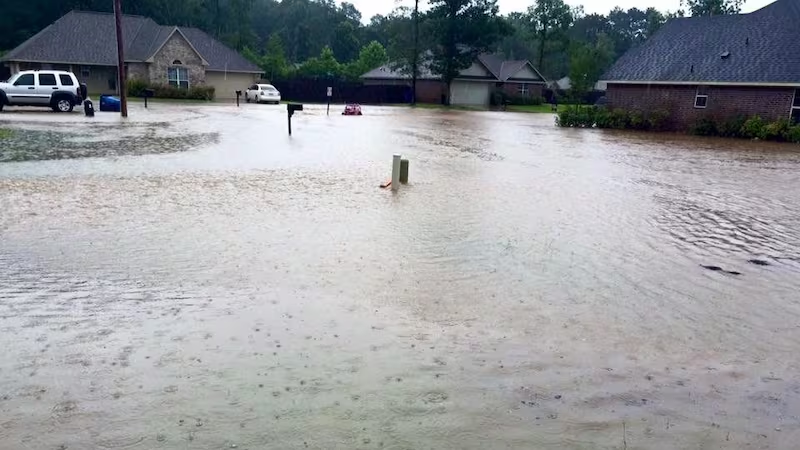
A significant portion of Mandeville’s most frequent flood clean up calls come from subdivisions well inland from the lake. Newer developments built throughout St. Tammany Parish over the past three decades sit on terrain that was historically low-lying wetland, developed with drainage infrastructure that handles typical rainfall reasonably well but reaches its limits quickly during the kind of sustained heavy rainfall events that South Louisiana receives regularly. When those limits are exceeded, water enters homes from below and from the sides rather than dramatically from above, and the flood clean up that follows is shaped by that specific dynamic.
How Inland Mandeville Subdivisions Flood
Lakefront flooding in Mandeville involves storm surge and surface water intrusion that is visible, rapid, and immediately understood as a flood event. Subdivision flooding further inland tends to be quieter and more confusing to homeowners experiencing it for the first time.
The mechanism is ground saturation. During extended heavy rainfall, the soil beneath and around a subdivision reaches full saturation point. Once that happens, additional rainfall has nowhere to go but across the surface and, critically, against and through any foundation or slab penetration it can find. Storm drains back up as the municipal system reaches capacity. Swales and retention ponds overflow. And water that has nowhere else to go finds its way into the lowest accessible space, which in a slab-on-grade Mandeville subdivision home is the living space itself.
This type of flooding typically enters through:
- Garage door thresholds where the seal between door and slab is the only barrier against sheet flow across the driveway
- Slab cracks and plumbing penetrations as hydrostatic pressure builds beneath the foundation
- HVAC condensate and floor drain backflow when the drainage system surcharges under heavy load
- Weep screed gaps in stucco exterior walls at the foundation line where water pools against the building perimeter
Why Slab-on-Grade Flood Clean Up Is Different
Raised foundation homes in Mandeville’s older neighborhoods have a natural advantage in a flood event: water that enters the crawl space can be addressed without necessarily compromising the living space above. Slab-on-grade subdivision homes have no such buffer. When water reaches the slab, it is immediately in contact with flooring, baseboards, wall assemblies, and any cabinetry or furnishings at floor level.
Flood clean up in these properties involves a specific challenge: the slab itself. Concrete absorbs floodwater, and in a ground-saturation flooding scenario, the slab may continue wicking moisture upward from saturated soil beneath it long after the surface flooding has receded. Standard flood clean up protocols that focus on visible water extraction and surface drying consistently underperform in slab-on-grade properties because they address what is above the slab without accounting for what the slab is still pulling up from below.
Effective flood clean up in a Mandeville subdivision home requires:
- Slab moisture testing at depth before any flooring replacement decisions are made
- Extended drying timelines that account for ongoing vapor drive from saturated soil beneath the slab
- Dehumidification equipment sized for the actual moisture load including the slab contribution, not just the volume of visible floodwater
- Daily moisture monitoring until slab readings stabilize at acceptable levels across the entire affected area
- Flooring assessment that distinguishes between materials that can be dried in place and those that must be removed to allow slab drying to proceed
The Contamination Question in Subdivision Flooding
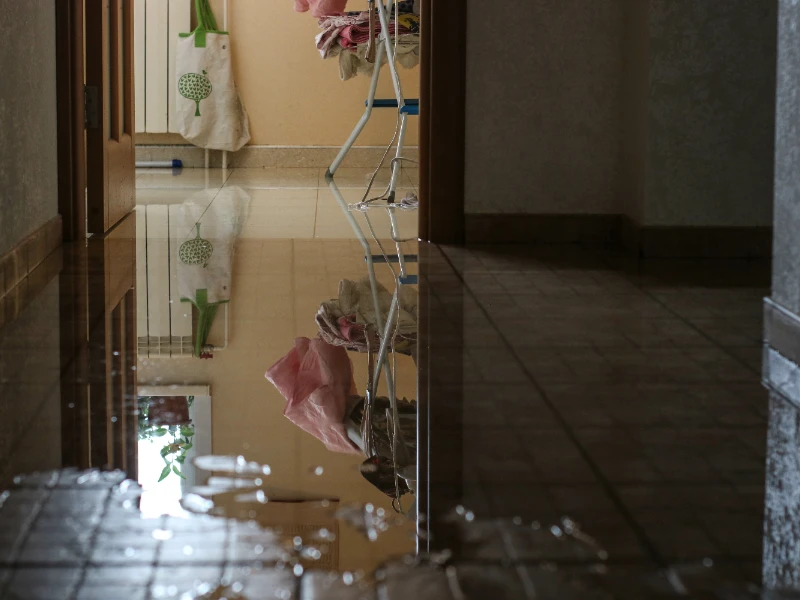
Flood water in a Mandeville subdivision during a storm event is not clean water. By the time it reaches a home’s foundation, it has traveled across streets, yards, and drainage infrastructure carrying road runoff, lawn chemicals, and in many cases material from surcharging sewer lines in the overwhelmed municipal system.
This classifies the intrusion in most cases as Category 2 or Category 3 contaminated water, which changes the flood clean up scope significantly. Materials that could be dried in place after a clean water event require evaluation for removal after contaminated water contact. All affected surfaces require antimicrobial treatment as part of the clean up process. And the documentation of water category is important for the insurance claim, as the contamination classification affects both the scope of covered work and the adjuster’s assessment of salvageable materials.
Timing Flood Clean Up in Mandeville’s Climate
St. Tammany Parish does not give homeowners the luxury of a slow response window after a flood event. In Mandeville’s ambient humidity, the conditions that support mold development in flood-affected materials arrive within 24 to 48 hours of the initial water intrusion. In a slab-on-grade home where the concrete is continuing to contribute vapor to the interior environment, that timeline can be further compressed.
The practical implication is straightforward: flood clean up in a Mandeville subdivision home needs to begin the same day the water recedes, not the next business day. Our team responds to flood clean up calls around the clock precisely because waiting until morning routinely converts a manageable clean up job into a remediation job that includes mold removal on top of the original flood damage.
Been Through This Before? Here Is What to Do Differently This Time.
Many Mandeville subdivision homeowners who call us have been through at least one prior flooding event and attempted clean up themselves or with general contractors who did not specialize in flood restoration. The most common outcome of that approach is a home that looks restored but develops a mold problem or persistent humidity issue within the first year, traced back to incomplete slab drying or inadequate contamination treatment.
If that description sounds familiar, the good news is that a professional assessment can identify residual moisture or mold development even in a home that has already been partially treated, and address it before it progresses further.
Subdivision or Lakefront, We Cover All of Mandeville
PuroClean Emergency Restoration responds to flood clean up calls throughout Mandeville, from the historic lakefront district to the newest subdivisions in the northern reaches of St. Tammany Parish. Our team understands how different parts of this community flood, what the clean up requires in each context, and how to document the job in a way that supports your insurance claim from start to finish.
When the water comes in, (985) 590-6600 is the number to call. Day, night, middle of a rainstorm, we will be there.