


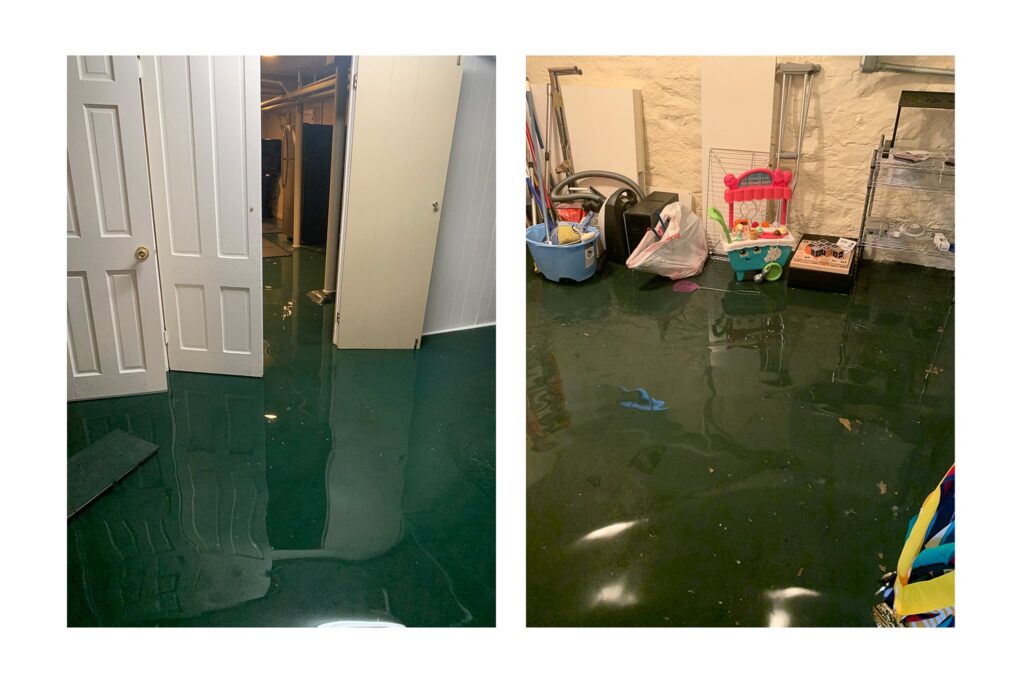
When unexpected disasters strike corporate facilities, industrial parks, or retail centers in St. Tammany Parish, the immediate physical effects can alter daily operations completely. High humidity levels and intense seasonal storms throughout the Northshore region can accelerate minor structural compromises into large-scale disruptions. Stagnant moisture can migrate through porous materials, compromising the safety and functional integrity of a business location.
Addressing these incidents requires an organized, technical response to halt structural degradation before the building becomes completely uninhabitable. Property restoration experts focus on stabilizing the environment, suppressing secondary complications, and returning the asset to pre-loss conditions. Implementing structural remediation early helps a facility maintain local safety compliance codes and protects the structural asset from losing significant real estate value.
Why Is Immediate Commercial Water Damage Restoration Necessary for Retail Spaces?
A broken pipe or flash flooding can introduce thousands of gallons of water into a corporate building within minutes. In a commercial setting, this liquid quickly saturates subfloors, ceiling tiles, and structural supports. If this moisture remains standing, the physical effect is the warping of load-bearing wood, the degradation of drywall, and the destruction of expensive electrical infrastructure. Professional intervention must begin quickly to extract the fluid before deep structural rot sets in.
To stop the progression of structural decay, certified technicians implement professional commercial water damage restoration techniques. Industrial-grade extraction equipment pumps standing liquid out of the affected zones, while high-velocity air movers draw hidden dampness out of deep structural cavities. This detailed procedure drops the relative humidity inside the facility to acceptable levels, preventing long-term structural warping.
Special attention must be given to built-in features like wooden fixtures and office furniture. Technicians utilize targeted water damage mitigation procedures to save expensive cabinetry and custom reception desks before total saturation ruins the wood fibers completely. By executing rapid extraction and drying, technicians stabilize the internal atmosphere, allowing employees to return to a safe environment.
How Does Air Quality Deteriorate After a Commercial Fire Incident?
Flame consumption leaves behind structural weakness, but the acidic soot and smoke residue can cause far wider damage throughout a commercial property. Smoke particles travel through HVAC ductwork, depositing fine, corrosive films on electronics, inventory, and office walls. This soot reacts with ambient humidity to form highly acidic compounds that pit metals and permanently discolor stone or porous surfaces.
Overcoming this contamination requires a meticulous structural cleansing process known as commercial property damage restoration. Technicians scrub structural surfaces and neutralize ambient odors using thermal fogging equipment. This process breaks down complex smoke molecules at a molecular level, preventing the permanent staining of structural concrete and metal frameworks.
When heat and flames compromise structural elements, specialized property cleaning becomes vital to remove ash and toxic residues. Part of this recovery involves targeted fire and smoke damage restoration to salvage delicate office machinery, documents, and retail products that were exposed to heavy smoke penetration. This careful decontamination process eliminates dangerous airborne particles, ensuring the indoor air quality returns to healthy levels for staff and clients.
Why Must Microbial Growth Be Contained in Office Buildings?
High moisture levels from a hidden plumbing leak can trigger fungal spores to germinate on building materials within twenty-four to forty-eight hours. In an air-conditioned office environment, active fungal colonies release spores directly into the shared ventilation system, spreading contamination across multiple floors. The physical effect of this biological growth is the destruction of ceiling tiles and drywall, alongside the generation of unpleasant, musty odors.
Eliminating these biological hazards requires strict adherence to professional mold remediation protocols. Technicians construct negative-pressure containment zones to isolate the affected areas completely, preventing active spores from traveling into unaffected parts of the building. High-efficiency particulate air filtration units continuously scrub the air to capture microscopic contaminants during the removal process.
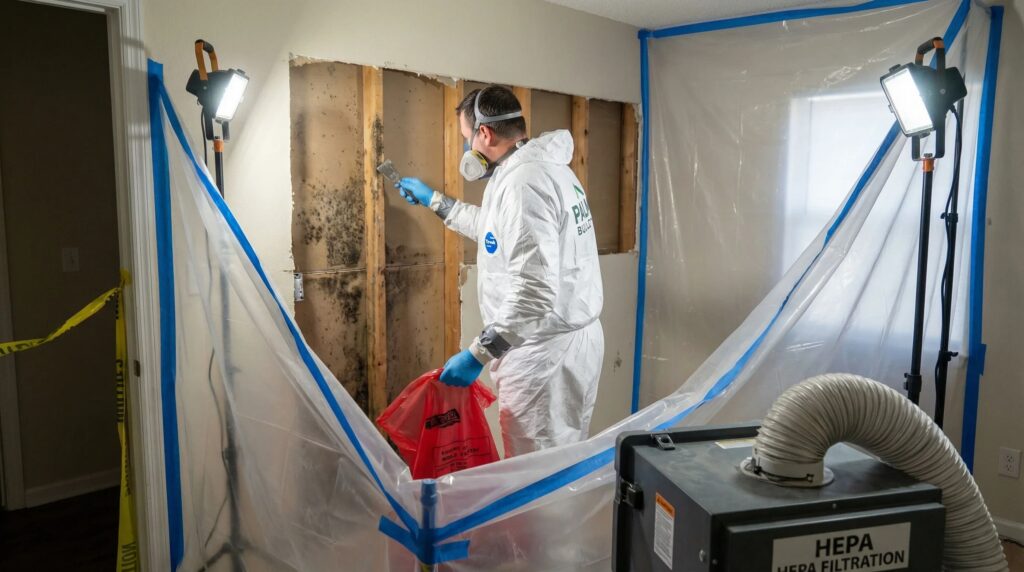
A critical phase of this environmental cleaning involves targeted mold removal and remediation from hidden structural cavities, such as behind baseboards and inside wall columns. Technicians apply EPA-registered antimicrobials to disinfect the remaining structural framing, completely eradicating the root fungal structures. This systematic containment and sterilization process prevents the return of microbial colonies, preserving the indoor environment.
What Hazards Exist During an Industrial Chemical or Biological Spill?
Industrial accidents, sewage backups, or chemical spills introduce dangerous pathogens and hazardous materials directly into a workspace. These biohazard contaminants present immediate environmental safety risks, requiring specialized neutralization before any general cleaning or rebuilding can take place. Raw sewage or chemical deposits soak rapidly into porous concrete floors and wall assemblies, leaving behind toxic bio-contaminants.
Resolving these dangerous situations requires certified biohazard cleanup protocols to completely neutralize the workspace. Specialized personnel wearing advanced personal protective equipment apply industrial-strength chemical neutralizers to render the biological materials harmless. All contaminated items that cannot be completely sterilized are extracted and disposed of according to strict environmental laws.
The final phase of hazardous decontamination involves detailed property restoration experts using specialized testing equipment to verify that surface areas are chemically and biologically clean. This meticulous decontamination process completely purifies the building interior, allowing normal commercial operations to resume safely without environmental risk.
PuroClean Emergency Restoration supplies the technical skill required to protect your commercial building, serving Covington and the surrounding Northshore communities. Partnering with these local professionals provides a rigorous, timely examination of every structural component to halt the decay cycle and safeguard the business asset.