 PuroClean Emergency Restoration
Why Shotgun Houses and Creole Cottages Play by Different Rules When Water Gets Inside
Covington’s older neighborhoods carry a architectural character that newer construction simply cannot replicate. The narrow shotgun houses along the historic streets near the Bogue Falaya, the Creole cottages with their wide overhanging eaves and cypress framing, these homes were built with materials and methods specific to South Louisiana’s climate and culture. They have survived decades of humidity, storms, and seasonal flooding.
What they were not built for is modern water damage restoration protocols designed around drywall, PVC plumbing, and platform framing. When water gets into one of these homes, it behaves differently, travels differently, and requires a restoration approach that accounts for what the building is actually made of.
At PuroClean Emergency Restoration, we work throughout St. Tammany Parish and we know these homes well. Here is what water damage restoration looks like when the home itself is part of the equation.
How Water Moves Through a Shotgun House
The shotgun floor plan, rooms arranged in a single file from front to back with no hallways, was designed for cross-ventilation in Louisiana’s heat. That same linear layout creates a direct pathway for water to travel the entire length of the home from a single entry point.
A roof leak at the front of the house, a supply line failure in the middle room, water entry through a failing front door threshold during a storm, any of these can send water traveling across original heart pine floors, beneath tongue-and-groove walls, and into every room in the home before it finds somewhere to stop.
Original heart pine flooring absorbs and releases moisture differently from modern engineered wood. It swells, cups, and gaps in ways that can be managed with proper drying protocols, but only if those protocols account for the material’s specific behavior rather than treating it like standard residential flooring.
The Cypress Framing Problem
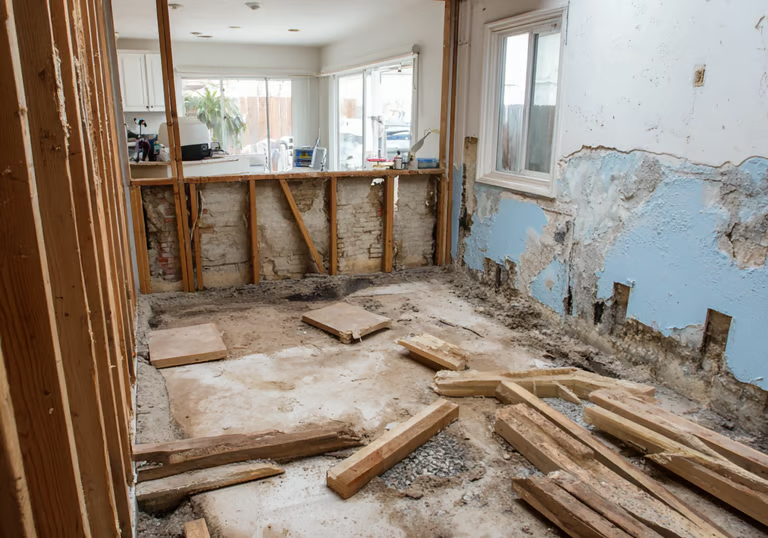
Many of Covington’s pre-war homes were built with old growth cypress, one of the most water-resistant woods ever used in residential construction. This is genuinely good news in many respects. Cypress resists rot and insect damage at a level modern framing lumber cannot match.
The complication is drying. Cypress is dense. When it absorbs moisture from an extended water event, it releases that moisture slowly and on its own timeline, not the timeline that standard residential drying equipment assumes. Moisture meters calibrated for pine or spruce framing produce inaccurate readings on cypress, which means jobs that appear to reach clearance by standard metrics may still carry elevated moisture in the framing itself.
Our team accounts for this during every restoration job in older St. Tammany Parish homes, extending monitoring periods and adjusting clearance thresholds to reflect what the actual building materials require.
What Proper Water Damage Restoration Covers in an Older Covington Home
Getting water damage restoration right in these properties means going beyond the standard checklist:
- Material-specific moisture mapping that accounts for heart pine flooring, plaster walls, and cypress framing rather than applying generic drywall-based protocols
- Extended drying timelines calibrated to dense historical materials, not modern construction assumptions
- Subfloor assessment beneath original flooring before any decision is made about replacement versus drying in place
- Plaster wall evaluation to determine whether walls can be dried without opening, which preserves the original finish that cannot be replicated with modern materials
- Daily monitoring with documented readings that reflect actual material moisture content rather than ambient air readings alone
- Insurance documentation that accurately describes the building materials and their specific restoration requirements
Preserving What Makes the Home Worth Saving
Replacing original heart pine floors with modern hardwood is not restoration. Covering plaster walls with drywall is not restoration. These materials and finishes are part of what gives an older Covington home its value, its character, and its connection to Louisiana’s architectural history.
The goal of water damage restoration in these properties is to preserve as much of the original fabric as possible, drying in place where the material supports it, and replacing only what genuinely cannot be saved. That requires patience, the right equipment, and a team that understands what they are working with.
Older Home, Newer Problem. We Know the Difference.
If your Covington home was built before 1960 and water has gotten inside, the standard restoration playbook may not be the right one. The materials are different, the drying dynamics are different, and the stakes for getting it wrong are higher when what you stand to lose cannot be bought at a lumber yard.
PuroClean Emergency Restoration serves Covington, Mandeville, Madisonville, and throughout St. Tammany Parish around the clock. Give us a call at (985) 590-6600 and let us take a look before assumptions are made about what needs to come out. You might be surprised how much can be saved with the right approach from the start.
 PuroClean Emergency Restoration