


What Should I Do First If My Quad Cities Basement Floods?
Walking down into your commercial property or home only to find standing water and the unmistakable musty odor of rapidly growing mold is a nightmare no property owner wants to face. As a Quad Cities business owner or resident, dealing with basement flooding in Quad Cities communities can feel completely overwhelming, leaving you stressed about structural damage, ruined inventory, and lost revenue.
Fortunately, you do not have to navigate this disaster alone, understanding the root causes of subsurface water intrusion and acting quickly with structural drying protocols can save your property from long-term ruin.
How do I dry out a flooded basement?
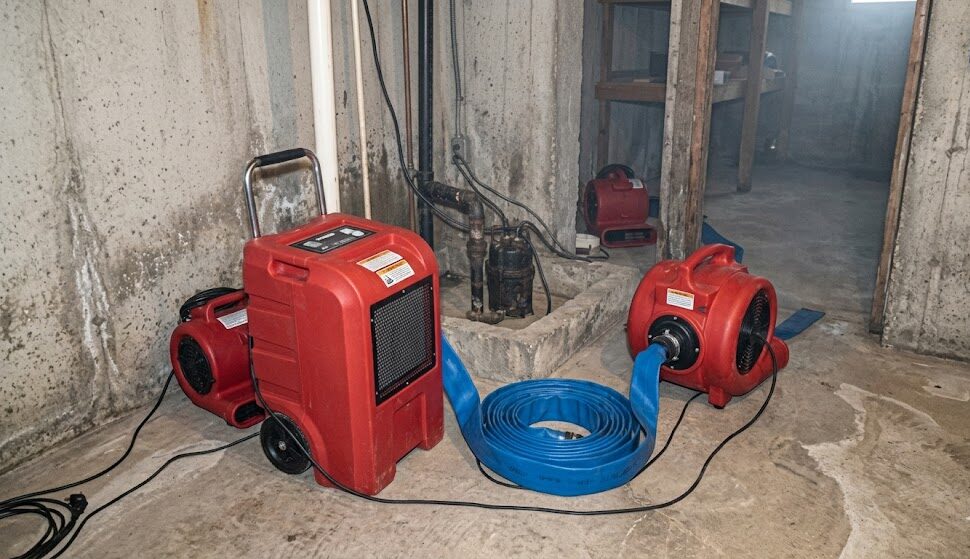
To properly dry out a flooded basement, immediately shut off the main power if standing water covers electrical outlets. Next, utilize submersible sump pumps to extract bulk water, followed by a professional deployment of heavy-duty industrial dehumidifiers and high-velocity air movers to capture deep structural moisture. True structural drying requires professional extraction timelines, typically taking between 3 to 5 days, monitored by specialized moisture meters to prevent secondary damage like toxic mold growth.
What Causes Basement Flooding in Quad Cities Properties?
Property owners across Scott County, Iowa, and Rock Island County, Illinois, face a unique set of geographic and environmental challenges that contribute to severe subsurface water problems.
Mississippi River Flood Stages and Crests
Living along the historic Mississippi River means local properties are inextricably linked to regional hydrology. When high-volume spring thaws or torrential rains push the river past its critical Mississippi River flood stages, the local water table rises exponentially. This massive shift forces water upward through concrete pores and foundation cracks, leaving thousands of properties vulnerable to rapid moisture accumulation.
Sump Pump Failure in Iowa and Illinois
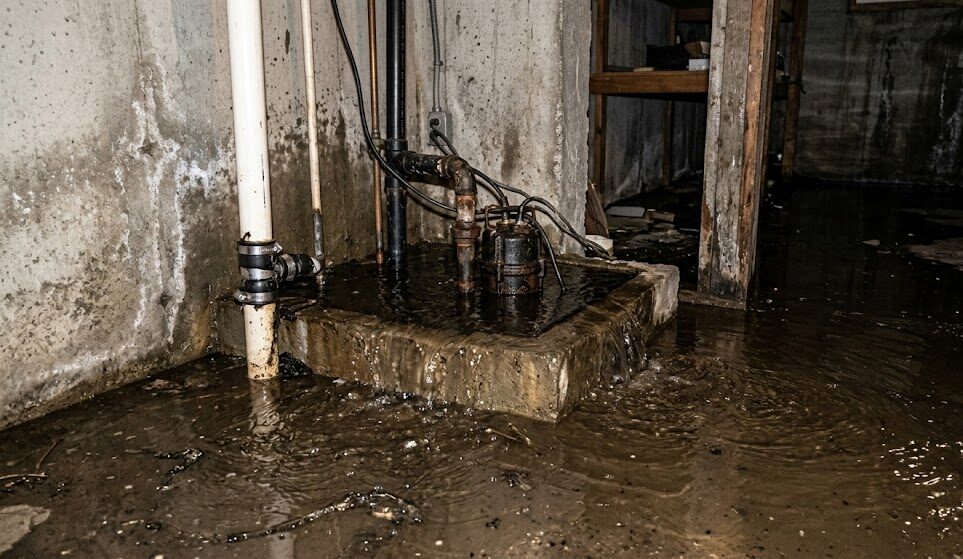
A reliable sump pump system is your basement’s primary defense mechanism against water accumulation. However, during intense seasonal downpours, a sudden sump pump failure in Iowa or Illinois neighborhoods can leave your lower level entirely unprotected. Whether caused by a mechanical breakdown of popular sump pump brands like Zoeller or Wayne, or a widespread electrical outage during severe Quad Cities storm events, a dead pump results in immediate, unchecked water accumulation.
Groundwater Intrusion in Illinois and Iowa Soils
The clay-heavy soil surrounding the Quad Cities retains an immense amount of moisture. During periods of heavy, prolonged precipitation, the soil undergoes hydrostatic pressure, the force exerted by standing water against a foundation. This intense pressure results in severe groundwater intrusion in Illinois and Iowa basements, forcing moisture through tiny structural fractures, floor-to-wall joints, and unsealed masonry.
Why Is Basement Water Damage Repair in Bettendorf and Beyond Urgent?
| Hazard Category | Primary Property Risk |
| Structural Integrity | Foundation cracking, drywall rot, weakened framing |
| Electrical & Fire Safety | Circuit short-circuits, appliance damage, shock hazards |
| Biological Proliferation | Rapid toxic mold growth within 24–48 hours |
| Category 3 Water Intrusion | Black water contamination from backed-up sewer lines |
Delaying professional mitigation only increases your total repair costs. Immediate basement water damage repair in Bettendorf, Davenport, and Rock Island is absolutely vital to protect the physical footprint of your building. Securing certified water damage restoration in Davenport, IA & Quad Cities area protects your structure from foundation cracking, ruined insulation, and compromised foundational footings.
Furthermore, floodwaters often carry biohazards, pesticides, and raw sewage. This hazardous runoff requires specialized sanitation protocols matching the strict standards set by the Iowa Department of Natural Resources to ensure the indoor environment is completely safe for human occupancy.
How Do I Safely Clean Up a Flooded Basement?
If you are dealing with a minor moisture issue, you might consider taking initial steps yourself. However, always prioritize safety before stepping into any area with standing water.
- Isolate the Power: Never step into a wet basement until the main electrical breaker has been entirely shut off.
- Wear Protective Gear: Equip yourself with rubber boots, heavy-duty gloves, and an N95 mask to limit your exposure to biohazards.
- Begin Extraction: Use a wet/dry vacuum or a reliable utility pump to clear out standing water.
- Remove Saturated Materials: Discard heavily soaked carpeting, padding, and cardboard boxes that cannot be thoroughly sanitized.
For major incidents, DIY efforts simply cannot pull deep moisture out of structural framing. Investing in professional flooded basement cleanup in Davenport ensures that hidden moisture pockets behind walls and beneath subfloors are completely eradicated.
Professional Restoration: Partner with PuroClean of Davenport
When catastrophic basement flooding in Quad Cities disrupts your daily operations or upturns your home life, you need an experienced, rapid-response team to regain control. PuroClean of Davenport is the premier choice for professional property restoration throughout Milan, Davenport, IA, Rock Island, Bettendorf, and the greater Quad Cities communities.
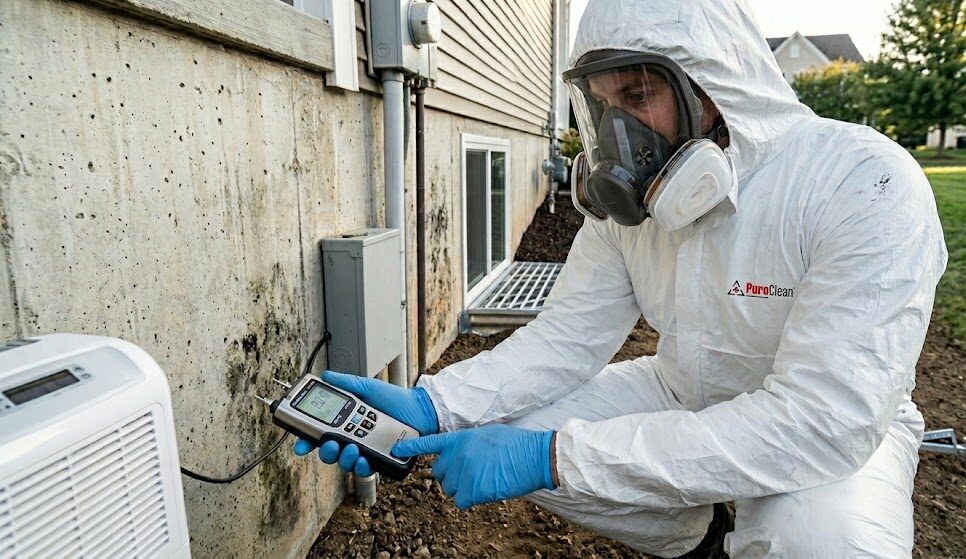
Our highly trained specialists hold advanced IICRC (Institute of Inspection Cleaning and Restoration Certification) credentials, ensuring every step of your cleanup adheres to strict industry protocols. We utilize professional-grade truck-mounted extractors, advanced industrial dehumidification units, and targeted thermal imaging cameras to find and eliminate hidden pockets of moisture before they trigger toxic mold growth.
We are available 24 hours a day, 7 days a week, 365 days a year because we know that water damage does not wait for normal business hours. The faster we arrive, the more of your structural materials, inventory, and treasured personal property we can save.
Do not let standing water put your property at risk. Call 563-484-4846 right now to request an immediate, comprehensive property assessment, or fill out our online contact form to get your restoration underway.
FAQs About Basement Flooding in Quad Cities
How long does it take for mold to grow after a basement floods?
Dangerous basement mold after flooding events can begin proliferating in as little as 24 to 48 hours. Mold spores thrive in dark, humid environments with cellulose-rich food sources like drywall and wood joists. If relative humidity levels remain above 60 percent, a massive mold infestation can quickly take over your lower level, requiring extensive, certified remediation.
Can groundwater leak through solid concrete basement walls?
Yes, concrete is a highly porous material that naturally absorbs water like a hard sponge. When hydrostatic pressure builds up in saturated soil outside, it forces moisture directly through the microscopic pores and tiny hairline cracks of solid concrete walls. This continuous movement of water from the exterior soil into your interior space is a classic example of severe groundwater intrusion.
What is the most effective way to prevent basement flooding?
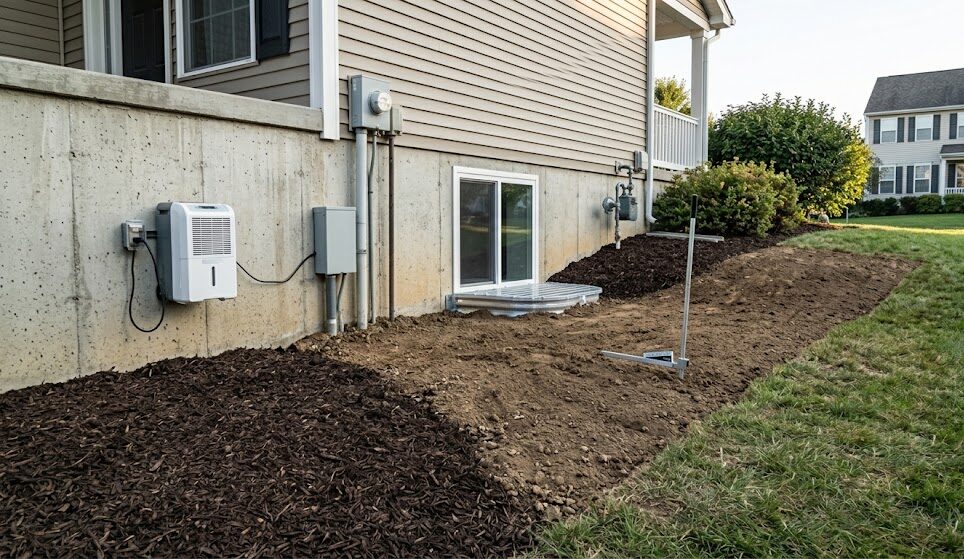
The single most effective defense against recurrent flooding is executing professional basement waterproofing in Rock Island and Davenport properties. This includes installing a high-quality interior drainage tile system, maintaining a reliable sump pump backed up by a heavy-duty battery system, repairing exterior foundational cracks, and grading your lawn so surface water flows away from your building walls.
Is flood water considered hazardous to my health?
Yes, most basement flooding caused by storms or outdoor surface runoff is classified as Category 2 or Category 3 water. This means it contains significant chemical or biological contamination. Coming into direct contact with these waters without professional-grade personal protective equipment (PPE) can expose you to harmful pathogens, E. coli, and dangerous chemical residues.