


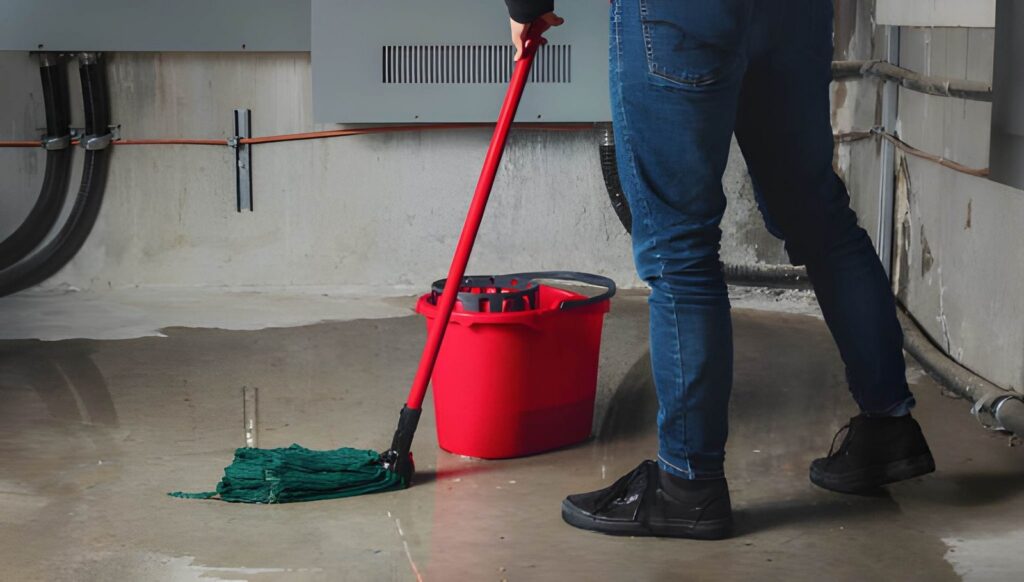
The first 24 hours after a flood are the most important — and often the most overwhelming. Between the shock of seeing water in your home and the flood of decisions that follow, it’s easy to freeze up or waste precious time doing the wrong things first.
This guide lays out exactly what to do, step by step, during that critical first day. Getting this window right can be the difference between a manageable cleanup and a much larger, more expensive restoration project.
Step 1: Make Sure It’s Actually Safe to Be There
Before anything else — including grabbing valuables or assessing damage — confirm the space is safe to enter.
- Never enter a flooded area if there’s any risk of electrical hazard. If water is near outlets, appliances, or the breaker panel, shut off power to that area first, or call an electrician if you’re not confident doing it safely yourself.
- Watch for structural instability, including sagging ceilings, buckling floors, or visible cracks — these can indicate the space isn’t safe to walk through.
- Avoid contact with the water itself if there’s any chance it’s contaminated (sewage backup, floodwater from outside the home, or standing water that’s been sitting for a while).
- Wear protective footwear at minimum, since floodwater often contains debris you can’t see.
Step 2: Stop the Water Source, If You Can
If the flooding is from an internal source — a burst pipe, an overflowing appliance, a failed water heater — shutting off the water supply is often the single most important action you can take. Locate your home’s main water shutoff valve ahead of time, before an emergency happens, so you’re not searching for it during a crisis.
If the flooding is from an external source, like storm or creek flooding, there’s often nothing to “shut off” — in this case, focus shifts to safety and documentation instead.
Step 3: Document Everything Before You Touch Anything
This step gets skipped more often than any other, usually because people jump straight into cleanup mode. Don’t.
- Take photos and video of every affected area, from multiple angles.
- Capture damaged belongings before moving them.
- Note the approximate time the flooding started, if known.
- Keep any damaged items (within reason) rather than immediately throwing them out — your insurance adjuster may need to see them.
Thorough documentation now can significantly speed up your insurance claim later.

Step 4: Call a Restoration Professional
This is the point where many homeowners debate whether to try handling things themselves first. For anything beyond a very minor, clean-water spill, calling a professional within the first 24 hours is almost always the right move — here’s why:
- Mold can begin growing within 24–48 hours in the right conditions.
- Hidden moisture inside walls, insulation, and subflooring isn’t something you can fully assess or dry with household fans.
- Contaminated water (gray or black water) requires specialized handling and disinfection.
- Professional-grade extraction and drying equipment moves far faster than anything available for rent or purchase at a hardware store.
A reputable restoration company can typically respond quickly, even outside of normal business hours, which matters most in this first-day window.
Step 5: Start Removing Standing Water, If Safe to Do So
While waiting for professional help to arrive, or if the flooding is minor enough to handle immediately, you can begin removing standing water yourself if it’s safe:
- Use a wet/dry shop vacuum for small amounts of water.
- Mop or towel up shallow puddles.
- Open windows if weather and safety allow, to begin air circulation.
Avoid using a household vacuum not rated for wet use — this is a serious electrical hazard.
Step 6: Move Belongings Out of the Affected Area
- Relocate furniture, boxes, and valuables to a dry area as soon as it’s safe to do so.
- Elevate items still in the affected space onto blocks or higher furniture if you can’t move everything at once.
- Separate wet items from dry ones to prevent moisture from spreading.
Step 7: Begin Contacting Your Insurance Company
Most insurance providers want to be notified as soon as possible after a loss. Have your documentation ready, and ask specifically:
- What’s covered under your current policy
- Whether you need a separate flood insurance claim versus a standard homeowners claim
- Whether Additional Living Expenses (ALE) coverage applies if you need to temporarily relocate
What NOT to Do in the First 24 Hours
- Don’t use regular household fans as your only drying method for anything beyond a very small, clean-water spill — it’s not enough to prevent hidden moisture and mold.
- Don’t wait to “see how bad it gets” before calling for help — the cost and complexity of restoration increases with every hour water sits.
- Don’t throw away damaged items immediately without documenting them first for insurance purposes.
- Don’t ignore a musty smell, even if visible water is gone — it’s often a sign of moisture still trapped somewhere.
- Don’t assume a small amount of water isn’t worth a professional assessment — hidden damage is often worse than what’s visible on the surface.
Why This First Day Matters So Much
Water damage isn’t static — it actively gets worse the longer it’s left unaddressed. Materials that could have been saved with same-day drying often need to be replaced entirely by day two or three. Mold, which is one of the most expensive and health-relevant complications of water damage, has its best chance of taking hold specifically within this early window. Acting decisively in the first 24 hours is genuinely one of the highest-leverage things you can do to limit both cost and disruption.
Frequently Asked Questions
| Question | Answer |
|---|---|
| What’s the very first thing I should do after a flood? | Confirm the area is safe to enter — check for electrical hazards and structural instability — before doing anything else. |
| Should I call my insurance company or a restoration company first? | Both matter, but calling a restoration company first is often more time-sensitive since drying needs to start quickly. Insurance can typically be notified shortly after. |
| Can mold really grow within 24 hours? | Mold can begin colonizing damp materials within 24–48 hours under the right conditions, which is part of why quick professional response matters. |
| Is it okay to just use fans and let it dry naturally? | For very minor spills, sometimes. For anything more significant, household fans usually aren’t enough to reach moisture trapped inside walls, flooring, or insulation. |
| Should I throw away ruined items right away? | Document them with photos first for insurance purposes before disposing of anything, even if they seem clearly ruined. |
Don’t Face the First 24 Hours Alone
The decisions you make in the first day after a flood have an outsized impact on how much can be saved — and how much it will cost. At PuroClean of Davenport, we’re ready to respond quickly and guide you through exactly what needs to happen next.
Call PuroClean of Davenport at (563) 484-4846 anytime, 24/7. We’ll respond quickly, assess the damage, answer your questions honestly, and help you protect your home, your belongings, and your peace of mind.
👉 Follow us on Facebook for tips and updates, or fill out our contact form to reach us now.