


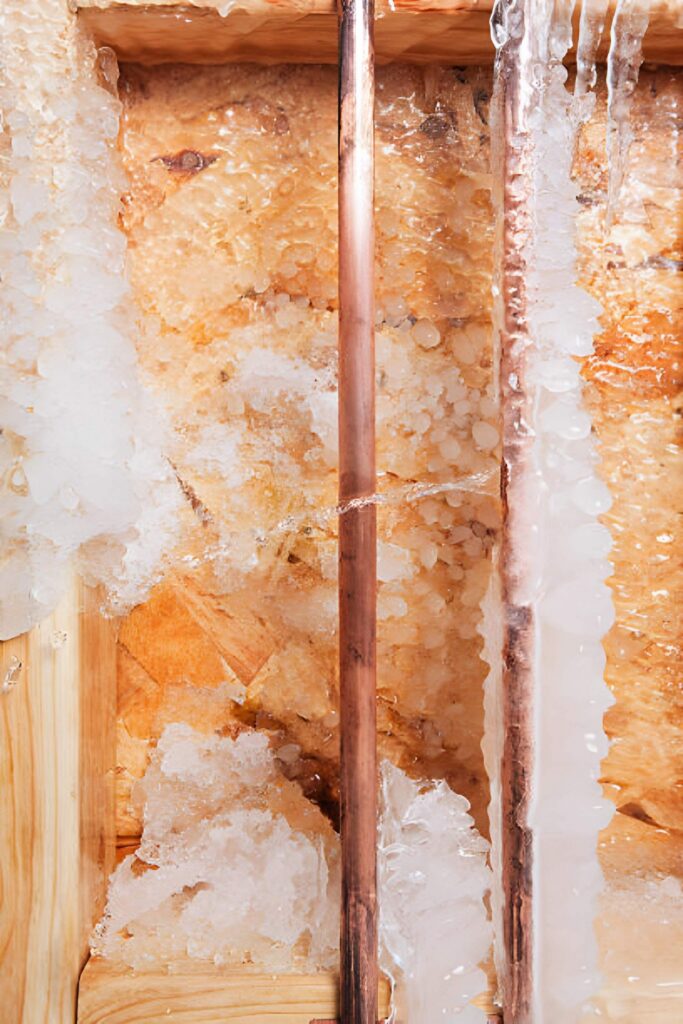
When winter temperatures drop below freezing, plumbing systems become vulnerable to one of the most costly and disruptive home disasters: pipe damage. Each year, thousands of homeowners and business owners face flooded basements, ruined walls, destroyed flooring, and mold growth — not because of storms or major floods, but because of something far more ordinary: frozen and burst pipes.
In this article, we explore frozen pipes vs. burst pipes, while the terms are often used interchangeably, they are not the same. Understanding the difference is more than just plumbing trivia — it can directly impact how fast you respond, how severe the damage becomes, and whether your insurance claim is approved or denied.
We’ll cover:
What Are Frozen Pipes?
A frozen pipe is exactly what it sounds like: water inside the pipe has turned to ice.
When temperatures fall below 32°F (0°C), water inside exposed or poorly insulated pipes can freeze. As water freezes, it expands by about 9%. That expansion puts enormous pressure on the inside of the pipe—especially in metal or rigid plastic piping.
At this stage, water flow is often restricted or completely blocked, but the pipe itself may still be intact.
Common causes of frozen pipes
Frozen pipes typically occur in:
- Unheated basements or crawl spaces
- Exterior walls with little insulation
- Attics and garages
- Vacant or seasonally used properties
- Buildings with inconsistent heating
- Plumbing near drafts, vents, or foundation cracks
A frozen pipe is a warning sign. It means the plumbing system is under stress and failure may be imminent.
What Are Burst Pipes?
A burst pipe is the result of pressure buildup inside a frozen pipe.
When ice forms, it blocks the flow of water. As additional water freezes or pressure builds behind the blockage, the pipe eventually cracks or splits open. Sometimes the pipe bursts immediately. Other times, the pipe breaks silently while frozen and only begins leaking when temperatures rise and the ice melts.
This is why many homeowners discover water damage after a cold snap ends—suddenly water is flowing freely through a pipe that is no longer intact.
Frozen vs. Burst Pipes: The Key Differences
Although closely related, frozen pipes and burst pipes create very different situations.
| Frozen Pipes | Burst Pipes |
|---|---|
| Water inside pipe is frozen | Pipe has cracked or split |
| Usually no visible water damage yet | Active water leak or flooding |
| Flow is blocked or slow | Water escapes into walls, ceilings, floors |
| Reversible if thawed safely | Requires pipe repair + water damage restoration |
| Early warning stage | Full emergency |
In short one common implication of frozen pipes vs burst pipes is:
- Frozen pipes are the danger signal.
- Burst pipes are the disaster.
Why the Difference Matters for Insurance Claims
Insurance companies look closely at how damage occurred, not just how bad it is.
Understanding the difference between frozen and burst pipes can influence:
- Whether your claim is approved
- How much is covered
- Whether the insurer argues negligence
- How quickly the claim is processed
1. Coverage depends on cause, not just damage
Most standard homeowners insurance policies cover sudden and accidental water damage from burst pipes.
However, coverage often depends on whether:
- The home was properly heated
- The plumbing was reasonably maintained
- The homeowner took steps to prevent freezing
- The damage occurred suddenly rather than over time
If an insurer believes the pipe froze due to negligence (such as turning off heat during winter or failing to insulate known vulnerable pipes), they may reduce or deny the claim.
2. Frozen pipes alone may not trigger coverage
If your pipe is frozen but has not burst, insurance may not cover anything yet — because technically no damage has occurred.
However, once the pipe bursts and causes water damage, coverage is usually triggered.
That timing matters:
- Waiting too long to thaw pipes
- Ignoring warning signs
- Delaying action after discovering freezing
…can all be used by insurers to argue that damage was preventable.
3. Gradual damage vs. sudden damage
Insurance policies typically exclude damage caused by long-term leaks or repeated neglect.
If a pipe burst weeks ago inside a wall and slowly leaked unnoticed, insurers may classify it as gradual damage, not sudden.
That’s why immediate response is critical:
- The sooner you stop the water
- Document the damage
- Call a professional restoration company
…the stronger your claim becomes.
Signs Your Pipes Are Frozen (Before They Burst)
Recognizing frozen pipes early can prevent catastrophic damage.
Watch for:
- No water or reduced flow from faucets
- Frost on exposed pipes
- Strange smells from drains (caused by trapped water)
- Unusual sounds when turning on taps
- Bulging sections of pipe
If you notice these signs, act immediately.
What to Do If You Suspect Frozen Pipes
- Keep faucets slightly open to relieve pressure
- Apply gentle heat using a hair dryer or warm towels
- Start warming near the faucet, then move toward colder sections
- Never use open flames
- Turn off the main water supply if pressure seems extreme
- Call a plumber or restoration professional if unsure
Thawing safely may prevent a burst entirely.
What to Do If a Pipe Bursts
If the pipe has already burst:
- Shut off the main water supply immediately
- Turn off electricity in affected areas
- Call PuroClean of Davenport on 563-484-4846
- Document damage with photos and video
- Contact your insurance provider
Professional water extraction and drying should begin within 24 hours to prevent mold growth and structural damage.
The Hidden Cost of Burst Pipes
A single burst pipe can cause:
- Thousands of gallons of water damage
- Mold growth within 24–48 hours
- Structural weakening of floors and walls
- Electrical hazards
- Ruined insulation and drywall
- Business downtime
- Displacement from your home
According to insurance industry data, water damage claims are among the most expensive and most common winter claims.
How Insurance Adjusters Evaluate Pipe Damage
When reviewing your claim, adjusters often look for:
- Weather conditions at the time
- Heating system status
- Pipe location
- Evidence of maintenance
- Whether the home was occupied
- Timeline of discovery and response
- Professional mitigation reports
Having documentation from a licensed restoration company strengthens your claim significantly.
Prevention: How to Reduce Risk This Winter
While no system is foolproof, these steps dramatically reduce risk:
- Insulate exposed pipes
- Seal air leaks in basements and crawl spaces
- Maintain consistent indoor heat
- Open cabinet doors under sinks during extreme cold
- Let faucets drip during deep freezes
- Drain water lines in vacant properties
- Schedule winter plumbing inspections
Prevention not only protects your property—it also protects your insurance eligibility.
Final Thoughts: Why This Knowledge Protects Your Home and Your Claim
Frozen pipes and burst pipes are not just plumbing problems—they are financial, legal, and emotional stressors.
Knowing the difference helps you:
- Act faster
- Prevent major damage
- Avoid insurance disputes
- Strengthen your claim
- Protect your investment
Winter plumbing disasters often strike without warning. But preparation and understanding can mean the difference between a minor inconvenience and a life-disrupting catastrophe.
If you are currently evaluating what to do when faced with frozen pipes vs burst pipes, professional water damage restoration is essential— not only to repair the damage, but to document it properly for insurance purposes and prevent future problems like mold.
Responding quickly, documenting thoroughly, and working with experienced professionals ensures your home or business is restored safely—and your insurance claim stands on solid ground.
If you experience water damage in winter, call 563-484-4846 and get help today. You can also contact us here or follow us on facebook