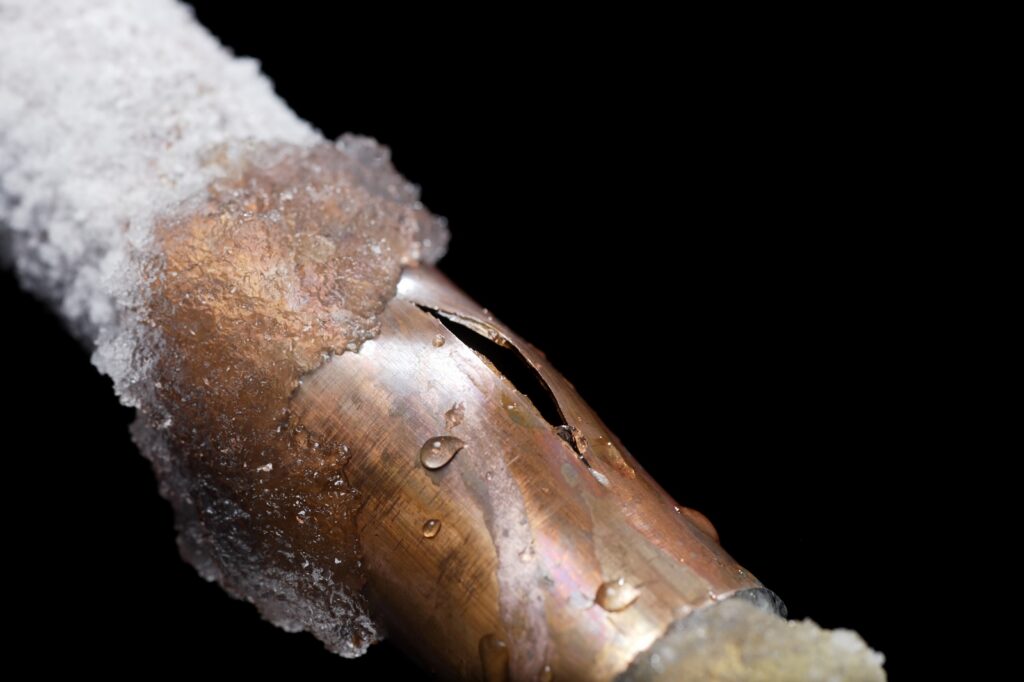
When North Texas temperatures drop, the real risk to your home often comes after the freeze. In Frisco and across the DFW area, frozen pipes rarely fail at the coldest moment. They burst during the thaw. Water begins flowing again, pressure builds, and suddenly ceilings drip, drywall bows, and attic insulation collapses under the weight. This is the winter water damage pattern we see every year, and it is why fast response matters.
At PuroClean Frisco, we specialize in stopping damage early, especially the attic pipe bursts that lead to ceiling collapse if not handled immediately.
Here is what every homeowner should know during a freeze warning or emergency. This includes what to do first, how long repairs take, and how to prevent the same damage in the future.
The Freeze Thaw Cycle and Why Damage Escalates So Fast
Frozen pipes do not usually burst while they are frozen solid. The pipe fails when temperatures rise and ice inside begins to melt. Water pressure returns, finds the weakest point, and releases suddenly. In North Texas homes, that failure often happens in the attic, above ceilings and insulation.
The first signs are easy to miss. By the time water is visible inside the home, it has often been flowing for hours.
Fast response during this window is critical. Water spreads vertically and horizontally, soaking insulation, saturating framing, and weakening drywall. What starts as a pipe repair can quickly become structural loss if drying does not begin immediately.
What to Do Immediately If a Pipe Freezes or Bursts
If you are dealing with an active freeze or thaw, these steps help limit damage before help arrives.
- Shut off the main water valve immediately
This stops additional water from entering the system and feeding the leak. - Open all faucets in the home
This drains remaining water and relieves pressure in the lines. - Turn off electricity in affected areas
Water and electricity do not mix. If ceilings or walls are wet, power should be shut off to those zones. - Document visible damage
Photos and videos of the source and spread of water help with insurance claims later.
If you see early warning signs before a burst, act right away. These signs include frost on pipes, strange smells from drains, or just a trickle of water from faucets. These are signs of frozen pipes that may fail during the thaw.
Winter Water Damage Restoration Timelines What to Expect
One of the biggest misconceptions homeowners have is how long water damage takes to dry. The answer depends on how quickly restoration begins and how deeply water has traveled into the structure.
Surface water can often be extracted within hours. Structural drying is where timing matters most. In winter freeze losses, we often see something called deep saturation. This is especially true when attic insulation and framing are involved.
Typical restoration timelines include:
- Emergency response and extraction
Begins immediately upon arrival to stop spread and remove standing water. - Structural drying
Usually takes three to five days using industrial dehumidifiers and air movement equipment designed for deep moisture. - Monitoring and adjustments
Moisture levels are checked daily to ensure materials dry correctly and safely.
Starting this process quickly can prevent secondary damage such as swelling wood, compromised ceilings, and microbial growth. Delays allow moisture to sit, weakening structural components and increasing repair costs.
How to Prevent Attic Pipes From Freezing in DFW Homes
Preparation before a freeze can save thousands in repairs. In North Texas, attic plumbing is especially vulnerable due to shallow insulation and rapid temperature swings.
To reduce the risk of frozen pipes and winter water damage:
- Insulate attic pipes with foam sleeves designed for cold exposure.
- Keep attic access hatches sealed and closed to maintain heat.
- Maintain your thermostat above 68 degrees during freezes so warm air can rise.
- Allow faucets to drip slightly during extreme cold to keep water moving.
- Check previous freeze damage areas and repair weak points before winter storms arrive.
Taking these steps before a freeze warning helps protect your home and reduces the chance of another emergency call during the next thaw cycle.
Fast Local Response Matters When Every Hour Counts
Frozen pipes and burst lines are stressful, disruptive, and costly when not handled quickly. The difference between a controlled restoration and a ceiling collapse often comes down to response time.
At PuroClean Frisco, we understand the specific risks North Texas homes face during winter storms, especially attic pipe failures that lead to widespread damage.
If you are seeing signs of frozen pipes, dealing with active water damage, or want to prepare before the next freeze, our team is available 24 hours a day.