


Key Takeaways for Homeowners
- Recurring mold signals an unresolved moisture problem, not a cleaning deficiency
- Columbus’s humid subtropical climate with summer humidity above 75 percent creates year round mold pressure
- Historic homes in German Village and Clintonville plus newer developments each face unique moisture vulnerabilities
- IICRC S500 and S520 certified remediation is the only path to permanent mold control
- PuroClean Home Savers provides 24/7 emergency response across Columbus and Franklin County at (614) 689 0012
The Columbus Homeowner’s Mold Nightmare
You see the dark patch in the corner of your basement ceiling. You grab a scrub brush and bleach. You attack it with determination. A week later, it is smaller. A month later, it is back and bigger. Six months later, your entire family is dealing with persistent coughs and you are facing a five figure remediation bill.
This story repeats in Columbus homes every single day. From century old Victorians in German Village to new construction in Dublin and New Albany, mold respects no property value or zip code. And the reason it keeps returning is simple: you are treating the symptom while the disease rages on.
As IICRC S500 and S520 certified restoration professionals, PuroClean Home Savers does not clean mold. We eliminate the environmental conditions that allow mold to exist. Our technicians serve Columbus, Dublin, Westerville, Reynoldsburg, Grove City, and all of Franklin County with science based remediation that lasts. If you are ready to stop the cycle, call (614) 689 0012 now. Here are the five reasons your mold keeps coming back and the professional solutions that actually work.
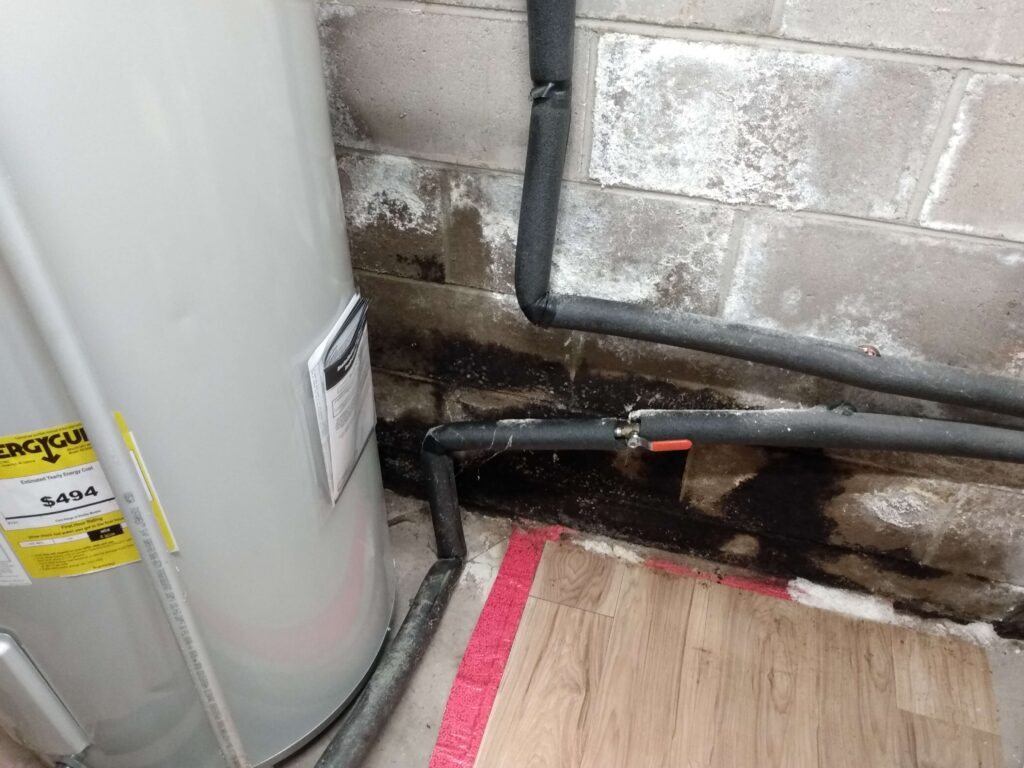
Reason 1: The Moisture Source Was Never Identified
Mold is not a stain. It is a biological organism with specific survival requirements. The most critical requirement is moisture. Not a flood. Not a leak. Just sustained moisture content above 16 percent in building materials or relative humidity above 60 percent in the air.
Columbus, Ohio sits in a humid subtropical climate zone where summer relative humidity regularly exceeds 75 percent. The city’s location at the confluence of the Scioto and Olentangy rivers adds ground level moisture to atmospheric humidity. Properties in flood prone areas near these waterways face elevated baseline moisture conditions even during dry seasons.
Without professional moisture mapping, homeowners cannot identify the hidden sources feeding their mold. Common concealed moisture pathways in Columbus area homes include:
- Foundation seepage through aging concrete in pre 1950s homes common in Clintonville and Bexley
- Condensation on poorly insulated ductwork in attics during summer cooling season
- Plumbing leaks inside walls of split level homes prevalent in Upper Arlington and Worthington
- Crawlspace moisture rising through unsealed vapor barriers in homes built on clay rich Franklin County soils
- Window condensation on single pane originals in historic German Village structures
- Roof leaks around chimneys and dormers on Victorian era homes with complex rooflines
PuroClean Home Savers uses thermal imaging cameras, penetrating and non penetrating moisture meters, and digital hygrometers to create complete moisture maps of your property. We find the water you cannot see.
Reason 2: Porous Materials Act as Mold Reservoirs
The visible mold on your drywall represents the tip of the iceberg. Beneath that surface lies an extensive network of hyphae, microscopic filaments that penetrate deep into porous materials. When you clean the surface with household products, you kill the visible colony but leave the root system intact.
IICRC S520 standards, the industry benchmark for mold remediation, establish clear guidelines for material disposal. Porous materials with significant mold growth must be physically removed and properly disposed of. This includes:
- Drywall and gypsum board with mold on paper facing or within the core
- Fiberglass batt insulation that has contacted water or high humidity
- Carpet and padding with water damage history
- Ceiling tiles and acoustic panels
- Upholstered furniture and draperies with mold contamination
- Wood framing with moisture content exceeding 20 percent
Non porous materials such as glass, metal, and sealed tile can be cleaned and treated with antimicrobial biocide. But attempting to clean porous materials is scientifically futile. The mycelium regenerates, and the mold returns.
Professional remediation involves controlled demolition within negative air pressure containment. HEPA filtered air scrubbers prevent spore migration during removal. This is not a DIY project.
Reason 3: Columbus Architecture Creates Unique Mold Pathways
Columbus features one of the most diverse housing stocks in the Midwest. Each architectural style presents distinct moisture vulnerabilities that generic remediation approaches fail to address.
Historic German Village and Victorian Village Homes: Built between 1840 and 1920, these homes feature balloon framing, minimal insulation, original single pane windows, and masonry foundations without dampproofing. They breathe more than modern homes, but they also admit more moisture. Common issues include rising damp in basements, condensation on cold plumbing lines, and mold in plaster walls where horsehair lath provides organic substrate.
Mid Century Ranch and Split Level Homes: Developed during the 1950s through 1970s in suburbs like Clintonville and Whitehall, these homes often feature slab on grade foundations with minimal or deteriorated vapor barriers. The flat or low slope roofs common in this era trap water and create chronic leak conditions. Original bathroom exhaust fans, if present, are often undersized and vent into attics rather than outdoors.
Newer Developments in Dublin, Westerville, and New Albany: Modern construction features tighter envelopes and better moisture barriers, but construction defects create vulnerabilities. Improperly flashed windows, missing housewrap, and HVAC systems sized for speed rather than dehumidification are common in homes built during the 1990s and 2000s building boom.
Condominiums and Townhomes: Multi family structures in the Short North and Downtown Columbus face shared wall moisture migration. A leak in one unit can create mold conditions in adjacent units months before detection.
PuroClean Home Savers technicians understand Columbus architecture. We customize our remediation approach to your home’s specific construction era, materials, and vulnerabilities.
Reason 4: HVAC Systems Distribute Spores Throughout Your Home
Your heating, ventilation, and air conditioning system is designed to circulate air. When mold grows inside that system, it becomes a distribution network for spores and mycotoxins. Every cycle of your furnace or air conditioner pushes contamination into living spaces.
Columbus’s climate makes HVAC mold particularly prevalent. Hot, humid summers demand continuous air conditioning. The evaporator coil operates below the dew point, creating condensation that must drain properly. When condensate lines clog or pans overflow, water accumulates in dark, warm ductwork. Dust provides nutrients. The result is a hidden mold factory.
Common HVAC related mold sources in Columbus homes include:
- Dirty evaporator coils with accumulated biological growth
- Clogged condensate drains causing water backup
- Leaky return pathways pulling air from moldy crawlspaces or attics
- Inadequate filtration allowing spore recirculation
- Oversized air conditioners that cool too quickly without proper dehumidification
- Furnace humidifiers set too high during winter, creating condensation on cold surfaces
Professional remediation must include comprehensive HVAC inspection and cleaning. PuroClean Home Savers evaluates your entire mechanical system and recommends filtration upgrades, UV light installation, and humidity control solutions.
Reason 5: No Professional Verification Means No Proof of Clearance
How do you know the mold is really gone? Visual inspection alone is insufficient. Air sampling alone is insufficient. True clearance requires a multi point verification protocol aligned with IICRC S520 standards:
- Visual Inspection: No visible mold growth on any surface within the containment area
- Moisture Verification: All building materials below 16 percent moisture content
- Air Sampling: Indoor spore counts comparable to outdoor baseline levels
- Surface Sampling: No residual fungal contamination on treated surfaces
- Odor Assessment: No musty or earthy odors indicating hidden growth
- Documentation: Written report suitable for real estate transactions, insurance claims, and landlord tenant disputes
Ohio Revised Code 5302.30 requires disclosure of moisture and mold conditions in residential real estate transactions. Professional documentation protects both buyers and sellers. PuroClean Home Savers provides comprehensive post remediation reports that satisfy legal requirements and give you confidence that the problem is truly solved.
How to Stop Mold for Good: The PuroClean Process
When you call (614) 689 0012, you initiate a systematic, science based mold remediation process:
- Emergency Dispatch: 24/7 response to Columbus and all Franklin County communities
- Comprehensive Inspection: Moisture mapping, thermal imaging, and air quality assessment
- Containment: Negative air pressure chambers with HEPA filtration prevent cross contamination
- Material Removal: Safe disposal of contaminated porous materials per EPA guidelines
- HEPA Cleaning: Vacuuming and detailed cleaning of all surfaces within containment
- Antimicrobial Treatment: Application of professional grade biocides on non porous surfaces
- Structural Drying: Commercial dehumidification and air movement to restore safe moisture levels
- Verification Testing: Independent air and surface sampling confirms clearance
- Restoration: We rebuild what we remove, returning your home to pre loss condition
- Prevention Consultation: Customized moisture management recommendations for your specific home
Frequently Asked Questions
Does home insurance cover mold caused by high humidity in Columbus, Ohio?
Standard Ohio homeowner’s policies typically exclude mold damage resulting from long term humidity, condensation, or maintenance issues. However, if mold follows a covered water loss such as a burst pipe, appliance malfunction, or storm damage, your policy may cover remediation. Ohio Revised Code requires clear disclosure of mold conditions in real estate transactions. Document all water events with photos and maintenance records. PuroClean Home Savers provides detailed cause and origin documentation to support insurance claims.
Why does mold keep returning to my Columbus basement?
Columbus basements face multiple moisture pressures including high water tables in areas near the Scioto and Olentangy rivers, clay rich Franklin County soils that retain water against foundation walls, and seasonal freeze thaw cycles that stress concrete. Many Columbus homes, especially older properties in German Village and Clintonville, have basements that were never designed to be dry. Finishing these spaces without professional moisture control creates hidden mold reservoirs.
Can I use vinegar or baking soda to kill mold permanently?
No. While vinegar has mild antifungal properties, it does not penetrate porous materials deeply enough to kill mycelium. Baking soda is a surface cleaner with no proven fungicidal action against established mold colonies. IICRC S520 standards require physical removal of mold from porous materials and professional antimicrobial treatment of non porous surfaces. Household remedies are appropriate for prevention on clean surfaces, not remediation of active infestations.
How dangerous is mold in my Columbus home?
Health effects vary by species, exposure duration, and individual sensitivity. Common reactions include allergic rhinitis, asthma exacerbation, skin irritation, and respiratory symptoms. Some species produce mycotoxins linked to more severe neurological and immunological effects. The Ohio Department of Health treats mold as a potential public health nuisance. Columbus housing code requires rental units to be free from health hazards including mold. If you suspect health impacts, consult your physician and schedule professional testing.
What Columbus neighborhoods does PuroClean Home Savers serve?
PuroClean Home Savers serves Columbus, Dublin, Westerville, Reynoldsburg, Grove City, Upper Arlington, Worthington, New Albany, Gahanna, Bexley, Whitehall, and all Franklin County communities. We are locally owned and operated with deep knowledge of Central Ohio’s climate, soils, and architectural diversity.