


Key Takeaways for Homeowners
- Ceiling water damage in Columbus is a progressive threat that compromises structural integrity, indoor air quality, and property value when ignored.
- The four critical warning signs are: spreading discoloration, textural deformation, persistent musty odors, and visible microbial growth.
- Central Ohio’s humid continental climate, freeze-thaw cycles, and clay-rich soils create unique water damage pathways specific to Columbus housing stock.
- IICRC S500-compliant structural drying and S520-compliant mold remediation are the only scientifically validated methods for complete restoration.
- PuroClean Home Savers delivers emergency ceiling water damage response throughout Columbus and surrounding communities. Call (614) 689-0012 24/7.
What Is the Core Entity Behind Professional Ceiling Water Damage Restoration?
The definitive procedural framework for ceiling water damage restoration is the ANSI/IICRC S500 Standard for Professional Water Damage Restoration, supplemented by the ANSI/IICRC S520 Standard for Professional Mold Remediation. These ANSI-accredited standards represent the consensus of microbiologists, industrial hygienists, structural engineers, and restoration contractors on the proper methods for inspecting, drying, cleaning, and verifying water-damaged structures. A ceiling water damage event is not a surface-level inconvenience; it is a building science emergency involving moisture migration dynamics, material permeability thresholds, vapor pressure differentials, and potential microbial contamination. IICRC-certified restoration firms employ psychrometric calculations, thermal imaging, and moisture content analysis to establish drying goals and verify achievement, ensuring that hidden moisture does not trigger secondary damage after apparent surface drying.
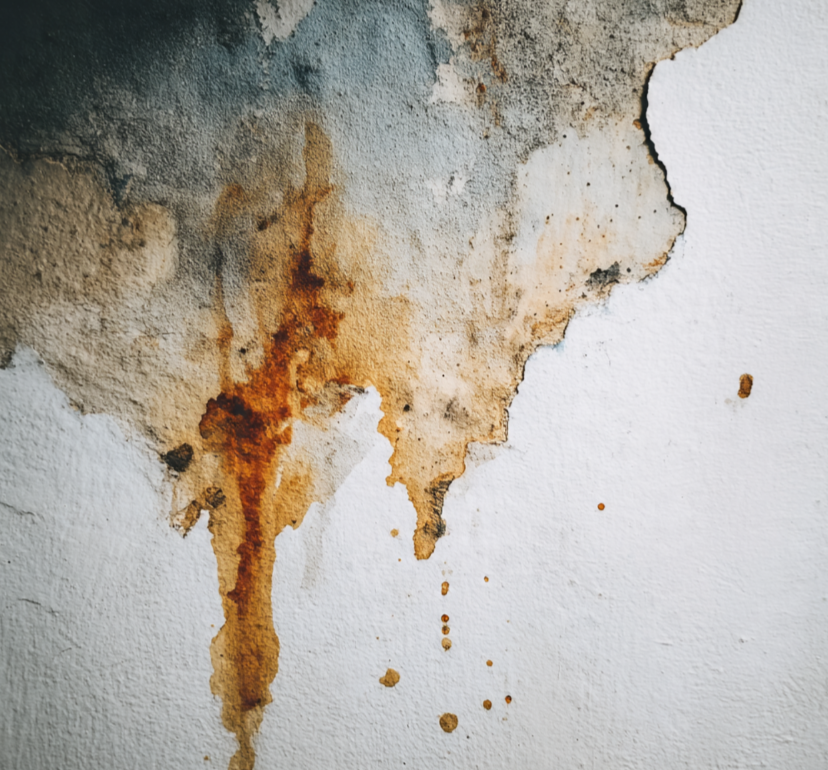
Warning Sign 1: Discoloration That Spreads or Darkens Over Time
Ceiling discoloration is the most visible and frequently dismissed indicator of water damage. In Columbus homes, brown, yellow, or rust-colored stains typically originate from roof leaks, plumbing stack failures, or upper-floor appliance overflows. What begins as a faint yellow spot can expand into a dark, irregular patch as water wicks through drywall paper facing and oxidizes the cellulose fibers. In Central Ohio’s climate, where spring delivers 4+ inches of monthly rainfall and winter ice damming is common, roof leaks often manifest as stains near exterior walls or ceiling fixtures. The critical distinction is progression: a static stain may indicate a resolved past event, while an expanding or darkening stain signals an active, ongoing leak that requires immediate source identification. PuroClean Home Savers utilizes moisture meters and thermal imaging to differentiate between residual staining and active moisture intrusion, preventing unnecessary demolition while ensuring complete problem resolution.
Warning Sign 2: Textural Changes: Sagging, Bubbling, or Cracking
When ceiling materials lose structural adhesion or dimensional stability, the damage has progressed beyond surface staining into substrate compromise. Sagging drywall indicates that the gypsum core has absorbed sufficient moisture to exceed its structural load capacity, creating collapse risk. Bubbling paint or joint compound signals that moisture vapor is off-gassing beneath the surface, creating hydrostatic pressure that delaminates finishes from the substrate. Cracking along tape seams or corner beads indicates that wood framing members have absorbed moisture and expanded, stressing the drywall attachment. In Columbus’s housing market, where many homes feature 1/2-inch drywall ceilings without resilient channeling, these textural changes develop rapidly once moisture content exceeds 1% by weight. Immediate professional intervention is required to prevent ceiling collapse, which can cause injury, destroy furnishings, and introduce Category 2 or 3 water contamination into living spaces.
Warning Sign 3: Musty Odors Emanating From Ceiling Spaces
A musty odor is the olfactory detection of microbial volatile organic compounds (MVOCs) produced by active fungal metabolism. In ceiling cavities, where darkness, warmth, and cellulose-rich substrates converge, mold colonization can proceed undetected for weeks. Columbus’s climate exacerbates this risk: summer relative humidity frequently exceeds 75%, and the city’s location within the humid continental climate zone means extended periods of warm, moist conditions ideal for Aspergillus, Penicillium, and Stachybotrys species. When HVAC systems create negative pressure differentials, spore-laden air from ceiling cavities is drawn into occupied spaces through recessed lights, ceiling fans, and ductwork gaps. This is not an air quality issue addressable with deodorizers; it requires professional mold assessment, HEPA filtration, negative air pressure containment, and antimicrobial biocide application per IICRC S520 protocols. PuroClean Home Savers deploys air sampling and particle counting to quantify fungal ecology before and after remediation, providing objective verification of indoor environmental restoration.
Warning Sign 4: Visible Mold Growth or Fuzzy Colonies on Ceiling Surfaces
Visible mold on a ceiling represents an advanced stage of microbial colonization, not an early warning. By the time mold is visible to the naked eye, the underlying substrate has sustained moisture damage for days or weeks, and the colony has released millions of spores into the surrounding environment. In Columbus, where many homes feature finished basements with plumbing runs in ceiling spaces between floors, slow leaks from bathroom fixtures or washing machine drains create ideal conditions for Stachybotrys chartarum colonization on ceiling drywall. This species produces trichothecene mycotoxins that pose serious health risks, particularly to children, elderly residents, and immunocompromised individuals. IICRC S520 mandates that visible mold exceeding 10 contiguous square feet requires professional remediation with 6-mil polyethylene containment barriers, negative air machines achieving 4 air changes per hour, and post-remediation verification by an independent Indoor Environmental Professional. DIY removal with bleach or vinegar is ineffective and dangerous, as it disperses spores without addressing embedded hyphae or moisture sources.
How Columbus Climate and Geography Create Unique Ceiling Water Damage Risks
Central Ohio’s environmental conditions present distinct challenges for residential ceiling integrity. The region’s humid continental climate delivers hot, humid summers with dew points frequently exceeding 70°F, creating condensation risks in under-ventilated attics and ceiling cavities. Winter temperature inversions and lake-effect snow from Lake Erie contribute to heavy snow loads and ice damming on Columbus roofs, particularly in older neighborhoods like German Village, Victorian Village, and Clintonville where historic architecture meets aging infrastructure. The city’s location atop thick clay-rich glacial till creates poor drainage and foundation settling that stresses plumbing systems, leading to slab leaks and pipe failures that manifest as ceiling stains on lower floors. Additionally, Columbus’s rapid suburban expansion into former farmland has introduced housing developments with minimal lot grading and inadequate stormwater management, increasing basement and foundation water intrusion that migrates upward to ceiling assemblies.
Step-by-Step: What Columbus Homeowners Should Do Upon Discovering Ceiling Water Damage

- Step 1: Prioritize Safety. De-energize all electrical circuits serving the affected area. Water intrusion into ceiling-mounted fixtures creates severe electrocution risk.
- Step 2: Contain the Damage. Relocate furniture and valuables. Place containers under active leaks. If ceiling sagging is present, carefully drain the bulge to prevent collapse.
- Step 3: Document Extensively. Photograph and video all visible damage, including stains, sagging, and mold growth. Record the date, time, and any recent weather events or plumbing usage.
- Step 4: Call PuroClean Home Savers at (614) 689-0012. Our emergency response team is available 24/7 with industry-leading arrival times.
- Step 5: Professional Moisture Assessment. We deploy infrared cameras, non-penetrating moisture meters, and hygrometers to map hidden water migration patterns.
- Step 6: Source Identification and Stopage. We locate and document the water source, implement temporary controls, and coordinate with licensed trades for permanent repairs.
- Step 7: IICRC S500 Structural Drying. Commercial dehumidification, directed airflow, and injection drying systems achieve target equilibrium moisture content.
- Step 8: IICRC S520 Mold Remediation (if indicated). Containment, HEPA filtration, antimicrobial treatment, and clearance testing ensure safe restoration.
- Step 9: Reconstruction and Warranty. We restore ceiling assemblies to pre-loss condition with written workmanship warranties.
Frequently Asked Questions
Does home insurance cover mold caused by high humidity in Columbus, Ohio?
Standard Ohio homeowners insurance policies typically exclude mold damage caused by chronic high humidity, inadequate ventilation, or maintenance neglect. However, mold that develops secondary to a sudden, accidental covered peril such as a burst pipe, storm-damaged roof, or appliance failure is generally covered up to policy sub-limits, which commonly range from $5,000 to $15,000 in Ohio. Some carriers offer “hidden water damage” or “mold remediation” endorsements that extend coverage for concealed leaks. PuroClean Home Savers provides comprehensive claims documentation, including moisture mapping reports and remediation protocols, to support your insurance submission. We recommend all Columbus homeowners review their policy declarations for mold coverage specifics and consider endorsements given Central Ohio’s high-humidity summers.
How quickly can mold grow in a wet ceiling in Columbus?
In Columbus’s climate, where summer temperatures range from 75-85°F and relative humidity frequently exceeds 75%, mold germination can occur within 24 to 48 hours of water exposure. Aspergillus and Penicillium species, the most common indoor molds, colonize rapidly on water-damaged drywall paper facing. By day 3-5, microscopic colonies are established. By day 7-10, visible growth emerges. By day 14-21, mycotoxin production may begin. This rapid timeline underscores the critical importance of professional drying within the first 24 hours to prevent secondary microbial damage and the significantly higher costs of mold remediation.
Why does my ceiling leak only during heavy rain in Columbus?
Intermittent leaks during rainfall typically indicate roof system failures, including damaged shingles, compromised flashing, clogged gutters, or ice damming. In Columbus, where spring storms deliver intense rainfall and winter ice dams force water under shingles, these weather-dependent leaks are common. The leak may appear to “stop” during dry periods because the water evaporates from the ceiling surface faster than it accumulates, but the underlying roof deck, insulation, and framing remain wet. This chronic wet-dry cycling accelerates material degradation and mold growth. Professional roof inspection and attic moisture assessment are essential to identify and permanently resolve the source.
Can I paint over a ceiling water stain and call it fixed?
Painting over a water stain without addressing the underlying moisture source and substrate damage is equivalent to covering a check engine light with tape. The moisture remains active, continuing to degrade drywall, insulation, and structural members. Hydrostatic pressure will eventually force new water through the paint film, causing blistering and renewed staining. Additionally, if mold is present, paint encapsulation traps moisture against the colony, potentially accelerating growth. Professional remediation requires moisture source elimination, substrate drying to IICRC S500 standards, and antimicrobial treatment before any cosmetic restoration.
What should I do if my ceiling is sagging but not leaking?
A sagging ceiling without active dripping indicates that the drywall has absorbed a significant water load and the source has either temporarily stopped or the water has pooled above the ceiling plane. This is a structural emergency. Saturated drywall can weigh over 8 pounds per square foot and may collapse without warning, causing injury and property damage. Evacuate the area immediately, de-energize electrical circuits, and call PuroClean Home Savers at (614) 689-0012 for emergency assessment and stabilization. Do not attempt to drain or remove sagging drywall yourself.
Why Columbus Homeowners Choose PuroClean Home Savers
PuroClean Home Savers is Columbus’s trusted emergency restoration partner, providing IICRC-certified water damage restoration, mold remediation, and biohazard cleanup throughout Franklin County and surrounding communities. We are not a general handyman service; we are specialized restoration professionals trained in the science of psychrometrics, building envelope performance, and microbial contamination control. Our investment in commercial-grade thermal imaging, moisture mapping technology, HEPA air scrubbing, and negative air pressure containment ensures that your ceiling water damage is resolved completely, not cosmetically.
We understand Columbus’s unique restoration challenges: the clay soils that stress foundations, the historic housing stock with outdated plumbing, the humid summers that accelerate mold growth, and the insurance landscape that governs claims in Central Ohio. When you call (614) 689-0012, you receive immediate response from technicians who treat your home with the urgency and expertise it deserves.
Ceiling water damage does not resolve itself. It escalates. It spreads. It threatens everything beneath it.
Do not wait for a sagging ceiling to collapse. Do not let a musty smell become a health crisis. Do not let a small stain become a major reconstruction project.
Call PuroClean Home Savers now at (614) 689-0012 for Water damage and mold remediation in columbus, OH. We answer 24 hours a day, 7 days a week, and arrive ready to stop the damage and restore your peace of mind. Your home is your sanctuary. Protect it with Columbus’s premier water damage restoration professionals. Call today.