


Key Takeaways for Homeowners
- Unvented clothes dryers release up to 1.5 gallons of water vapor per load directly into your Columbus home, creating hidden moisture conditions that trigger mold growth within 24 to 48 hours.
- Mold from dryer moisture often colonizes inside walls, behind baseboards, within HVAC systems, and under flooring long before visible signs appear.
- Columbus, Ohio’s humid continental climate, clay soil conditions, and prevalence of basement laundry areas create a perfect storm for dryer-related mold infestations.
- Only IICRC S500 and S520 certified remediation, including moisture mapping, thermal imaging, HEPA filtration, and negative air pressure containment, can safely eliminate hidden mold.
- If you suspect mold in your Columbus home, call PuroClean Home Savers immediately at (614) 689-0012 for 24/7 emergency assessment and professional mold remediation.
What Is an Unvented Clothes Dryer and Why Is It Dangerous?
An unvented clothes dryer, sometimes called a condenser dryer or ventless dryer, operates without an external exhaust duct. Instead of channeling hot, humid air outside the home, these units condense moisture internally and release residual humidity directly into the surrounding indoor air. While manufacturers market these appliances as convenient solutions for homes without exterior venting options, they introduce a severe moisture management problem that most residential structures are not designed to handle.
Under IICRC S500 standards for professional water damage restoration, any source that introduces uncontrolled moisture into a building envelope is classified as a potential cause of secondary damage, including mold colonization and material degradation. The psychrometrics are straightforward: a typical dryer load removes approximately 1 to 1.5 gallons of water from clothing. In a vented system, that moisture exits the structure. In an unvented system, it becomes part of your indoor air mass.
When relative humidity exceeds 60 percent, mold spores that exist in every home activate and begin reproducing. Within 24 to 48 hours of moisture introduction, microscopic colonies establish themselves on organic substrates. Within weeks, these colonies can expand into wall cavities, ceiling spaces, and HVAC systems, creating a contamination event that threatens both structural integrity and occupant health.
Why Columbus Homes Are Uniquely Vulnerable to Dryer-Related Mold
Columbus, Ohio presents a convergence of risk factors that make unvented dryer moisture particularly dangerous. The city sits within a humid continental climate zone with four distinct seasons. Summer months bring high humidity, with dew points frequently climbing into the upper 60s. Winter months create dramatic temperature differentials between heated interiors and cold foundation walls, producing condensation on basement surfaces.
Local soil in Franklin County is predominantly clay-based, which retains moisture against foundation walls and contributes to basement humidity through vapor transmission. Many Columbus homes feature basements, and the laundry area is commonly located in the basement level. In historic neighborhoods like German Village, Victorian Village, and the University District, older homes may lack modern ventilation infrastructure, leading homeowners to install unvented dryers as a workaround.
Building codes in Columbus require proper exhaust ventilation for dryers, but enforcement varies in older properties, and DIY installations often bypass code requirements. The combination of climate, soil, housing stock, and appliance choice creates an environment where unvented dryers function as moisture delivery systems with devastating consequences.
6 Hidden Ways Unvented Dryers Cause Mold Problems
1. Saturating Wall Cavities Behind and Adjacent to the Dryer
The wall directly behind an unvented dryer absorbs concentrated moisture with every load. Because this area is typically concealed by the appliance itself, homeowners cannot see the damage until it becomes severe. Moisture migrates through drywall paper into the wall cavity, where it contacts wood studs, insulation, and electrical boxes. Thermal imaging consistently reveals temperature differentials in these areas indicating trapped moisture. Without professional moisture mapping, this hidden colonization progresses for months, weakening structural components and releasing spores into the living space.
2. Creating Condensation Traps in Basement Environments
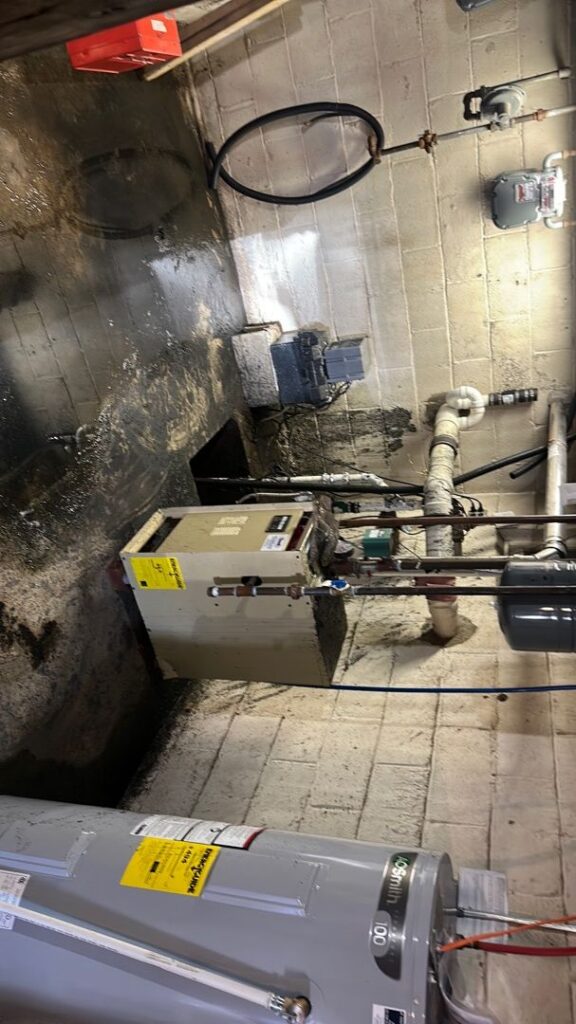
Columbas basements are naturally cool, especially in spring and fall when ground temperatures lag behind air temperatures. When warm, humid air from an unvented dryer contacts cool concrete walls, uninsulated ductwork, or cold water pipes, condensation forms immediately. These water droplets provide the moisture mold needs to colonize on dust, paint, and organic debris. Over time, condensation cycles repeatedly with each dryer use, establishing permanent damp zones that support continuous biological growth. Dehumidification alone cannot counteract this localized moisture source.
3. Contaminating HVAC Ductwork and Distribution Systems
Your HVAC system is the circulatory network of your home. Return air ducts in basement laundry areas draw in humid air and any airborne mold spores, transporting them to every room. Standard fiberglass duct insulation provides an organic food source for mold, and the dark, temperature-stable environment inside ductwork is ideal for colonization. Once established, HVAC mold becomes a whole-house contamination event. Only professional duct cleaning with HEPA filtration and antimicrobial biocide treatment can restore air quality. In severe cases, contaminated duct sections must be removed and replaced.
4. Elevating Subfloor and Crawl Space Moisture
In Columbus homes with first-floor laundry rooms, unvented dryer moisture does not remain in the laundry space. It migrates downward through flooring into crawl spaces and subfloor assemblies. Many Central Ohio homes, particularly ranches and split-levels built between 1960 and 1990, feature crawl spaces with limited ventilation. Added moisture from above creates conditions where mold colonizes joists, subflooring, and insulation. Because crawl spaces are rarely inspected, these infestations can persist for years, causing wood rot and structural compromise while releasing spores upward through floor gaps.
5. Supporting Mycotoxin-Producing Species in Confined Utility Spaces
Unvented dryers are frequently installed in small utility closets, pantries, or converted basement corners with minimal airflow. These confined spaces trap humidity at levels that support toxigenic mold species, including Stachybotrys chartarum and Aspergillus species. Unlike common household molds, these species produce mycotoxins, which are secondary metabolites capable of causing serious health effects through inhalation and skin contact. The confined nature of utility closets means that spore concentrations in these areas can reach extremely high levels, creating acute exposure risk for anyone accessing the space.
6. Overwhelming Residential Dehumidification Systems
Many Columbus homeowners invest in basement dehumidifiers to manage natural humidity. However, residential units are designed to handle ambient moisture, not the concentrated output of an unvented appliance. A standard dehumidifier extracts 30 to 70 pints of moisture per day. An unvented dryer operating daily can introduce 30 to 45 gallons of water vapor monthly, far exceeding dehumidifier capacity. The result is a home where humidity levels remain chronically elevated, supporting mold growth in areas completely unrelated to the laundry room, including bedrooms, bathrooms, and closets.
The Health and Structural Consequences of Hidden Dryer Mold
Hidden mold from unvented dryers poses dual threats. Structurally, it degrades drywall, wood framing, insulation, and flooring materials. The cost of repairing mold-damaged structures frequently exceeds the cost of remediation itself because compromised materials must be removed and replaced following IICRC protocols.
Health consequences are equally serious. Mold exposure triggers allergic reactions, asthma exacerbation, and respiratory infections in sensitive individuals. Chronic exposure to mycotoxins has been associated with immune suppression, neurological symptoms, and chronic fatigue syndrome. Children, elderly residents, pregnant women, and individuals with pre-existing respiratory conditions face the highest risk.
Because hidden mold often exists for months before detection, occupants may experience prolonged exposure without understanding the source of their symptoms. This is why professional assessment using air quality testing, spore trap analysis, and thermal imaging is critical at the first sign of trouble.
What Should Columbus Homeowners Do If They Suspect Hidden Mold?
If you have an unvented dryer, or if you have noticed any warning signs including musty odors, visible staining, condensation, or unexplained health symptoms, immediate professional assessment is essential. Mold does not improve with time. It expands, deepens, and becomes more expensive to remediate.
Step-by-Step Emergency Protocol:
- Cease operation of the unvented dryer. Every additional load increases moisture saturation and colony expansion.
- Increase ventilation temporarily. Open windows and run exhaust fans to begin reducing humidity, understanding that this is only a temporary measure.
- Inspect visible areas. Check walls, ceilings, and floors near the dryer for any discoloration, warping, or water staining.
- Document conditions. Take photographs of visible damage and note any health symptoms for your insurance provider and remediation team.
- Call PuroClean Home Savers at (614) 689-0012. Our IICRC-certified technicians provide emergency moisture mapping, air quality testing, and comprehensive mold remediation with direct insurance billing.
Professional Mold Remediation: The IICRC S500 and S520 Approach
PuroClean Home Savers follows the Institute of Inspection Cleaning and Restoration Certification (IICRC) S500 Water Damage Standard and S520 Mold Remediation Standard on every Columbus project. This is not optional. It is the scientifically validated protocol that ensures safe, complete, and lasting results.
Our process includes:
- Emergency Inspection and Documentation: Comprehensive moisture mapping with calibrated meters, thermal imaging to identify hidden wet zones, and air sampling to quantify spore types and concentrations.
- Containment and Isolation: Physical barriers sealed with polyethylene sheeting and negative air pressure machines prevent cross-contamination to unaffected areas of the home.
- Air Filtration and Scrubbing: Industrial HEPA filtration devices and air scrubbers operate continuously during remediation to capture airborne spores, mycotoxins, and particulate matter.
- Controlled Demolition: Contaminated porous materials, including drywall, insulation, carpet, and ceiling tiles, are removed and disposed of per EPA and OSHA guidelines.
- Structural Drying: Commercial dehumidification and psychrometric monitoring reduce moisture content to levels that prevent biological regrowth.
- Antimicrobial Treatment: All affected non-porous surfaces receive professional-grade antimicrobial biocide application to eliminate residual colonization.
- Post-Remediation Verification: Clearance testing, including air sampling and surface analysis, confirms the environment has returned to normal fungal ecology before containment is dismantled.
Columbus-Specific Considerations and Building Factors
Columbus building codes administered by the City of Columbus Building and Zoning Services require proper ventilation for all moisture-generating appliances. However, many homes in established neighborhoods were constructed decades before these requirements. In areas like Clintonville, Bexley, and Grandview Heights, homeowners often face challenges routing exterior ductwork through historic structures, leading to ventless dryer installations.
The prevalence of basements in Columbus homes is another critical factor. Franklin County clay soils retain moisture, and basement walls experience hydrostatic pressure and vapor transmission. Adding an unvented dryer to this already damp environment is equivalent to pouring gasoline on a smoldering fire. The basement becomes a humidity reservoir that feeds mold growth throughout the home.
Modern Columbus suburbs including Dublin, Powell, and New Albany feature homes with better ventilation infrastructure, but even these properties can suffer mold damage if vent lines become disconnected, clogged, or improperly modified during renovations.
Frequently Asked Questions
Does home insurance cover mold caused by high humidity in Columbus, Ohio?
Standard homeowners insurance policies typically exclude mold damage resulting from chronic humidity, poor maintenance, or inadequate ventilation. However, if mold developed secondary to a sudden and accidental covered event, such as a plumbing failure or appliance malfunction, coverage may be available. PuroClean Home Savers works directly with insurance carriers to document damage, provide detailed estimates, and facilitate claims processing. Call us at (614) 689-0012 for insurance-compatible assessment and emergency response.
How can I tell if mold from my unvented dryer has spread to my HVAC system?
Indicators of HVAC contamination include musty odors when the system operates, visible mold near supply or return vents, inconsistent airflow, and increased allergy symptoms when the system runs. Because HVAC ducts provide ideal conditions for mold growth, once spores enter the system, colonies can establish quickly. Do not attempt DIY duct cleaning, as this can aerosolize spores and worsen contamination. Professional inspection with borescope cameras and air sampling is required.
Is it safe to keep using my unvented dryer if I run a dehumidifier?
No. Residential dehumidifiers are not engineered to process the volume of moisture an unvented dryer produces. Even high-capacity units will be overwhelmed by daily dryer use, particularly during Columbus summers when ambient humidity is already elevated. The only safe long-term solution is installing proper exterior venting or replacing the unvented dryer with a vented model. Temporary dehumidification may reduce visible condensation but will not prevent hidden wall cavity colonization.
What makes professional mold remediation different from cleaning with bleach?
Bleach is ineffective against mold in porous materials because it cannot penetrate drywall, wood, or insulation to reach root structures. Additionally, bleach contains water, which can provide moisture that fuels deeper growth. Professional remediation follows IICRC S520 standards, employing containment, negative air pressure, HEPA filtration, moisture elimination, and antimicrobial treatment to remove both visible and hidden contamination safely. Post-remediation clearance testing provides verification that the environment is safe.
How quickly can PuroClean Home Savers respond to a mold emergency in Columbus?
PuroClean Home Savers provides 24/7 emergency response throughout Columbus and Central Ohio. When you call (614) 689-0012, our dispatch team treats mold-related calls with priority urgency. We understand that every hour of delay allows colonies to expand and remediation costs to increase. Our certified technicians typically arrive on-site within hours to conduct emergency assessment and begin containment.
Do Not Let Hidden Mold Destroy Your Columbus Home
An unvented clothes dryer is not a minor inconvenience. It is a hidden moisture source that can compromise your home’s structure, contaminate your air, and endanger your family’s health. In Columbus, where climate, soil, and housing conditions already create moisture challenges, adding an unvented dryer to the equation is a risk no homeowner should take.
If you live in Columbus, Dublin, Westerville, Reynoldsburg, or any surrounding community and you have an unvented dryer, or if you have noticed musty odors, visible staining, condensation, or unexplained health symptoms, the time to act is now. Every day of delay allows hidden mold to expand deeper into your walls, your HVAC system, and your life.
Call PuroClean Home Savers today at (614) 689-0012. Our IICRC-certified technicians are available 24 hours a day, 7 days a week, for emergency mold assessment, moisture mapping, certified remediation, and complete restoration. We work directly with your insurance company, provide detailed documentation, and guarantee results that protect your home and your family. Do not wait for the problem to get worse. Get professional help now.