Reviewed for technical accuracy by PuroClean Home Savers’ IICRC-certified restoration team.
Restoration professionals rely on the IICRC S500 Standard for Professional Water Damage Restoration to identify, classify, and dry out moisture intrusion before it turns into permanent structural damage. In Columbus, that process gets called into action often. The Scioto River bisects the city north to south and joins the Olentangy near downtown, while Big Walnut Creek and Alum Creek border the east and southeast sides. Hardwood floor damage in Columbus homes rarely starts with an obvious flood. It usually begins as a small, easy-to-miss change underfoot.

Key Takeaways for Homeowners
- Cupped or crowned floorboards are early signals that moisture has reached the wood from underneath, not just spilled on the surface.
- FEMA flood maps identify Special Flood Hazard Areas in Franklinton, the Bottoms, and along Alum Creek, where river overflow is a real basement flooding risk.
- Pre-1970 neighborhoods like German Village, Old North, and parts of Franklinton use combined sewer systems that can back up during heavy rain, introducing Category 3 contamination.
- A musty odor or dark staining between boards often shows up weeks before visible warping appears.
- Soft or spongy flooring usually means the subfloor beneath your hardwood is already delaminating.
- Summer thunderstorms in Central Ohio can produce flash flooding that overwhelms drainage faster than a slow seasonal rise, so response time matters just as much as the season.
If you notice any of these signs after a storm, don’t wait to see if it dries on its own. Mold can begin colonizing wet wood and subflooring within 24 to 48 hours, so a prompt moisture assessment gives you the best odds of saving your original hardwood.
Why Columbus Hardwood Floors Are at Risk
Columbus homes face two very different flood mechanisms depending on neighborhood and construction era. Along the Scioto and Olentangy corridors, FEMA Flood Insurance Rate Maps identify Special Flood Hazard Areas affecting Franklinton, the Bottoms, and Grandview-adjacent properties, where the Griggs and O’Shaughnessy dams provide flood control but intense urban rainfall can still overwhelm the system. Alum Creek on the near east side carries similar risk during heavy storms.
A separate risk runs through the city’s older core. Pre-1970 neighborhoods like German Village, Old North, and parts of Franklinton were built on combined sewer systems that funnel stormwater and sewage through the same pipes. During intense rain, those systems can overflow and back up through floor drains and sanitary laterals into basements, a scenario the Ohio EPA tracks as a documented seasonal risk. That kind of backup is classified as Category 3 water under IICRC S500, meaning it carries contamination that changes everything from PPE requirements to how affected materials are disposed of.
Construction era matters just as much as location. Pre-1960 homes throughout German Village, Victorian Village, and Italian Village are more prone to burst pipes and failing supply lines, while craftsman-era houses in Clintonville and the Short North often see mold colonize behind plaster walls and in crawl spaces after moisture intrusion. Sump pump failures in finished basements are a recurring issue throughout Clintonville, Bexley, and the Near East Side during spring storm season, while newer development in areas like Dublin generally benefits from better engineered drainage, though aggressive development near the Scioto has put even some newer neighborhoods into flood-prone zones.
Takeaway: Whether you live near a river corridor or in one of Columbus’s historic, combined-sewer neighborhoods, both spring storms and summer flash flooding deserve a proactive moisture check on ground-level and basement-adjacent hardwood flooring.
The 7 Warning Signs of Hardwood Floor Water Damage
1. Cupping Along the Board Edges
Cupping is usually the first visible sign of trouble. The edges of each board sit noticeably higher than the center, because the underside of the wood is absorbing moisture faster than it can dry out on top.
Technicians confirm this with moisture mapping, taking penetrating meter readings across the affected room. Elevated readings concentrated near an exterior or basement-adjacent wall in neighborhoods like Franklinton often point back to river-corridor groundwater rather than a household leak.
2. Crowning or Bulging Boards
Crowning is the reverse pattern, with the center of each board rising above its edges. This typically appears after a previously cupped floor was sanded or refinished before fully drying, essentially locking in an uneven moisture profile.
Homes that went through a DIY drying attempt after a past storm are common candidates for crowning, since incomplete drying often shows up months later in this exact pattern.
3. A Persistent Musty or Earthy Odor
A musty smell near baseboards or in a room above a damp basement is frequently the very first clue, showing up before any staining is visible. That smell comes from microbial activity in damp wood fibers and subfloor material.
Restoration crews use hygrometer readings paired with thermal imaging to locate moisture behind walls or beneath flooring without unnecessary demolition, which is especially useful in the plaster-wall construction common in Clintonville and the Short North.
4. Soft or Spongy Spots Underfoot
A section of floor that feels soft, spongy, or sticky when you walk on it usually indicates subfloor delamination, meaning the layers beneath the hardwood have started separating from sustained moisture exposure. This is a structural issue, not a cosmetic one.
5. Dark Staining or Discoloration Between Boards
Dark lines forming in the seams between boards, particularly in a basement-level room, mean moisture has likely been sitting there long enough to stain the wood or support early mold growth. If the staining follows a known combined sewer backup common in German Village or Old North, technicians classify the event under IICRC S500 as Category 3 water and apply an antimicrobial biocide as part of the cleanup, since sewage-contaminated water requires a different protocol than a clean water leak.
Stop and call a professional right away if the staining follows a sewer backup or river-related flooding event, or if you notice a sewage odor. Category 3 contamination needs proper containment and PPE, not general household cleaning.
6. Gaps That Widen or Won’t Close Seasonally
Some seasonal gapping is normal in Ohio’s climate as wood contracts during colder, drier months. It becomes a warning sign when gaps grow unevenly year over year or fail to close when humidity returns, which usually means the wood lost its normal expansion and contraction behavior after an earlier moisture event.
7. A Soft, Sagging, or Bouncy Feel When Walking
A noticeable give or bounce underfoot, especially in a room above a basement affected by river overflow or sewer backup, often signals Class 4 water damage under IICRC S500, the category for low-permeance materials that have become deeply saturated and require extended, specialized drying.
This is generally the most advanced of the seven signs and typically requires structural drying equipment rather than a household dehumidifier or open windows.
How Professionals Diagnose and Dry Columbus Hardwood Floors
- Moisture mapping across the affected room. Technicians record board-by-board readings to define the scope of the problem and set a dry standard target.
- Thermal imaging and hygrometer monitoring. These tools find hidden wet zones behind walls or beneath flooring and track drying progress without excessive demolition.
- Containment barrier and negative air pressure. When contamination or mold is suspected, a containment barrier combined with negative air pressure and HEPA filtration prevents cross-contamination into unaffected rooms.
- Category and class classification. Following IICRC S500 protocols, water is classified by contamination level and materials by saturation severity, which drives the equipment, PPE, and timeline used.
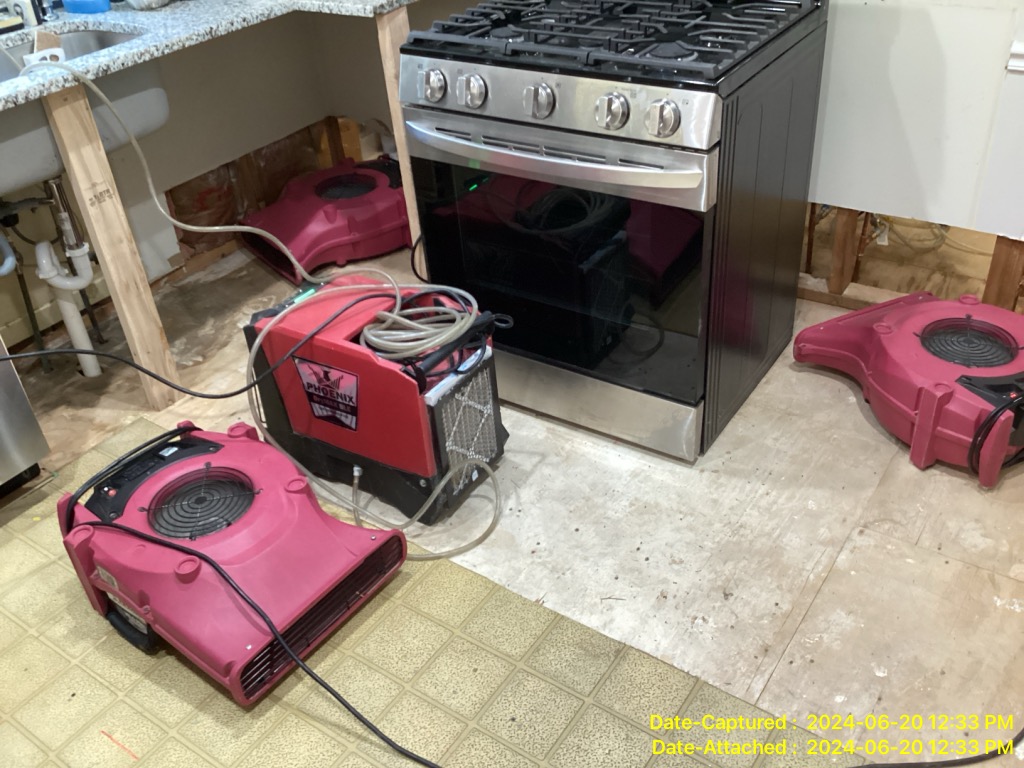
- Structural drying with LGR dehumidification. Low-grain refrigerant dehumidifiers, air movers, and air scrubbers work in coordination, guided by psychrometric calculations of temperature and humidity, to safely remove moisture from wood and subfloor without cracking the boards through over-drying.
- Antimicrobial biocide application when needed. For Category 2 or 3 events, an EPA-registered antimicrobial biocide addresses mold spores and potential mycotoxins before they spread.
- Final moisture verification. Readings are rechecked against dry standard benchmarks before sanding, refinishing, or board replacement begins.
Takeaway: A box fan and an open window rarely bring hardwood moisture content down far enough to stop warping after a Columbus basement flood. Structural drying equipment is calibrated to the wood, not just the surrounding room air.
PuroClean Home Savers provides 24/7 emergency dispatch across Columbus and Franklin County, works directly with insurance carriers through direct billing, and sends IICRC-certified technicians to assess hardwood floor damage rather than general contractors. The equipment decisions made in the first day after a flood or backup often determine whether original hardwood can be saved.
Frequently Asked Questions
Does homeowners insurance cover hardwood floor water damage in Columbus? It depends on the cause. Sudden events like a burst pipe are typically covered under standard Ohio homeowners policies, while river flooding and gradual seepage are often excluded unless you carry a separate FEMA flood insurance policy. Documenting the cause with help from your restoration company supports a stronger claim.
How much does hardwood floor water damage restoration cost in Columbus? Cost depends on the water category, how far the moisture spread, and whether the subfloor needs replacing. Early cupping caught quickly may only need monitored drying, while advanced Class 4 saturation with subfloor delamination usually requires board removal and replacement. A technician can give a specific estimate after moisture mapping.
How long does it take hardwood floors to dry after a Columbus flood or sewer backup? Most structural drying takes three to seven days with professional LGR dehumidification and targeted air movement, though Category 3 water from a combined sewer backup often extends that timeline due to added decontamination requirements.
Can I dry minor hardwood water damage myself? A small spill cleaned up immediately may not need professional intervention. Once cupping, odor, or soft spots appear, moisture has usually reached the subfloor, which calls for professional drying equipment and verified moisture readings to catch hidden mold growth.
Is mold a real health risk after a Columbus combined sewer backup? Yes. Category 3 water carries bacteria and contamination that can support mold growth within 24 to 48 hours, potentially producing mycotoxins that affect indoor air quality. The EPA recommends professional assessment rather than surface cleaning when sewage-contaminated water is involved.
What is the difference between Category 2 and Category 3 water in a Columbus basement? Category 2 water, or gray water, includes moderately contaminated sources like an overflowing appliance. Category 3 water, or black water, includes sewage backup from a combined sewer system or river floodwater, and requires stricter containment, PPE, and antimicrobial treatment under IICRC S500 guidelines.
If your Columbus home is showing any of these warning signs, don’t wait for it to spread. Call PuroClean Home Savers at (614) 689-0012 for a moisture assessment. Our IICRC-certified technicians are available 24/7, work directly with your insurance company through direct billing, and provide fast local response across Columbus and Franklin County.