


Reviewed for technical accuracy by PuroClean Home Savers’ IICRC-certified restoration team.
Key Takeaways for Homeowners
- Mold can begin growing within 24 to 48 hours on wet drywall, plaster, wood, and cabinet materials, according to EPA guidance.
- A musty odor, stains, and warped flooring are the most common warning signs of hidden mold after a kitchen leak.
- Pre-1960 homes in German Village, Victorian Village, and Italian Village have supply lines and plaster walls that can hide moisture for long periods.
- Professional mold work follows the IICRC S520 standard, using containment, negative air pressure, and HEPA filtration.
- Sewage from a combined sewer backup is category 3 water (black water) and needs a different cleanup protocol than a clean supply line leak.
- Do not scrub or spray mold without containment, because disturbing it can spread spores through the house.
If your kitchen leak is less than two days old, you may still be able to prevent mold. Call PuroClean Home Savers at (614) 689-0012 for a moisture check before growth begins.
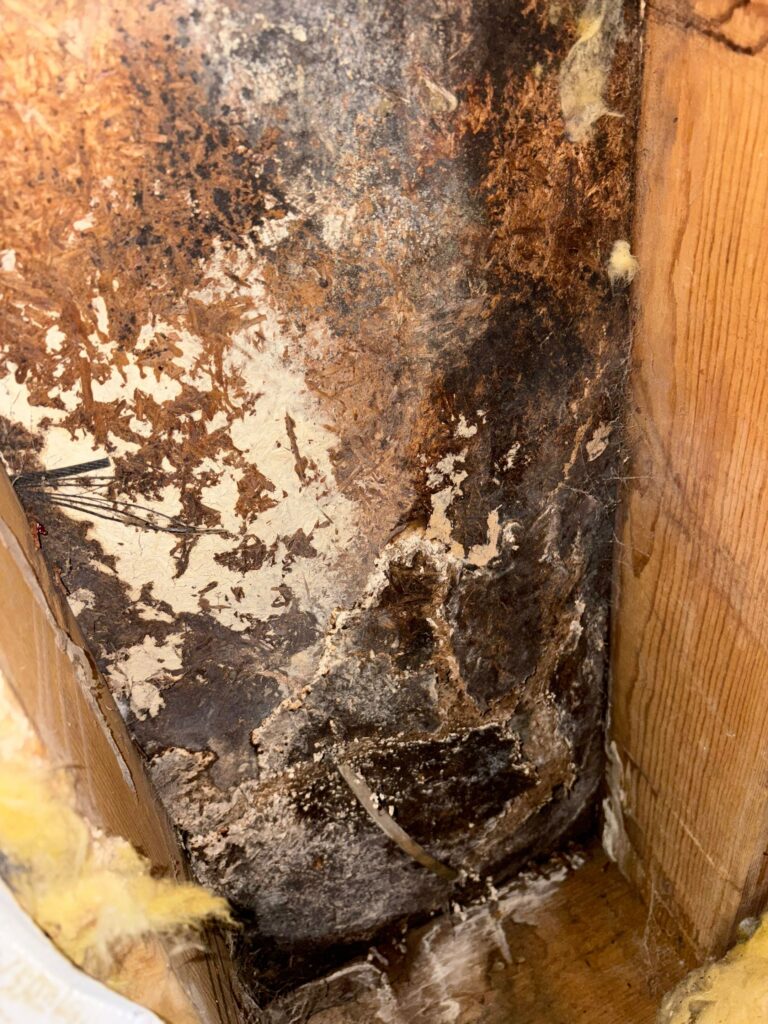
What Is Mold Remediation After a Kitchen Leak?
Mold remediation removes mold and dries the materials that supported it, following the IICRC S520 standard alongside the IICRC S500 water damage standard. The EPA recommends drying wet materials within 24 to 48 hours to prevent mold.
Kitchens hold many leak points: dishwasher supply lines, sink drains, faucets, and refrigerator water lines. A small, steady drip inside a cabinet or wall can saturate materials for weeks before anyone notices.
Action step: Check under sinks and behind appliances today for dampness or discoloration.
Sign 1: Does a Musty Smell Mean Hidden Mold?
Yes, usually. A lingering earthy smell in the kitchen, especially one that gets stronger when the HVAC runs, often signals active mold growth behind a wall or under flooring. The odor comes from gases produced as mold digests damp material.
If you cannot see the source, moisture is likely trapped in a cavity. Thermal imaging and moisture mapping can locate it without unnecessary demolition.
Sign 2: What Do Stains, Bubbling Paint, or Soft Drywall Tell You?
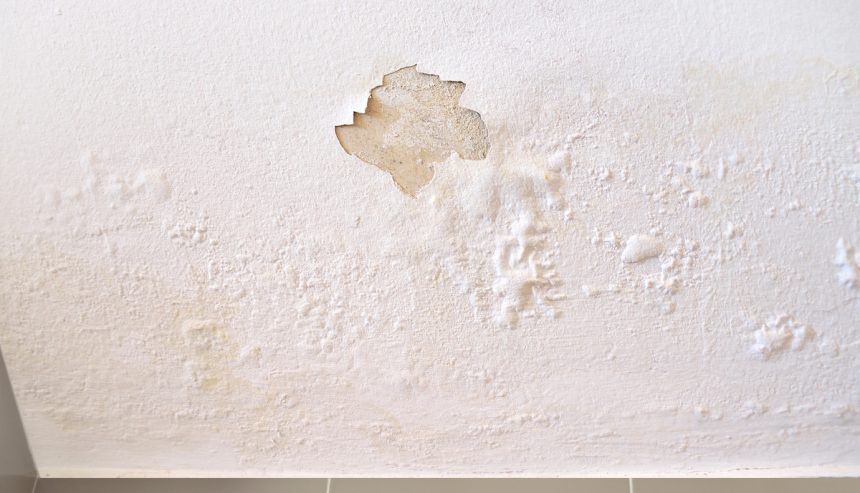
They show moisture has moved through the wall. Yellow or brown stains, blistering paint, and drywall that feels soft under light pressure point to prolonged wetness. Mold uses the paper facing of drywall as food.
In Columbus’s older neighborhoods such as German Village and Victorian Village, plaster and lath walls can absorb water and hold it, which makes it easy for mold to develop behind an intact-looking surface.
Action step: Photograph stains with the date so you can track changes and document them for insurance.
Sign 3: Why Are Warped Floors and Swollen Cabinets a Red Flag?
They show water has reached the layers beneath. Cupped hardwood, buckled laminate, and swollen toe kicks mean the subfloor and cabinet materials have absorbed moisture. Subfloor delamination occurs when plywood layers separate from prolonged wetness, and mold can grow on the underside.
Pre-1960 homes in Italian Village and Victorian Village often have aging supply lines and older subfloors, so a leak can worsen existing wear.
Sign 4: Can a Higher Water Bill or Damp Air Signal Mold Risk?
Yes. An unexplained bill increase points to a hidden leak, and a persistently humid kitchen creates ideal mold conditions. Hygrometer readings above 60 percent relative humidity favor growth, while the EPA suggests keeping indoor humidity between 30 and 50 percent.
Shut off all fixtures and watch your water meter. If it moves, water is escaping somewhere.
Action step: Use a hygrometer in the kitchen and basement for one week and record the numbers.
Sign 5: Do Sudden Allergy-Like Symptoms Point to Mold?
They can. Coughing, congestion, itchy eyes, and headaches that ease when you leave home are consistent with mold exposure, according to the EPA. Some molds release mycotoxins, though reactions differ widely between individuals.
Children, older adults, and people with asthma or weakened immune systems often notice symptoms first. A doctor can evaluate symptoms, and a restoration team can evaluate the home.
Sign 6: Why Is Visible Mold Only Part of the Problem?
Visible mold means growth is established, and what shows on the surface usually understates what is behind it. Spots along caulk lines, under sinks, or on cabinet interiors often connect to larger colonies in the wall or subfloor.
Do not scrub or spray bleach. Disturbing mold sends spores into the air and causes cross-contamination.
If you see mold spreading, feel soft flooring, or the leak involved sewage, stop and call a professional. PuroClean Home Savers can respond quickly: (614) 689-0012.
How Do Professionals Remove Hidden Mold After a Kitchen Leak?
Professionals stop the water, map the moisture, contain the work area, remove affected materials, and dry the structure until it meets standards. Under IICRC S520, the process typically runs like this:
- Stop the source and repair the leaking line.
- Map the moisture with pin and pinless meters and a thermal imaging camera.
- Record psychrometrics with hygrometer readings for temperature, humidity, and grains per pound.
- Build a containment barrier with poly sheeting.
- Establish negative air pressure using air scrubbers with HEPA filtration.
- Remove porous materials that cannot be saved, then HEPA vacuum and damp wipe remaining surfaces.
- Apply an antimicrobial biocide to framing and surfaces.
- Dry the structure with LGR dehumidifiers and air movers for several days, sometimes longer for Class 4 water damage in dense materials such as plaster or hardwood.
- Verify with moisture readings before rebuilding.
Action step: Ask for documented moisture readings at the start and end of any mold job.
Why Are Columbus Homes Vulnerable to Kitchen Leak Mold?
Columbus is shaped by the Scioto and Olentangy rivers, with Alum Creek and Big Walnut Creek on the east side. Franklinton, the Bottoms, and areas along Alum Creek include FEMA-mapped Special Flood Hazard Areas, and the Griggs and O’Shaughnessy dams help with flood control but cannot stop every urban rainfall overload.
Spring river overflow and summer thunderstorms each raise basement humidity across the city. Sump pumps in finished basements in Clintonville and Bexley can fail during storms, and craftsman-era homes in Clintonville and the Short North can hold moisture behind plaster walls and in crawl spaces, so a kitchen leak lands in an already damp house.
Neighborhoods such as German Village and Old North use combined sewers that can overflow in heavy rain. Ohio EPA combined sewer overflow policy addresses these systems. A backup is category 3 water (black water), and the cleanup scope expands. Newer construction in places like Dublin usually has better engineered drainage, though development near the Scioto has put some newer areas in flood-prone zones.
Action step: Test your sump pump before spring storms and check that floor drains flow freely.
What Sets PuroClean Home Savers Apart?
PuroClean Home Savers offers 24/7 emergency dispatch, IICRC-certified technicians, and direct insurance billing, with a local team serving Columbus and Franklin County.
Frequently Asked Questions
Does insurance cover mold from a kitchen leak in Ohio? Coverage varies by policy. Many policies cover mold after a sudden, accidental leak but exclude long-term seepage, and mold limits are common. Report the leak promptly and document it with photos. The Ohio Department of Insurance can answer general policy questions.
How much does mold remediation cost in Columbus? Cost depends on the size of the affected area, materials involved, and whether structural drying and rebuilding are needed. A small contained area costs far less than a job involving plaster, subfloors, and cabinets. A written estimate after a moisture inspection is the most reliable guide.
How long does mold remediation take? Small, contained jobs can finish in a few days. Projects with structural drying, demolition, and verification often take one to two weeks before rebuilding. Timelines depend on how saturated the materials are and how far the moisture has spread.
Can I clean kitchen mold myself? A small, surface-only patch on non-porous material can be cleaned with detergent and water using gloves and an N95 mask. Call a professional when mold covers a larger area, returns after cleaning, sits inside walls or under flooring, or follows a sewage backup.
Is kitchen mold harmful to my family? It can be, particularly for children, older adults, and people with asthma or weak immunity. Symptoms may include coughing, congestion, and irritation. Columbus’s humid summers and damp basements can help mold persist, so ongoing symptoms warrant a prompt assessment.
How quickly does mold grow after a kitchen leak? Mold can begin growing within 24 to 48 hours on wet porous materials, according to the EPA. Drying the area within that window is the best prevention. If materials stay wet beyond two days, call a professional to check for hidden moisture.
Talk to a Columbus Restoration Team Before Mold Spreads
PuroClean Home Savers serves Columbus and Franklin County at (614) 689-0012. Our IICRC-certified technicians are available 24/7 and offer direct insurance billing.