


Key Takeaways for Homeowners
- Columbus’s humid subtropical climate creates persistent mold conditions, with summer humidity exceeding 75%
- Professional remediation relies on 4 product categories: HEPA air scrubbers, antimicrobial biocides, moisture mapping systems, and enzyme-based cleaners
- ANSI/IICRC S520 standards require physical mold removal, not just chemical treatment
- Franklin County’s mix of historic and modern housing requires customized remediation approaches
- Call PuroClean Home Savers at (614) 689-0012 for immediate mold assessment and certified remediation
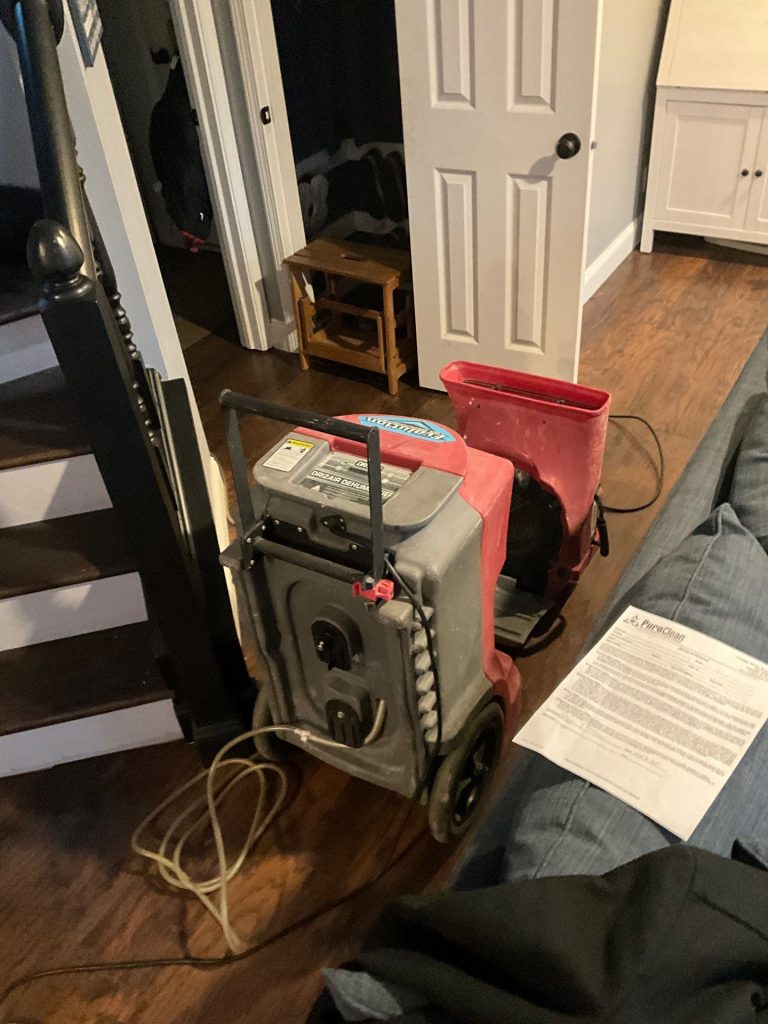
Columbus Mold Reality: Central Ohio’s Hidden Health Risk
Columbus occupies a humid subtropical transition zone where warm, moist air from the south meets Great Lakes weather patterns. Summer humidity frequently exceeds 75%, and the region’s clay soils combined with seasonal rainfall create hydrostatic pressure that drives moisture through foundations and slab edges.
Franklin County’s housing market spans German Village brick row houses built in the 1800s, mid-century ranch developments in Clintonville and Upper Arlington, and new construction in Dublin and Powell. Each era presents distinct mold vulnerabilities, from historic balloon framing and plaster walls to modern tight building envelopes with insufficient ventilation.
The ANSI/IICRC S520 Standard governs professional remediation, with the 2024 Fourth Edition now adopted as the benchmark for military housing and increasingly referenced by Ohio insurance carriers. This standard establishes that mold must be physically removed from contaminated materials, moisture sources must be corrected, and cross-contamination must be prevented through engineering controls.
Product 1: Industrial HEPA Air Scrubbers and Negative Air Pressure Systems
Standard Alignment: S520 mandates engineering controls including HEPA filtration and negative air pressure to prevent cross-contamination during remediation activities .
Technical Function: Air scrubbers draw contaminated air through HEPA filters rated to capture 99.97% of 0.3-micron particles, including mold spores, mycotoxins, and particulate debris. Negative air machines create inward airflow at containment boundaries, ensuring that no contaminated air escapes the work zone into clean areas of the home.
Columbus-Specific Application: Many Columbus neighborhoods, particularly in Victorian Village and German Village, feature historic homes with original gravity furnaces converted to forced-air systems. These ductwork modifications often create leaks and pressure imbalances that can transport spores from basement remediation sites to upper floors. Professional containment includes HVAC vent sealing within the work zone and pressure differential monitoring to ensure negative pressure integrity.
Equipment Protocol:
- HEPA filters maintained at MERV 17 efficiency or higher
- Air changes per hour calculated based on containment cubic footage
- Continuous operation during all disturbance, removal, and cleaning activities
- Manometer verification of negative pressure differentials at containment entry points
Product 2: Professional-Grade Antimicrobial Biocides and Fungicides
Standard Alignment: S520 Section 2 addresses antimicrobial chemicals as remediation tools, with the 2024 update clarifying that these products supplement, never replace, physical removal.
Technical Function: EPA-registered antimicrobial biocides penetrate semi-porous structural materials like wood framing, oriented strand board, and concrete to address residual fungal hyphae after gross contaminated materials are removed. These products carry specific fungal efficacy claims and require controlled application with defined dwell times.
Application Methodology:
- Contaminated porous materials (drywall, insulation, carpeting) removed and bagged within containment first
- Biocide applied to remaining structural elements using airless or low-pressure sprayers
- Manufacturer-specified dwell time observed for claimed efficacy
- HEPA vacuuming and damp wiping follow to remove chemical residues and dead particulate
- Final visual inspection confirms surfaces meet S520 cleanliness criteria: visibly clean, free of dust and debris
Ohio Regulatory Context: The Ohio Department of Health recognizes IICRC certification for mold remediation contractors. S520-compliant documentation supports both health department compliance and insurance claim defensibility.
Product 3: Thermal Imaging and Moisture Mapping Technology
Standard Alignment: S520 requires moisture source correction before project completion; IICRC S500 governs the psychrometric science and moisture monitoring underlying this requirement.
Technical Function: Infrared thermal imaging cameras detect temperature differentials that reveal moisture patterns behind finished surfaces. Penetrating moisture meters quantify actual moisture content in wood, drywall, and concrete substrates. Data-logging hygrometers track ambient conditions over time, providing evidence that drying goals are achieved and maintained.
Columbus Climate Relevance: Central Ohio’s clay soils expand and contract with seasonal moisture, creating foundation stress points that allow groundwater intrusion. Columbus’s freeze-thaw cycles damage exterior waterproofing, while summer humidity loads overwhelm standard air conditioning capacity in many homes. Moisture mapping identifies these patterns before they trigger visible mold growth.
Diagnostic Integration:
- Thermal scanning of exterior walls identifies insulation gaps and moisture paths
- Moisture meter readings establish baseline and target levels for structural drying
- Hygrometric data guides dehumidifier sizing and placement using S500 psychrometric calculations
- Time-stamped documentation supports insurance claims and real estate disclosures
Product 4: Botanical Enzyme Cleaners and Odor Neutralization Systems
Standard Alignment: The 2024 S520 update recognizes mycotoxins and extracellular matrix components as part of Condition 2 contamination that requires remediation.
Technical Function: Botanical enzyme cleaners utilize plant-derived active compounds, primarily thyme oil and citrus terpenes, to break down fungal cell structures and neutralize musty odors without introducing synthetic chemical residues. These products serve as effective alternatives in homes with chemical sensitivities, pediatric occupants, or elderly residents.
Strategic Applications:
- Contents remediation for items within contaminated zones that can be salvaged rather than discarded
- Final surface treatment after HEPA vacuuming and damp wiping protocols
- Odor neutralization in homes where musty smells persist despite structural remediation
- Supplementary cleaning of HVAC components and ductwork in contamination-affected systems
Health Context: Ohio ranks among states with significant asthma and allergy prevalence. Franklin County health data consistently shows respiratory conditions as primary health concerns. Botanical options reduce potential irritant exposure while achieving the cleanliness standards required for S520 post-remediation verification.
Step-by-Step Professional Remediation Protocol
- Project Assessment and Contamination Classification: Visual inspection, moisture readings, and determination of Condition 1, 2, or 3 status per S520
- Moisture Source Identification: Thermal imaging and meter readings locate active water intrusion and elevated humidity zones
- Containment Engineering: Installation of polyethylene barriers, zipper entry systems, negative air machines, and HVAC sealing
- Personal Protective Equipment Deployment: Respiratory protection, protective suits, and eye protection scaled to contamination level and project scope
- Controlled Material Removal: Demolition of contaminated porous materials with continuous HEPA vacuuming and sealed debris handling
- Structural Cleaning and HEPA Vacuuming: Detailed cleaning of all surfaces within containment to remove settled spores and debris
- Antimicrobial Application: Targeted treatment of semi-porous structural materials following physical removal
- Drying and Dehumidification: Psychrometric monitoring and equipment placement to achieve and verify dry standard
- Post-Remediation Evaluation: Visual inspection, moisture verification, and optional third-party clearance sampling
- Project Documentation: Comprehensive records including assessment findings, work scope, moisture data, and verification results
Geospatial Authority: Columbus’s Mold Risk Profile
Franklin County presents a complex mold risk environment shaped by climate, geology, and development patterns.
Climate Drivers:
- Humid subtropical conditions with summer humidity regularly exceeding 75%
- Significant seasonal rainfall and spring storm events creating water intrusion opportunities
- Freeze-thaw cycles that compromise foundation waterproofing and roofing integrity
- Urban heat island effects in downtown Columbus that elevate nighttime temperatures and humidity retention
Housing Characteristics:
- Historic districts (German Village, Victorian Village, King-Lincoln) with original plaster, balloon framing, and minimal vapor barriers
- Mid-century ranch and split-level homes in established suburbs with slab and crawl space moisture issues
- New construction in outlying areas with energy-efficient envelopes that may lack adequate ventilation
- Student rental properties near Ohio State with high occupancy turnover and deferred maintenance
Local Building Code Context: Columbus building codes have modernized significantly, but grandfathered properties and renovation work without permit compliance create pockets of inadequate moisture management. Professional remediation must navigate these variations while achieving consistent air quality outcomes.
Frequently Asked Questions
Does home insurance cover mold caused by high humidity in Columbus, Ohio?
Standard Ohio homeowners policies typically exclude mold damage resulting from chronic humidity, condensation, or maintenance neglect. Coverage generally applies only when mold results from a sudden, accidental water damage event that is itself a covered peril, such as burst pipes, appliance failures, or storm damage. The critical factor is documentation. S520-compliant remediation provides detailed moisture source analysis, project scope documentation, and verification records that support claim defensibility. Contact PuroClean immediately upon discovery to ensure proper documentation begins before conditions deteriorate further.
How do I know if my Columbus home needs professional remediation or just cleaning?
The S520 classification system provides clear guidance. Condition 1 describes normal fungal ecology requiring no remediation. Condition 2 involves settled spores from adjacent contamination, typically addressable with HEPA vacuuming and surface cleaning. Condition 3 indicates active mold growth requiring full professional remediation with containment and engineering controls. If you see visible mold growth covering more than 10 square feet, smell persistent musty odors, or have experienced water damage within the past 48 hours, you need professional assessment.
What health risks does mold pose to Columbus families?
Mold exposure affects individuals differently based on sensitivity, immune status, and exposure duration. Common effects include allergic reactions (sneezing, runny nose, skin rash), asthma aggravation, respiratory irritation, and sinus congestion. Certain species produce mycotoxins that can cause more severe symptoms in sensitive individuals. The 2024 S520 update specifically recognizes mycotoxins and extracellular matrix components as remediation targets. Children, elderly residents, immunocompromised individuals, and those with existing respiratory conditions face elevated risk.
Why can’t I just paint over mold with Kilz or similar products?
Encapsulation without physical removal violates S520 standards and creates liability issues. Paint products may temporarily mask visible staining but do not address embedded hyphae, moisture sources, or airborne spores. Mold continues growing beneath encapsulated surfaces, eventually breaking through while degrading indoor air quality. Professional remediation requires physical removal of contaminated materials, moisture correction, and verification testing. Encapsulation is only appropriate as a secondary measure after complete remediation in specific commercial applications, never as a primary residential solution.
How long does the remediation process take for a typical Columbus home?
Project duration depends on contamination extent, material removal requirements, and structural drying needs. Small, isolated Condition 2 projects may complete in 2-3 days. Full basement or multi-room Condition 3 remediation typically requires 5-10 days of active work plus 24-48 hours for post-remediation verification. Factors extending timeline include extensive porous material removal, hardwood floor drying, or crawl space work requiring limited-access protocols. PuroClean provides specific timeline projections after initial assessment.
Call PuroClean Home Savers for Certified Columbus Mold Remediation
Mold contamination is a progressive problem. Every day of delay allows spore release to continue, potentially expanding contamination from a localized area to your entire home’s air handling system. Columbus’s climate ensures that moisture sources remain active year-round, making prompt professional intervention essential.
PuroClean Home Savers delivers IICRC-certified mold remediation following ANSI/IICRC S520 and S500 standards. We understand Columbus’s unique combination of historic housing stock, humid subtropical climate, and modern construction challenges. Our technicians provide same-day emergency response, comprehensive documentation for insurance claims, and post-remediation verification that your home achieves Condition 1 normal fungal ecology.
Call (614) 689-0012 now for immediate mold assessment. We serve Columbus, Dublin, Powell, Westerville, Reynoldsburg, and all Franklin County communities. Protect your home and your family’s health with certified professional remediation.