


Key Takeaways for Homeowners
- Columbus, Ohio’s humid continental climate and spring storm season create ideal conditions for hidden water damage and mold amplification in residential structures.
- The five hidden warning signs are: musty odors with no visible mold, discolored or bubbling ceiling textures, persistent condensation on windows and walls, buckling laminate or vinyl flooring, and unexplained respiratory symptoms among occupants.
- IICRC S500 (Water Damage Restoration) and S520 (Mold Remediation) provide the authoritative standards for professional assessment and mitigation.
- Columbus homes, from German Village brick rowhouses to suburban vinyl-sided colonials, each face distinct spring moisture risks based on construction age and materials.
- Early professional intervention using moisture mapping, thermal imaging, and psychrometric drying prevents the exponential cost escalation of delayed remediation.
The Nature of Hidden Water Damage in Columbus
Hidden water damage is moisture intrusion that compromises building materials and indoor air quality without presenting visible pooling or flooding. In Columbus, Ohio, this phenomenon is particularly prevalent during spring due to the region’s climatic patterns, soil characteristics, and diverse housing stock.
Columbus experiences a humid continental climate with warm, moist springs that follow cold, snowy winters. Average spring precipitation exceeds 4 inches monthly, often delivered through severe thunderstorms with high rainfall intensity. The region’s soil, dominated by Blount-Pewamo and Crosby associations, features clay-rich glacial till with low permeability. When spring rains combine with snowmelt, surface runoff concentrates against foundations and overwhelms stormwater systems.
The city’s architectural diversity creates varied risk profiles. Historic districts like German Village and Victorian Village feature brick and masonry construction with aging roof systems, original plumbing, and limestone foundations that allow capillary moisture migration. Suburban developments in Dublin, Powell, and New Albany feature wood-framed construction with composite siding, but rapid build schedules in the 1990s and 2000s sometimes resulted in improper flashing and drainage plane failures. Mid-century homes in Upper Arlington and Bexley feature original galvanized plumbing and unconditioned crawl spaces that create chronic humidity issues.
IICRC S500 defines water damage by category (clean, gray, black) and class (amount of evaporation required), establishing the scientific basis for extraction, drying, and verification. IICRC S520 addresses mold remediation, requiring containment, HEPA air filtration, and source removal to prevent occupant exposure and cross-contamination.
The 5 Hidden Warning Signs Columbus Homeowners Cannot Overlook
Sign 1: Musty Odors with No Visible Mold Growth
A musty odor is the olfactory signature of active microbial metabolism. When you smell mustiness but cannot locate visible mold, the colony is almost certainly concealed within wall cavities, beneath flooring, inside HVAC ductwork, or above ceiling assemblies. The odor results from microbial volatile organic compounds (MVOCs), including geosmin and 1-octen-3-ol, which are detectable at parts-per-billion concentrations.
In Columbus, this scenario is common in homes with crawl space foundations, particularly in neighborhoods like Clintonville and Grandview Heights where mid-century construction prevails. Ground vapor rises through unsealed crawl spaces, elevating humidity in the floor assembly and creating conditions for mold growth on subflooring and joists. The odor enters the living space through floor registers, plumbing penetrations, and gaps in the thermal envelope.
What to do: Do not attempt to mask odors with air fresheners or ozone generators. Ozone is ineffective against mycotoxins and dangerous at concentrations required for odor neutralization. Contact PuroClean Home Savers for professional moisture mapping and air quality assessment. If mold is confirmed, negative air pressure containment and HEPA filtration must be established before any disturbance of contaminated materials.
Sign 2: Discolored, Bubbling, or Sagging Ceiling Textures
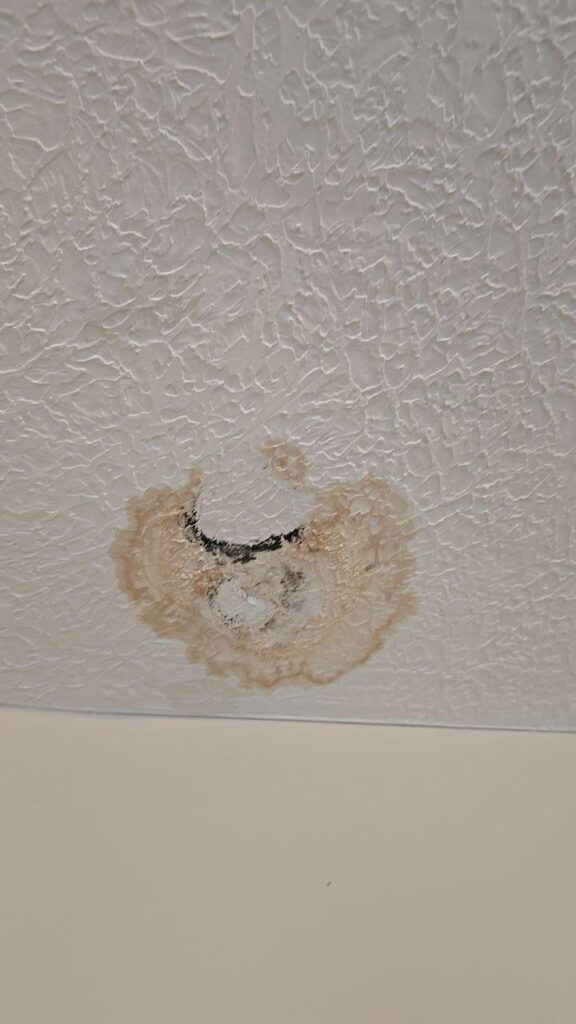
Water staining on ceilings appears as yellowish-brown discoloration that expands in irregular patterns. When the ceiling texture becomes saturated, the material delaminates from the drywall or plaster substrate, creating bubbles or sagging sections. In severe cases, the texture may detach entirely, exposing the wet substrate beneath.
Columbus homes with popcorn or acoustic ceiling textures, common in 1970s and 1980s construction, are particularly vulnerable because the texture material absorbs and retains moisture. Spring roof leaks from ice dam damage, wind-driven rain through compromised flashing, or plumbing failures in second-floor bathrooms all channel water into ceiling assemblies. In German Village and Italian Village, historic plaster ceilings may show efflorescence or crystalline deposits as moisture wicks through lime-based materials.
What to do: Ceiling damage indicates an active or recent leak that may still be wet within the cavity. A professional must locate the source, assess the moisture content of insulation and framing, and determine whether the texture contains asbestos (common in pre-1980 construction) before remediation. Drying must be completed with LGR dehumidification before any cosmetic repair.
Sign 3: Persistent Condensation on Windows, Walls, or Cold Surfaces
Condensation occurs when surface temperature falls below the dew point of the surrounding air. Persistent condensation on interior window surfaces, exterior walls, or ductwork indicates excessive indoor humidity, inadequate insulation, or air leakage that allows warm, moist air to contact cold surfaces.
In Columbus, spring temperature swings create ideal condensation conditions. Homes with original single-pane windows, common in historic districts, experience severe condensation that pools on sills and wicks into surrounding drywall. Suburban homes with high-efficiency HVAC systems may experience condensation on supply ducts if the system is oversized and does not run long enough to dehumidify. Basement walls in homes with insufficient exterior waterproofing show condensation as soil temperature remains cold while spring air warms.
What to do: Condensation is a symptom of an underlying moisture imbalance. Wiping surfaces does not address the vapor pressure driving the condensation. A professional must perform building envelope analysis, including blower door testing and infrared inspection, to identify air leakage pathways and insulation deficiencies. In basements, exterior waterproofing or interior drainage may be required to eliminate the cold surface temperature.
Sign 4: Buckling, Warping, or Softening of Laminate and Vinyl Flooring

Laminate and luxury vinyl plank (LVP) flooring are popular in Columbus homes for their durability and aesthetic appeal. However, both materials are vulnerable to moisture damage when water accumulates beneath the wear layer. Laminate swells at the edges, creating a “tented” appearance where boards push against each other. LVP may warp, gap, or delaminate from the subfloor.
This damage often results from slow leaks in ice maker lines, dishwasher drain hoses, or bathroom wax rings that release small amounts of water into the subfloor with each use. In Columbus homes with slab-on-grade construction, common in newer Dublin and Powell developments, groundwater vapor can migrate through the slab and become trapped beneath impermeable flooring, causing adhesive failure and microbial growth.
What to do: Surface-level flooring replacement will not resolve subfloor moisture. A professional must remove the flooring, measure subfloor moisture content, and deploy drying systems specifically designed for concrete slabs or wood subfloors. In slab situations, calcium chloride testing may be required to quantify vapor emission rates before new flooring installation.
Sign 5: Unexplained Respiratory Symptoms, Allergies, or Fatigue Among Occupants
When hidden water damage supports mold amplification, airborne spores and mycotoxins can trigger health effects in sensitive individuals. Symptoms include persistent coughing, nasal congestion, throat irritation, headaches, fatigue, and exacerbation of asthma. These symptoms often worsen in the home and improve when the occupant is away.
Columbus’s spring allergy season, driven by tree pollen from oak, maple, and birch, can mask mold-related symptoms. However, if allergy medications do not provide relief or if symptoms persist indoors with windows closed, mold exposure should be investigated. Homes with forced-air heating and cooling systems are particularly concerning because the HVAC ductwork can distribute spores from a localized contamination source to every room.
What to do: Health symptoms warrant immediate air quality testing. PuroClean Home Savers can perform spore trap sampling, viable air sampling, and ERMI dust analysis to identify fungal species and concentrations. If Stachybotrys chartarum, Aspergillus, or Penicillium are detected at elevated levels, IICRC S520 remediation protocols must be followed, including HVAC cleaning and antimicrobial treatment of the entire duct system.
Why Columbus Architecture and Climate Create Perfect Spring Storm Conditions
Columbus presents a unique combination of climatic and architectural factors that amplify spring water damage risk. The city’s humid continental climate delivers spring temperatures that fluctuate between 40°F and 70°F, creating repeated freeze-thaw cycles that degrade roofing materials, caulking, and exterior coatings. Average spring relative humidity ranges from 60% to 80%, providing ample atmospheric moisture to sustain hidden dampness.
The local housing stock varies dramatically by neighborhood. German Village features brick rowhouses built in the 19th century with limestone foundations, slate or clay tile roofs, and original cast iron plumbing. These homes are beautiful but require vigilant maintenance; a single missing slate or failed mortar joint can channel spring rain into wall cavities for weeks before detection. Victorian Village homes feature wood frame construction with ornate trim that creates multiple water intrusion points if flashing and caulking are not maintained.
Suburban developments in Hilliard, Gahanna, and Reynoldsburg feature tract homes built during the 1980s through 2000s with composite siding, asphalt shingles, and PVC plumbing. While newer, these homes often suffer from improper grading that directs runoff toward foundations, inadequate gutter capacity for spring downpours, and attic ventilation deficiencies that create condensation. The prevalence of finished basements in these suburbs means that hidden water damage can destroy thousands of dollars in carpeting, drywall, and furnishings before discovery.
Columbus building codes have strengthened over time, requiring sump pumps in below-grade spaces, backflow prevention on sewer lines, and foundation dampproofing. However, homes built before these requirements remain vulnerable, and even compliant systems can fail during extreme spring events.
Advanced Professional Detection and the IICRC Standard
DIY inspection cannot locate moisture trapped within structural assemblies or quantify the extent of hidden contamination. PuroClean Home Savers employs IICRC S500 and S520 certified technicians who use industry-leading technology:
- Thermal Imaging: Infrared cameras detect the evaporative cooling signature of wet materials behind walls, ceilings, and floors without destructive investigation.
- Moisture Detection Meters: Pin-type and pinless meters measure moisture content in wood, drywall, concrete, and insulation against established dry standards for each material.
- Psychrometric Analysis: Technicians calculate vapor pressure, dew point, and grains per pound to determine the exact dehumidification capacity required and to verify that drying goals are achieved.
- Borescope Inspection: Fiber-optic cameras inserted through small penetrations provide visual confirmation of cavity conditions, identifying mold growth, standing water, or deteriorated insulation.
- Air and Surface Sampling: Laboratory analysis identifies fungal species and concentrations, guiding the scope of remediation and providing post-clearance verification.
When hidden damage is confirmed, the restoration process follows a rigorous protocol: emergency response to stop the source, water extraction, controlled demolition of non-salvageable materials, structural drying with professional air movers and dehumidifiers, antimicrobial application to prevent regrowth, and complete reconstruction to pre-loss condition.
FAQ: Complex Questions Columbus Homeowners Ask
Does home insurance cover mold caused by high humidity in Columbus, Ohio?
Standard Ohio homeowners policies typically exclude mold damage caused by humidity, condensation, or long-term leaks as these are considered maintenance issues rather than sudden, accidental events. Coverage may apply if mold results directly from a covered peril, such as a storm-damaged roof or burst pipe, and is reported promptly. Most policies include a mold endorsement with a specific dollar limit, often $10,000. Columbus homeowners should review their policy language carefully and document any water intrusion immediately to preserve potential coverage.
How long can water damage remain hidden before it becomes a mold problem?
Under IICRC S520, mold can begin colonizing on organic building materials within 24 to 48 hours of moisture introduction. However, visible signs may not appear for weeks or months if the moisture source is intermittent or the colony develops in a concealed, stagnant space. By the time occupants notice odors, staining, or health symptoms, the contamination is typically well-established and may require extensive remediation.
Are historic Columbus homes more vulnerable to hidden water damage?
Yes. Homes in historic districts like German Village, Victorian Village, and the Short North often feature original plumbing, aging roof systems, and foundations that allow capillary moisture migration. Balloon framing in pre-1940 construction provides continuous vertical channels for water travel, and historic masonry is more permeable than modern materials. While these homes have survived decades, deferred maintenance on critical waterproofing elements creates acute spring vulnerability.
What is the difference between a waterproofing contractor and a restoration company?
A waterproofing contractor installs systems to prevent future water intrusion, such as exterior membranes, interior drainage, and sump pumps. A restoration company addresses the damage that has already occurred: saturated building materials, mold contamination, and structural drying. Both may be needed. PuroClean Home Savers coordinates with licensed waterproofing specialists to ensure the source is eliminated while we restore the damaged environment to pre-loss condition.
Can I use a household dehumidifier to dry out my basement after spring flooding?
Consumer-grade dehumidifiers typically remove 30 to 50 pints of moisture per day and are designed for ambient air, not structural drying. Professional restoration requires LGR dehumidifiers that remove 100+ pints daily and operate efficiently even at low specific humidity. Air movers must be positioned to create laminar airflow across wet surfaces, and psychrometric conditions must be monitored continuously. Without professional equipment, basement materials will retain moisture and support mold growth despite apparent surface dryness.
Act Before Hidden Damage Becomes a Homeowner’s Nightmare
The five warning signs described above are not cosmetic concerns. They are early indicators of structural degradation, microbial contamination, and potential health hazards that worsen exponentially with time. Spring in Columbus delivers the moisture, temperature fluctuations, and soil conditions that transform minor vulnerabilities into major losses.
PuroClean Home Savers provides 24/7 emergency water damage restoration, mold remediation, and structural drying for homeowners throughout Columbus, Dublin, Powell, and central Ohio. Our IICRC-certified technicians understand the unique challenges of Columbus’s diverse housing stock and climate patterns.
Call (614) 689-0012 now for immediate assistance. We respond within the hour, perform comprehensive moisture detection using thermal imaging and psychrometric analysis, and restore your home using science-backed protocols and industry-leading equipment.