


Key Takeaways for Homeowners
| Columbus, Ohio’s humid continental climate and spring storm season create significant water damage and mold risk for homeowners. |
| IICRC S500 and S520 standards define the science-based protocols that govern professional water damage and mold remediation. |
| Hidden moisture inside wall cavities, floor assemblies, and crawl spaces requires thermal imaging and moisture mapping to identify. |
| Structural drying using psychrometrics and professional dehumidification must be completed before any cosmetic repairs begin. |
| PuroClean Home Savers serves Columbus and surrounding communities. Call (614) 689-0012 for immediate professional restoration. |
Why Spring Is a Critical Time for Water-Damaged Columbus Homes
Columbus, Ohio sits in the heart of the Midwest’s humid continental climate zone. Spring in central Ohio brings a powerful combination of snowmelt from February and March accumulations, heavy rainfall from active storm systems tracking across the Ohio Valley, and rapidly fluctuating temperatures that challenge every building system in residential construction.
The Columbus metro area has experienced significant flooding events in neighborhoods along the Scioto River, Alum Creek, Big Walnut Creek, and Olentangy River corridors. Beyond riverine flooding, the region’s predominantly clay-heavy glacial soils shed water rather than absorbing it, directing runoff toward foundations and slab-on-grade floor systems throughout the city.
Columbus’s housing stock reflects more than a century of development. Historic neighborhoods including German Village, Short North, Clintonville, and Bexley feature older brick and stone construction from the early 1900s. The expanding outer suburbs of Hilliard, Dublin, Westerville, Gahanna, and Reynoldsburg include late 20th and early 21st century construction on engineered foundations. Both housing types face distinct water intrusion vulnerabilities that require a tailored spring deep cleaning approach.
The following five steps represent the scientifically grounded, professionally recognized process for achieving safe, complete restoration of water-damaged Columbus homes. Each step aligns with protocols established in the IICRC S500 Standard for Professional Water Damage Restoration and the IICRC S520 Standard for Professional Mold Remediation.
Step 1: Complete Moisture Mapping and Damage Assessment
Effective spring deep cleaning begins not with scrubbing surfaces but with understanding where moisture exists in your Columbus home. Moisture mapping is the systematic process of identifying every zone of elevated moisture content in a structure using calibrated instruments and thermal imaging technology.
Professional restoration technicians use infrared thermal imaging cameras to detect temperature differentials caused by evaporative cooling in wet building materials. These thermal anomalies reveal wet zones inside wall cavities, under hardwood and tile floors, above ceilings, and within structural columns that would otherwise be invisible until visible mold growth or structural failure alerts the homeowner.
In Columbus-area homes, moisture mapping frequently reveals water migration paths that extend well beyond the initial point of intrusion. A basement wall leak in a Clintonville craftsman bungalow may drive moisture through the rim joist, into the first floor wall system, and upward into second-floor framing before it becomes visible. A roof leak over a Hilliard colonial may saturate attic insulation, the top plates of exterior walls, and eventually ceiling drywall across multiple rooms.
Moisture mapping targets for Columbus spring assessment:
- All basement walls and slab areas within 8 feet of known or suspected entry points
- Crawl space structural members including beams, joists, and subfloor sheathing
- All exterior wall systems on sides of the home facing prevailing spring storm tracks
- Attic insulation, sheathing, and rafter systems below any damaged or aged roofing
- Mechanical room walls and floors surrounding water heater, HVAC, and plumbing systems
Step 2: Remove All Unsalvageable Materials Per IICRC S500 Standards
After moisture mapping establishes the full scope of water intrusion, the next step is aggressive removal of all materials that cannot be effectively dried or decontaminated in place. The IICRC S500 standard provides clear guidance on which materials must be removed based on the category and class of water damage.
Columbus homeowners frequently face both Category 1 and Category 2 losses from internal plumbing failures and appliance malfunctions. Spring storm events and riverine flooding in Scioto floodplain communities such as Grandview Heights, Marble Cliff, and portions of the Near West Side may introduce Category 3 contaminated water that demands the most stringent removal protocols.
The IICRC S500 also classifies water damage by class, from Class 1 involving minimal absorption to Class 4 involving deeply absorbed materials including hardwood, plaster, and concrete. Class 3 and Class 4 losses commonly affect Columbus’s older housing stock, where solid wood flooring, plaster walls, and concrete block foundations hold moisture for extended periods.
Material removal checklist for Columbus spring restoration:
- Remove all Category 2 or 3 water-saturated carpeting, padding, and vinyl sheet flooring
- Perform flood cuts in drywall a minimum of 12 inches above the confirmed moisture line
- Remove all fiberglass batt insulation and blown cellulose from wet cavities
- Evaluate original plaster systems for total saturation requiring full removal versus localized patching
- Remove and dispose of particle board, MDF, and oriented strand board that has experienced full saturation
- Document all material removal with photographs and written inventory for insurance adjuster review
Step 3: Apply Antimicrobial Treatment and Initiate Psychrometric Structural Drying
With unsalvageable materials removed, the exposed structural skeleton of the affected areas must be treated and dried simultaneously. This two-part step combines antimicrobial biocide application with the deployment of structural drying equipment guided by psychrometric science.
Antimicrobial biocide treatment is applied to all remaining structural surfaces to eliminate mold spores, bacteria, and biofilm. Columbus spring conditions, with outdoor relative humidity regularly between 65 and 80 percent during April and May, support rapid microbial colonization on any surfaces that remain wet for more than 24 to 48 hours. The Ohio Department of Health recognizes mold as a public health concern in residential structures, and Columbus housing code enforcement may flag properties with visible mold growth as an occupancy hazard.
Structural drying deploys the principles of psychrometrics, specifically the relationship between temperature, relative humidity, and moisture content in building materials, to drive evaporation and capture water vapor using high-efficiency dehumidification equipment. In Columbus, where spring outdoor dew points can be quite elevated, sealed drying environments are essential to prevent outdoor moisture from rehydrating drying materials.
Antimicrobial and psychrometric drying protocol for Columbus homes:
- Apply EPA-registered antimicrobial biocide to all exposed wood framing, concrete, and masonry surfaces
- Place axial air movers at floor level to create laminar airflow across all wet structural members
- Deploy refrigerant or desiccant dehumidifiers sized to handle the calculated moisture load of the affected space
- Seal the drying zone with polyethylene containment sheeting to prevent outdoor moisture intrusion
- Monitor structural wood moisture content daily with calibrated moisture meters until equilibrium moisture content is achieved
Step 4: Address Mold Contamination Using IICRC S520 Remediation Protocol
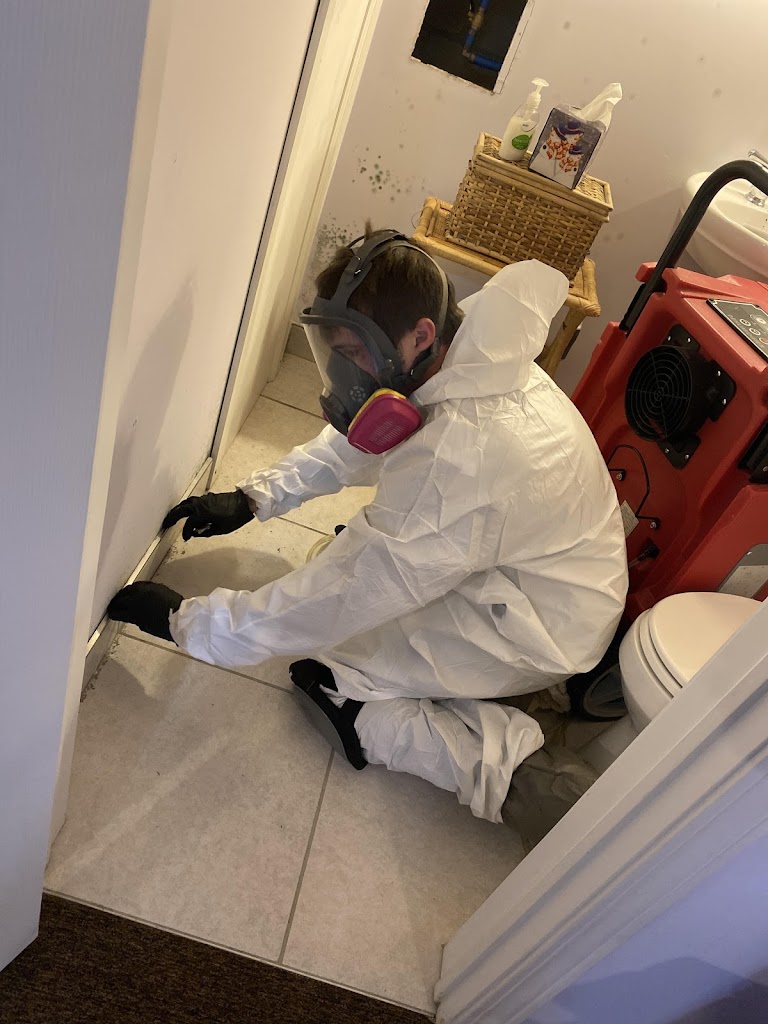
If moisture mapping or visual inspection reveals mold colonization, all work must immediately pivot to a full IICRC S520 compliant mold remediation protocol. Mold remediation is a distinct and more regulated process than water damage restoration and requires specific containment, worker protection, and verification procedures.
Columbus homes, particularly those in German Village with original brick construction, older Clintonville bungalows with unventilated crawl spaces, and basement apartments throughout the University District, are especially vulnerable to chronic mold problems that may have been exacerbated by winter moisture accumulation and are now fully active in spring conditions.
Common mold species found in Columbus residential structures include Aspergillus, which produces mycotoxins including aflatoxins and ochratoxins, Stachybotrys chartarum, which requires cellulose-based materials and chronic moisture to grow, Cladosporium, extremely common on any outdoor-adjacent surface, and Penicillium, which colonizes rapidly on insulation and wallboard.
Mycotoxin exposure from these species is associated with respiratory inflammation, immune suppression, and neurological effects in chronically exposed individuals. Occupants with asthma, allergies, compromised immune systems, or young children are at elevated risk and should not be present in the home during active mold remediation.
IICRC S520 mold remediation steps for Columbus homes:
- Establish 6-mil polyethylene containment barriers around all mold-affected work zones
- Set up HEPA air scrubbers to maintain negative air pressure within the containment zone
- HEPA vacuum all visible mold growth from surfaces before wet treatment
- Apply antimicrobial biocide with appropriate contact time and coverage
- Run HEPA air scrubbers continuously until post-remediation air quality clearance testing is complete
- Hire an independent industrial hygienist for clearance air sampling and written verification
Step 5: Restore, Rebuild, and Protect Against Future Water Intrusion
Once moisture mapping confirms that all structural materials have reached equilibrium moisture content and post-remediation air quality verification confirms clean indoor air quality, restoration and rebuilding can begin. This final step also includes implementing protective measures to reduce the risk of future water intrusion in your Columbus home.
Columbus code requirements under the Ohio Building Code and Columbus Development Regulations specify minimum standards for waterproofing, drainage, and moisture management in residential construction. Work completed as part of water damage restoration must comply with these standards, and permits may be required for structural repairs depending on the scope of work.
Rebuilding after water damage restoration should include moisture-resistant materials wherever possible. Mold-resistant drywall, pressure-treated or composite materials for any below-grade framing, closed-cell spray foam insulation in crawl spaces and rim joists, and vapor-retarder barriers in basements and crawl spaces all reduce future vulnerability to moisture intrusion.
Preventive measures for Columbus homeowner long-term protection:
- Install a properly sized sump pump with battery backup for all finished basements with water intrusion history
- Apply interior waterproof membrane systems to below-grade masonry walls after complete structural drying
- Regrade exterior landscaping to maintain a 6-inch minimum drop over 10 feet away from the foundation
- Replace damaged or missing downspout extensions to direct roof runoff at least 5 feet from the foundation
- Inspect and clean gutters each spring to prevent overflow and concentrated water deposits near the foundation
- Install a whole-home dehumidification system to maintain indoor relative humidity between 30 and 50 percent year-round
Frequently Asked Questions: Spring Water Damage Cleaning in Columbus, Ohio
Does home insurance cover mold caused by high humidity in Columbus, Ohio?
Ohio homeowner’s insurance policies generally provide mold coverage only when mold results directly from a sudden and accidental covered peril, such as a burst water line, a washing machine overflow, or storm-related water intrusion. Mold caused by long-term elevated indoor humidity, condensation from inadequate ventilation, or maintenance neglect is routinely excluded by standard policy language. Columbus homeowners in Scioto or Alum Creek floodplains should consider purchasing separate National Flood Insurance Program coverage, as standard homeowner’s policies typically exclude flooding from external water sources.
How do I know if my Columbus home has hidden mold after winter water damage?
The most reliable indicators of hidden mold in Columbus homes include persistent musty or earthy odors that intensify when the HVAC system runs, worsening allergy or asthma symptoms among household members during the spring season, visible discoloration that reappears on walls or ceilings after surface cleaning, humidity readings consistently above 55 percent in any enclosed space, and warping or staining of wood floors or window frames. Professional moisture mapping with thermal imaging and air quality sampling is the definitive method for detecting hidden mold before it becomes a more serious problem.
How long does water damage drying take in a Columbus, Ohio home?
Professional structural drying in Columbus-area homes typically requires 3 to 7 days for uncomplicated Category 1 losses in newer construction with limited material saturation. More extensive losses involving older construction materials, Category 2 or 3 water, or Class 3 and 4 saturation depth may require 10 to 21 days. Spring outdoor conditions in Columbus, with high humidity and cool temperatures, can extend drying timelines. Professional restoration teams monitor psychrometric data and adjust equipment daily until drying goals are confirmed.
Can Columbus building inspectors require remediation of water damage or mold?
Yes. Columbus Development Services and the Ohio Department of Health have authority to require remediation of water damage and mold growth that rises to the level of a public health hazard or violates housing maintenance standards. Properties with visible extensive mold growth, sewage backups, or water damage that compromises structural integrity may be issued notices of violation. Working with an IICRC-certified restoration company ensures that remediation meets or exceeds the standards recognized by Ohio building authorities.
What is the difference between water damage restoration and mold remediation in Columbus?
Water damage restoration, governed by IICRC S500, focuses on water extraction, structural drying, and decontamination following a moisture intrusion event. Mold remediation, governed by IICRC S520, is a more specialized process triggered when microbial colonization is confirmed. It involves containment, HEPA filtration, antimicrobial treatment, and air quality verification that goes beyond standard water damage protocols. Many Columbus water damage losses require both services in sequence, beginning with water extraction and drying and transitioning to mold remediation when active growth is discovered.
Call PuroClean Home Savers for Columbus Spring Water Damage Restoration
If your Columbus, Westerville, Dublin, Hilliard, Gahanna, Grove City, or Reynoldsburg home is dealing with the aftermath of water damage this spring, the team at PuroClean Home Savers is ready to respond immediately. Our IICRC-certified technicians bring professional-grade moisture mapping, structural drying equipment, and complete mold remediation capabilities to every project.
Spring water damage does not get better on its own. Moisture trapped in your home’s structure will continue to migrate, degrade materials, and feed microbial growth until it is professionally identified, extracted, and dried. Acting quickly is the single most effective way to limit damage, control costs, and protect the health of everyone in your home.
Call PuroClean Home Savers at (614) 689-0012 today for immediate emergency water damage assessment and complete spring restoration services throughout the Columbus, Ohio area.