


Who We Serve
Property Restoration Solutions For Residential And Commercial Clients
At PuroClean, we strive to reduce damage and minimize the effects of the destruction brought on by unexpected disasters. In a property emergency, PuroClean responds immediately to restore your property to its pre-loss condition. PuroClean has earned the reputation of “The Paramedics of Property Damage®” as a result of expert, efficient, and timely care.
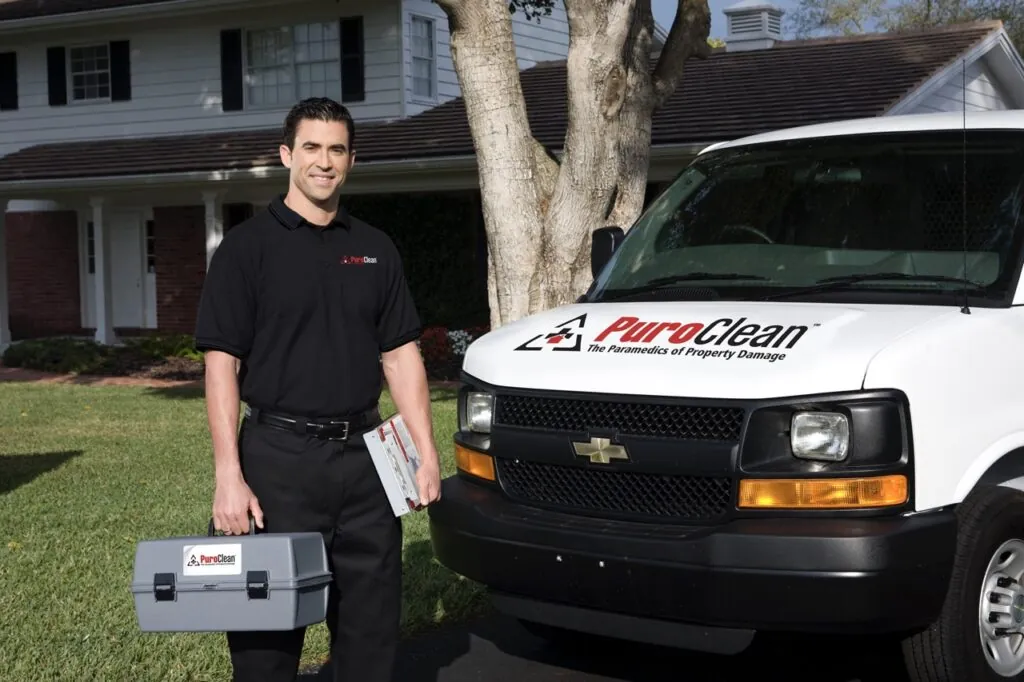
Residential Property
When disaster strikes, PuroClean is here to help homeowners restore their peace of mind.
When fire, smoke, water, mold, or a biohazard damages a home, the feeling of helplessness can be overwhelming. The emotion surrounding the loss and the disruption of daily life is more than most families can handle. That’s why PuroClean provides dependable service that you can always count on, 24 hours a day, 7 days a week, 365 days a year.
At PuroClean, we strive to reduce damage and minimize the effects of the destruction brought on by unexpected disasters. Our professionals are trained to handle the most difficult situations in a moment’s notice to restore your property to its normal state so that you can get back to your routine without missing a beat. We understand that any loss to your property is both stressful and costly. In fact:
- The average cost of water damage to a home is between $2,500 and $4,500.
- Mold can lead to serious health problems, including chronic inflammatory response syndrome.
- A sewage backup in your home exposes you and your family to dangerous biohazards.
- Every 60 seconds, $15,000 in property is lost to fire.
Attention to detail and customer care are factors that make the PuroClean experience the best in the industry. We employ the latest techniques and procedures throughout the restoration process while providing unparalleled service and rapid response. We will do whatever it takes to restore your property and your sense of security. This is our promise to you—when property damage occurs, PuroClean is driven to provide an unmatched service experience quickly, professionally, ethically, and with compassion, resulting in peace of mind for all concerned.
When PuroClean handles the job from start to finish, you can enjoy a streamlined claims process and potential savings, as well as the peace of mind that your property is in expert hands. As specialists in remediation, first we salvage everything that can be saved—from your walls to your most sentimental personal belongings—then our reconstruction specialists make all the necessary post-mitigation repairs.
Commercial Property
Minimize business interruption with PuroClean’s expert commercial restoration solutions.
Disasters can happen at any time. That’s why PuroClean responds with urgency— 24/7/365. After a disaster, you need immediate response to minimize business interruption, and PuroClean provides not only rapid response but also expert care and precision. We offer unparalleled service and renowned remediation from professionals certified to the highest standards in the industry. Whether it is a loss due to water, fire, mold, or a biohazard, we are prepared to immediately mitigate with expertise, compassion, and respect. You can be confident that if the unexpected occurs, PuroClean will be at the ready, with solutions customized to exactly what your commercial property needs.
Why PuroClean? Our expansive North American network responds cost-effectively to any size emergency. PuroClean handles your project from start to finish, including reconstruction. We quickly stabilize your facility, assess your loss, and plan for the rapid recovery of your site, thus ensuring you regain use of your property and prevent long-term damage. We can assist you in preparing your site in order for repairs to begin quickly, saving you additional expenses.
Every day, commercial clients rely on our responsiveness and superior disaster restoration services, which include:
- Pre-Loss Planning Project Management
- Data & Document Recovery
- Electronics Restoration
- Antiques & Fine Arts Restoration
- Emergency Mitigation Services
- Emergency Power
- Board-Up
- Building Stabilization
- Drying & Dehumidification
- Restoring to Pre-Loss Condition
- Cat-3 Response
- Reconstruction
Emergency Management Plan for Commercial Clients
The PuroClean Emergency Management Plan (EMP) was designed for commercial clients who are seeking to improve their emergency preparedness. In addition to emergency planning for all types of events, the program also offers risk management and assessment.
PuroClean’s EMP can help you effectively manage unexpected events and minimize the impact on your business operations, your property, and your customers.
Preparedness Planning and Response
Before an event occurs, we perform a thorough evaluation of your facilities to gain an in-depth understanding of your operations. This helps us to properly plan and respond in case of an emergency. Our EMP process includes:
Planning → Customizing → Execution → Ongoing Training → Reviewing and Accessing
When you call our 24/7/365 Call Center to report an emergency, the PuroClean team acts immediately, following protocols established in your customized EMP. Our highly trained professionals will work quickly to get your business back up and running.
To find out more about our Emergency Management Plan and training, please contact us at 855-977-7876 or [email protected]

Property Management Companies
Speak to a Business Development Specialist at (800) 775-7876
PuroClean is a Preferred Provider for Commercial Management Companies Nationwide
PuroClean is the property emergency company of choice for commercial management professionals, property managers, real estate agents, hospitality, manufacturing, retail, and luxury commercial management professionals who need a 24/7 full-service emergency property damage restoration company to take care of their customers.
- PuroClean offers a North American network of over 500 offices backed by our quality assurance and training organization. We provide a personalized approach to property damage emergencies that will save you time and money.
- PuroClean’s “Paramedics of Property Damage®” are highly trained experts in emergency property restoration and provide excellent service with respect, discretion, and compassion for home and business owners in the midst of trying emotional situations.
- PuroClean technicians come to the rescue with just one call—doing whatever it takes to satisfy your customer and bring the property back to pre-loss condition. You can feel confident knowing that PuroClean is there for you as a trusted partner.

Helping Insurance Agents with Property Restoration Services
Speak to a Business Development Specialist at (800) 775-7876
PuroClean is the top restoration choice for insurance professionals, claims adjusters, and insurance agents who need a 24/7 full-service emergency property damage restoration company to take care of their customers 24/7. PuroClean, certified by the Institute of Inspection, Cleaning and Restoration Certification (IICRC), can offer you, the claims adjuster or insurance agent, a North American network of over 475 offices backed by our quality assurance and training organization. We provide a personalized approach to property damage emergencies that will save you time and money.
Get the Results You Need. Partner with PuroClean!
Increased customer retention and reduced loss expenses are key elements that make partnering with PuroClean the right property restoration company for your claims department. Relentlessness, as well as results, will prove to save you time and money when you choose PuroClean. Call one of our Business Development team members today to start a relationship and build your national account program.
Read more about the collaboration between insurance providers and restoration professionals.
Certified Priority Response
PuroClean’s Certified Priority Response (CPR) Program is designed to help you reduce claim costs and increase satisfaction by employing strict certification standards, clear protocols, and mutually agreed-upon scope pre-approvals.
Our goal is to provide 24/7 easy access, then respond quickly, efficiently, and cost-effectively, every time!
Why The CPR Process Sets PuroClean Apart
- Insurance companies that partner with PuroClean can assign a loss electronically or through our National Call Center at 800-775-7876.
- Every CPR-certified PuroClean office will make contact within 60 minutes or less of assignment notification.
- A CPR-certified PuroClean Representative will perform an on-site inspection within four hours of assignment notification.
- A CPR-certified PuroClean Representative will provide an updated status report within 24 hours of site inspection. All reports, readings, and real-time data will be obtained through our PuroLogic claims management system.
- A CPR-certified PuroClean office will transmit a complete package of supporting documentation within 48 hours of job completion.
Do you have an emergency plan?
You never know when a property emergency will happen, but with PuroClean’s Emergency Management Process or EMP, you can be ready when disaster strikes your property.
An Emergency Management Process Will:
- Help you create a detailed emergency preparation plan for you and your employees when there is unexpected damage to any of your properties.
- Reduce liability risks. We identify potential hazards that could lead to future damage and address or notify you of them.
- Get you back in business sooner. Having a plan and documentation process in place saves time and money, as well as limits interruptions to your business operations.
- Improves tenant/property owner satisfaction. At the end of every job, we conduct third-party customer evaluations to ensure the highest level of satisfaction.
Be ready when it counts.
This comprehensive EMP will provide you with a detailed portfolio, including:
- An emergency action checklist
- You become a “preferred response” partner
- Advanced warning and emergency contact sheet
- A personalized portfolio, including pictures and many other details of power, water, gas, and other utilities shut-off locations
- Primary contact information, including insurance policies and important numbers
- Pre-approved work authorization and NTE amounts, so work doesn’t have to wait, and less damage is assumed
- Local contacts for fire departments, Insurance Agents, nearest hospitals, security and & power companies, and more.
We build lasting relationships with our clients and provide a one-year guarantee on our workmanship and materials.
Call (800) 775-7876
To speak to a business development specialist or email us at [email protected]
OR, request more information using the form below.
Priority Response
PuroClean utilizes the full technology suite provided by Next Gear Solutions, which includes job management with PuroLogic, real-time homeowner communication with ProAssist, CRM and growth technology with LuxorCRM, water mitigation documentation and compliance with MICA, and data analytics with BI Reporting. Adopting the Next Gear technology package creates a cohesive and efficient approach to PuroClean’s job management.
Frequently Asked Questions
That depends on the amount of damage. It there is extensive damage it will not be possible to occupy the structure. However, every situation is different!
Many PuroClean Professionals provide Full Service to you including the replacement or repair of any structural items that have been damaged. Consult your local PuroClean office to see if they provide Full Service.
Homeowners insurance provides coverage for damage that is sudden and accidental (such as water heater ruptures or pipe bursts). However, flood damage, no matter the source of the water, is NOT covered by standard homeowners policies. Flooding can occur from storms, sewer backup, and overflowing rivers, ponds, lakes, and oceans. However, you can purchase flood insurance through the National Flood Insurance Program. Note that water damage that results from lack of maintenance is not covered on a standard homeowners insurance policy.
Initially PuroClean needs to get into the home or office to do the emergency remediation and mitigation work. Then, during the drying process, PuroClean will need to return each day to monitor the progress and to adjust equipment to achieve the best results in the shortest amount of time.



