


Reviewed for technical accuracy by PuroClean Home Savers’ IICRC-certified restoration team.
Mold remediation follows the IICRC S520 Standard for Professional Mold Remediation, the industry benchmark that governs how contaminated materials get inspected, contained, and safely removed. For Columbus homeowners, that standard becomes relevant faster than most people expect, because a shower wall that stays wet for even a few days can develop a hidden colony well before any sign shows up on the visible tile. By the time a smell or stain finally appears, the mold has usually already spread further than most people assume.
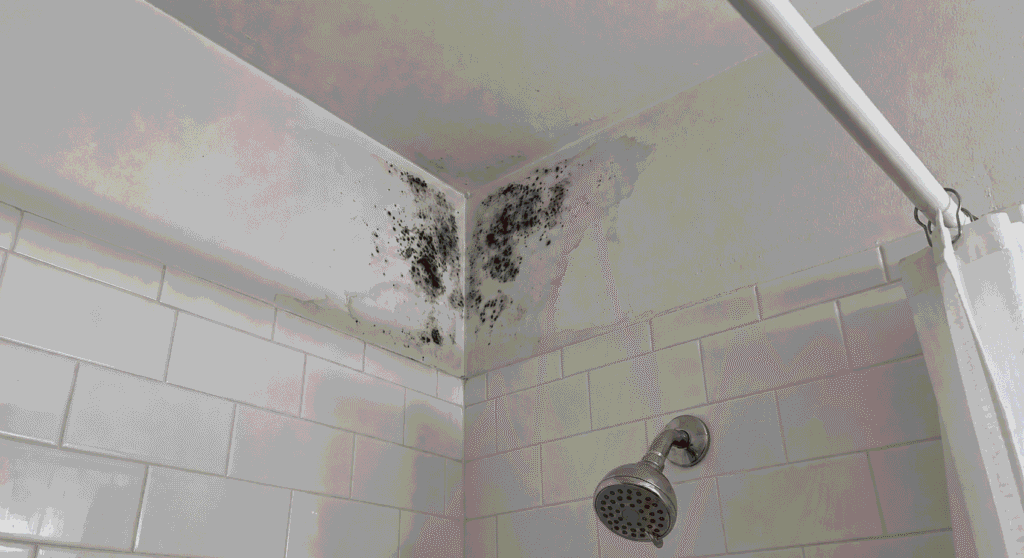
Key Takeaways for Homeowners
- A musty smell near the shower that returns after cleaning almost always means the mold source is inside the wall, not on the surface.
- Soft, spongy, or slightly damp drywall next to a shower enclosure means water has already saturated the gypsum core.
- Staining on an adjoining wall or the ceiling of a room below a bathroom often traces back to a leaking shower pan or failed grout line.
- Homes in Columbus neighborhoods on older combined sewer systems carry an added risk: a basement backup introduces Category 3 black water contamination, changing the remediation scope entirely.
- The EPA advises treating any indoor mold as a potential health concern as soon as it’s found, since effects vary from person to person.
- Professional moisture mapping with a hygrometer and thermal imaging is the only reliable way to confirm how far hidden mold has traveled behind the wall.
If any of these signs sound familiar, don’t wait to find out how far the problem has spread. Moisture trapped behind a shower wall does not dry out on its own, and every additional day gives mold more material to consume and more surface area to colonize. Call PuroClean Home Savers at (614) 689-0012 for a moisture assessment before a small repair becomes a full wall tear-out.
Why Columbus Bathrooms Are Prone to Hidden Shower Mold
Shower enclosures combine warmth, humidity, and organic material, drywall paper, wood framing, and grout, that mold needs to establish itself. A caulk joint that hasn’t been resealed in a few years, a cracked grout line, or a slow supply line leak behind the tile can all introduce moisture into a space that rarely fully dries. Columbus adds its own regional pressure to this risk. The city is shaped by its rivers, with the Scioto running north to south through downtown and joined by the Olentangy, and FEMA flood maps identify significant flood hazard areas in neighborhoods like Franklinton and the Bottoms. While river flooding doesn’t cause shower leaks directly, the higher ambient humidity that comes with proximity to these waterways and with older housing stock in general slows drying time for any wall cavity that already has a moisture problem.
Craftsman-era homes throughout Clintonville and the Short North were largely built before moisture barriers were standard in bathroom framing, which means a slow leak can travel down through plaster walls and into crawl spaces for months before it’s noticed. Pre-1960 construction in German Village, Victorian Village, and Italian Village carries a related risk: aging supply lines and burst-prone plumbing that were never designed for today’s longer, hotter showers.
Takeaway: If your Columbus home was built before 1970 and the shower caulk or grout hasn’t been checked recently, there’s a strong chance moisture is already finding a way in.
8 Signs Mold Is Growing Behind Your Shower Walls
1. A Musty Smell That Returns After Cleaning
If the earthy, musty odor near your shower comes back within a day or two of cleaning, the source is very likely inside the wall, out of reach of any surface cleaner.
2. Soft, Spongy, or Bubbling Drywall
Press gently on the wall a few inches from the shower. If it flexes or feels damp, the gypsum core has already absorbed water. Depending on how deep the moisture has traveled, this can indicate Class 3 or Class 4 water damage and usually means the paper backing is already colonized.
3. Discoloration on an Adjoining Wall or Ceiling
Water often travels along framing members before showing up visibly, sometimes surfacing as a stain in a hallway closet or the ceiling below an upstairs bathroom. This cross-contamination pattern is exactly what thermal imaging is designed to trace back to its source during a professional inspection.
4. Peeling Paint or Trim Separating From the Wall

Baseboards pulling away from the wall, bubbling paint, or lifting wallpaper near a bathroom point to moisture vapor pushing outward through the wall assembly.
5. Visible Mold Around Fixtures or the Caulk Line
Small black or greenish spots where the tile meets the floor or around the shower valve rarely appear in isolation. They usually signal a larger colony growing unseen behind the surface.
6. Grout That Stays Damp Long After Showering
If the grout near the shower floor is still wet an hour or more after use, water is likely wicking into the substrate below the tile instead of draining properly.
7. Warped or Buckling Flooring Near the Bathroom
Subfloor delamination, where plywood or OSB layers beneath tile or vinyl start to separate, shows up as a soft spot or slight give underfoot near the bathroom threshold.
8. Allergy Symptoms That Improve Away From Home
Sneezing, headaches, or throat irritation that ease up once you leave the house and return when you’re back can point to airborne mycotoxins circulating from a hidden colony through the HVAC system.
If you find soft drywall, visible colonies, or symptoms tied to time spent at home, stop investigating on your own and call a professional. Disturbing mold-contaminated material without proper containment can spread spores into the rest of the house.
What a Professional Mold Assessment Involves
A proper S520 inspection starts with moisture mapping, using a hygrometer and moisture meter to measure humidity and water content in suspected areas, followed by thermal imaging to identify temperature differences revealing trapped moisture before any demolition begins. Once the scope is confirmed, remediation typically follows this sequence:
- Build a containment barrier with plastic sheeting and negative air pressure to keep spores from reaching unaffected rooms.
- Remove and bag contaminated drywall, insulation, or flooring under S520 containment procedures.
- Apply an antimicrobial biocide to framing and remaining surfaces to address residual spores.
- Run air scrubbers with HEPA filtration to clear airborne particulates from the containment zone.
- Position LGR dehumidification equipment and air movers to return moisture levels to normal.
- Confirm dry, clear conditions with follow-up hygrometer readings before rebuilding begins.
Skipping the antimicrobial step or rebuilding before confirming dry readings is one of the most common reasons mold returns after a rushed repair.
Why Columbus Homeowners Call PuroClean Home Savers
PuroClean Home Savers offers 24/7 emergency dispatch, IICRC-certified technicians, and direct insurance billing, so homeowners aren’t left managing the claims process alone on top of the repair itself. A local team serving Columbus and Franklin County means faster on-site response than a company dispatching from outside the region, which matters when moisture is actively spreading inside a wall.
Once mold behind your shower wall is confirmed, the fastest path to a safe home is a professional remediation plan, not another round of surface cleaning. Call (614) 689-0012 to schedule an assessment.
Frequently Asked Questions
Does homeowners insurance cover mold behind shower walls in Ohio? It depends on the cause. Most policies cover mold resulting from a sudden, accidental event, like a burst supply line, but typically exclude mold tied to long-term neglect or unresolved maintenance issues. Documenting when the leak started and getting a professional assessment quickly can support a claim.
How much does shower wall mold remediation cost in Columbus? Costs vary based on how far the mold has spread and whether structural materials need replacing. A contained, single-wall repair costs significantly less than remediation that has reached the subfloor or adjoining rooms, which is why catching it early matters.
How long does mold remediation behind a shower wall take? A contained, single-wall job often takes a few days from containment setup through confirmed drying. Larger projects involving subfloor delamination or multiple rooms take longer, since drying equipment has to run until readings confirm the structure is safe to rebuild.
Can I remove shower wall mold myself? Small, surface-level mold on grout can often be cleaned with standard household products. Once mold is confirmed behind the wall, on framing, insulation, or subfloor, DIY removal risks spreading spores through the home without proper containment, so professional remediation under S520 protocol is recommended.
What health risks come from mold behind a shower wall? Health effects vary by individual and mold species. The EPA advises treating any indoor mold growth as a potential concern, especially for people with asthma, allergies, or compromised immune systems, since prolonged mycotoxin exposure can worsen respiratory symptoms.
Does Columbus’s combined sewer system increase the risk of contamination during a basement or bathroom flood? Yes. Pre-1970 neighborhoods including German Village, Old North, and parts of Franklinton run on combined sewer systems that can overflow during heavy rain, introducing Category 3 black water contamination through floor drains and sanitary laterals. This changes the required decontamination scope well beyond a standard water leak.