Reviewed for technical accuracy by PuroClean Home Savers’ IICRC-certified restoration team.
A flooded basement in Columbus rarely waits for a convenient time to happen, and what you do in the first day matters more than most homeowners expect. IICRC S500, the professional standard for water damage restoration, identifies the first 24 to 48 hours as the critical window separating a manageable water event from one that leads to mold and structural damage. Knowing the right steps, in the right order, gives you a real head start before a restoration crew arrives.
This guide covers seven steps grounded in IICRC standards and FEMA flood guidance, tailored to the specific ways Columbus basements actually flood.
Key Takeaways for Homeowners
- Shut off power to any flooded area before entering, even in shallow water.
- Water sitting more than 24 to 48 hours creates conditions where mold growth becomes likely under IICRC S500 guidelines.
- Combined sewer overflow in older Columbus neighborhoods can turn basement flooding into a Category 3 black water event.
- Photograph everything before moving belongings or starting cleanup.
- Sump pump failure, not just river overflow, is a leading cause of basement flooding in neighborhoods like Clintonville and Bexley.
- Professional structural drying with commercial dehumidification catches hidden moisture that surface-level fans miss.
If your basement has more than an inch of standing water, or you suspect it came from a sewer backup, stop and call a restoration professional before continuing cleanup on your own. Waiting increases the risk of subfloor delamination and long-term structural saturation. PuroClean Home Savers offers 24/7 emergency dispatch across Columbus and Franklin County.
Why Columbus Basements Flood: Neighborhood by Neighborhood
Columbus flooding risk depends heavily on which neighborhood you live in, since river proximity, sewer age, and construction era all vary block by block. The Scioto River bisects the city north to south and is joined near downtown by the Olentangy, with Big Walnut Creek to the east and Alum Creek to the southeast. FEMA Flood Insurance Rate Maps identify Special Flood Hazard Areas concentrated in Franklinton, the Bottoms, and along Alum Creek on the near east side. The Griggs and O’Shaughnessy dams help manage flow, but intense urban rainfall can still overwhelm drainage capacity in these zones.
River overflow is only part of the picture. Sump pump failure during spring storm season is a leading cause of finished-basement flooding in Clintonville, Bexley, and the Near East Side, unrelated to river proximity. Meanwhile, aging combined sewer systems on the Near South Side, Linden, and Olde Towne East can back up through floor drains and laterals during heavy rain, and that backup carries Category 2 or 3 contamination that requires different handling than clean water.
Construction era matters too. Pre-1960 homes throughout German Village, Victorian Village, and Italian Village are more prone to burst pipes and supply line failures as original plumbing ages. Craftsman-era homes in Clintonville and the Short North often see mold colonization behind plaster walls and in crawl spaces, sometimes from slow leaks rather than a single flood event. Newer development, including parts of Dublin, generally benefits from better-engineered drainage, though aggressive building near the Scioto has placed some newer neighborhoods in flood-prone zones as well.
Columbus also sees intense summer thunderstorms capable of flash flooding, and the city’s sewer maintenance operations center has logged hundreds of flooded-basement reports during single major storm events, reflecting how widespread and fast-moving this risk can be.
Takeaway: knowing whether your neighborhood’s main risk is river overflow, sump pump failure, or sewer backup changes both your prevention strategy and how urgently you should treat any water you find.
Step 1: Identify the Water Source and Category
Determine whether the water is clean groundwater, gray water, or sewage before deciding how to proceed. A sump pump failure typically produces Category 1 or 2 water. A backup through a floor drain in German Village or Olde Towne East during heavy rain is far more likely to be Category 3, especially in homes on older combined sewer lines.
Watch for dark coloring, floating debris, or a sewage odor. Any of these signs mean you should treat the water as contaminated and limit direct contact.
Takeaway: correctly identifying the water category before cleanup prevents the most common and costly DIY mistake, which is handling black water like a routine spill.
Step 2: Cut Power and Protect Yourself
Turn off electricity to the flooded area at the breaker before entering standing water. If your breaker panel sits within the flooded zone, don’t wade in to reach it. Call your utility company instead.
Once power is off, wear rubber boots and gloves at minimum. For suspected Category 3 water, common in older combined-sewer neighborhoods, add eye protection and an N95 or better respirator before going in.
Takeaway: no item in your basement is worth risking electrical injury to save.
Step 3: Document the Damage Thoroughly
Photograph and video the flooded area before moving furniture or starting cleanup. Insurance adjusters lean heavily on early documentation, and the appearance of water damage changes quickly once drying starts. Capture wide shots of each affected room, close-ups of damaged items, and the water line on walls if visible.
Keep a written log with the date, estimated depth, and suspected source. This helps both your claim and the restoration crew’s moisture mapping process later.
Takeaway: documenting before cleanup begins protects your ability to file an accurate, well-supported insurance claim.
Step 4: Check for Sump Pump or Mechanical Failure
If your basement is finished and flooded without an obvious storm event, check your sump pump first. Sump pump failure is one of the most common causes of basement flooding in Clintonville, Bexley, and the Near East Side, and it can happen during moderate rain, not just major storms. Look for a pump that isn’t running, a stuck float switch, or a discharge line that’s frozen or blocked.
If the pump has failed, note it for your records and consider a battery backup system once the immediate flooding is resolved, since power outages during storms are a common trigger for pump failure at the worst possible time.
Takeaway: a working sump pump with battery backup prevents a large share of the basement flooding calls restoration companies see every spring.
Step 5: Extract Standing Water Immediately
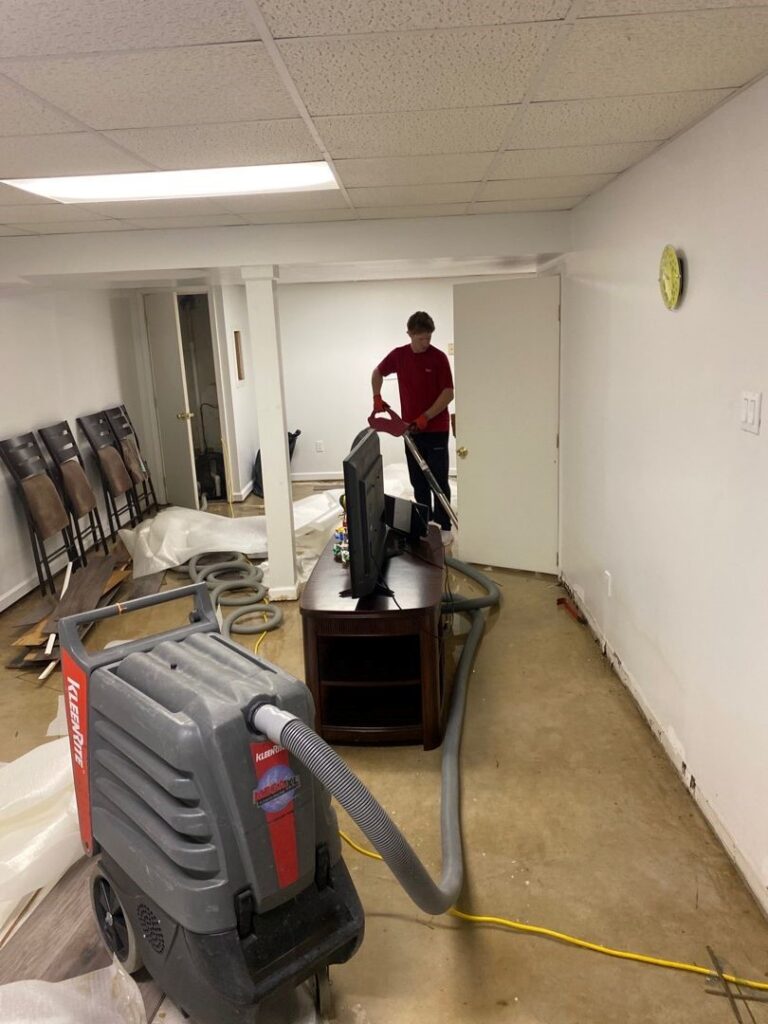
Remove standing water as soon as possible using a wet-dry shop vacuum for smaller amounts or a secondary pump for larger volumes. Professional crews use extraction equipment that removes far more water in far less time than consumer tools, which is a major reason early professional response leads to better outcomes.
While waiting for help, move salvageable furniture and belongings off wet flooring. Wood furniture and upholstered items submerged more than 48 hours have a much lower survival rate.
Takeaway: the faster standing water is removed, the fewer materials end up needing full replacement instead of drying in place.
Step 6: Begin Controlled Drying, Not Just Airflow
Run fans and open windows only if outdoor humidity is lower than indoor humidity, and treat this as a stopgap rather than a solution. Professional structural drying relies on low-grain refrigerant (LGR) dehumidification equipment combined with strategically placed air movers, guided by hygrometer readings and psychrometric calculations rather than guesswork.
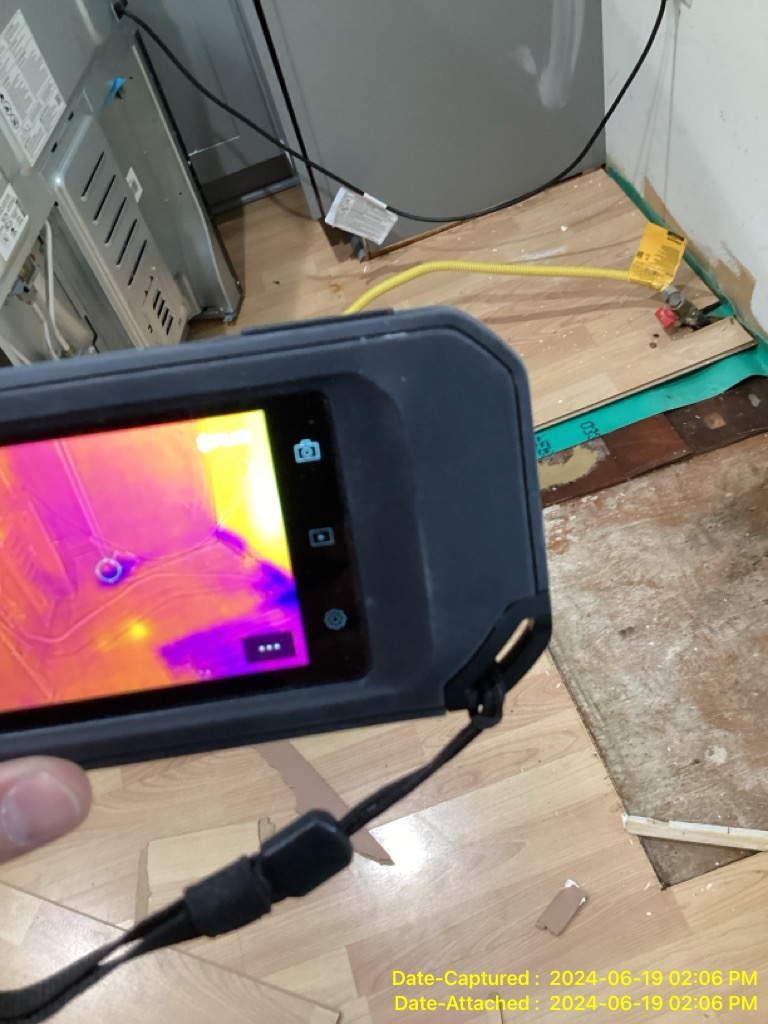
Thermal imaging helps technicians locate moisture trapped behind plaster walls or beneath flooring, which matters especially in Columbus’s older craftsman and pre-1960 homes where hidden moisture behind original plaster is a known source of delayed mold colonization. A basement can appear dry on the surface within a couple of days while framing and subfloor remain saturated underneath, setting the stage for subfloor delamination weeks later.
Takeaway: don’t judge a basement as fully dry just because the floor looks dry. Confirm it with moisture readings.
Step 7: Know When to Call In Professional Restoration
Bring in a professional crew if water covered more than a few inches of floor, sat longer than 24 hours, contacted electrical systems, or came from a sewer backup. These situations go beyond what a shop vac and box fans can safely resolve.
For Class 3 or Class 4 water damage, meaning water has saturated framing, insulation, or structural wood, a professional response typically includes containment barriers to prevent cross-contamination into unaffected rooms, negative air pressure setups with HEPA filtration and air scrubbers to control airborne particulates and mycotoxins, and an EPA-registered antimicrobial biocide applied to affected surfaces to limit mold growth during drying.
PuroClean Home Savers’ IICRC-certified technicians handle this level of response regularly across Columbus and Franklin County, and the company offers direct insurance billing, removing one significant burden from homeowners already managing a stressful situation.
Takeaway: the decision to call a professional should rest on water category and how long it sat, not on how the basement looks at first glance.
Frequently Asked Questions
Does homeowners insurance cover basement flooding in Columbus?
It depends on the cause. Sudden water damage from a burst pipe or a covered sewer backup rider is often included under standard homeowners policies, while river or groundwater flooding usually requires separate flood insurance through the National Flood Insurance Program, particularly relevant for homes in Franklinton, the Bottoms, or along Alum Creek. Review your policy’s flood exclusions with your agent before an event occurs.
How much does professional basement water extraction cost in Columbus?
Cost depends on square footage, water category, and how much material needs replacement versus in-place drying. Category 3 sewage cleanup from combined sewer backup generally costs more than clean water extraction from a sump pump failure, due to added decontamination requirements. Most restoration companies, including PuroClean Home Savers, provide a free on-site assessment before starting work.
How long does it take to dry out a flooded Columbus basement?
A basement with clean water and prompt extraction typically dries within 3 to 5 days using commercial dehumidification. Category 3 contamination, extensive material saturation, or delayed response can extend that timeline past a week, especially if subfloor or framing needs removal rather than drying.
Is it safe to clean up a sewer backup myself in older Columbus neighborhoods?
It’s not recommended. Category 3 black water carries bacteria and pathogens requiring PPE, containment, and proper disposal of contaminated porous materials like carpet padding and drywall. This is especially relevant in German Village, Old North, and parts of Franklinton, where combined sewer systems make backup contamination more likely during heavy rain.
Can mold from a basement flood actually affect my family’s health?
Some mold species produce mycotoxins that can affect indoor air quality and trigger respiratory symptoms in sensitive individuals, according to EPA mold guidance. Not every exposure leads to serious illness, but a persistent musty odor or visible mold growth after a flood should be evaluated, particularly in homes with young children, older adults, or anyone with asthma or allergies.
How fast can PuroClean Home Savers respond to flooding in Columbus or Franklin County?
PuroClean Home Savers offers 24/7 emergency dispatch across Columbus and Franklin County. Response time depends on storm volume and current call demand, so calling as soon as flooding is discovered helps get extraction started sooner rather than later.
A flooded Columbus basement doesn’t improve on its own while you wait. PuroClean Home Savers is available 24/7 for emergency water extraction and structural drying throughout Columbus and Franklin County. The team follows IICRC S500 drying protocols and works directly with insurance carriers through direct billing.
Call PuroClean Home Savers now at (614) 689-0012 Serving Columbus and Franklin County Available 24/7 | IICRC-Certified Technicians | Direct Insurance Billing.