


Key Takeaways for Homeowners
| Hidden Danger | Health Impact | Professional Solution |
|---|---|---|
| Airborne Mycotoxins | Respiratory damage, neurological symptoms, immune suppression | HEPA containment and certified mold remediation |
| Subfloor Pathogen Reservoirs | Recurring illness, persistent odors, structural rot | Moisture mapping and controlled demolition |
| HVAC Bioaerosol Distribution | Whole-property contamination, asthma triggers | Duct sealing and air scrubbing |
| Invisible Sewage Contamination | E. coli, parasites, and antibiotic-resistant bacteria | Category 3 water protocol with antimicrobial treatment |
Biohazard threats in Columbus properties rarely announce themselves with flashing lights. The most dangerous contamination is the kind you cannot see: mycotoxins circulating through your air ducts, bacteria colonizing your subfloor, and pathogens hiding behind intact drywall. For property owners in Franklin County, understanding these hidden dangers is not optional. It is a matter of protecting your family’s health, your property’s value, and your legal standing.
PuroClean Home Savers provides IICRC S500 and S520 certified biohazard remediation across Columbus, Ohio, from Victorian Village and German Village to suburban communities in Dublin, Westerville, and Reynoldsburg. Our technicians are trained in trauma scene cleanup, sewage restoration, and toxic mold remediation. If you suspect hidden biohazard contamination in your property, call (614) 689-0012 now for immediate assessment and emergency response.
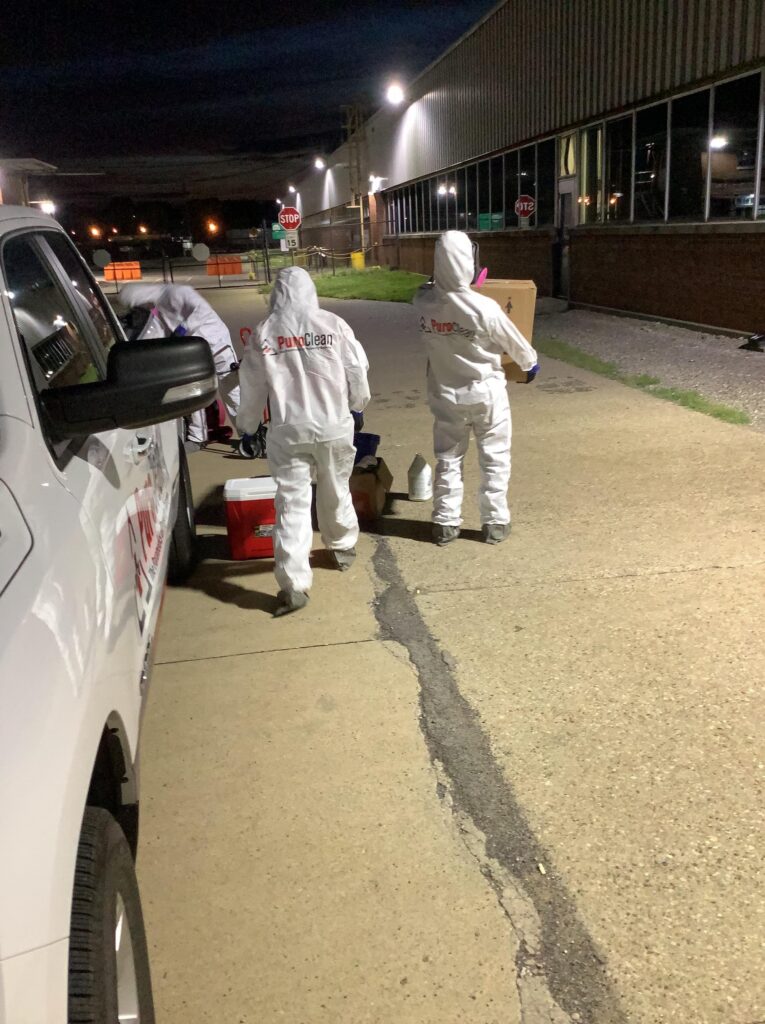
The IICRC Standard: Your Assurance of Scientifically Grounded Remediation
The Institute of Inspection, Cleaning and Restoration Certification (IICRC) develops the standards that govern professional restoration. The S500 standard establishes water damage classification, structural drying, and contamination control. The S520 standard defines mold remediation including containment, removal, and post-remediation verification. For incidents involving blood and bodily fluids, the IICRC S540 standard mandates specific protocols for pathogen elimination and worker safety.
These standards are not suggestions. They are the consensus of medical professionals, industrial hygienists, and restoration scientists. When a contractor follows IICRC protocols, you receive documented, verifiable safety. When they do not, you receive hope.
Hidden Danger 1: Airborne Mycotoxins from Undetected Mold Colonies
Columbus properties face a perfect storm for hidden mold growth. The region’s humid continental climate produces summers with relative humidity regularly exceeding 75 percent. Combined with Ohio’s frequent precipitation and the temperature differentials created by air conditioning, condensation forms inside wall cavities where homeowners never look.
When mold species like Stachybotrys chartarum, Aspergillus, and Penicillium colonize hidden spaces, they do not just release spores. They release mycotoxins, volatile organic compounds that are small enough to pass through standard air filters and deposit deep in lung tissue. Symptoms of mycotoxin exposure include chronic fatigue, cognitive fog, persistent cough, and immune dysfunction. These symptoms often masquerade as allergies or stress, delaying proper diagnosis for months or years.
Standard home inspections do not detect hidden mold. Visual inspection only reveals surface growth. Air sampling without controlled disturbance often misses wall cavity colonies. Professional remediation requires a multi-modal detection approach.
Step-by-Step: Hidden Mold Detection and Remediation Protocol
- Conduct infrared thermal imaging to identify moisture anomalies behind walls
- Perform penetrating moisture meter readings on suspect framing and sheathing
- Use borescope cameras to visually inspect wall cavities without destructive opening
- Collect air and surface samples for third-party laboratory analysis
- Establish containment with HEPA-filtered negative air machines before disturbance
- Remove contaminated materials using controlled demolition within containment
- Clean all surfaces with antimicrobial biocide formulated for fungal destruction
- Dry structure to below 16 percent moisture content using LGR dehumidifiers
- Perform post-remediation verification with clearance air sampling
Hidden Danger 2: Subfloor Pathogen Reservoirs After Water Events
When water damage occurs, gravity is not your friend. Water follows the path of least resistance, seeping under flooring, into subfloor cavities, and down to basement ceilings. By the time you notice warping or staining on your finished floor, the subfloor has been saturated for days or weeks.
This creates a hidden reservoir of pathogens. In Category 2 or 3 water events, bacteria from sewage or environmental sources colonize the organic material in plywood and OSB subflooring. Even after the surface appears dry, elevated moisture content in the subfloor sustains microbial growth. Every footstep releases bioaerosols. Every temperature change drives vapor migration that carries odors and pathogens upward.
Columbus’s housing diversity complicates detection. Historic homes in German Village and Victorian Village feature original hardwood over plank subfloors with no vapor barrier. Mid-century ranch homes in Clintonville and Upper Arlington have plywood subfloors that delaminate when wet. Newer construction in Dublin and Powell may have engineered subflooring with adhesives that fail under prolonged moisture exposure.
Step-by-Step: Subfloor Assessment and Restoration
- Remove finished flooring materials to expose subfloor condition
- Test subfloor moisture content with pin-type meters at multiple locations
- Inspect floor joists and insulation for fungal growth and structural compromise
- Remove compromised subfloor and insulation following IICRC S500 guidelines
- Treat structural framing with antimicrobial biocide and borate wood preservatives
- Install drying equipment with strategic air mover placement for cavity ventilation
- Monitor moisture content daily until readings stabilize below 16 percent
- Replace subfloor and flooring materials with moisture-resistant alternatives where indicated
Hidden Danger 3: HVAC Systems Distributing Bioaerosols Throughout Your Property
Your heating and cooling system is designed to move air. When that air contains bioaerosols, spores, or volatile organic compounds, the HVAC system becomes a distribution network for contamination. This is particularly dangerous because occupants receive continuous low-level exposure, making it difficult to correlate symptoms with the source.
In Columbus, where seasonal temperature extremes require year-round HVAC operation, this risk is constant. Summer air conditioning creates condensation on evaporator coils that supports bacterial growth. Winter heating dries nasal passages, increasing susceptibility to airborne irritants. Spring and fall temperature transitions mean systems cycle frequently, stirring settled contaminants.
Ductwork in older Columbus homes may contain decades of accumulated dust, debris, and prior water damage. Flexible ducting in newer homes can sag and trap moisture. In either case, biohazard remediation is incomplete without HVAC assessment.
Step-by-Step: HVAC Decontamination During Biohazard Remediation
- Seal HVAC registers and returns within the contamination zone
- Install HEPA-filtered air scrubbers to create negative pressure
- Inspect ductwork with remote cameras for visible contamination
- Clean evaporator coils, blower assemblies, and plenum boxes
- Perform mechanical duct cleaning with rotary brush systems and HEPA vacuum extraction
- Apply EPA-registered antimicrobial treatment to duct interiors where indicated
- Replace contaminated filters with high-MERV rated media
- Verify system integrity before returning to operation
Hidden Danger 4: Invisible Sewage Contamination in Seemingly Dry Areas
Sewage backups are overtly traumatic. What property owners miss is the invisible contamination that remains after the visible mess is cleaned. Category 3 water contains pathogenic, toxigenic, and other harmful agents including enteric bacteria, parasites, and antibiotic-resistant strains. These organisms adhere to surfaces through biofilm, a protective slime layer that resists standard cleaning.
In Columbus, aging sewer infrastructure in neighborhoods like Franklinton and the Near East Side contributes to recurring backup events. Properties with finished basements are especially vulnerable, as sewage can saturate carpet pad, baseboards, and wall insulation before being detected.
The danger is not just the initial exposure. Without proper antimicrobial treatment and structural drying, these pathogens persist and can cause illness months later. Children playing on previously contaminated carpet, pets contacting residual contamination, and adults performing routine cleaning can all be exposed.
Step-by-Step: Comprehensive Sewage Remediation
- Extract all standing sewage using truck-mounted extraction with heated solution
- Remove and dispose of all porous materials in the contamination zone
- Pressure-wash and disinfect structural surfaces with antimicrobial biocide
- Deploy air movers and dehumidifiers for rapid structural drying
- Apply secondary antimicrobial treatment to all affected and adjacent areas
- Perform ATP and microbial testing to verify sanitization
- Document all steps for insurance claim and health department requirements
Columbus’s Local Biohazard Landscape
Franklin County presents distinct biohazard challenges. The Scioto River and Olentangy River watersheds create flood risk for low-lying properties. The region’s freeze-thaw cycles stress plumbing and cause ice dam backups. Columbus’s mix of historic and modern construction means no single remediation approach fits all properties.
Local building codes require permits for structural repairs following significant water or biohazard damage. PuroClean Home Savers manages permit acquisition, inspection scheduling, and code-compliant reconstruction. We understand the specific requirements for properties in Columbus’s historic districts, where material matching and preservation guidelines apply.
Frequently Asked Questions
Does home insurance cover mold caused by high humidity in Columbus, Ohio?
Most Ohio homeowners policies exclude mold damage attributable to humidity, condensation, or maintenance neglect. Coverage typically applies only when mold results from a covered peril, such as a sudden pipe burst or storm damage. PuroClean Home Savers provides the forensic documentation necessary to establish cause and secure maximum claim approval. We work with all major carriers serving Franklin County.
How can I tell if my Columbus home has hidden biohazard contamination after a previous water event?
Warning signs include persistent musty odors, unexplained respiratory symptoms among occupants, visible staining that reappears after cleaning, and recent water events even if the surface appeared to dry. Professional assessment using thermal imaging, moisture meters, and air sampling is the only way to confirm hidden contamination. We offer no-obligation inspections for concerned property owners.
What makes PuroClean Home Savers different from general cleaning services in Columbus?
We are IICRC S500, S520, and S540 certified. Our technicians wear full PPE, use medical-grade containment, and provide documented clearance testing. General cleaning services lack the training, equipment, and regulatory compliance to safely handle biohazard contamination. Improper cleanup can actually increase your liability and health risks.
How quickly can PuroClean respond to emergencies in the Columbus area?
Our dispatch center operates 24 hours a day, 7 days a week. For Franklin County properties, typical response time is under 90 minutes. For biohazard situations involving bloodborne pathogens or sewage, immediate response is critical to prevent cross-contamination and structural damage.
Are there specific biohazard risks for Columbus rental property owners?
Yes. Ohio Revised Code requires landlords to maintain habitable premises. Failure to properly remediate biohazards can result in tenant claims, health department violations, and personal liability. PuroClean provides the certified documentation needed for legal compliance and tenant reassurance.
Conclusion
The hidden dangers lurking in Columbus properties, airborne mycotoxins from undetected mold, subfloor pathogen reservoirs, HVAC bioaerosol distribution, and invisible sewage contamination, do not resolve themselves. They metastasize. What begins as a faint musty odor or a small water stain can evolve into a property-wide health hazard that requires tens of thousands of dollars in structural remediation and medical intervention for affected occupants. For Franklin County property owners, the risk is amplified by our humid continental climate, the freeze-thaw cycles that stress building envelopes, and the mix of historic and modern construction that creates unique contamination pathways.
The invisible nature of these threats is precisely what makes them so dangerous. You cannot smell mycotoxins at dangerous concentrations. You cannot see bacteria colonizing your subfloor. You cannot detect pathogens circulating through your ductwork without professional equipment. By the time symptoms appear in your family, employees, or tenants, the contamination has already reached critical mass.
This is why IICRC S500, S520, and S540 standards exist. They provide the scientific framework for detection, containment, elimination, and verification that transforms guesswork into guaranteed safety. Certified remediation is not an expense. It is an investment in your property’s longevity, your occupants’ health, and your legal protection.
PuroClean Home Savers has restored hundreds of properties across Columbus, from Victorian Village historic homes to suburban developments in Dublin and Westerville. We bring IICRC certification, local building code expertise, and 24/7 emergency response to every biohazard situation. Our documentation packages satisfy insurance carriers, health departments, and legal requirements. Our remediation protocols eliminate threats at their source, not just their surface.
Do not let hidden dangers become visible disasters. The moment you suspect biohazard contamination, whether from a recent water event, a trauma scene, or unexplained health symptoms among occupants, professional assessment is your only safe course of action.
Call PuroClean Home Savers right now at (614) 689-0012 for immediate emergency dispatch. Our certified team serves all of Franklin County with the urgency, expertise, and documentation you need to reclaim your property and protect what matters most.