 PuroClean Home Savers
 | Key Takeaways for Homeowners |
| ✓ Ohio’s standard HO-3 homeowners insurance covers sudden, accidental ice storm damage: burst pipes, ice dams, and ice/snow-induced roof collapse. |
| ✓ Flooding from snowmelt is excluded from standard policies, separate NFIP or private flood coverage is required. |
| ✓ Columbus’s unique urban heat island effect combined with surrounding rural cold creates unusual freeze-thaw cycling that damages structures. |
| ✓ Insurance adjusters in Franklin County scrutinize maintenance history, document all preventive measures you’ve taken. |
| ✓ IICRC S500/S520 certified documentation is the most effective tool for successful claim outcomes. |
| ✓ Mold from covered water events is insured, but policies typically cap mold coverage at $5,000–$10,000. |
| ✓ Call PuroClean Home Savers: (614) 689-0012 for 24/7 emergency response across Columbus and Franklin County. |
Introduction: How Columbus Winters Damage Homes in Ways Homeowners Don’t Expect
Columbus, Ohio occupies a fascinating and challenging position in the Midwest winter weather map. As Ohio’s capital and largest city, it generates a measurable urban heat island effect, meaning the urban core of Franklin County is typically 2–5 degrees Fahrenheit warmer than surrounding suburban and rural areas. For homeowners, this creates a counterintuitive danger: the temperature differentials between the warm urban core and cold suburban fringe accelerate freeze-thaw cycling, the mechanical process most responsible for structural damage, ice dam formation, and pipe vulnerability in Central Ohio homes.
Columbus averages 27 inches of snow annually, but it is the ice storm events, the freezing rain systems that track across Ohio from southwest to northeast during January and February, that cause the most severe and insurance-relevant structural damage. Franklin County’s housing stock is notably diverse: 1920s–1940s Tudor and bungalow neighborhoods in Clintonville and Bexley, 1950s–1960s ranches in Westland and Whitehall, 1970s–1980s split-levels in Pickerington and Gahanna, and newer subdivisions in Dublin, New Albany, and Grove City. Each architectural style has distinct ice storm vulnerability profiles.
This guide provides Columbus homeowners with an authoritative, scientifically grounded breakdown of what Ohio homeowners insurance covers after an ice storm, what it excludes, and how to work with IICRC-certified professionals to protect your home and your claim.
IICRC Standards: The Scientific Foundation of Columbus Ice Storm Restoration
Professional ice storm damage restoration in Columbus is governed by two foundational IICRC standards. The S500 Standard for Professional Water Damage Restoration defines the scientific protocols, grounded in psychrometrics, for assessing, drying, and documenting water-damaged structures. The S520 Standard for Professional Mold Remediation governs the containment, bioremediation, and verification procedures when mold is present.
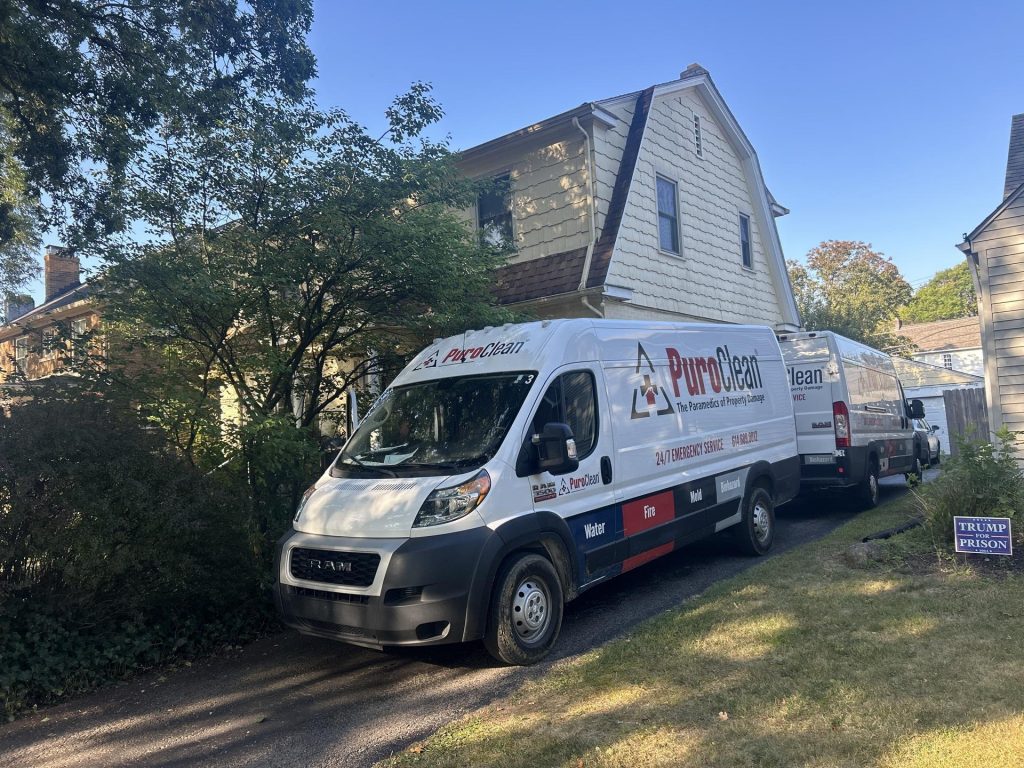
These standards matter to Franklin County homeowners not as abstract credentials but as practical insurance tools. Every major Ohio homeowners insurance carrier, Nationwide (headquartered in Columbus), State Auto, Erie, and others, recognizes IICRC S500/S520 documentation as the evidentiary standard for scope of work verification. When PuroClean Home Savers arrives at a Columbus property with:
- Thermal imaging cameras for moisture mapping behind walls and under floors
- Calibrated psychrometric instruments measuring temperature, relative humidity, and dew point
- Category 1-3 water classification documentation per S500
- HEPA-filtered air scrubbers for mold containment per S520
- Antimicrobial biocide treatment records and application documentation
- Negative air pressure containment barrier documentation
- Daily drying monitoring logs with psychrometric readings
- Post-drying verification moisture readings at each mapped location
- Structural assessment of hygroscopic materials: drywall, wood framing, insulation
- Final documentation package formatted for insurance adjuster review
…the result is an insurance file that meets carrier evidentiary requirements and reduces the likelihood of underpayment disputes.
What Homeowners Insurance Covers After a Columbus Ice Storm
Covered: The Sudden and Accidental Standard
Ohio homeowners insurance policies written on the HO-3 open-perils form cover physical loss to the dwelling and other structures from any peril not specifically excluded. For ice storm damage, the key legal and contractual concept is suddenness. The following are generally covered:
- Burst pipes from freezing: When exterior temperature drops cause pipes to freeze and rupture, a risk particularly acute in Columbus’s older Clintonville, German Village, and Olde Towne East neighborhoods where original plumbing often runs through uninsulated exterior wall cavities, the resulting water damage is covered under Coverage A (dwelling) and Coverage C (personal property).
- Ice dam-caused water intrusion: Columbus’s Tudor and craftsman homes, with their complex rooflines, dormers, and varying roof pitches, are classic ice dam candidates. Water that infiltrates through ice-dam-compromised roofing is treated as sudden water damage under standard Ohio HO-3 policies.
- Structural damage from ice and snow weight: Ohio building codes (OBC) specify roof loads based on ground snow loads of 20 psf for the Columbus area. When ice accumulation, particularly the dense, glazed ice from Central Ohio’s freezing rain events, exceeds structural capacity, the resulting collapse or deformation is covered.
- Tree and falling object damage: Ice-laden trees fall on Columbus homes every significant winter storm. Structural damage from fallen trees and limbs is covered under dwelling and other structures provisions.
- Resulting interior water and property damage: Finishes, flooring, cabinetry, and contents damaged by covered water intrusion are covered under the appropriate coverage sections.
Excluded From Columbus Ice Storm Claims
- Flood and surface water: Snowmelt runoff entering through foundation walls, window wells, or floor drains is excluded as flooding. This is critically important for Columbus homeowners in Olentangy River, Big Walnut Creek, or Alum Creek floodplain zones, FEMA-designated flood areas throughout Franklin County. Separate NFIP or private flood insurance is essential.
- Maintenance neglect: Ohio courts have upheld insurer denials when homeowners failed to maintain minimum heating temperatures in vacant homes or failed to repair known plumbing vulnerabilities. Document all preventive maintenance.
- Gradual deterioration: Slow leaks, progressive roof material degradation, and incremental foundation seepage are excluded as maintenance failures, even if an ice storm accelerated the existing condition.
- Frost heave: Foundation movement caused by soil freezing is classified as earth movement and excluded from standard Ohio HO-3 policies.
- Utility interruption losses: Food spoilage, sump pump failure, and equipment damage from power outages require separate endorsements.
- Pre-existing damage: Damage that predated the storm, even if the storm revealed or worsened it, is subject to denial.
Columbus-Specific Risk Factors: Freeze-Thaw Cycling and Your Home
The Columbus urban heat island effect, combined with the city’s position in Ohio’s primary ice storm corridor (stretching from Dayton northeast through Columbus and toward Canton), creates a specific risk profile that sets Central Ohio apart from other Indiana and Ohio markets. Freeze-thaw cycling, the repeated freezing and thawing of moisture within building materials and soil, is the dominant mechanical damage process for Columbus homes.
Clintonville and Bexley’s 1920s–1940s housing stock, built with balloon-frame construction and original single-wythe brick facades, is particularly vulnerable to freeze-thaw-induced deterioration. Water infiltrates brick mortar joints, freezes, expands, and progressively fractures the mortar matrix, a process called spalling. While the spalling itself may not trigger an immediate insurance claim, the water that infiltrates through compromised mortar during an ice storm event is the covered loss.
Columbus’s newer developments in Dublin, Powell, and New Albany face different risks: modern construction with engineered lumber framing, complex roofline geometries, and high-R-value insulation assemblies can create unexpected ice dam conditions because the insulation performance creates sharper temperature gradients at the roof deck.
Step-by-Step: What Columbus Homeowners Should Do After Ice Storm Damage
- Confirm structural safety: Do not re-enter a home with visible structural damage, ceiling sagging, or active ice fall hazard. Call 911 if there is an immediate safety risk.
- Document everything before any cleanup: Take timestamped photos and videos of every damaged surface, structural element, and piece of property. This evidence is irreplaceable.
- Take reasonable mitigation steps: Ohio law and your policy require you to prevent further damage. Extract standing water, place tarps, and move undamaged property to dry areas.
- Report the claim promptly: Call your insurance carrier and file the claim. Ask about your deductible, ALE (Additional Living Expenses) coverage, and the claims inspection timeline.
- Call PuroClean Home Savers at (614) 689-0012: Get IICRC-certified professionals on site immediately. Early moisture mapping and category classification establish the claim’s technical foundation.
- Do not discard damaged materials: Your adjuster needs to inspect all damaged items before disposal. Written authorization is required before disposal.
- Request and retain all drying documentation: Ask your restoration contractor for copies of all psychrometric readings, moisture maps, and drying logs.
- Track all displacement expenses: Hotel stays, meals, and temporary housing costs may be reimbursable under ALE coverage.
Mold After Columbus Ice Storms: Risks, Coverage, and Remediation
Columbus’s average winter relative humidity, typically 65–75%, combined with the moisture-saturated building materials common after ice storm events creates near-ideal conditions for mold colonization. The 24–48-hour window from initial water intrusion to active mold growth is a real biological threshold, not a marketing claim. In Columbus’s older housing stock, where building cavities may contain legacy organic materials (horse hair plaster, cellulose insulation, wood lathe), mold can establish rapidly once water intrusion occurs.
From an insurance perspective, mold remediation is covered when it directly results from a covered water damage event. However, Ohio homeowners should be aware of a critical policy limitation: most standard HO-3 policies issued in Franklin County include a mold sub-limit of $5,000–$15,000. For significant mold contamination in a larger home, which can easily require $15,000–$40,000 in remediation, drywall replacement, and air quality testing, this sub-limit may leave you significantly underinsured.
IICRC S520-compliant documentation is essential for maximizing your mold claim: mycotoxin air sampling results, containment documentation, HEPA filtration deployment records, antimicrobial biocide application logs, and post-remediation clearance air testing all support the full scope of covered remediation.
FAQ: Columbus Ice Storm Insurance Questions
Does homeowners insurance cover mold caused by high humidity in Columbus, Ohio?
Mold caused by ambient humidity alone, without a triggering covered water damage event, is excluded from standard Ohio HO-3 policies as a maintenance/humidity control issue. However, if mold developed as a direct result of a covered ice storm water intrusion (burst pipe, ice dam, roof breach), the mold remediation is covered as a consequential loss, subject to your policy’s mold sub-limits.
My Columbus basement flooded because of snowmelt from the February storm. Is that covered?
Very likely not. Snowmelt that enters through foundation cracks, window wells, or floor drains is classified as surface water or flood, both excluded from standard homeowners policies in Ohio. Homes in the Olentangy River or Alum Creek floodplains particularly need NFIP flood insurance. If the flooding was caused by a burst pipe (not snowmelt), that is a different, covered cause of loss.
I was on vacation and my Columbus home’s pipes froze because a neighbor turned off my heat. Who pays?
This involves potential third-party liability. Your own homeowners insurance may cover the water damage from the burst pipes, though it may also contest the claim if the home was unoccupied without proper winter preparation (a common policy condition). You may also have a negligence claim against the person who turned off your heat. Document the circumstances thoroughly and consult both your insurer and, if necessary, an Ohio property attorney.
How does PuroClean Home Savers coordinate with Columbus insurance adjusters?
PuroClean Home Savers provides insurance adjusters with complete IICRC S500/S520 documentation packages, including moisture maps, psychrometric logs, drying verification records, and scope of work documentation. This professional file reduces disputes, accelerates claim processing, and supports full-scope coverage. Call (614) 689-0012 to dispatch a certified team today.
What is the difference between an ice dam claim and a roof leak claim?
An ice dam claim involves water intrusion caused specifically by the ice dam mechanism, typically evidenced by water staining at the eave line and interior ceiling near exterior walls. A general roof leak is typically excluded if it results from the gradual deterioration of roofing materials. The ice dam mechanism is the critical covered distinction, which is why photographic documentation of ice accumulation at the eave line at the time of damage is so valuable.
Contact PuroClean Home Savers Columbus, Ohio
If your Columbus home has been damaged by an ice storm, frozen pipe, or winter water intrusion, every hour of delay increases the risk of mold colonization and structural deterioration. PuroClean Home Savers provides IICRC-certified S500/S520 restoration throughout Franklin County and surrounding communities.
Call PuroClean Home Savers now: (614) 689-0012, 24/7 emergency response for Columbus, Westerville, Dublin, Gahanna, Grove City, and all of Franklin County.
Our team arrives equipped with moisture mapping technology, psychrometric instruments, and the insurance documentation expertise to support your claim from the first call.

 PuroClean Home Savers