Reviewed for technical accuracy by PuroClean Home Savers’ IICRC-certified restoration team.
An unattended death is a painful event for any family, and the practical questions that follow can feel impossible to face. Professional cleanup after an unattended death follows the IICRC S540 Standard for trauma, crime scene, and biohazard cleanup, along with OSHA bloodborne pathogen and personal protective equipment rules. This guide explains, with care and in plain language, what Columbus families are typically responsible for, what cleanup costs depend on, and when to bring in professional biohazard experts. It also covers how older homes and wet basements can complicate the work.
Key Takeaways for Families
- Police and the coroner investigate and remove the person, but cleanup is generally arranged by the property owner, the estate, or the family.
- Do not enter or clean the area yourself, because bodily fluids can carry bloodborne pathogens and soak into carpet, padding, and subfloors.
- OSHA’s bloodborne pathogen standard (29 CFR 1910.1030) and IICRC S540 call for protective equipment, controlled work areas, and regulated waste disposal.
- Cleanup costs depend on the size of the affected area, how long the scene sat, the materials removed, and odor treatment, so ask for a written estimate.
- Plaster walls and old wood floors in many Columbus homes can absorb odors and fluids, which may require removal of materials.
- Basement moisture and combined sewer backups can add mold or Category 3 (black water) contamination to the cleanup.
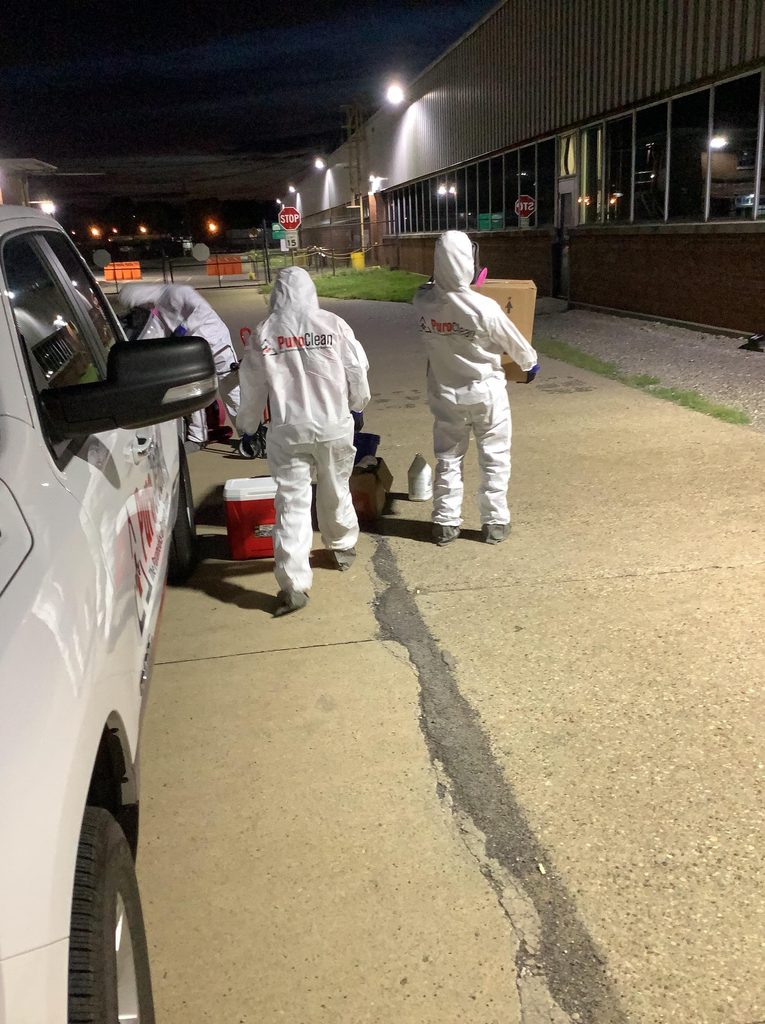
Time and moisture make it harder. Odor and contamination spread into flooring, walls, and ductwork the longer a scene sits, and humid summer weather can speed microbial growth. If you need guidance, call PuroClean Home Savers at (614) 689-0012 for a calm, confidential conversation about next steps.
What are a family’s responsibilities after an unattended death?
Families and estates are usually responsible for arranging and paying for cleanup, often with help from insurance. Authorities release the scene after the investigation, but they do not clean it. Renters should notify the landlord, and responsibilities can vary by lease and circumstance, so confirm details with the landlord, estate representative, or an attorney.
Steps for families
- Wait for the scene to be released. Do not enter until authorities confirm it. Ask for a case number, which insurers often request.
- Stay out of the affected area. Fluids can carry pathogens, and contamination may reach materials you cannot see. Keep children and pets away.
- Secure the property. Lock doors, gather important documents and valuables from unaffected rooms, and arrange for mail and utilities.
- Notify the insurer and landlord. Ask what coverage applies and what documentation is needed. The Ohio Department of Insurance can answer questions about your rights as a policyholder.
- Call a certified biohazard cleanup company. Ask about IICRC training, OSHA compliance, waste disposal, and whether they can bill your insurer directly.
- Ask about compensation programs. State crime victim compensation programs may help with certain costs depending on eligibility. Ask the program or an attorney.
- Take care of yourselves. Reach out to a grief counselor, doctor, or faith leader. If anyone in the family feels hopeless or overwhelmed, call or text 988, the Suicide and Crisis Lifeline.
Actionable takeaway: Make one early call to a professional, since they can explain the process and insurance steps while you focus on family.
Stop and call a professional if you notice a strong odor, stained flooring or furniture, visible fluids, sharp objects, insects, or any area you are unsure about. These are signs of contamination that need protective equipment and regulated disposal. PuroClean Home Savers can help at (614) 689-0012.
What does cleanup cost, and what drives the price?
Cost depends on the size of the affected area, how long the scene sat before discovery, whether fluids reached subflooring, which materials must be removed, odor treatment, and waste disposal. Because every scene is different, reputable companies provide a written estimate after a walk-through. Ask what is included, and whether any part can be billed to insurance or covered by another program.
In older Columbus homes, the cost picture can change. Pre-1960 houses in German Village, Victorian Village, and Italian Village often have plaster walls, wood subfloors, and original framing that absorb fluids and odor more deeply than modern drywall and plywood. In some cases, sections of flooring or subfloor must be removed to reach the source. Matching historic trim and finishes may add repair cost after cleanup.
Actionable takeaway: Request an itemized estimate that separates cleanup, removal, deodorization, and any repairs, so you can compare and submit it to your insurer.
What does professional biohazard cleanup involve?
Professional cleanup is a planned sequence: assess, contain, remove, decontaminate, deodorize, and verify. Technicians work under IICRC S540 and OSHA rules in protective suits, gloves, boots, and respirators. The goal is a safe, livable home, handled with discretion and respect for your family.
- Assessment. Technicians identify affected areas, including contamination that seeped into subflooring or wall cavities, and document conditions for insurance.
- Containment. Poly sheeting forms a containment barrier to prevent cross-contamination. Negative air pressure with HEPA air scrubbers keeps particles and odors from spreading.
- Removal. Porous materials such as carpet, padding, mattresses, and sometimes plaster, drywall, or subfloor sections are removed and disposed of as regulated medical waste.
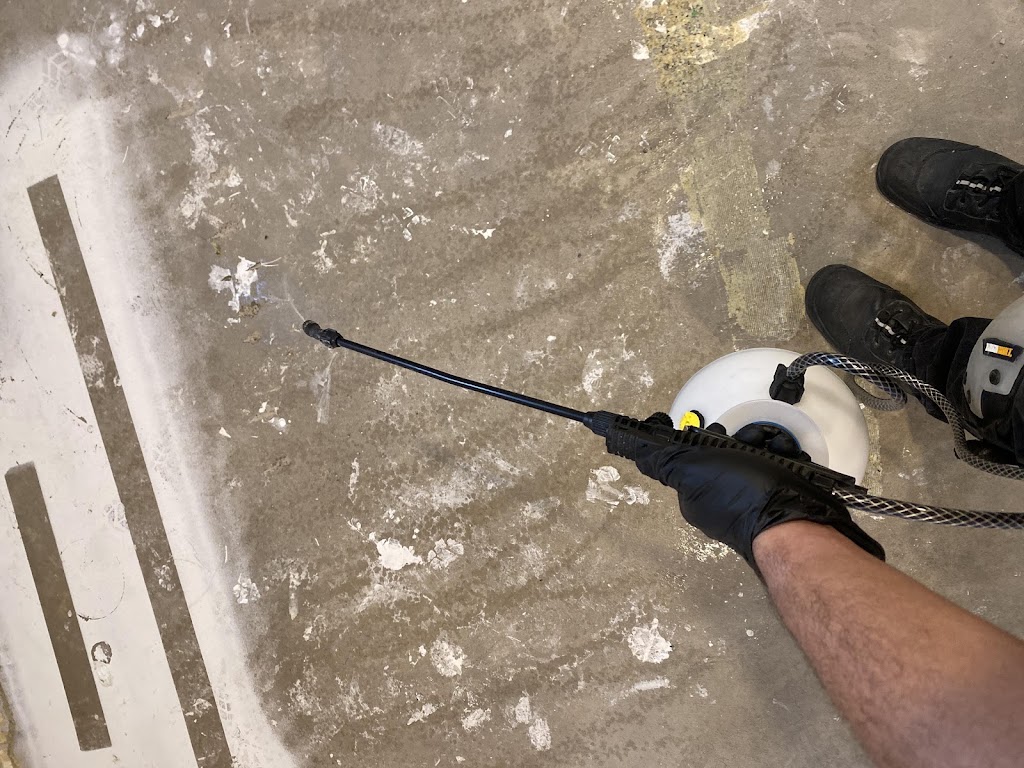
- Decontamination. Surfaces are HEPA vacuumed and cleaned, and antimicrobial biocide is applied. Verification testing may be used to confirm cleaned surfaces.
- Moisture control. Moisture meters and thermal imaging cameras find wet materials, and technicians record hygrometer readings and psychrometrics. If water is present, LGR dehumidifiers and air movers perform structural drying, and subfloor delamination is evaluated.
- Deodorization. Odor is removed at the source with air scrubbers and matched treatments, not masked.
- Final walk-through. The team verifies surfaces, air quality, and odor with the family.
Unlike a generic cleaning service, PuroClean Home Savers offers 24/7 emergency dispatch, IICRC-certified technicians, and direct insurance billing where coverage applies, with local response across Columbus and Franklin County.
Actionable takeaway: Ask how the company disposes of biohazard waste and what training its crew holds in S540 and OSHA requirements.
How do Columbus’s rivers and sewers affect cleanup?
Columbus is shaped by its rivers. The Scioto runs north to south, joined near downtown by the Olentangy, with Big Walnut Creek to the east and Alum Creek to the southeast. FEMA Flood Insurance Rate Maps identify Special Flood Hazard Areas in Franklinton, the Bottoms, and along Alum Creek on the near east side. The Griggs and O’Shaughnessy dams provide flood control, but intense urban rainfall can still overwhelm drainage, and summer thunderstorms can cause flash flooding.
If a scene is in a basement, moisture can complicate the work. Finished basements in Clintonville, Bexley, and the Near East Side see sump pump failures in spring storm season, and craftsman-era homes in Clintonville and the Short North can develop mold behind plaster and in crawl spaces. Some molds can release mycotoxins. Pre-1970 neighborhoods such as German Village, Old North, and parts of Franklinton use combined sewers that can overflow in heavy rain, so a basement flood there may contain sewage and require Category 3 protocol. Ohio EPA’s combined sewer overflow policy recognizes this as a public health concern. In those cases, S540 work and S500 water damage restoration may both be needed, and dense materials can bring Class 4 water damage.
Actionable takeaway: If the property has a damp basement, tell your cleanup company before work begins so moisture can be mapped and controlled.
Frequently Asked Questions
Does homeowners insurance cover unattended death cleanup in Ohio?
Some homeowners policies cover cleanup after a sudden covered event, but coverage varies and may exclude certain causes or require documentation. Renters policies differ. Contact your insurer promptly, ask what applies, and contact the Ohio Department of Insurance if you have questions about your rights as a policyholder.
How much does unattended death cleanup cost in Columbus?
Cost depends on the size of the affected area, how long the scene sat, whether fluids reached subflooring, the materials removed, odor treatment, and disposal. A professional walk-through produces a written estimate. Ask what is included and whether any part may be billed to insurance or covered by another program.
How long does biohazard cleanup take?
It depends on how far contamination spread. A small area may take a day or two, while a larger scene with subfloor contamination, odor, or water damage can take several days. A good team explains each stage, including drying and deodorization time.
Can family members clean up after an unattended death themselves?
It is not recommended. Bodily fluids can carry bloodborne pathogens, and contamination often reaches materials you cannot see. OSHA bloodborne pathogen rules and IICRC S540 call for protective equipment and regulated waste disposal. Professionals can work discreetly while you focus on family.
What health risks come with an unattended death scene?
Risks include bloodborne pathogens, bacteria, mold, and airborne particles. EPA guidance notes mold can grow on damp materials within 24 to 48 hours. In older Columbus basements, sewer backup can add Category 3 contamination. Protective gear, containment, and HEPA filtration reduce exposure.
When should I call professional biohazard experts instead of handling it myself?
Call as soon as the scene is released, or sooner for guidance. Professionals are needed whenever there are bodily fluids, strong odor, stained materials, sharps, pests, mold, or sewage. If you are unsure, assume it needs protective equipment and ask a certified team to assess the space.
Need Help in Columbus? Call Now
PuroClean Home Savers (614) 689-0012 Serving Columbus, Ohio and Franklin County. Our IICRC-certified technicians are available 24/7, treat every home with respect and discretion, and can bill your insurance directly where coverage applies.