 PuroClean Home Savers
 Key Takeaways for Homeowners
- Columbus’s position along the Scioto and Olentangy Rivers, combined with clay-heavy glacial till soils, creates significant spring flood risk for Franklin County neighborhoods.
- The 2026 spring flood outlook indicates near-normal risk for the Ohio River basin, with above-normal precipitation favoring isolated moderate flooding .
- Category 3 floodwater introduces pathogens, chemicals, and agricultural contaminants from upstream watersheds.
- PuroClean Home Savers provides Columbus homeowners with 24/7 emergency water extraction, certified structural drying, and mold remediation. Call (614) 689-0012 immediately.
Why Is Columbus at High Risk for Spring Flood Damage in 2026?
Columbus, Ohio, sits at the confluence of the Scioto and Olentangy Rivers, with extensive suburban development across former floodplains in Franklin and Delaware counties. The 2026 Spring Flood and Water Resources Outlook from the National Weather Service indicates near-normal flood risk for the Ohio River basin, with minor flooding expected and isolated moderate flooding possible. Above-normal precipitation through May remains the primary driver, meaning Columbus homeowners must remain vigilant.
The local geology exacerbates flood damage. Central Ohio’s glacial till soils are predominantly clay and silt, providing poor drainage and promoting hydrostatic pressure against foundation walls. Many Columbus neighborhoods, including German Village, Victorian Village, Clintonville, and Bexley, feature historic homes with brick, stone, or block foundations that predate modern waterproofing standards. These porous materials wick moisture upward through capillary action, spreading flood damage far beyond visible water lines.
Ohio’s building codes, based on the Residential Code of Ohio (RCO), incorporate IRC floodplain provisions requiring compliance with ASCE 24 for structures in Special Flood Hazard Areas. However, many Columbus homes in flood-prone neighborhoods were constructed before these standards, leaving them vulnerable to repeated spring inundation.
Step 1: Prioritize Safety and Assess the Contamination Level
What Hazards Hide in Columbus Floodwater?
Spring flooding in Columbus frequently involves Category 3 water per IICRC S500 standards. Contaminants include:
- Pathogenic bacteria and viruses from combined sewer overflows, particularly in Columbus’s older neighborhoods with aging infrastructure
- Petroleum products, heavy metals, and road salts from urban stormwater runoff
- Agricultural chemicals, including fertilizers and pesticides, from upstream Scioto River watershed farmland
- Debris, sharp objects, and displaced wildlife
Never enter floodwater without protective equipment. Electrical hazards are paramount: if your breaker panel is submerged or inaccessible, call Columbus Division of Power or a licensed electrician before approaching the water.
Step 2: Document Damage and Contact Your Insurance Carrier
What Documentation Strengthens Your Ohio Insurance Claim?
Ohio follows standard homeowners policy frameworks, but flood damage requires NFIP coverage or a private flood endorsement. To maximize claim success:
- Photograph standing water depth, damaged materials, and visible contamination
- Record video walkthroughs with timestamp narration
- Inventory damaged personal property with purchase dates and values
- Save receipts for emergency mitigation expenses
- Request a certified copy of the flood event from the National Weather Service
If your damage resulted from wind-driven rain or a covered peril rather than ground flooding, your standard policy may apply. The distinction is critical: document the water entry point carefully.
Step 3: Begin Emergency Water Extraction and Moisture Mapping
Why Is Extraction the Most Critical Phase?
IICRC S500 establishes that mechanical water extraction is ten times more efficient than evaporation-based drying alone. Professional extraction removes bulk water before it migrates into wall cavities, subflooring, and structural framing.
PuroClean Home Savers deploys:
- Truck-mounted extraction systems for high-volume water removal
- Subsurface extraction tools for carpet and pad
- Hardwood floor mats and suction systems for salvageable flooring
- Infrared thermal imaging to identify hidden moisture migration paths
What Is Moisture Mapping and Why Does Columbus’s Climate Require It?
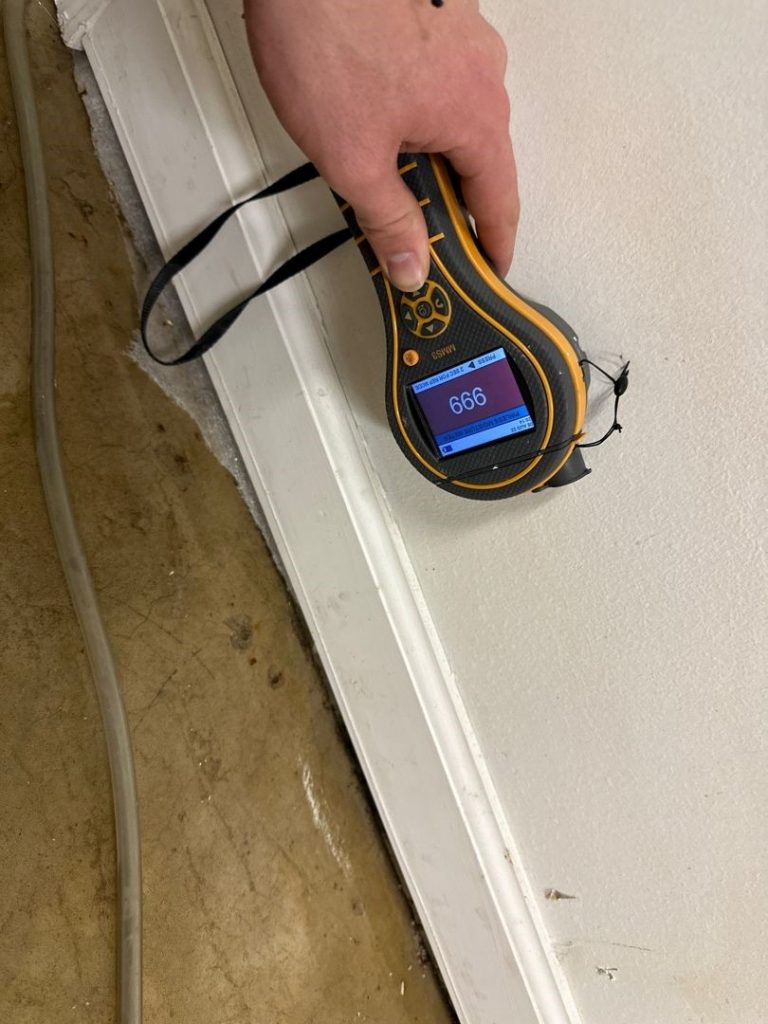
Moisture mapping creates a three-dimensional profile of moisture content across all affected building materials. Technicians use pinless moisture meters, penetrating probes, and hygrometers to establish baseline readings and drying goals. In Columbus’s humid continental climate, where spring relative humidity often exceeds 70 percent, precise moisture mapping prevents the under-drying that leads to mold and the over-drying that causes wood cracking and structural distortion.
Step 4: Deploy Structural Drying with Psychrometric Precision
What Equipment Drives Professional Drying in Ohio’s Climate?
Psychrometrics governs the relationship between temperature, humidity, and vapor pressure. Effective structural drying in Columbus requires:
- Low-grain refrigerant (LGR) dehumidifiers to achieve specific humidity levels below 40 grains per pound
- High-velocity axial air movers to disrupt boundary layers and accelerate evaporation
- Desiccant dehumidifiers for dense materials like plaster, brick, and hardwood common in Columbus’s historic homes
- Continuous remote monitoring systems tracking temperature, relative humidity, and moisture content
Columbus’s clay soil and limestone bedrock create cool, damp basement environments that challenge standard drying protocols. Basements in German Village and Victorian Village, with their stone foundations and minimal ventilation, often require extended drying cycles with supplemental heat and targeted airflow.
Step 5: Apply Antimicrobial Treatment and Implement Mold Prevention
What Biocides Are Safe and Effective for Residential Use?
EPA-registered antimicrobial biocides, including quaternary ammonium compounds and chlorine dioxide, neutralize pathogenic organisms on non-porous surfaces. Application follows water extraction and precedes final cleaning. Key considerations:
- Biocides do not penetrate porous materials; contaminated drywall and insulation must be removed
- Treatment must comply with EPA label directions and Ohio Department of Health guidelines
- HEPA vacuuming follows biocide application to capture spores and particulates
When Is Mold Containment Necessary?
If mold growth is visible or suspected based on odor or health symptoms, IICRC S520 mandates:
- 6-mil polyethylene containment barriers isolating affected areas
- Negative air pressure machines with HEPA filtration exhausting outdoors
- Full PPE for remediation technicians
- Physical removal of mold-contaminated materials, not chemical treatment alone
Columbus homes with finished basements, particularly in neighborhoods like Upper Arlington and Dublin where basements serve as living space, require immediate containment to prevent cross-contamination to HVAC systems.
Step 6: Rebuild with Flood-Resistant Materials and Methods
What Building Codes Govern Columbus Flood Reconstruction?
The Residential Code of Ohio incorporates IRC floodplain provisions requiring:
- Elevation of electrical, HVAC, and plumbing systems above the base flood elevation in SFHAs
- Use of flood-resistant materials below the design flood elevation
- Proper anchoring to resist flotation, collapse, and lateral movement
- Compliance with FEMA Technical Bulletin 2 for material specifications
Franklin County and Columbus building departments enforce these standards through permit review. If your home experienced substantial damage (repair costs exceeding 50 percent of pre-damage market value), full compliance with current floodplain standards is mandatory.
What Materials Resist Future Flood Damage?
- Closed-cell spray foam insulation (does not absorb water)
- Ceramic or porcelain tile with waterproof mortar
- Pressure-treated lumber and marine-grade plywood
- Solid hardwood or luxury vinyl plank flooring (avoid carpet in basements)
- Elevated mechanical platforms for furnaces and water heaters
Step 7: Verify Drying Completion and Obtain Documentation
How Do You Know Your Home Is Truly Dry?
Professional restoration concludes only when moisture readings meet established drying goals:
- Wood moisture content within 2 to 4 percent of normal equilibrium for the species and region
- Relative humidity below 60 percent in all affected areas
- No thermal anomalies indicating hidden moisture
- Documented moisture maps showing consistent readings across all materials
Obtain a certificate of drying completion and moisture log from your restoration contractor. This documentation protects you against future mold claims and supports insurance reimbursement.
FAQ: Answering Complex Long-Tail Questions for Columbus Homeowners
Does Home Insurance Cover Mold Caused by High Humidity in Columbus, Ohio?
Standard Ohio homeowners policies typically exclude mold damage caused by humidity, condensation, or poor maintenance. However, mold that directly results from a covered sudden and accidental water event, such as a burst pipe or wind-driven rain, may be covered subject to your policy’s mold sublimit. The key is prompt, documented mitigation. If you hire PuroClean Home Savers within 24 hours of water damage and maintain drying logs, your insurer is more likely to approve mold remediation as part of the original claim. Delayed mitigation leading to secondary mold damage is frequently denied as negligence.
How Do Columbus’s River Flood Plains Affect Rebuilding Requirements?
Columbus and Franklin County participate in the National Flood Insurance Program, enforcing FEMA floodplain management standards. If your home is in a Special Flood Hazard Area and sustains substantial damage, rebuilding must comply with current base flood elevation requirements. This may require elevating your structure, relocating utilities, or using flood-resistant materials. The City of Columbus Building Department reviews elevation certificates and permits for floodplain construction. Non-compliance can result in denial of future flood insurance coverage and municipal code violations.
Are Finished Basements in Columbus Worth Rebuilding After Flooding?
Finished basements in Columbus neighborhoods like Clintonville, Dublin, and Powell represent significant investment. Rebuilding is worthwhile if you implement proper waterproofing: exterior membrane systems, interior drainage with sump pumps, closed-cell insulation, and moisture-resistant flooring. However, if your basement is in a recurrent flood zone, consider converting to unfinished storage with elevated utilities to reduce future loss exposure. Document all improvements for potential flood insurance premium reductions.
What Is the Difference Between a Water Damage Restoration Company and a General Contractor in Ohio?
Water damage restoration companies like PuroClean Home Savers hold IICRC certifications in water damage restoration (WRT), applied structural drying (ASD), and mold remediation (AMRT). They specialize in emergency response, extraction, drying, and microbial remediation using scientific protocols and specialized equipment. General contractors handle reconstruction but typically lack the training, equipment, and certification for initial water damage mitigation. For best outcomes, use a certified restoration company for the emergency phase, then engage a contractor for rebuild. Many restoration firms, including PuroClean, offer both services for seamless recovery.
Why PuroClean Home Savers Is Columbus’s Trusted Restoration Authority
PuroClean Home Savers serves Columbus, Dublin, Westerville, Grove City, Reynoldsburg, and all Franklin County neighborhoods with IICRC-certified technicians, commercial-grade drying equipment, and deep knowledge of Ohio’s spring flood patterns. We understand the unique challenges of Columbus’s historic homes, clay soil drainage, and river basin flood risks.
If spring flood water has damaged your Columbus, Ohio home, every minute counts. Call PuroClean Home Savers immediately at (614) 689-0012 for 24/7 emergency water extraction, structural drying, and certified mold prevention. We stop damage before it destroys your home.

 PuroClean Home Savers