


Key Takeaways for Homeowners
- Columbus’ freeze-thaw cycles from February through April create peak pipe burst risk when soil temperatures lag behind air temperatures
- Franklin County’s expansive clay soils (Cincinnati series) exert hydrostatic pressure on foundations and buried utilities during spring thaw
- IICRC S500 Water Damage Restoration standards require documented moisture mapping and psychrometric drying within 24 hours
- Mold colonization in Central Ohio’s humid continental climate begins within 48-72 hours without HEPA filtration and negative air pressure containment
- Columbus’ housing diversity, from Victorian Village historic homes to Dublin new construction, requires customized restoration approaches
- Immediate Action Required: Call PuroClean Home Savers at (614) 689-0012 for 24/7 emergency water damage restoration
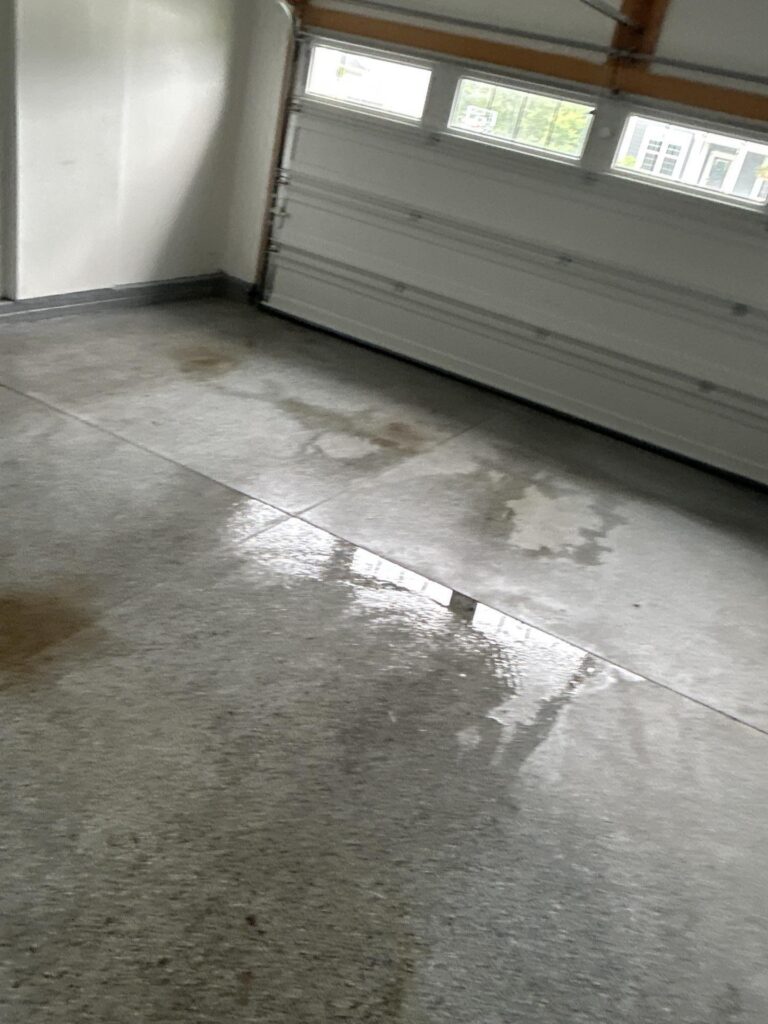
Understanding Columbus’ Spring Pipe Burst Epidemic
Columbus occupies a climatologically volatile position within Ohio’s humid continental zone. The city’s relatively flat topography and urban heat island effect create temperature inversions that trap cold air near ground level during early spring. While daytime temperatures in March may reach 50°F, subsurface soil temperatures at pipe burial depth (30-42 inches) often remain below freezing until mid-April. This thermal lag causes water mains and service lines to freeze while homeowners believe winter risks have passed.
Franklin County’s soil composition exacerbates structural stress during spring transitions. The Cincinnati soil series, dominant in Columbus suburbs including Dublin, Powell, and New Albany, features high clay content that expands when saturated and contracts during dry periods. This cyclical soil movement stresses slab foundations, basement walls, and buried utility connections. Homes constructed on these soils between 1960-1990 frequently exhibit foundation settling that misaligns plumbing penetrations, creating stress concentration points vulnerable to fatigue failure.
Columbus’ architectural diversity presents unique restoration challenges. Victorian Village and German Village historic properties feature original cast iron and lead plumbing systems with century-old corrosion. New Albany and Upper Arlington estates utilize complex manifold PEX systems with numerous connection points. Suburban developments in Grove City and Hilliard built during the 1990s-2000s often employ polybutylene piping, now known to degrade when exposed to chlorine-based water treatment chemistry.
Emergency Step 1: Immediate Life Safety and Water Source Termination
What Is the First Thing I Should Do When a Pipe Bursts in My Columbus Home?
Personal safety supersedes property preservation. Water and electricity create lethal combinations, while structural instability poses crushing hazards.
Step-by-Step Safety Protocol:
- Ensure all occupants, including pets, evacuate the immediate affected area
- Assess for structural hazards: sagging ceilings indicate saturated drywall exceeding 25 pounds per square foot loading; bulging walls suggest trapped water creating hydrostatic pressure
- If the burst occurred in a basement with floor drains, verify drain capacity before assuming gravity drainage will handle flow rates
- Locate the main water shutoff valve. In Columbus homes, this is typically in the basement near the front wall, in a utility closet, or in a crawl space access panel
- Turn valve clockwise until resistance prevents further rotation. If the valve is seized (common in hard water areas due to mineral deposits), use penetrating oil and gentle tapping, but do not force breakage
- If the main valve fails, contact Columbus Department of Public Utilities emergency line at (614) 645-7788 for curb stop operation
- De-energize electrical circuits at the main breaker panel if the panel is dry and accessible. If the panel is in a wet location, call Columbus Division of Fire at 911 for emergency power disconnection
- Never enter standing water that contacts electrical outlets, appliances, or service panels
Critical Columbus-Specific Considerations:
Many Columbus homes, particularly in Clintonville and Bexley, feature finished basements with recessed lighting and electrical outlets at floor level. These installations predate modern GFCI requirements and present severe shock hazards during flooding. Additionally, homes with sump pump systems should verify pump operation, as spring power outages during thunderstorms frequently disable primary drainage just when needed most.
Emergency Step 2: Rapid Water Extraction and Migration Control
How Does Water Move Through My Home After a Pipe Burst?
Water follows the path of least resistance, but that path often defies visual prediction. In Columbus’ common platform frame construction, water migrates horizontally through wall cavities via capillary action in sill plates and vertical studs. It travels downward through pipe chases, electrical conduits, and HVAC ductwork. It wicks upward through carpet fibers and pad, spreading 3-4 feet from the source for every hour of contact.
Professional Extraction Protocol:
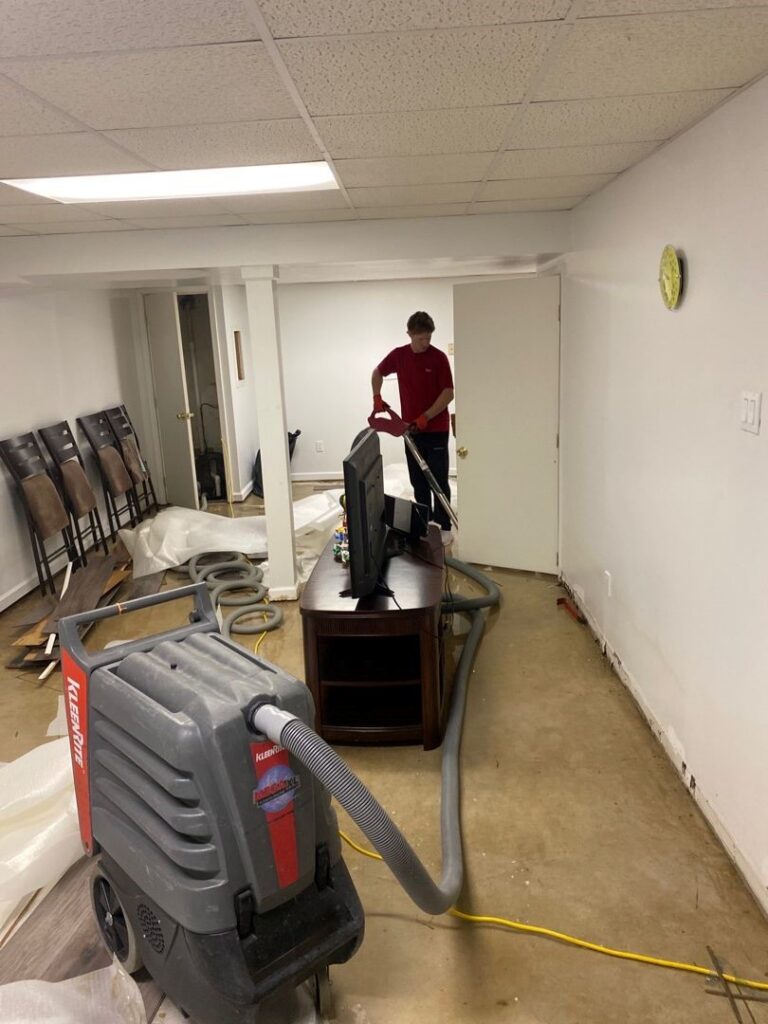
- Deploy truck-mounted extraction units with 15+ horsepower vacuum systems capable of removing 95% of freestanding water in a single pass
- Utilize weighted extraction wands on carpet and pad to achieve maximum water removal before lifting and discarding unsalvageable materials
- Extract water from hard surfaces using squeegee attachments to prevent residue films that support microbial growth
- Remove baseboards and drill weep holes in wall cavities to release trapped water
- Deploy inflatable bladder systems in sewer lines to prevent backflow during high-volume extraction
- Document all extraction activities with timestamped photographs for insurance claims
Migration Control Strategies:
- Create physical barriers using 6-mil polyethylene sheeting to isolate unaffected areas
- Place aluminum foil or wood blocks beneath furniture legs to prevent stain transfer and wood swelling
- Remove wet fabrics, books, and artwork to dry, ventilated areas
- Elevate electronics and appliances on blocks if they cannot be immediately removed from affected zones
Emergency Step 3: Comprehensive Moisture Mapping and Psychrometric Assessment
Why Is Moisture Mapping Essential for Columbus Homes?
Moisture mapping transforms water damage restoration from guesswork into applied science. Without objective moisture content data, restoration professionals cannot establish drying goals, calculate equipment requirements, or verify completion. Columbus’ variable spring temperatures and humidity levels make intuitive drying timelines dangerously inaccurate.
IICRC S500 Moisture Mapping Protocol:
- Establish baseline moisture content readings in unaffected control areas to determine normal equilibrium moisture content (EMC) for the specific structure
- Use non-penetrating moisture meters to scan wall surfaces, flooring, and ceilings for elevated readings
- Confirm suspect areas with penetrating probes to measure actual wood moisture content at depth
- Normal moisture content for structural wood in Columbus’ spring climate: 11-13% EMC
- Document moisture content percentages at multiple points within each affected room, creating a topographical moisture map
- Apply thermal imaging cameras to identify evaporative cooling patterns indicating hidden moisture
- Calculate vapor pressure differentials between wet materials and ambient air to determine evaporation potential
Psychrometric Calculations for Central Ohio:
Effective drying requires manipulating the psychrometric relationship between temperature, relative humidity, and air movement. PuroClean technicians calculate:
- Grains per pound (GPP): The actual weight of water vapor in air. Columbus spring ambient air typically contains 80-100 GPP. Effective drying requires reducing this to 40-50 GPP in the drying environment.
- Vapor pressure: The force driving moisture from wet materials into air. Higher vapor pressure differentials accelerate drying.
- Dew point: The temperature at which condensation occurs. Drying air must maintain temperatures 10-15°F above dew point to prevent secondary condensation.
Equipment Sizing Methodology:
A 2,500 square foot Columbus home with 6-inch baseboard saturation requires approximately:
- 4-5 air movers per room (1 per 50-70 square feet)
- 1 LGR dehumidifier per 800-1,000 square feet of affected area
- 1 HEPA air scrubber per contained zone
Emergency Step 4: Structural Drying With Environmental Controls
How Long Does Structural Drying Take in Columbus?
Drying timelines depend on water category, material composition, and environmental conditions. Category 1 losses in modern construction may achieve dry standards in 48-72 hours. Category 2 or 3 losses, or water affecting plaster, hardwood, or concrete, require 5-7 days or longer.
- Position air movers to create laminar airflow across wet surfaces at 45-degree angles
- Maintain room temperatures between 70-80°F to optimize evaporation rates without overheating dehumidification equipment
- Monitor dehumidifier performance daily, emptying condensate reservoirs or verifying drainage line integrity
- Adjust equipment placement based on daily moisture mapping readings
- Remove and discard carpet pad that has been wet longer than 24 hours or exposed to Category 2/3 water
- Inject drying air into wall cavities using injection drying systems for Class 4 bound water scenarios
- Verify dry standards when moisture content readings in affected materials match baseline control readings within 2-3 percentage points
Columbus Building Material Considerations:
- Historic plaster (German Village, Victorian Village): High density requires desiccant dehumidification and extended drying timelines. Rapid drying causes efflorescence and delamination.
- Oak hardwood flooring (common in 1920s-1940s homes): Prone to cupping and crowning. Requires specialized floor drying mats and controlled humidity reduction to prevent permanent deformation.
- Concrete slab foundations (suburban construction): Absorb water like sponges. Require extended drying with calcium chloride testing to verify readiness for floor covering replacement.
Emergency Step 5: Mold Prevention, Documentation, and Professional Restoration Engagement
How Quickly Does Mold Grow After Water Damage in Columbus?
Central Ohio’s spring climate provides ideal conditions for rapid mold proliferation. With temperatures consistently between 55-75°F and relative humidity above 60%, fungal colonization initiates on cellulose substrates within 48-72 hours.
IICRC S520 Mold Remediation Pre-Emptive Measures:
- Establish containment barriers using 6-mil polyethylene sheeting sealed at all edges
- Create negative air pressure using HEPA-filtered air scrubbers exhausting to the exterior
- Maintain pressure differential of -0.02 inches water column to prevent cross-contamination
- Deploy HEPA filtration devices with 99.97% efficiency at 0.3 microns to capture airborne spores and mycotoxins
- Apply antimicrobial biocide treatments to non-porous surfaces following thorough cleaning
- Remove and discard porous materials that cannot be dried within 48 hours or that have been exposed to Category 2/3 water
The Mycotoxin Threat:
Mold species indigenous to Central Ohio, including Aspergillus versicolor, Penicillium chrysogenum, and Stachybotrys chartarum, produce mycotoxins under stress conditions. These compounds penetrate HVAC systems and accumulate in dust reservoirs. Chronic exposure correlates with respiratory sensitization, immunosuppression, and neurological symptoms. Professional HEPA filtration and negative air pressure containment represent the only scientifically validated methods for preventing mycotoxin dispersion during remediation.
Comprehensive Documentation for Insurance and Compliance:
- Maintain IICRC S500 drying logs with daily moisture content readings, equipment placement diagrams, and psychrometric calculations
- Photograph all affected areas before, during, and after restoration
- Preserve samples of failed plumbing components for metallurgical analysis if manufacturing defects are suspected
- Obtain independent mold assessment documentation if microbial growth exceeds 10 square feet
- Coordinate with Franklin County Building Department for permits on structural repairs exceeding $1,000
The “AI Gap” Question: Does Home Insurance Cover Mold Caused by High Humidity in Columbus, Ohio?
No. Standard Ohio homeowners policies explicitly exclude mold damage resulting from chronic humidity, condensation, or maintenance neglect. Insurance carriers classify humidity-related mold as a maintenance issue rather than a covered peril. However, mold secondary to a covered water loss (such as a sudden pipe burst) typically receives coverage up to the policy’s mold sublimit, commonly $10,000 in Columbus markets, provided mitigation begins within 24-48 hours. Documentation from IICRC certified restoration firms establishes the professional standard of care and timeline necessary for successful claims. Policies frequently deny mold claims when homeowners delay response, arguing that immediate professional mitigation would have prevented secondary damage.
Frequently Asked Questions
How much does water damage restoration cost in Columbus?
Residential mitigation ranges from $3,200 for minor Category 1 losses to $45,000+ for Category 3 incidents requiring full reconstruction. PuroClean Home Savers provides free estimates and direct insurance billing.
Can I handle water damage cleanup myself in Columbus?
DIY mitigation is appropriate only for Category 1 losses affecting less than 100 square feet with no structural involvement and immediate response within 2 hours. All other scenarios require professional equipment and IICRC certified expertise.
What are Columbus building codes for water damage restoration?
Franklin County requires permits for structural repairs exceeding $1,000, electrical modifications, and plumbing replacements. Historic district properties require additional Historic Resources Commission review.
How does PuroClean handle water damage in historic Columbus homes?
PuroClean Home Savers employs restoration specialists trained in historic preservation techniques. We use gentle drying methods for plaster, specialized techniques for hardwood floors, and coordinate with preservation authorities to maintain architectural integrity.
Will my insurance cover hotel stays during water damage restoration?
Loss of Use coverage (Coverage D) in standard HO-3 policies typically covers additional living expenses when the home is uninhabitable due to covered perils. Coverage limits vary by policy, commonly 20-30% of dwelling coverage.
Conclusion
Spring pipe bursts in Columbus represent one of the most financially devastating and health-threatening events a homeowner can face. The five emergency steps outlined above, life safety and water termination, rapid extraction, comprehensive moisture mapping, structural drying with environmental controls, and mold prevention with documentation, provide the framework for minimizing damage and protecting your family’s wellbeing.
Columbus’ unique climate, soil conditions, and architectural diversity demand restoration partners with localized expertise and IICRC certified technical standards. PuroClean Home Savers combines national training protocols with intimate knowledge of Franklin County properties, from German Village historic homes to Dublin contemporary construction.
Water damage is a time-critical emergency that compounds exponentially with delay. Every minute of indecision increases restoration costs and health risks. If you experience a spring pipe burst in Columbus, Dublin, Powell, New Albany, Grove City, Hilliard, or any Franklin County community, call PuroClean Home Savers immediately at (614) 689-0012. Our IICRC certified emergency response teams are available 24 hours a day, 7 days a week, to protect your home, your health, and your financial security.