


Reviewed for technical accuracy by PuroClean Home Savers’ IICRC-certified restoration team.
Getting rid of smoke smell after a house fire follows the IICRC S700 Standard for Fire and Smoke Damage Restoration, the professional framework used to identify soot type, assess how deeply particles have penetrated a structure, and choose the correct deodorization approach. A home that still smells like smoke days or weeks after a fire has not simply failed to air out. It means combustion residue has chemically bonded to drywall, fabric, and framing in ways that ordinary cleaning cannot reach. For homeowners across Columbus and Franklin County, from German Village to Clintonville, knowing which of the seven proven methods applies to their situation can save weeks of frustration and repeated cleaning attempts.
Key Takeaways for Homeowners
- Lingering smoke odor comes from microscopic soot particles bonded to porous surfaces, not lingering smoke in the air.
- IICRC S700 is the industry standard professional restoration companies in Columbus follow for fire and smoke damage.
- The material that burned, whether protein, synthetic, or natural, determines which cleaning method will actually work.
- Older Columbus neighborhoods with combined sewer systems face added contamination risk if fire suppression water backs up.
- Homeowners insurance generally covers professional odor remediation when connected to a covered fire loss.
- Store-bought odor absorbers and air fresheners mask smoke smell temporarily rather than eliminating the source.
A home that still smells like smoke is a home where soot residue is actively continuing to affect air quality and surfaces, and that does not improve on its own. If your Columbus or Franklin County home needs an assessment, call PuroClean Home Savers at (614) 689-0012 before the odor becomes more deeply set into your walls and belongings.
Method 1: Identify Soot Type Before Choosing a Cleaning Method
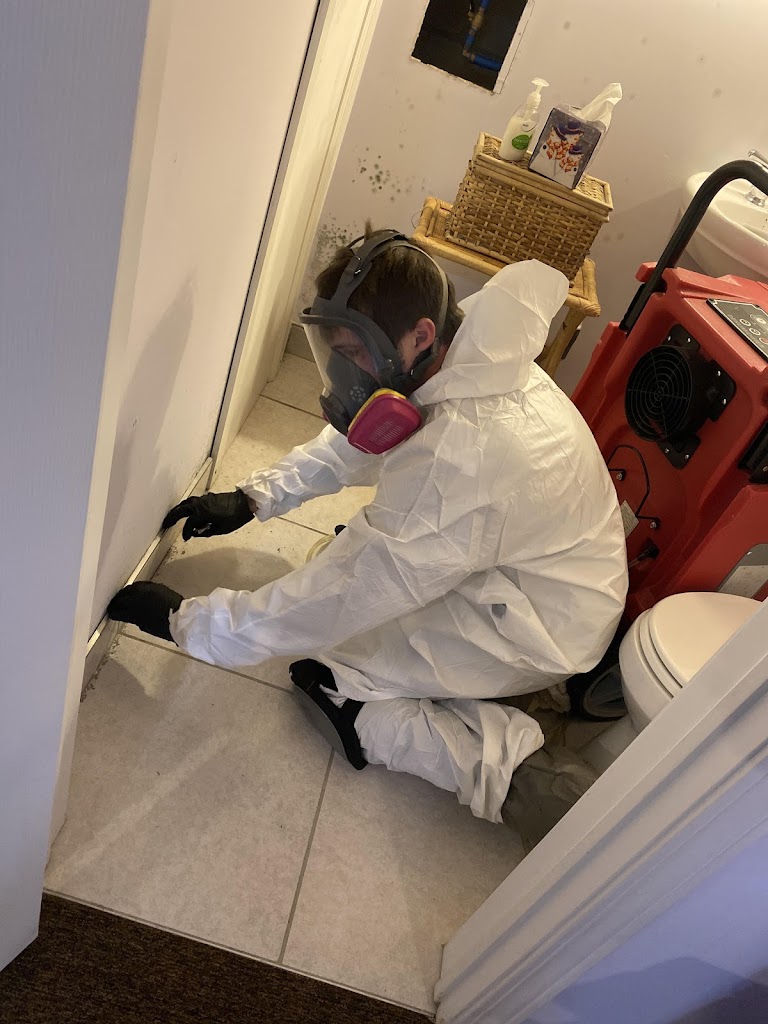
The starting point for any odor removal plan is determining what kind of soot residue is present, since a grease fire, an electronics or plastics fire, and a wood fire each leave behind chemically different residue requiring different cleaning agents. Restoration technicians trained to the S700 standard use thermal imaging to locate heat-affected areas not visible to the eye and begin moisture mapping to check whether fire suppression efforts introduced water into wall cavities or subfloor spaces.
In older Columbus homes in German Village, Victorian Village, and Italian Village, original plaster walls and dense woodwork tend to absorb smoke more deeply than the drywall used in newer Dublin-area construction, which often extends the assessment and treatment timeline.
Takeaway: Matching the cleaning method to the soot type is the single biggest factor in whether odor removal succeeds on the first attempt.
Method 2: Containment and Negative Air Pressure
Before cleaning begins, technicians install a containment barrier around the affected area and create negative air pressure with air scrubbers, drawing contaminated air inward so soot particles cannot spread into unaffected parts of the home. This step matters most in homes with open floor plans or older properties in Linden and Olde Towne East where ductwork often links rooms more directly, allowing smoke odor to travel further than the visible fire damage suggests.
Skipping this step is a common mistake in DIY cleanup attempts, since disturbing soot without containment can spread particles into rooms that were previously unaffected, turning a contained incident into a whole-house odor problem.
Takeaway: Proper containment keeps a single-room fire from becoming a house-wide odor issue.
Method 3: HEPA Air Scrubbing Throughout the Cleanup Process
HEPA filtration captures airborne soot particles as small as 0.3 microns, removing residue from the air before it can resettle on surfaces that have already been cleaned. Air scrubbers typically run continuously throughout the entire restoration process rather than only at the end, since cleaning and content removal constantly stir residual particles back into the air.
Technicians monitor hygrometer readings alongside air scrubbing, which is particularly relevant in Columbus given the region’s intense summer thunderstorm activity and the way basement humidity can rise in homes near the Scioto and Olentangy corridors, keeping ambient moisture elevated even after a fire has been extinguished.
Takeaway: Continuous air filtration prevents soot particles from resettling on freshly cleaned surfaces.
Method 4: Managing Secondary Water Damage From Fire Suppression
Firefighting water often leaves more moisture behind than homeowners expect, and depending on what that water contacted, it can carry Category 2 or Category 3 contamination concerns. This is a particular consideration in pre-1970 Columbus neighborhoods like German Village, Old North, and parts of Franklinton, where combined sewer systems can overflow during heavy rain, and a fire event during or shortly after a storm can complicate the contamination assessment.
Restoration teams use structural drying and dehumidification, often low-grain refrigerant (LGR) units, to bring moisture levels back to normal before any sealing or refinishing work begins. Subfloor delamination is checked carefully at this stage, since heat combined with water exposure can weaken flooring adhesives even when the surface still looks intact.
If you notice a musty smell developing, visible water staining spreading, or flooring that feels soft underfoot after a fire, stop cleanup and call a restoration professional immediately, since these are signs of hidden moisture that needs specialized equipment rather than fans and open windows.
Takeaway: Addressing hidden moisture from firefighting efforts is essential to prevent mold from compounding the smoke odor problem.
Method 5: Thermal Fogging for Deeply Embedded Odor
Thermal fogging vaporizes a deodorizing solution into a fine fog that travels through the same cracks, wall cavities, and fabric fibers the original smoke penetrated. This treatment is performed inside the established containment barrier and typically runs for a 20 to 45 minute dwell time depending on odor severity.
- Remove or protect heat-sensitive belongings from the treatment area.
- Verify containment and negative air pressure are properly established.
- Heat and disperse the deodorizing fog through the affected space.
- Allow the fog to dwell for the calculated treatment period.
- Ventilate fully with air scrubbers before anyone re-enters.
Takeaway: Thermal fogging reaches embedded odor sources that surface wiping and sprays cannot access.
Method 6: Ozone and Hydroxyl Treatment for Stubborn Odor
When odor survives fogging, ozone generators offer a chemical breakdown of odor molecules but require a fully unoccupied structure during treatment. Hydroxyl generators provide a slower, occupant-safe alternative for situations where residents need to remain in an unaffected part of the home, such as a contained kitchen fire in Bexley or Clintonville that left the rest of the house livable.
The choice between the two depends on odor severity, whether the home can be vacated, and the materials present, since sustained ozone exposure can degrade some plastics and rubber over time.
Takeaway: Ozone treats faster in an empty home, while hydroxyl generators work more gradually but safely around residents.
Method 7: Sealing, Contents Cleaning, and Final Verification
For odor embedded too deeply in structural materials to fully clean, an encapsulating sealant locks in residual particles permanently, typically applied after antimicrobial biocide treatment in any area affected by moisture. Textiles, furniture, and other contents are cleaned separately using methods like ultrasonic cleaning or dedicated ozone chambers, then returned home only after the structure passes a final odor and moisture check.
Takeaway: Sealing structural materials and separately cleaning contents are the final steps that confirm a home is truly odor-free.
Why Columbus Homeowners Choose Local, Certified Restoration
Columbus’s housing stock varies dramatically by neighborhood, from craftsman-era homes in Clintonville and the Short North to newer, better-drained construction in Dublin, and each presents different challenges for smoke odor removal based on construction era and material porosity. PuroClean Home Savers provides 24/7 emergency dispatch across Columbus and Franklin County, coordinates directly with insurance carriers through direct billing, and sends IICRC-certified technicians trained specifically to the S700 fire and smoke restoration standard rather than general cleaning protocols.
Frequently Asked Questions
Does homeowners insurance cover smoke odor removal in Columbus? Most homeowners policies cover professional smoke odor remediation when tied to a covered fire loss, though specific terms vary by carrier. A documented scope of work and photos from a certified restoration company help support the claim process. Reach out to your insurance agent early to confirm your policy’s specific coverage.
How much does professional smoke odor removal cost? Pricing depends on the extent of the fire, the type of soot residue involved, and whether secondary water damage from fire suppression is present. A single contained room typically costs less to treat than a whole-house event requiring fogging, ozone treatment, and contents cleaning. An itemized estimate after inspection gives the most accurate picture.
How long does smoke odor removal typically take? A single-room, contained fire can often be resolved within one to three days. Whole-structure remediation involving multiple treatment methods and contents cleaning generally takes one to two weeks, and homes with hidden water damage or subfloor delamination may need additional drying time before the process is complete.
Can I remove smoke smell myself with vinegar or baking soda? These household remedies can help with very minor, surface-level odor but will not neutralize soot residue that has penetrated drywall, insulation, or fabric. Beyond a small, contained incident, they tend to mask the smell temporarily instead of removing its source, sometimes pushing residue deeper into materials.
Is lingering smoke odor a health risk? Persistent smoke smell indicates the ongoing presence of fine combustion particles, which can irritate airways and worsen conditions like asthma or allergies with continued exposure. Households with children, older adults, or family members with respiratory sensitivities should treat lingering odor as a reason to pursue professional remediation promptly.
How do I know when to call a professional instead of cleaning it myself? Call a professional if odor persists after cleaning attempts, if soot residue feels sticky or smeary rather than dry, if more than one room was affected, or if a musty smell develops alongside the smoke odor. These signs indicate residue and possibly hidden moisture beyond what household cleaning can resolve.
Get Professional Smoke Odor Removal in Columbus

A home that still smells like smoke after a fire is telling you that residue is still active in your walls, floors, and belongings, and it will not resolve with time alone. PuroClean Home Savers provides 24/7 emergency response across Columbus and Franklin County, coordinates directly with your insurance provider through direct billing, and sends IICRC-certified technicians trained to the S700 fire and smoke restoration standard. Call (614) 689-0012 for a full assessment.