


Key Takeaways for Homeowners
- Mold spreads through airborne spores and direct contact; containment within the first hour prevents exponential colonization.
- Columbus’s variable climate, with humid summers and freeze-thaw winters, creates year-round moisture risks in basements and attics.
- Strategic DIY actions can halt mold progression, but professional IICRC S520 remediation is essential for complete restoration.
- PuroClean Home Savers provides 24/7 emergency mold response throughout Columbus and Central Ohio at (614) 689-0012.
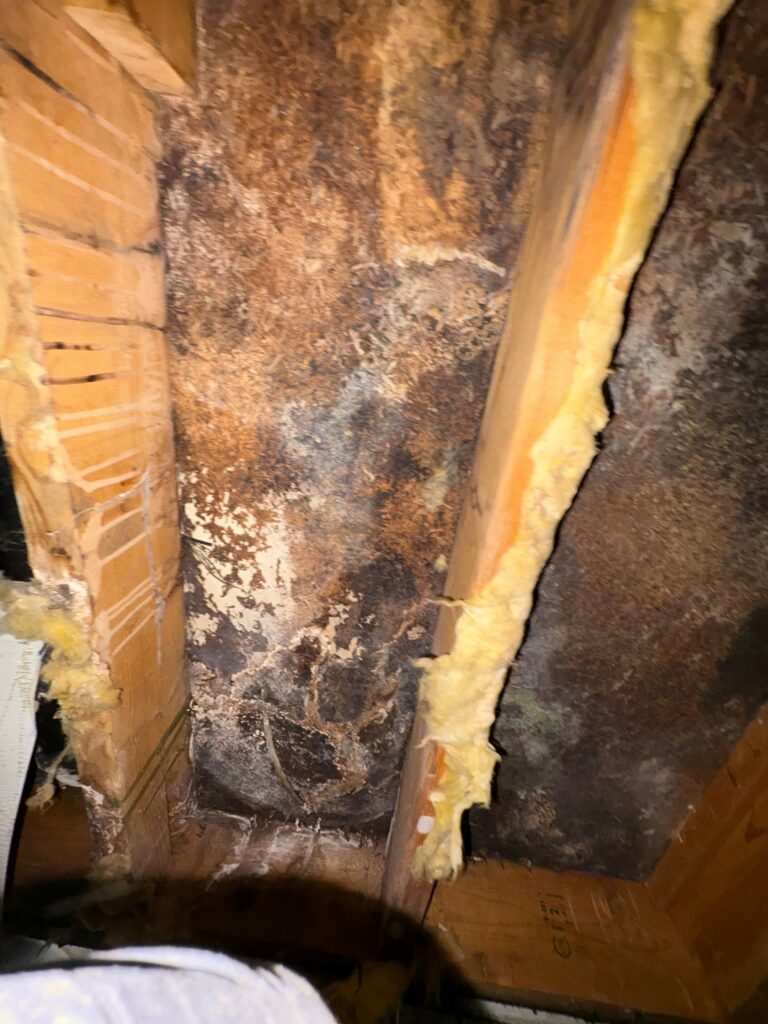
Why Does Mold Spread So Aggressively in Columbus Homes?
Mold is a biological organism with a singular imperative: reproduce. It accomplishes this by generating millions of microscopic spores that become airborne and colonize new surfaces. Under ideal conditions (temperatures between 60 and 80 degrees Fahrenheit, relative humidity above 60 percent, and organic food sources), mold can double its colonized area every 24 hours.
Columbus, Ohio presents a unique mold risk profile. Our city experiences a humid continental climate with four distinct seasons. Summer months bring average relative humidity of 65 to 75 percent, while winter freeze-thaw cycles create ice dams on roofs and foundation cracks that allow spring groundwater intrusion. The local geology includes clay-rich glacial till that drains poorly, causing hydrostatic pressure against basement walls throughout Dublin, Hilliard, Westerville, and other suburban communities.
Many Columbus neighborhoods feature housing stock from specific eras with known vulnerabilities. Homes built during the 1950s through 1970s in areas like Upper Arlington and Bexley often have unventilated crawl spaces and minimal insulation. Newer construction in Powell and Lewis Center may feature tight building envelopes that trap moisture without adequate mechanical ventilation. Understanding your home’s specific risk factors is essential for effective mold prevention.
What Is the IICRC S520 Standard and Why Does It Matter?
The Institute of Inspection, Cleaning and Restoration Certification (IICRC) S520 Standard and Reference Guide for Professional Mold Remediation is the authoritative document governing mold restoration in North America. It establishes:
- Containment protocols based on contamination size
- Personal protective equipment requirements for technicians
- Engineering controls including negative air pressure and HEPA filtration
- Criteria for determining salvageable versus non-salvageable materials
- Post-remediation verification testing procedures
When you hire PuroClean Home Savers, you receive technicians trained and certified to these exacting standards. Our work is documented, insured, and guaranteed to meet or exceed IICRC S520 requirements. Call (614) 689-0012 to schedule immediate assessment.
How Can I Stop Mold Spreading in the Critical First Hours?
Create Physical Barriers to Spore Migration
The most effective way to stop mold from spreading is to prevent spores from reaching new surfaces. This requires immediate containment:
Step-by-Step Containment Protocol:
- Close all doors to the affected room and seal gaps with painter’s tape
- Stuff towels or plastic sheeting under door bottoms
- Cover HVAC supply and return vents with plastic and tape
- Turn off the HVAC system to prevent duct contamination
- Seal windows if they connect to other rooms or shared spaces
For larger areas, construct a containment chamber using 6-mil polyethylene sheeting and PVC pipe or wooden frames. This is the same approach professionals use, scaled to available materials. The goal is to create a sealed environment where spores remain trapped until professional HEPA filtration and negative air pressure can be deployed.
Eliminate the Moisture Source Driving Colonization
Mold is a symptom of moisture. Stop the moisture, and you stop the expansion. Common sources in Columbus homes include:
- Foundation seepage: Check sump pump operation; Columbus’s clay soils require robust drainage systems
- Roof leaks: Ice dams are common in Franklin County winters; inspect attic spaces after thaw events
- Plumbing failures: Galvanized pipes in pre-1960 homes in German Village and Victorian Village are prone to corrosion
- Condensation: Poor insulation in attics and crawl spaces creates dew point conditions on framing
If you cannot identify the source, do not delay professional help. PuroClean Home Savers uses moisture mapping technology and thermal imaging to locate hidden intrusion points without destructive testing.
Remove Water and Lower Humidity Immediately
Standing water and elevated humidity are mold’s fuel sources. Act decisively:
- Extract standing water using wet/dry vacuums or submersible pumps
- Remove saturated porous materials (carpet, padding, cardboard, insulation)
- Deploy dehumidifiers rated for the space volume (minimum 50 pints per day for standard rooms)
- Position fans to create airflow across all damp surfaces
Columbus homeowners should understand psychrometrics: the relationship between air temperature, humidity, and moisture content in materials. Simply running a fan without dehumidification can actually increase mold risk by evaporating water into the air, where it condenses on cooler surfaces. Always pair air movement with active dehumidification.
Apply Targeted Antimicrobial Biocide Treatment
For hard, non-porous surfaces that show early mold spotting, apply an antimicrobial biocide to kill existing spores and inhibit regrowth. Effective products include:
- Concrobium Mold Control (mechanical kill, no harmful chemicals)
- Benefect Decon 30 (botanical, EPA-registered)
- Sporicidin Disinfectant Solution (residual antimicrobial activity)
Application guidelines:
- Wear N95 respirator, nitrile gloves, and eye protection
- Pre-clean surfaces to remove organic debris that shields spores
- Apply with pump sprayer or cloth, ensuring complete coverage
- Allow dwell time per manufacturer instructions (typically 10 minutes)
- Do not rinse; let surfaces air dry
Note: Biocides kill spores but do not remove them. Dead mold can still cause allergic reactions in sensitive individuals. Professional HEPA vacuuming and cleaning are required for complete removal.
Protect Clean Areas from Cross-Contamination
Spores travel on air currents, clothing, shoes, and pets. Implement strict cross-contamination controls:
- Designate a “clean zone” outside the containment area
- Remove and bag protective clothing before exiting containment
- Wash hands and exposed skin after each entry
- Keep pets and children away from the affected area entirely
- Launder clothing worn in contamination zones separately in hot water
If mold is present in a central area like a hallway or stairwell, consider temporary relocation to prevent tracking spores throughout the home. PuroClean Home Savers can advise on occupancy safety during remediation planning.
Monitor and Document the Situation
Effective mold management requires data. Monitor conditions using:
- Digital hygrometers to track relative humidity (target below 50 percent)
- Moisture meters to assess material moisture content (wood below 16 percent)
- Photographs with timestamps for insurance documentation
- Written notes on odors, visible changes, and health symptoms
This documentation serves multiple purposes: it guides your DIY actions, provides baseline data for restoration professionals, and supports insurance claims. Columbus-area insurers including State Farm, Nationwide, and Grange Mutual require detailed documentation for mold coverage approval.
What Are Columbus-Specific Mold Risk Factors?
How Does Central Ohio Climate Impact Mold Growth?
Columbus’s climate is characterized by significant humidity variability. Summer months bring warm, moist air masses from the Gulf of Mexico, while winter introduces cold, dry Arctic air. The transition periods (spring and fall) often create temperature inversions that trap moisture in low-lying areas.
Franklin County’s topography includes river valleys (Scioto, Olentangy, and Big Walnut Creek) that concentrate humidity in adjacent neighborhoods. Homes in the Clintonville, Worthington, and Dublin areas near these waterways experience higher basement moisture levels than properties on higher ground like the Harrison West plateau.
The region’s clay-heavy soils, a legacy of glacial Lake Maumee, drain poorly and expand when wet. This creates hydrostatic pressure against foundation walls, forcing water through cracks and joints. Many Columbus homes built before 1980 lack modern waterproofing membranes and drainage boards, making them particularly vulnerable.
What Local Building Characteristics Increase Mold Risk?
Columbus features diverse architectural styles with varying mold vulnerabilities:
- Victorian and Craftsman homes (1890-1930): Balloon framing allows fire and moisture to travel vertically between walls; minimal insulation creates condensation surfaces
- Mid-century ranch homes (1950-1970): Concrete slab foundations with minimal vapor barriers; single-pane windows promote condensation
- Split-level and bi-level homes (1970-1990): Partial basements at grade level experience more moisture intrusion than deep basements
- Modern construction (2000-present): Tight building envelopes require mechanical ventilation; without it, humidity accumulates in wall cavities
Understanding your home’s construction era and style helps predict where mold is likely to develop and where to focus prevention efforts.
Frequently Asked Questions for Columbus Homeowners
Does Home Insurance Cover Mold Caused by High Humidity in Columbus, Ohio?
Ohio homeowners insurance policies typically exclude mold damage resulting from humidity, condensation, or long-term maintenance issues. Coverage is generally available when mold is caused by a sudden, accidental event such as a burst pipe, water heater failure, or storm damage. Some insurers offer mold endorsement riders with coverage limits ranging from $10,000 to $50,000.
Given Columbus’s climate, we recommend reviewing your policy annually and considering supplemental coverage if you own an older home in neighborhoods like German Village, Victorian Village, or the Near East Side where plumbing and foundation systems are aging. PuroClean Home Savers provides insurance documentation support to maximize your claim recovery.
How Do I Know If Mold Is Making My Family Sick?
Mold-related health effects vary by individual sensitivity, mold species, and exposure duration. Common symptoms include nasal congestion, throat irritation, coughing, wheezing, eye irritation, and skin rashes. More severe reactions include asthma attacks, hypersensitivity pneumonitis, and immune suppression in vulnerable populations.
If family members experience unexplained symptoms that improve when away from home, schedule a medical evaluation and mention potential mold exposure. Our technicians can provide air quality sampling results to share with your healthcare provider.
Can I Remove Mold Myself or Do I Always Need Professionals?
DIY removal is appropriate for small areas (less than 10 square feet) of non-toxic mold on hard surfaces, provided you use proper PPE and containment. However, Columbus homeowners should call PuroClean Home Savers at (614) 689-0012 for:
- Contamination exceeding 10 square feet
- Mold in HVAC systems
- Category 2 or 3 water damage (gray or black water)
- Suspected toxic species (black mold)
- Recurring mold despite previous cleaning
- Occupants with respiratory conditions or immune disorders
What Is the Difference Between Mold Remediation and Mold Removal?
“Mold removal” is a misleading term. Mold spores exist everywhere in the environment; complete removal is impossible. “Remediation” is the accurate industry term describing the process of reducing mold to normal, safe levels through containment, removal of colonized materials, cleaning, and prevention. PuroClean Home Savers provides comprehensive remediation, not superficial removal.
How Long Does the Mold Remediation Process Take?
Timeline depends on contamination scope and material drying requirements. Small projects may complete in 2 to 3 days. Medium projects typically require 5 to 7 days. Large-scale remediation involving structural repairs may extend to 2 weeks or more. We provide detailed timelines during our initial assessment and maintain daily progress updates.
Will Mold Come Back After Professional Remediation?
Professional remediation by IICRC S520-certified technicians includes source elimination and moisture control recommendations. If homeowners follow maintenance protocols (humidity control, prompt leak repair, adequate ventilation), recurrence is unlikely. PuroClean Home Savers offers a satisfaction guarantee and will address any recurrence within our warranty period at no additional cost.