


Key Takeaways for Homeowners
- Mold can begin developing within 24 to 48 hours of a water leak, often long before it becomes visible.
- Four specific warning signs can alert homeowners to hidden mold growth before it becomes a major problem.
- Columbus, Ohio’s humid summers and older housing stock create conditions that accelerate mold growth after water damage.
- Only remediation performed to the IICRC S500 and S520 standards can confirm a property is fully safe.
- PuroClean Home Savers is available now at (614) 689 0012 for emergency inspection and mitigation.
A water leak rarely announces itself as a mold problem right away. By the time most Columbus homeowners notice a musty smell or a discolored patch on the ceiling, fungal colonization has often been active for days. Knowing the early warning signs, and understanding exactly how long mold takes to develop after water damage, gives homeowners a critical head start against a problem that only grows more expensive the longer it is ignored.
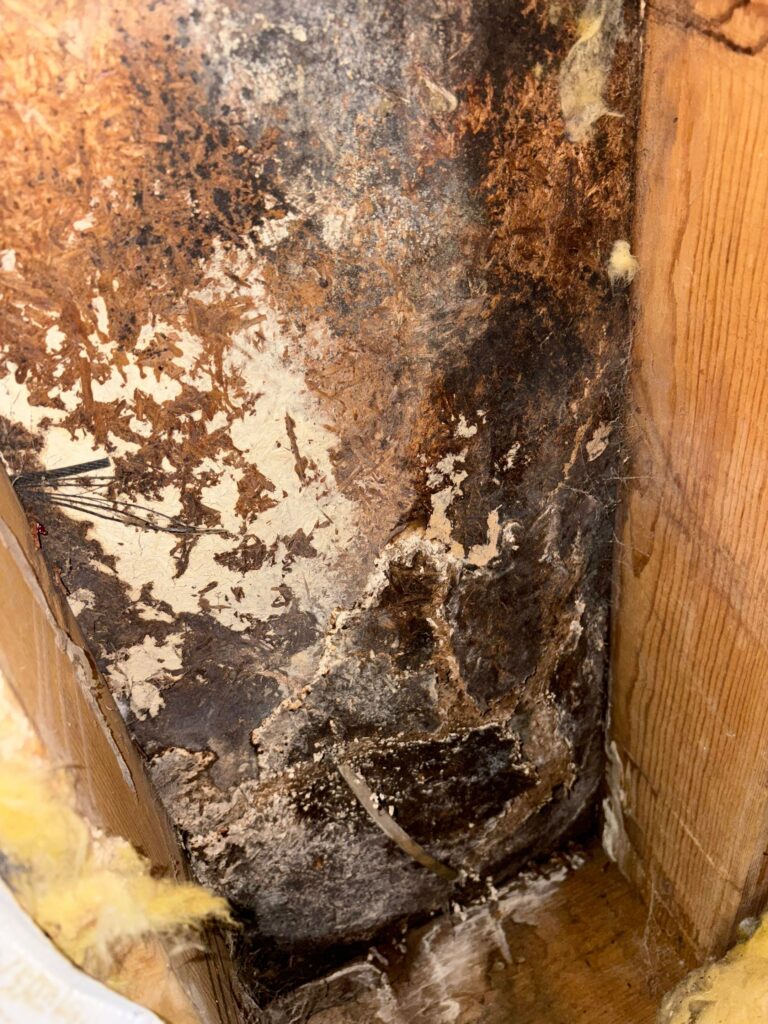
How Long Does It Take for Mold to Grow After Water Damage?
The 24 to 48 Hour Rule
Mold spores exist in virtually every home and require only moisture, an organic food source, and moderate temperature to begin germinating. Once building materials such as drywall, wood framing, or carpet padding become saturated, germination can start within 24 to 48 hours. A colony large enough to become visible and begin releasing spores into the air typically forms within 7 to 12 days if the moisture source is not corrected and the area is not properly dried.
Psychrometrics: The Science Restoration Professionals Use
Restoration technicians rely on psychrometrics, the study of temperature, humidity, and air movement, to predict how a wet structure will behave. Using moisture mapping tools and hygrometers, professionals measure relative humidity trapped inside walls, subfloors, and ceiling cavities. Readings above 60 percent relative humidity inside a building cavity are generally sufficient to sustain ongoing mold growth, even after the surface appears dry.
4 Warning Signs Mold May Already Be Growing
- A persistent musty odor. This smell comes from microbial volatile organic compounds released as mold digests organic material, and it is often detectable before any visible growth appears.
- Discoloration or staining on walls, ceilings, or baseboards. Yellow, brown, or dark spotting near a known leak location is a strong indicator that moisture has been present long enough for colonization to begin.
- Warped, bubbling, or soft drywall and flooring. These physical changes indicate sustained saturation, exactly the environment mold needs to thrive.
- Unexplained allergy like symptoms in the home. Increased sneezing, coughing, or respiratory irritation among household members, especially those with sensitivities, can signal airborne mold spores, including species capable of producing mycotoxins.
Why Columbus, Ohio Homes Are Especially Susceptible
Columbus experiences a humid continental climate with hot, muggy summers that push indoor relative humidity levels higher, particularly in homes without adequate ventilation or dehumidification. The region’s frequent spring and summer storms also increase the risk of basement and crawl space water intrusion. Many neighborhoods throughout Franklin County feature homes built from the 1950s through the 1980s, an era before modern vapor barrier and moisture control requirements were incorporated into local building codes, leaving these homes more vulnerable once a leak occurs.
Older housing stock across central Ohio commonly includes cellulose based insulation and untreated wood framing, both of which serve as an ideal food source for mold once exposed to moisture. Basements in Columbus are particularly prone to seasonal groundwater seepage, and finished basements with carpet or drywall face the highest risk of rapid mold development after even a modest leak.
The Professional Mold Remediation Process (IICRC S500 and S520 Standard)
PuroClean Home Savers follows the IICRC S500 Standard for Professional Water Damage Restoration and the IICRC S520 Standard for Professional Mold Remediation. A thorough remediation project generally includes:
- Full moisture mapping and thermal imaging inspection to locate all affected materials, visible and hidden
- Containment barriers to isolate the work area and prevent spore migration
- Negative air pressure equipment to keep contaminated air from spreading to unaffected rooms
- Continuous HEPA filtration using commercial air scrubbers throughout the project
- Removal and disposal of unsalvageable porous materials, including saturated drywall, insulation, and carpet
- Application of an EPA registered antimicrobial biocide to remaining structural surfaces
- Structural drying using industrial dehumidifiers and air movers, monitored until target moisture levels are achieved
- Post remediation clearance testing to confirm the space meets safety standards
Frequently Asked Questions
Does home insurance cover mold caused by high humidity in Columbus, Ohio? Standard homeowners policies generally cover mold only when it results from a sudden, covered peril such as a burst pipe. Mold linked to ongoing humidity or neglected maintenance is typically excluded. Documentation from a prompt professional inspection helps support claims tied to a covered event.
How quickly should I respond after discovering a leak to prevent mold? Ideally within 24 to 48 hours. Materials that remain wet beyond this window face a significantly elevated risk of active mold colonization.
Can I remove mold myself with bleach or store bought products? Surface cleaning may address visible mold on non porous surfaces, but it does not resolve mold that has penetrated porous materials like drywall or wood framing, and it does not address the underlying moisture source.
Will mold come back after remediation in my Columbus home? Recurrence typically only happens if the original moisture source, such as a roof leak, plumbing failure, or foundation issue, is not fully repaired. Proper remediation combined with source correction should prevent the problem from returning.
Don’t Ignore the Warning Signs
If you have noticed a musty odor, discoloration, or unexplained allergy symptoms in your Columbus home following any water event, these are signals that should not be ignored. The sooner a certified team inspects the property, the better the outcome for both your health and your home’s structural integrity.
Call PuroClean Home Savers now at (614) 689 0012 for immediate assistance.