


Executive Summary
Property damage in Columbus homes introduces stubborn odors that standard cleaning cannot eliminate. Fire residues, water damage consequences, and biological contamination create smells that penetrate structural components and personal belongings, making living spaces unbearable. This guide examines professional odor elimination techniques that address contamination at its source, using advanced technology and scientific methods to restore true livability. Understanding the difference between temporary masking and permanent elimination helps Columbus homeowners make informed restoration decisions that protect both property investment and family health.
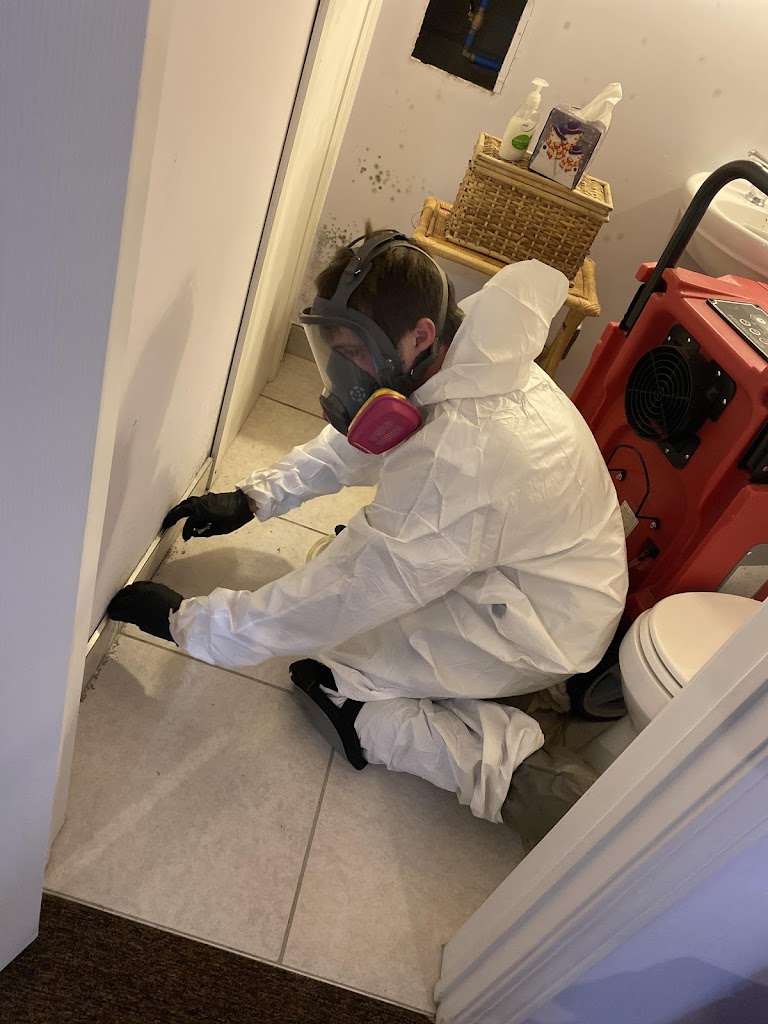
Why Do Property Damage Odors Persist Despite Cleaning Efforts?
Surface cleaning addresses only visible contamination while odor molecules embed themselves deep within porous building materials. Drywall, carpet padding, insulation, and wood framing act like sponges, absorbing contamination that continues releasing odorous compounds long after initial cleanup.
The molecular bonding between odor-causing substances and building materials creates particularly stubborn problems. Smoke particles carry acidic compounds that chemically bond with surfaces. Bacterial and fungal metabolic processes release volatile organic compounds that penetrate deeply into substrates. These molecular-level attachments require specialized treatment approaches rather than simple cleaning.
Air circulation systems compound odor problems by distributing contamination throughout properties. A localized water damage incident in one room can spread musty odors property-wide through HVAC ductwork. Fire smoke travels through air returns and supply vents, depositing particles in rooms far from the original fire location.
Temperature and humidity changes cause materials to expand and contract, releasing trapped odor molecules. This explains why smells often intensify during weather changes or seasonal transitions. The contamination remains within materials, becoming noticeable when environmental conditions change.
What Actually Causes Different Types of Damage-Related Odors?
Understanding odor sources provides insight into why elimination requires professional intervention rather than DIY approaches.
Fire and smoke contamination creates complex odor problems. Incomplete combustion releases hundreds of different chemical compounds, each contributing distinct smells. Protein-based materials like wool or leather produce particularly pungent odors when burned. Synthetic materials release plastic-like chemical smells. Wood smoke seems less offensive initially but creates persistent acid-based odors that intensify over time as residues continue breaking down.
Smoke particles measure microscopic in size, allowing penetration into the tiniest crevices. These particles carry the chemical compounds causing odors. Their sticky nature helps them adhere to virtually any surface they contact. The acidic composition means smoke residues continue damaging surfaces and releasing odors until properly neutralized.
Water damage and microbial growth introduce biological odors from fungal and bacterial activity. Different mold species produce distinctly different smells. Some create earthy, musty odors commonly associated with basements. Others generate sharper, more chemical-like scents. Bacteria involved in decomposition processes create particularly offensive smells.
These biological odors indicate active growth processes. As long as conditions support microbial activity, odor production continues. Simply masking smells without addressing the growing organisms provides no real solution.
Sewage and contaminated water bring some of the most difficult odor challenges in restoration work. Decomposing organic matter releases compounds like hydrogen sulfide, ammonia, and various sulfur-based molecules. These penetrate deeply and spread rapidly through properties.
Category 3 water (grossly contaminated) introduces pathogenic organisms alongside overwhelming odors. Health risks accompany the odor problem, making professional intervention essential rather than optional.
How Did One Columbus Family Discover Their DIY Approach Wasn’t Working?

Sarah and Michael Chen thought they could handle the aftermath of their Columbus home’s basement flooding themselves. Insurance covered structural drying, but they decided to save money by cleaning and deodorizing on their own.
“We spent three weekends scrubbing everything,” Sarah remembers. “We used every product the hardware store recommended. The smell seemed better at first, especially with all the windows open. But as soon as we closed up the house and turned on the heat, that musty odor came back stronger than ever.”
The Chens didn’t realize that water had wicked up inside wall cavities where their cleaning couldn’t reach. Mold was growing behind the drywall, continuously producing new odors. The products they used masked smells temporarily without addressing the actual contamination source.
“We ended up calling professionals after a month of fighting the smell,” Michael explains. “They used thermal imaging to show us exactly where moisture remained trapped. The mold was extensive behind walls that looked fine from the outside. We ended up spending more money because we waited so long. Plus, our kids were having breathing problems we didn’t initially connect to the mold.”
The professional restoration included removing affected drywall, treating structural components with antimicrobial solutions, thorough drying with industrial equipment, and multi-stage deodorization using hydroxyl generators and thermal fogging. The house finally smelled normal again.
“I wish we’d called them immediately,” Sarah reflects. “The money we ‘saved’ doing it ourselves got spent on doctor visits and ultimately cost more when we had to do it right. Most importantly, we exposed our family to mold for a month while we messed around thinking we could fix it ourselves.”
The Chen family’s experience illustrates why professional assessment and treatment matter for property damage odors. What seems like simple cleaning often involves complex contamination requiring specialized knowledge and equipment.
What Professional Methods Actually Eliminate Odors Permanently?
Modern odor elimination combines several advanced technologies, each addressing different aspects of contamination.
Thermal fogging uses heat to vaporize specialized deodorizing solutions into fine particles that penetrate materials the same way smoke particles did. The fog particles match smoke particle size, allowing them to reach identical locations. Once these deodorizing particles contact odor-causing residues, chemical neutralization occurs. This method proves particularly effective for fire and smoke odors.
Hydroxyl generators represent significant advancement in odor elimination technology. These machines produce hydroxyl radicals, the same molecules that naturally cleanse outdoor air through photochemical reactions with sunlight. Unlike ozone, hydroxyls work safely in occupied spaces without health risks or material damage concerns.
Hydroxyl radicals attack odor molecules through oxidation, breaking chemical bonds and permanently altering molecular structure. This eliminates odors rather than masking them. The continuous operation capability means ongoing treatment that addresses deep contamination requiring extended exposure time.
Ozone treatment creates ozone molecules (O3) that react with and permanently change odor-causing compounds. Ozone’s powerful oxidizing capability makes it extremely effective against stubborn odors. The treatment requires temporary property evacuation as ozone concentrations necessary for odor elimination exceed safe human exposure levels.
Ozone molecules naturally revert to oxygen (O2) after several hours, leaving no residue. This makes ozone particularly useful for treating sensitive materials and spaces where chemical residues would be problematic.
HEPA air scrubbing physically removes contaminated particles from air. High-efficiency particulate air filters trap particles as small as 0.3 microns with 99.97 percent effectiveness. Combined with activated carbon filters that chemically adsorb odor molecules and volatile organic compounds, these systems dramatically improve indoor air quality.
Industrial air scrubbers process air volume far exceeding residential air purifiers. Multiple units running continuously during restoration create air changes per hour rates that rapidly reduce airborne contamination.
Vapor barrier encapsulation seals residual odors when material replacement isn’t feasible or necessary. Specialized primers and sealants trap odor molecules within substrates, preventing migration into living spaces. Modern encapsulation products provide long-term effectiveness when properly applied to appropriate surfaces.
When Should Columbus Homeowners Seek Professional Odor Elimination?
Several indicators suggest DIY approaches won’t succeed and professional intervention will save time, money, and health concerns.
If odors persist beyond two weeks despite ventilation and cleaning, molecular-level contamination has occurred. Surface treatments cannot reach embedded contamination requiring professional-grade equipment and techniques.
When odors intensify with temperature or humidity changes, hidden contamination exists within building cavities or materials. These concealed problems need detection equipment like thermal imaging cameras and moisture meters that homeowners don’t typically possess.
If household members experience headaches, respiratory irritation, or nausea when exposed to odors, health risks accompany the comfort issues. Chemical residues or biological contaminants may pose genuine threats requiring immediate professional attention.
When preparing property for sale or rental, persistent odors dramatically impact market value and appeal. Professional certification documenting proper remediation provides credibility with buyers, renters, and real estate agents.
If previous DIY attempts haven’t solved the problem, continuing the same approaches wastes time and money. Professional assessment identifies what’s actually needed versus repeating ineffective methods.
How Long Does Complete Odor Elimination Take in Columbus Homes?
Project duration varies based on contamination type, severity, affected areas, and materials involved.
Minor localized odors from small water incidents or contained smoke exposure often resolve within 24 to 48 hours using targeted treatment. These projects involve assessment, cleaning, initial deodorization, and verification testing within a condensed timeframe.
Moderate contamination affecting multiple rooms or involving Category 2 water typically requires three to five days of comprehensive treatment. This includes thorough cleaning, structural drying, first-stage deodorization, material assessment, possible selective material removal, secondary treatment, and final verification.
Severe property-wide contamination from major fires, extensive water damage, or sewage incidents may need one to three weeks of intensive work. These complex projects involve significant material removal, structural component treatment, HVAC system remediation, multi-phase deodorization protocols, and rigorous testing before clearance.
Treatment timelines overlap with other restoration activities. Professionals coordinate deodorization with structural drying, cleaning, and reconstruction to maximize efficiency without compromising results.
Weather conditions affect timelines, particularly for water damage projects requiring controlled drying conditions. High humidity or extreme temperatures can extend necessary drying time before deodorization reaches full effectiveness.
What Role Does the HVAC System Play in Property-Wide Odor Problems?
Air distribution systems function as contamination highways, spreading odors throughout properties and requiring specialized attention during restoration.
Ductwork provides surfaces where particles settle and accumulate. Smoke, mold spores, bacteria, and chemical residues deposit on duct interiors. Each time your system operates, airflow disturbs these deposits and distributes particles to every connected room.
The furnace or air handler itself concentrates contamination. Blower assemblies draw air across components where particles accumulate. Heat exchangers, evaporator coils, and blower wheels harbor deposits that continue releasing odors as long as they remain.
Standard duct cleaning alone rarely eliminates damage-related contamination. The particles involved bond more strongly to surfaces than typical dust accumulation. Professional HVAC remediation includes video inspection documenting contamination extent, mechanical cleaning using specialized brushes and vacuum equipment, antimicrobial treatment of interior surfaces, coil and heat exchanger detailed cleaning, and complete filter replacement.
Return air pathways deserve particular attention. These ducts often carry higher contamination loads as they pull air from throughout the property back to the system. Wall cavities and joist spaces sometimes serve as return air plenums, creating hidden spaces requiring treatment.
Which Materials Can Be Successfully Deodorized Versus Requiring Replacement?
Not all materials respond equally to deodorization attempts. Professional assessment determines salvageability and guides treatment decisions.
Generally salvageable materials include sealed hardwood flooring, ceramic and porcelain tile, metal fixtures and appliances, glass surfaces, solid wood furniture with intact finishes, most plastics (unless heat-damaged), and well-sealed stone surfaces.
These non-porous or well-sealed materials resist deep penetration. Thorough cleaning followed by appropriate deodorization techniques typically succeeds.
Conditionally salvageable materials require expert evaluation. Carpet and padding success depends on water category, exposure duration, construction type, and contamination severity. Category 1 water exposure caught quickly often allows successful cleaning. Category 3 water contact or extended exposure typically necessitates replacement.
Upholstered furniture might be saved when frames and springs remain uncontaminated and fabrics respond to specialized cleaning. The decision factors include fabric type, contamination category, piece value, and owner attachment.
Drywall survives minor Category 1 water exposure if dried within 48 hours. Category 2 or 3 water contact, extended wetness, or visible mold growth indicates replacement. Fire-damaged drywall typically requires removal even without visible charring due to smoke penetration into the gypsum core.
Usually require replacement materials include insulation (which traps moisture and contaminants while being essentially impossible to clean), particleboard and medium-density fiberboard (which swell when wet and harbor bacteria), mattresses and pillows contacted by contaminated water (due to health risks and deep penetration), paper-faced materials with Category 2 or 3 exposure, and heavily smoke-damaged porous materials where soot has penetrated beyond surface reach.
Professional assessment prevents the costly mistake of attempting to salvage materials that will continue causing odor problems or supporting microbial growth. The assessment also avoids unnecessarily discarding materials that proper treatment could restore.
How Do Professionals Verify Complete Odor Elimination?
Verification testing ensures odors are actually eliminated rather than temporarily masked.
Sensory evaluation involves smell tests under various conditions. Technicians and property owners assess odors after entering from outside (when noses are fresh), after adjusting thermostat settings (temperature changes release trapped odors if present), during and after introducing humidity (simulating weather changes), and in all areas including closets and cabinets where air circulation is limited.
Moisture testing confirms complete structural drying since residual moisture leads to recurring odor problems. Professionals document moisture readings in all affected materials, comparing them to established standards for dry conditions. Thermal imaging identifies temperature differentials indicating hidden moisture.
Particle counting measures airborne contamination levels. These devices quantify particles by size category, documenting that air quality has returned to normal ranges. Comparison testing between treated areas and unaffected spaces confirms successful remediation.
VOC testing detects volatile organic compounds that cause many damage-related odors. Portable gas detection equipment or laboratory analysis identifies and quantifies specific compounds. This objective data supplements subjective smell tests.
Photographic documentation creates before, during, and after records showing visual evidence of contamination and subsequent cleaning. This documentation serves insurance claims and provides peace of mind about thoroughness.
Reputable companies don’t consider projects complete until verification testing confirms success. They guarantee their work and will return to retreat at no additional cost if odors recur due to incomplete initial treatment.
What Happens If Odors Return After Professional Treatment?
Odor recurrence sometimes indicates issues requiring additional attention.
Contact your restoration company immediately when smells return. Reputable professionals guarantee their work and will assess the situation at no charge. Often they’ll retreat affected areas without additional fees when the recurrence relates to their initial service.
Possible causes of odor return include previously hidden contamination that wasn’t initially detected (wall cavities, subfloor spaces), new moisture intrusion creating fresh contamination, inadequate initial drying allowing microbial regrowth, recontamination from untreated belongings returned to the property, HVAC system areas missed during initial treatment, or seasonal temperature and humidity changes releasing trapped residues.
Additional assessment tools might be deployed during callback visits. Borescope inspection examines wall and floor cavities without demolition. Advanced moisture detection identifies hidden wet spots. Air sampling pinpoints contamination sources. Detailed HVAC inspection might reveal system areas requiring additional treatment.
Most odor recurrence situations get resolved quickly when caught early. The longer you wait, the more extensive secondary contamination can become. Immediate contact allows intervention before minor issues escalate.
How Can Columbus Residents Prevent Future Odor Problems After Damage?
Prevention strategies protect against odor development following future incidents.
Rapid response proves critical for all property damage scenarios. The first 24 to 48 hours determine whether minor incidents remain minor or develop into major restoration projects. Water damage particularly benefits from immediate action before mold growth establishes.
Contact restoration professionals quickly rather than attempting DIY approaches that might miss hidden contamination. The cost of immediate proper treatment typically runs far below the expense of addressing problems that developed during delayed or inadequate initial response.
Maintain proper ventilation throughout your property. Bathroom exhaust fans should vent outside, not into attics. Kitchen exhaust actually removes moisture and odors rather than recirculating filtered air. Use these exhaust systems during and after activities generating moisture or odors.
Control indoor humidity between 30 and 50 percent. Higher humidity supports mold growth and bacterial activity. Monitor levels with inexpensive hygrometers available at hardware stores. Run dehumidifiers in naturally humid areas like basements, particularly during summer months.
Schedule annual HVAC maintenance including professional cleaning. This prevents odor-causing buildup in air distribution systems. Annual filter replacement (or more frequently for households with pets or allergies) maintains good air quality.
Inspect vulnerable areas regularly including under sinks, around water heaters, in basements, near exterior walls, around windows and doors, and in attics. Early detection of minor moisture intrusion prevents extensive damage requiring major restoration.
Store belongings appropriately by avoiding direct floor contact in basements, keeping items away from exterior walls, using moisture-resistant containers in humid areas, and elevating valuable items on shelves or pallets.
Address maintenance issues promptly rather than delaying repairs. Small roof leaks become major water damage. Minor plumbing drips lead to concealed mold growth. Cracked exterior sealants allow water intrusion.
Frequently Asked Questions About Odor Elimination After Property Damage
What’s the difference between cleaning and deodorization?
Cleaning removes visible contamination and surface residues. Deodorization eliminates odor-causing molecules embedded within materials. Many situations require both processes. You can thoroughly clean surfaces yet still have odors because contamination penetrated beyond cleaning’s reach. Professional restoration includes cleaning as preparation for effective deodorization.
Can air purifiers eliminate property damage odors?
Residential air purifiers help maintain air quality but cannot eliminate established property damage odors. These devices lack the power and specialized capabilities that industrial restoration equipment provides. Air purifiers filter particles passing through them but don’t address odor molecules embedded in materials or contamination within building cavities. They serve as maintenance tools, not remediation solutions.
Is ozone treatment safe for my home and belongings?
Professional ozone treatment is safe when properly conducted. The treatment requires temporary evacuation because ozone concentrations necessary for odor elimination exceed safe human exposure levels. After treatment, ozone naturally reverts to oxygen within hours. Proper protocols protect sensitive materials and ensure safe reoccupancy. Some materials like rubber and certain plastics can be damaged by excessive ozone exposure, so professionals assess and protect vulnerable items.
How quickly do professionals respond to odor problems?
Reputable restoration companies serving Columbus provide 24/7 emergency response. Initial contact typically results in on-site assessment within hours for urgent situations. Even non-emergency odor problems usually receive same-day or next-day response. Quick response prevents odor problems from intensifying and reduces overall restoration costs.
Will my insurance cover professional odor elimination?
Coverage depends on what caused the damage requiring odor elimination. Fire, sudden water damage from burst pipes, and vandalism typically include associated odor removal. Gradual damage from maintenance neglect or flooding (without specific flood insurance) generally isn’t covered. Your restoration company can work directly with your insurance adjuster to document necessary services and streamline claims processing.
What should I do immediately after property damage occurs?
Contact restoration professionals before attempting cleanup. Documenting damage with photos or video helps insurance claims. If safe to do so, turn off water sources for water damage or ensure fires are completely extinguished. Don’t disturb soot or fire residues, as improper cleaning can drive contamination deeper into materials. Ventilate spaces if weather permits, but don’t delay professional contact thinking ventilation alone will solve the problem.
How do I choose a qualified odor elimination company?
Look for IICRC (Institute of Inspection, Cleaning and Restoration Certification) certification indicating formal training in restoration techniques. Verify proper insurance including general liability and workers compensation. Check online reviews and references from previous customers. Request detailed written estimates explaining proposed methods, equipment, timeline, and costs. Choose companies offering guarantees on their work.
Can some odors never be completely eliminated?
With proper assessment, appropriate treatment methods, and professional expertise, virtually any property damage odor can be eliminated. Success requires correctly identifying contamination sources, using suitable technology for the specific odor type, thorough treatment of all affected materials and systems, and in some cases, replacing materials that cannot be effectively cleaned. Reputable professionals won’t accept projects they cannot successfully complete.
Conclusion
Property damage introduces odors that compromise livability and potentially threaten health. These smells penetrate building materials and spread through air distribution systems, creating problems that surface cleaning and ventilation cannot solve. Columbus homeowners facing fire damage, water intrusion, mold growth, or other contamination scenarios need professional odor elimination that addresses root causes rather than temporarily masking symptoms.
Successful restoration combines proper assessment identifying all contamination sources, appropriate technology matched to specific odor types, comprehensive treatment including HVAC systems, thorough verification testing confirming elimination, and guarantees from qualified professionals. The investment protects property value, restores genuine comfort, eliminates health risks, and provides peace of mind that problems are truly solved.
Understanding the science behind odor elimination helps you make informed decisions about restoration needs. Professional deodorization offers permanent solutions using advanced technology and proven methods that DIY approaches cannot match. When property damage affects your Columbus home, qualified restoration professionals have the expertise and equipment to make your space truly livable again.
Don’t continue living with unpleasant or unhealthy odors after property damage. If you’re experiencing persistent smells in Columbus or surrounding areas, contact PuroClean Home Savers at (614) 689-0012. Their certified technicians provide comprehensive assessment and advanced deodorization solutions that eliminate odors at the source. Professional help is available 24/7 to restore your property to the fresh, clean condition that makes it feel like home again.