


Reviewed for technical accuracy by PuroClean Home Savers’ IICRC-certified restoration team.
The first hour after discovering a sewage backup shapes everything that follows. Under the IICRC S500 Standard for Professional Water Damage Restoration, raw sewage is classified as Category 3 water, meaning it contains bacteria, viruses, and other pathogens that require specific containment and decontamination steps, not a standard cleanup response. Columbus homeowners, particularly those in older neighborhoods served by combined sewer systems, face this risk during heavy rain more often than many realize. Here are the seven steps that actually protect your home, your health, and your insurance claim.
Key Takeaways for Homeowners
- Raw sewage is Category 3 (black water) under IICRC S500 and requires specific safety and containment steps from the first moment you discover it.
- Shutting off electricity and HVAC systems to the affected area should happen before anything else, ahead of any cleanup attempt.
- Older Columbus neighborhoods on combined sewer systems, including German Village and parts of Franklinton, face elevated backup risk during heavy summer thunderstorms.
- Photographing and documenting damage immediately supports a smoother insurance claim process later.
- Mold colonization can begin within 24 to 48 hours, so calling a certified restoration company quickly is the single most cost-effective decision you can make.
- PuroClean Home Savers offers 24/7 emergency dispatch and direct insurance billing for Franklin County homeowners.
If sewage is currently backing up into your home, stop reading and call (614) 689-0012 right now. Category 3 contamination spreads through porous materials fast, and every hour of delay raises both health risk and repair cost.
Step 1: Get Everyone Out and Shut Off Utilities
Before touching anything, get people and pets away from the affected area. Raw sewage contains pathogens that pose real health risks through skin contact, inhalation of airborne particles, and cross-contamination tracked into other rooms.
Next, shut off electricity to the affected area at the breaker if it can be reached safely without stepping into standing water, and turn off the HVAC system so contaminated air is not pulled throughout the house. If sewage is actively coming from a specific fixture, such as a floor drain or toilet, avoid running any additional water in the home until the source is identified.
Takeaway: Safety steps come before cleanup steps, every time, with no exceptions.
Step 2: Identify the Contamination Category
Category 3 water, the classification for raw sewage, requires professional handling under IICRC S500 protocols. This differs significantly from Category 1 water, like a clean supply line break, or Category 2 water from sources like a washing machine overflow. Homeowners in pre-1970 Columbus neighborhoods such as German Village and parts of Franklinton, where combined sewer systems carry both stormwater and sanitary waste in the same pipes, should assume any basement backup during heavy rain is Category 3 until confirmed otherwise.
A restoration technician will use moisture mapping and often thermal imaging to determine both the contamination category and how far the water has traveled beneath visible surfaces.
Takeaway: Assume the worst about contamination category until a professional confirms otherwise, since underestimating it leads to incomplete cleanup.
Step 3: Document Everything Before Cleanup Begins
Photograph and video the affected area from multiple angles before any water is removed or items are moved. This documentation becomes essential support for an insurance claim, particularly since adjusters rely heavily on before-and-after evidence to assess the scope of a loss.
Note the time you discovered the backup, the apparent source if known, and any recent weather events, since a documented storm event can support a claim tied to sewer system overload rather than a plumbing failure the homeowner might otherwise be blamed for.
Takeaway: Thorough documentation taken immediately protects your claim and speeds up the approval process.
Step 4: Call Your Insurance Agent and a Restoration Company at the Same Time
Many Columbus homeowners assume sewer backup is automatically covered under a standard homeowners policy, only to discover later that coverage required a specific sewer backup endorsement that was never added. The Ohio Department of Insurance recommends confirming this type of coverage proactively, but if a backup has already happened, call your agent immediately to begin the claims process while a restoration company documents and begins mitigation work in parallel.
A company that offers direct insurance billing, like PuroClean Home Savers, can coordinate directly with your adjuster and reduce the paperwork burden during an already stressful event.
Takeaway: Do not wait for insurance approval before starting mitigation. Most policies expect prompt action to limit further damage.
Step 5: Extract Standing Water and Begin Moisture Mapping

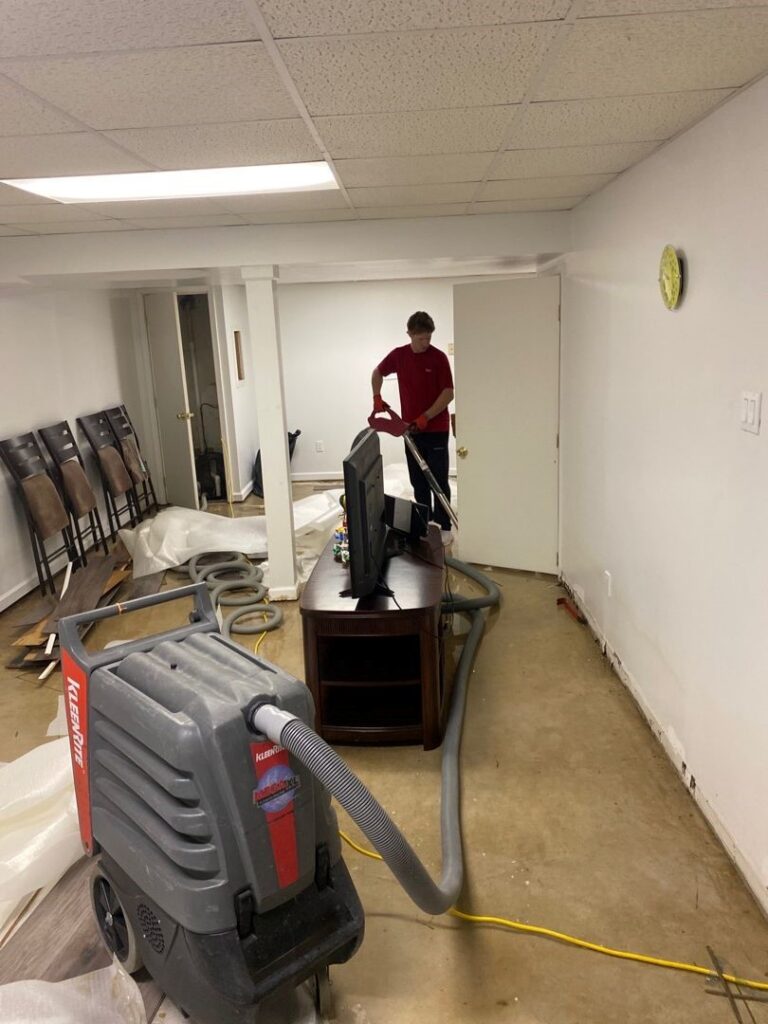
Once safety and documentation steps are complete, extraction begins. Technicians use truck-mounted or portable extraction equipment to remove standing sewage water, followed by moisture mapping across walls, flooring, and subfloor materials using penetrating moisture meters and hygrometer readings to establish a baseline.
This step also identifies any Class 4 water damage, where dense materials like concrete, hardwood, or plaster have absorbed moisture deeply and will require extended drying time. Homes in Victorian Village, Italian Village, and German Village, with their pre-1960 construction, are more likely to include these dense original materials than newer builds in areas like Dublin.
Takeaway: Extraction without moisture mapping is incomplete, since it leaves hidden pockets of contamination unaddressed.
Step 6: Set Up Containment and Begin Structural Drying
Technicians install a containment barrier and establish negative air pressure to prevent cross-contamination into unaffected parts of the home while drying equipment runs. Structural drying typically combines air movers with low grain refrigerant (LGR) dehumidification, which pulls moisture from the air more efficiently than standard household units, especially in Ohio’s humid summer months when ambient moisture works against the drying process.
Antimicrobial biocide is applied to affected surfaces after extraction and before drying begins, targeting the bacterial and viral load specific to Category 3 contamination. HEPA filtration through air scrubbers runs throughout this phase to capture airborne particles and reduce mycotoxin exposure risk if any mold growth has already begun.
If you notice a persistent musty odor, visible discoloration, or a soft spot in flooring during or after this phase, stop and call your restoration company immediately. These are signs the drying process needs to be reassessed before it is considered complete.
Takeaway: Complete structural drying, verified with equipment and readings rather than a visual check, is what prevents a second, more expensive problem later.
Step 7: Verify Clearance Before Rebuilding
Before any repairs, painting, or flooring replacement begins, moisture levels throughout the affected structure should return to normal readings confirmed by hygrometer testing, not simply appear dry to the touch. Rebuilding over materials that are still elevated in moisture content risks trapping contamination behind new finishes, which often surfaces later as mold or odor problems that are far more expensive to address once walls are closed up again.
Takeaway: Get written clearance confirmation before rebuilding starts, and keep that documentation with your other insurance and repair records.
Why This Happens So Often in Columbus
Columbus is shaped by its rivers, with the Scioto running north to south through downtown and joined by the Olentangy, while Big Walnut Creek and Alum Creek border the city to the east and southeast. FEMA Flood Insurance Rate Maps identify Special Flood Hazard Areas in Franklinton, the Bottoms, and along Alum Creek on the near east side, and while the Griggs and O’Shaughnessy dams provide flood control upstream, intense urban rainfall can still overwhelm local drainage systems during summer thunderstorm season.
Pre-1970 neighborhoods including German Village and parts of Franklinton run on combined sewer systems that carry stormwater and sanitary sewage together, meaning heavy rain can push Category 3 contaminated water back through floor drains and sanitary laterals into basements. Meanwhile, homes throughout Clintonville, Bexley, and the Near East Side see a different but related risk, with sump pump failures during spring storm season causing basement flooding even without sewer involvement. Columbus’s sewer maintenance operations center has documented storm events that generated hundreds of flooded-basement reports within a single day, underscoring how quickly citywide rain events translate into individual home emergencies.
Frequently Asked Questions
Does homeowners insurance cover sewage backup in Columbus, Ohio?
Standard homeowners policies in Ohio typically exclude sewer backup damage unless a specific water backup or sewer backup endorsement has been added. The Ohio Department of Insurance recommends confirming this coverage with your agent proactively, since claims filed without the endorsement are frequently denied even when the backup was sudden.
How much does sewage cleanup cost in Columbus?
Cost depends heavily on square footage affected, materials involved, and response speed. A backup addressed within hours generally costs less than one left standing for days, since delay often adds mold remediation and material replacement to the project.
How long does the full restoration process take after a sewage backup?
A typical Category 3 cleanup involves same-day extraction and containment followed by three to five days of structural drying and dehumidification. Homes in older neighborhoods like German Village or Victorian Village with dense original materials such as plaster and hardwood may take longer due to Class 4 water damage drying requirements.
Can I handle a small sewage backup myself?
Direct contact with raw sewage carries health risk regardless of the amount involved, since Category 3 water contains bacteria and viral contaminants. Very minor spills on non-porous, easily disinfected surfaces may be manageable with proper protective gear, but anything reaching carpet, drywall, or subflooring should go to trained professionals.
What health risks does sewage exposure create in a Columbus home?
Sewage exposure can cause gastrointestinal illness, skin infections, and respiratory irritation, with added mycotoxin exposure risk if mold growth has begun. Children, older adults, and residents with compromised immune systems should stay away from affected areas until professional decontamination is finished.
Why do German Village and Franklinton see more sewage backups than other Columbus neighborhoods?
Both areas are served by combined sewer systems built before 1970, which route stormwater and sanitary sewage through the same pipes. During heavy rain, these systems can exceed capacity and push contaminated water back into basements through floor drains, a risk that newer, separately engineered systems in areas like Dublin generally do not share to the same degree.
Get Help Now From a Local, Certified Team
A sewage backup demands fast, correct action, not guesswork. PuroClean Home Savers provides 24/7 emergency dispatch throughout Columbus and Franklin County, with IICRC-certified technicians who follow S500 protocols for Category 3 contamination from first contact through final clearance testing. Direct insurance billing means homeowners can focus on their family and their home instead of managing paperwork during a stressful event.
Call PuroClean Home Savers at (614) 689-0012, available around the clock for emergency response.